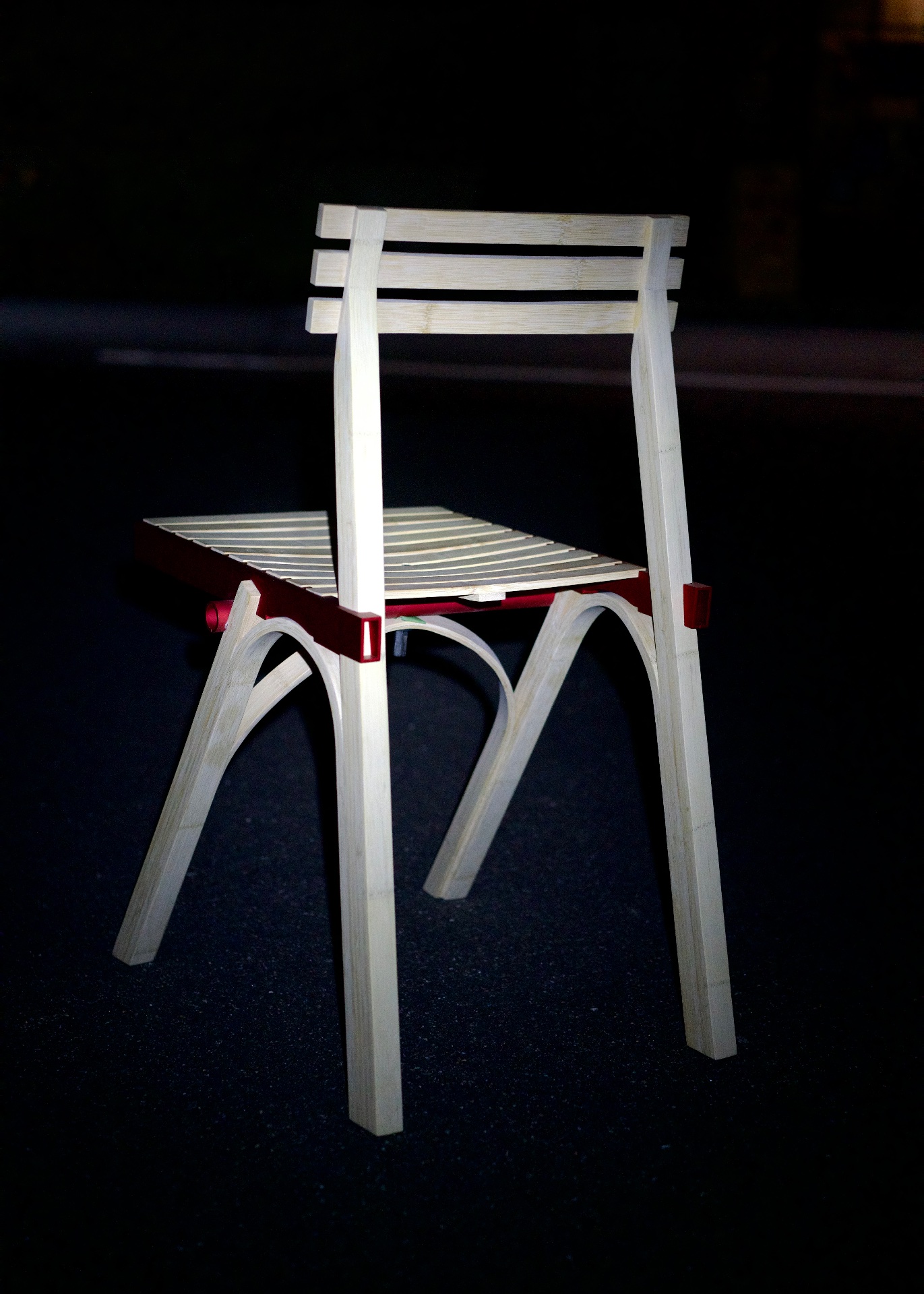
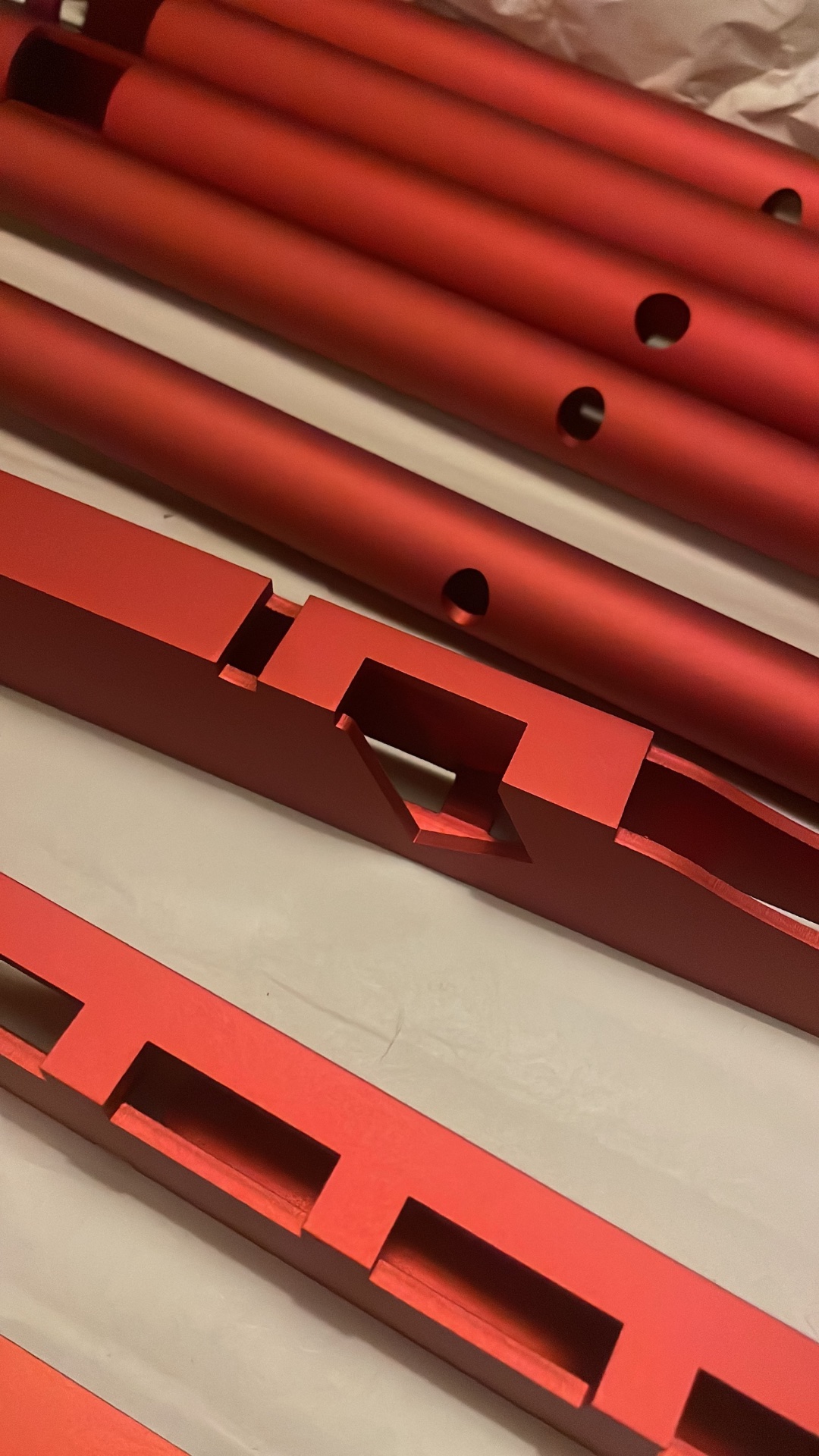
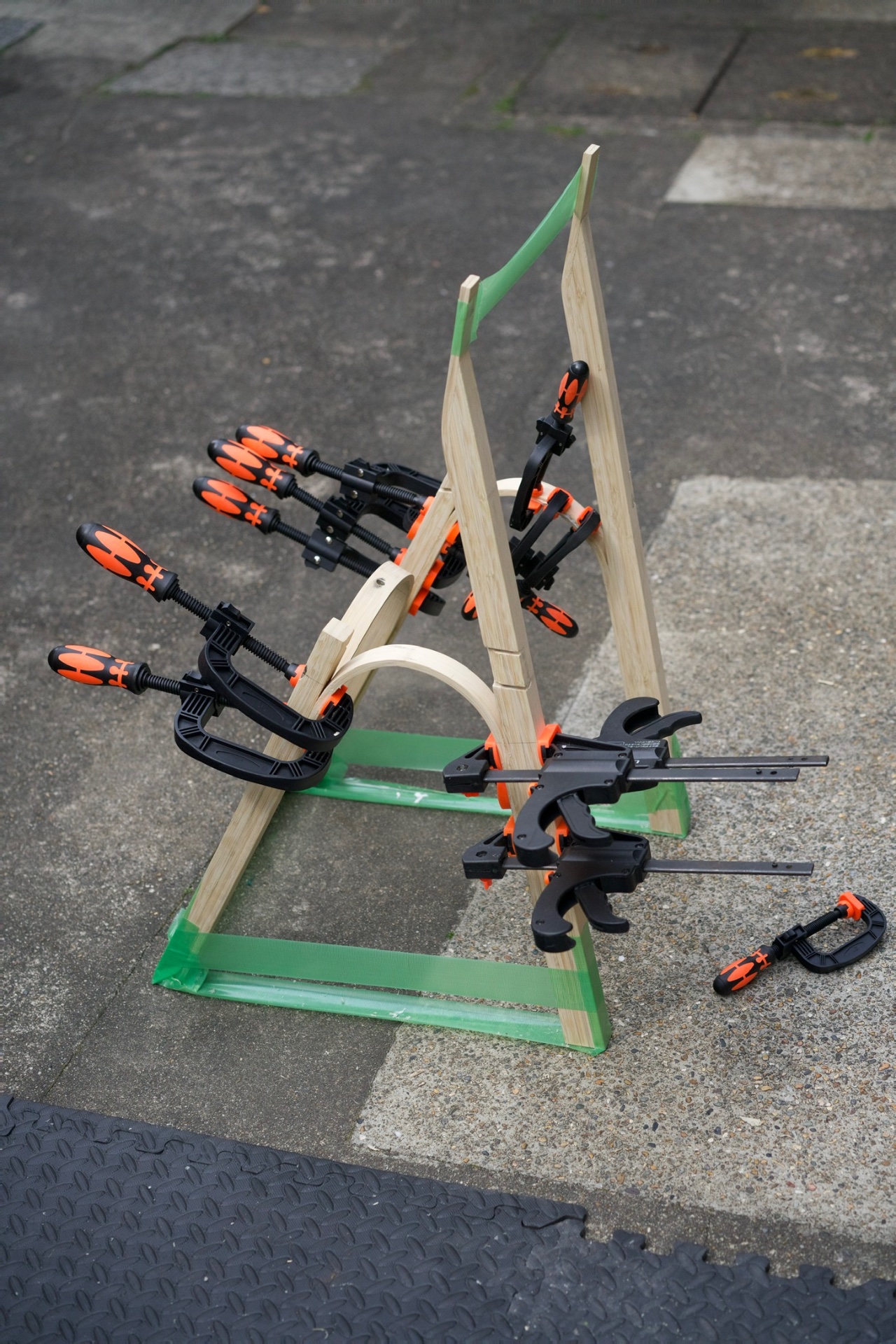
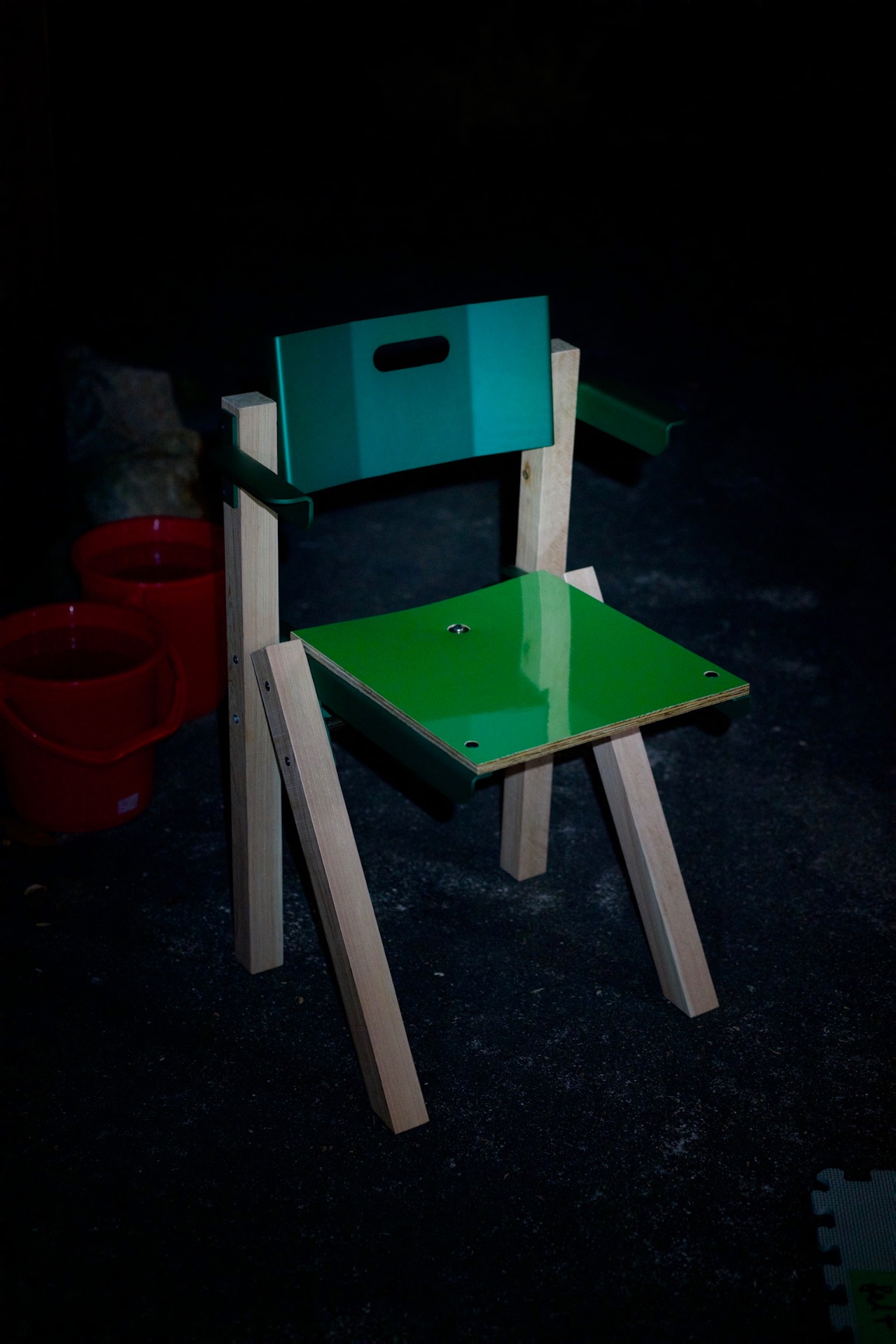
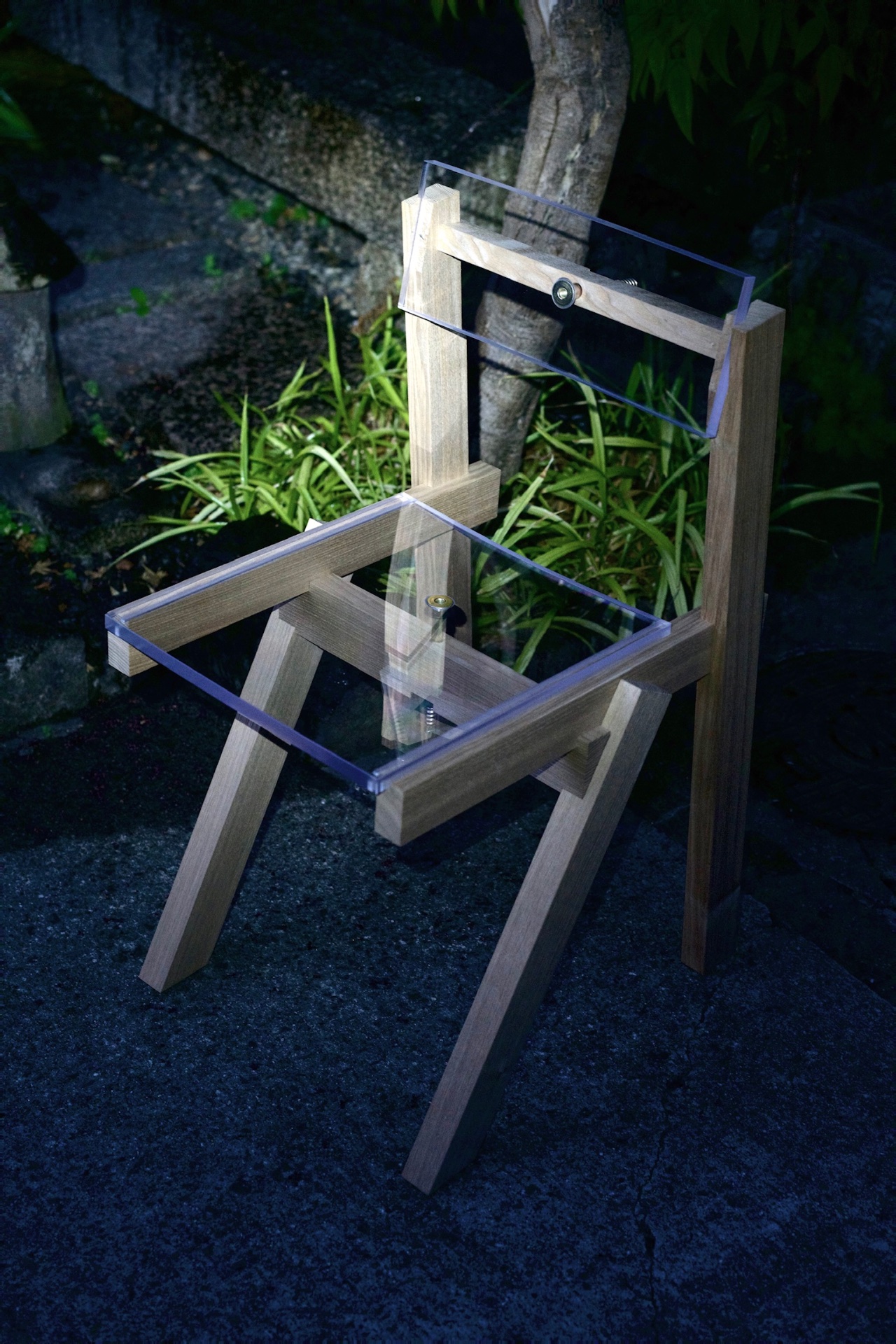
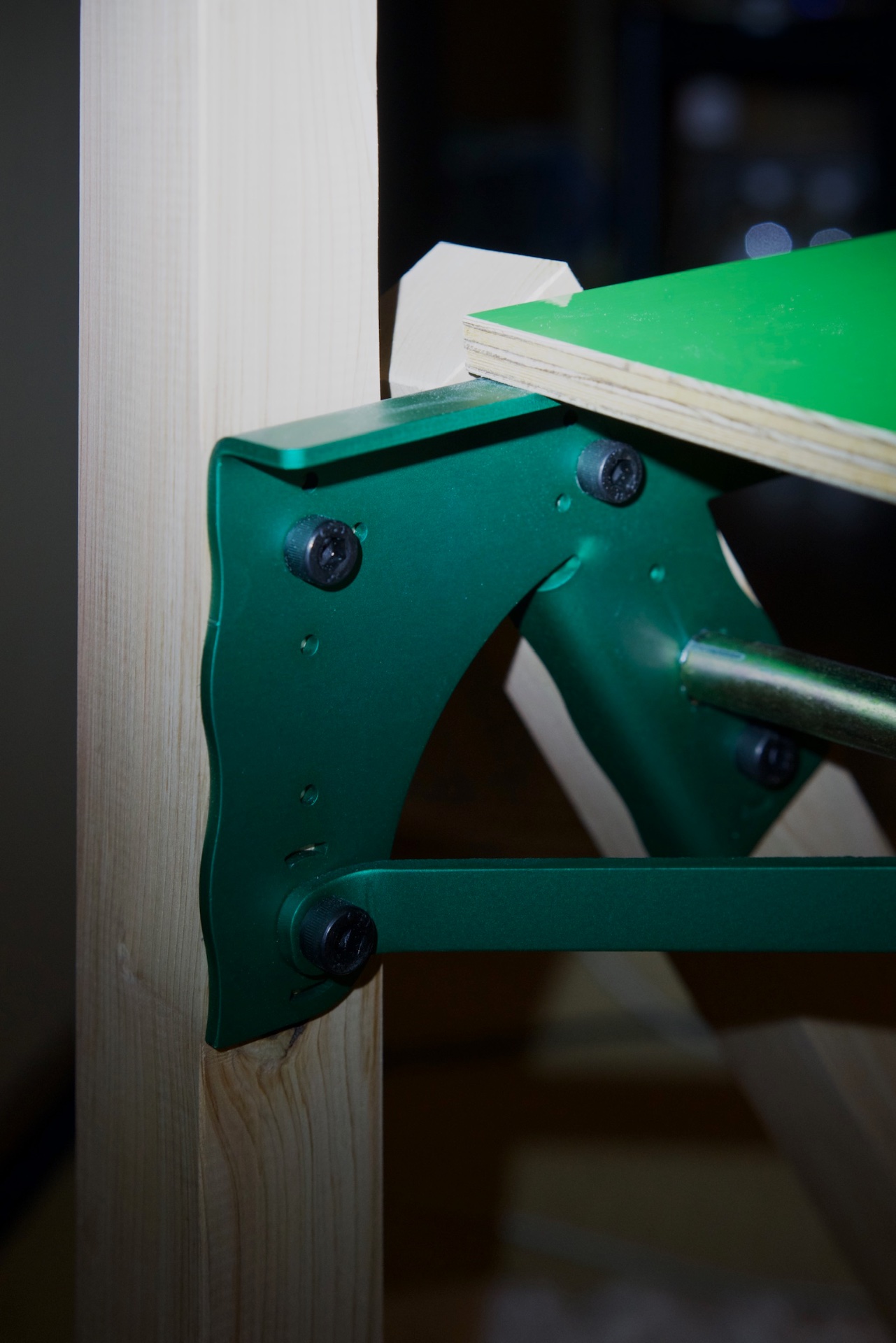
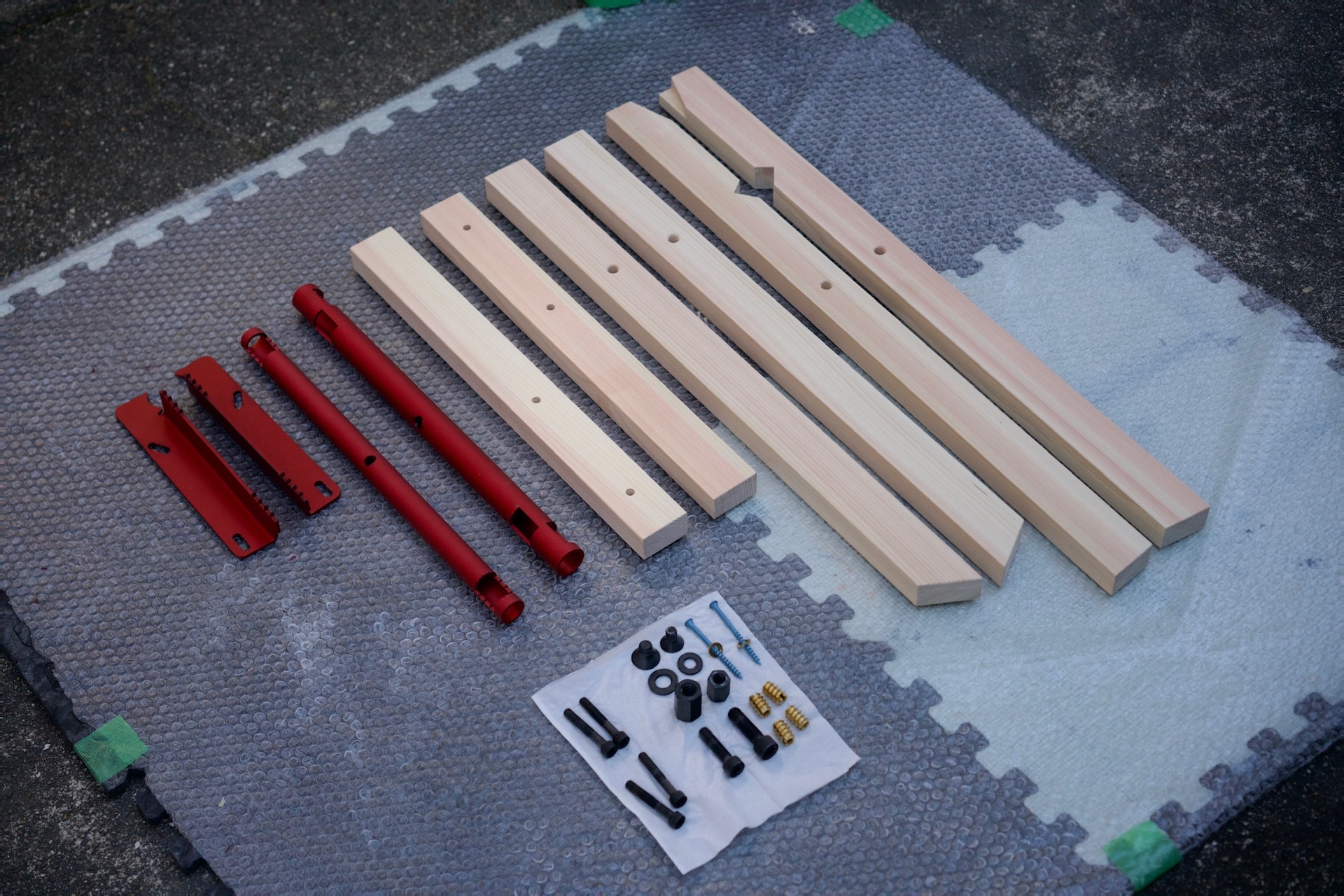
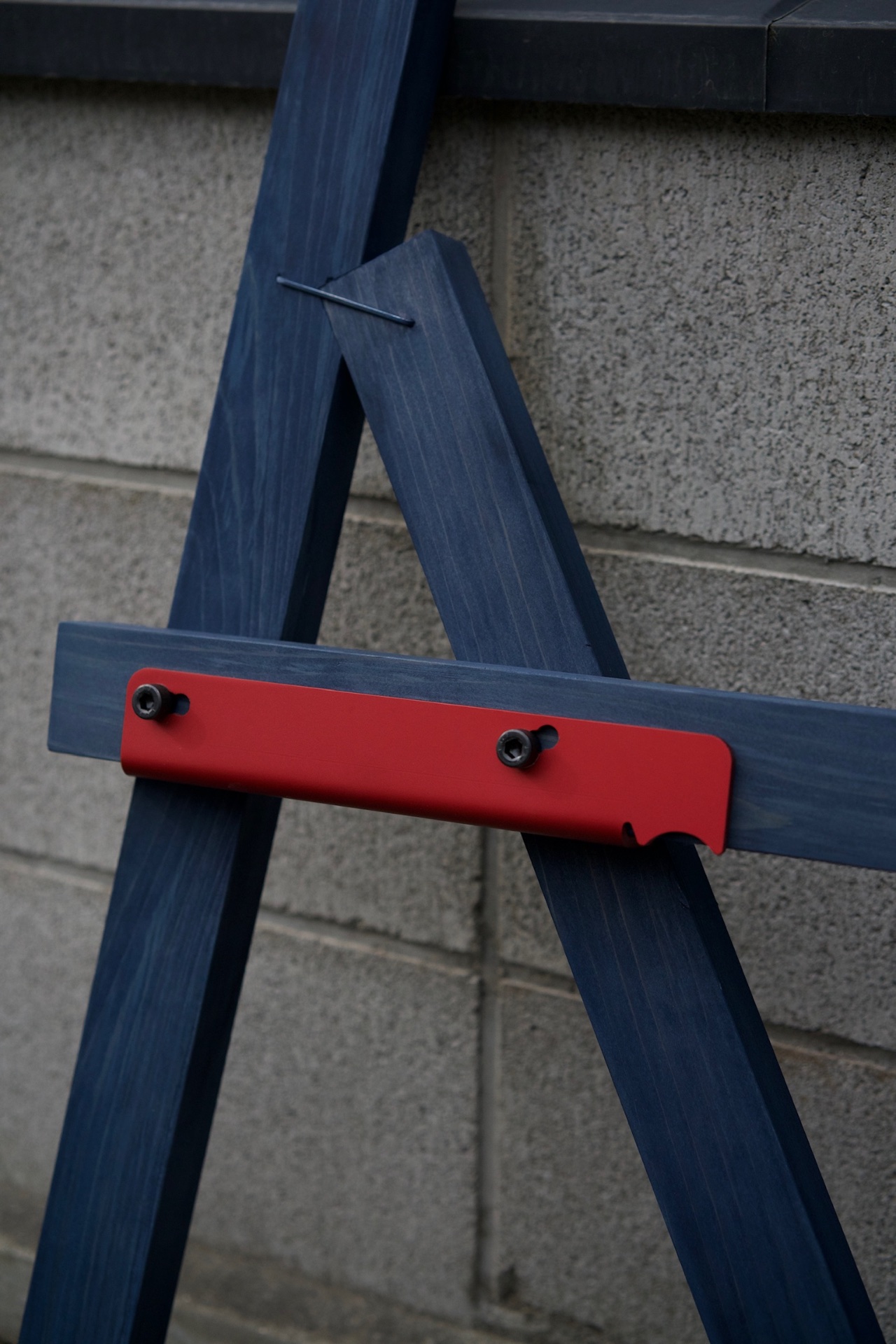
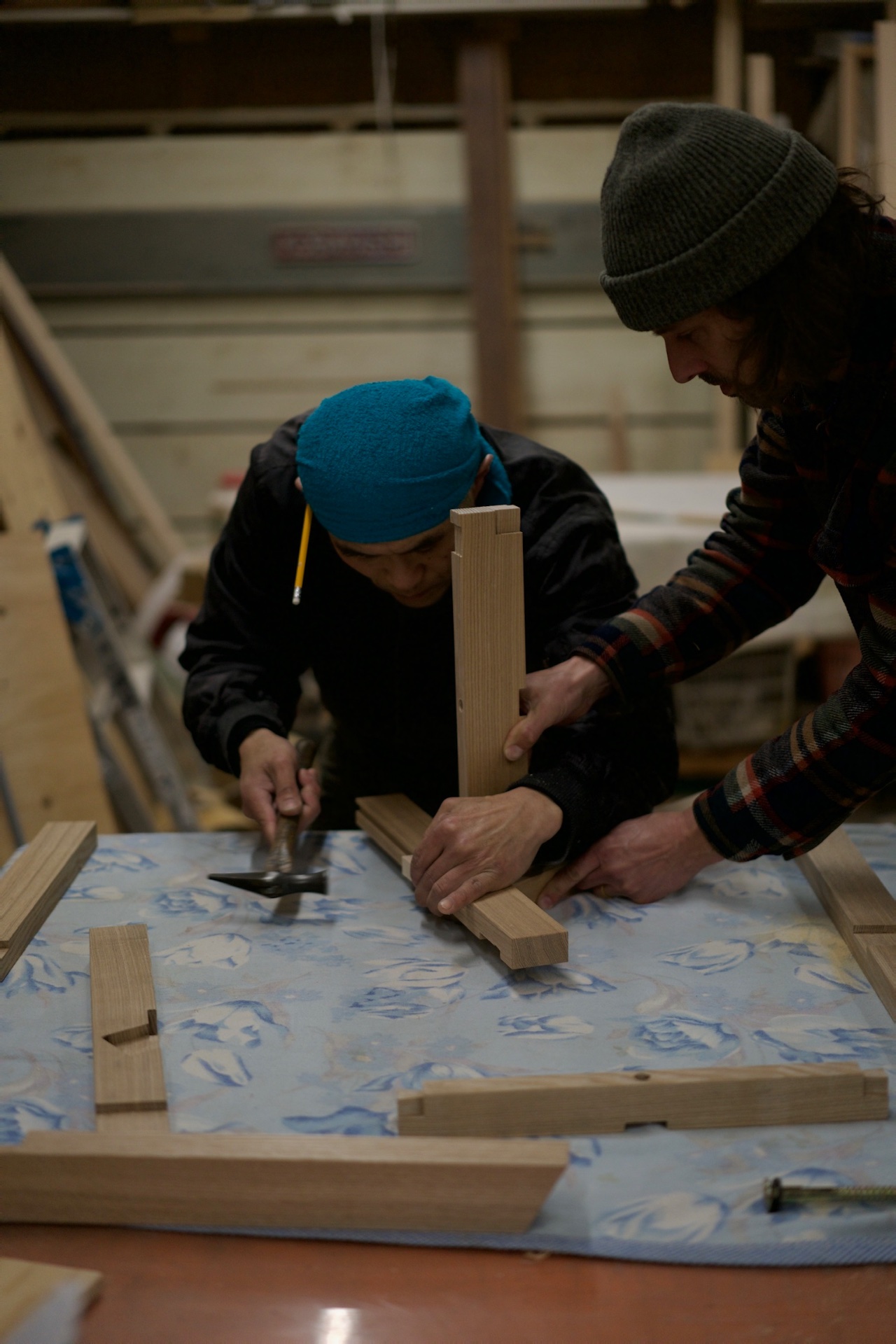
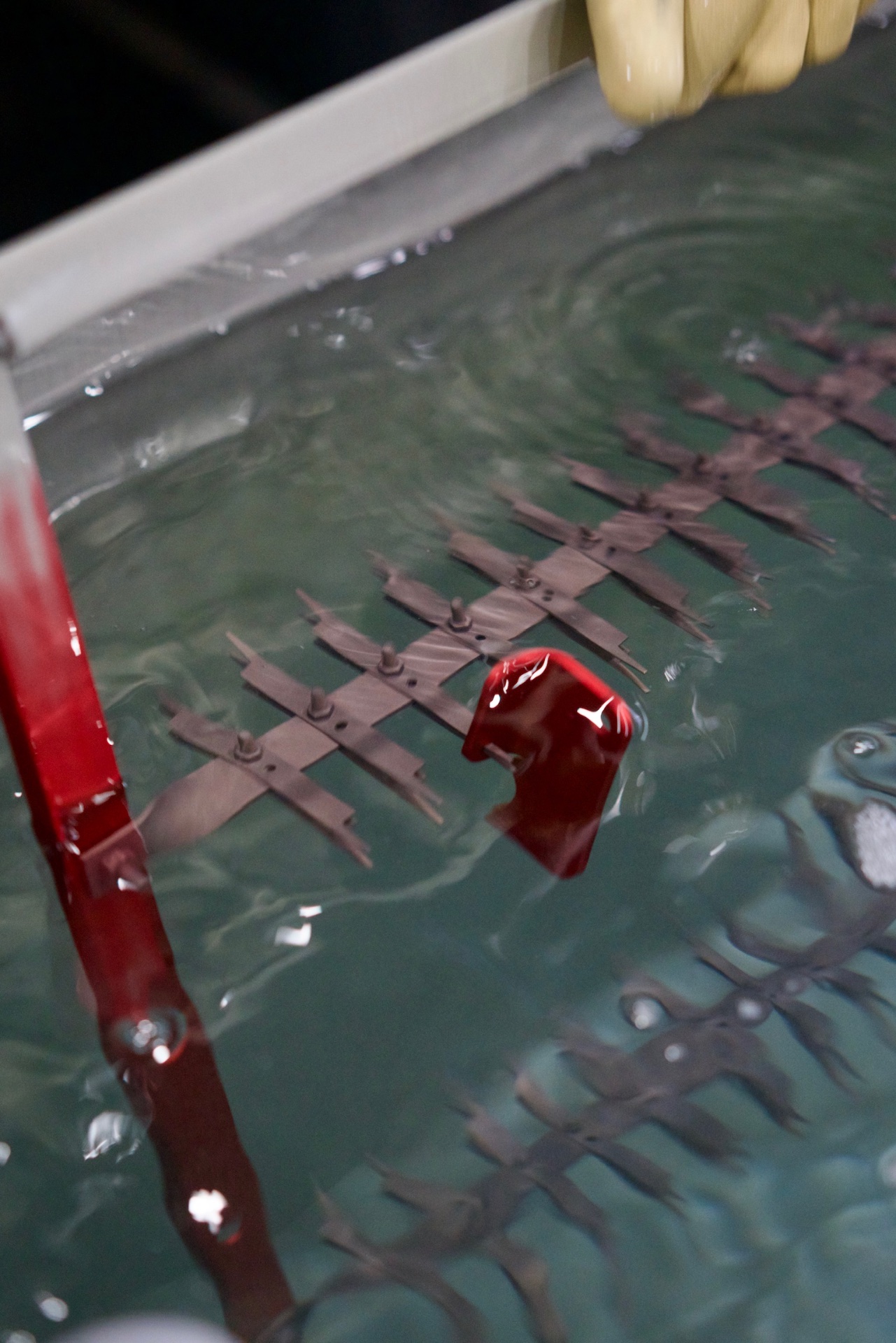
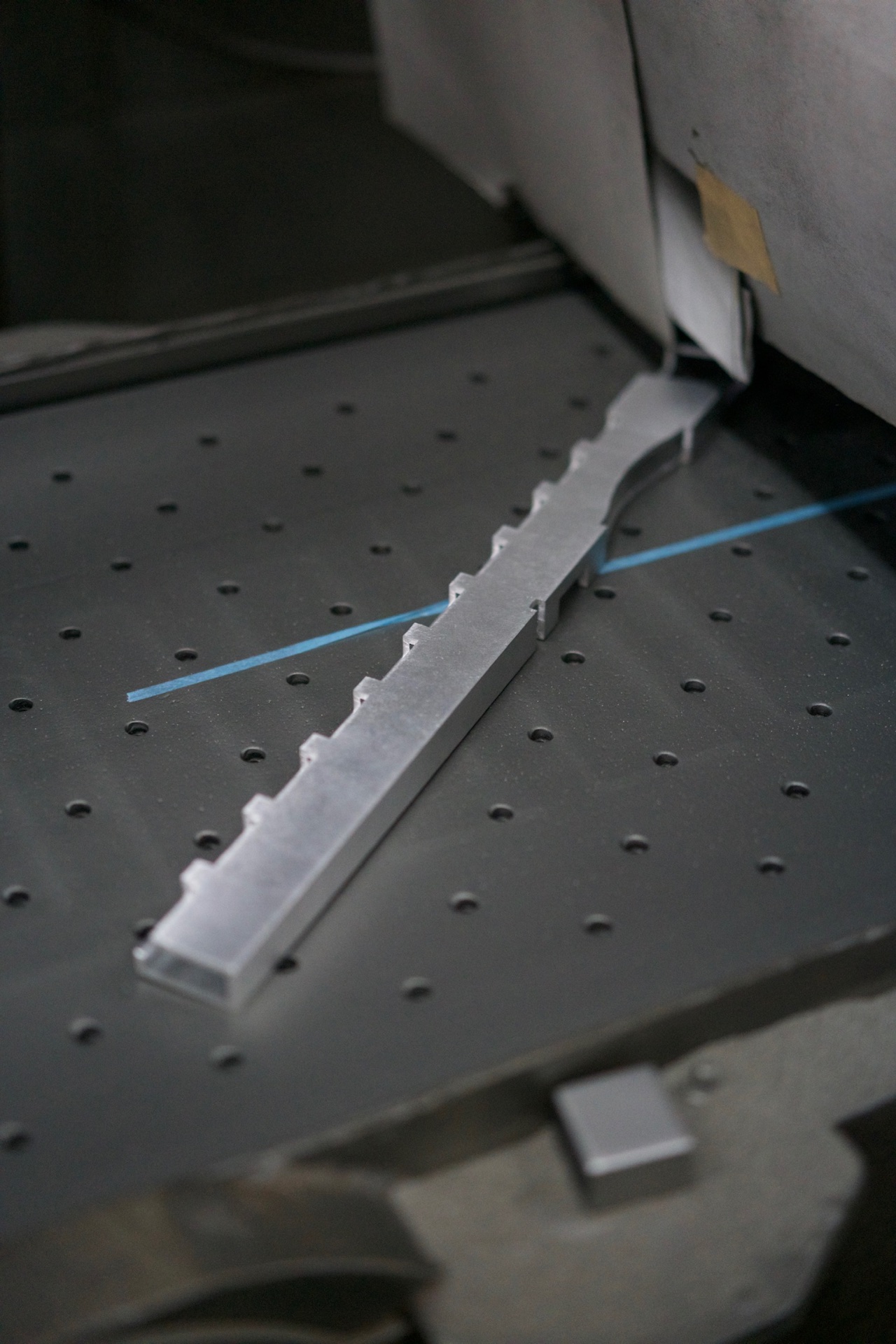
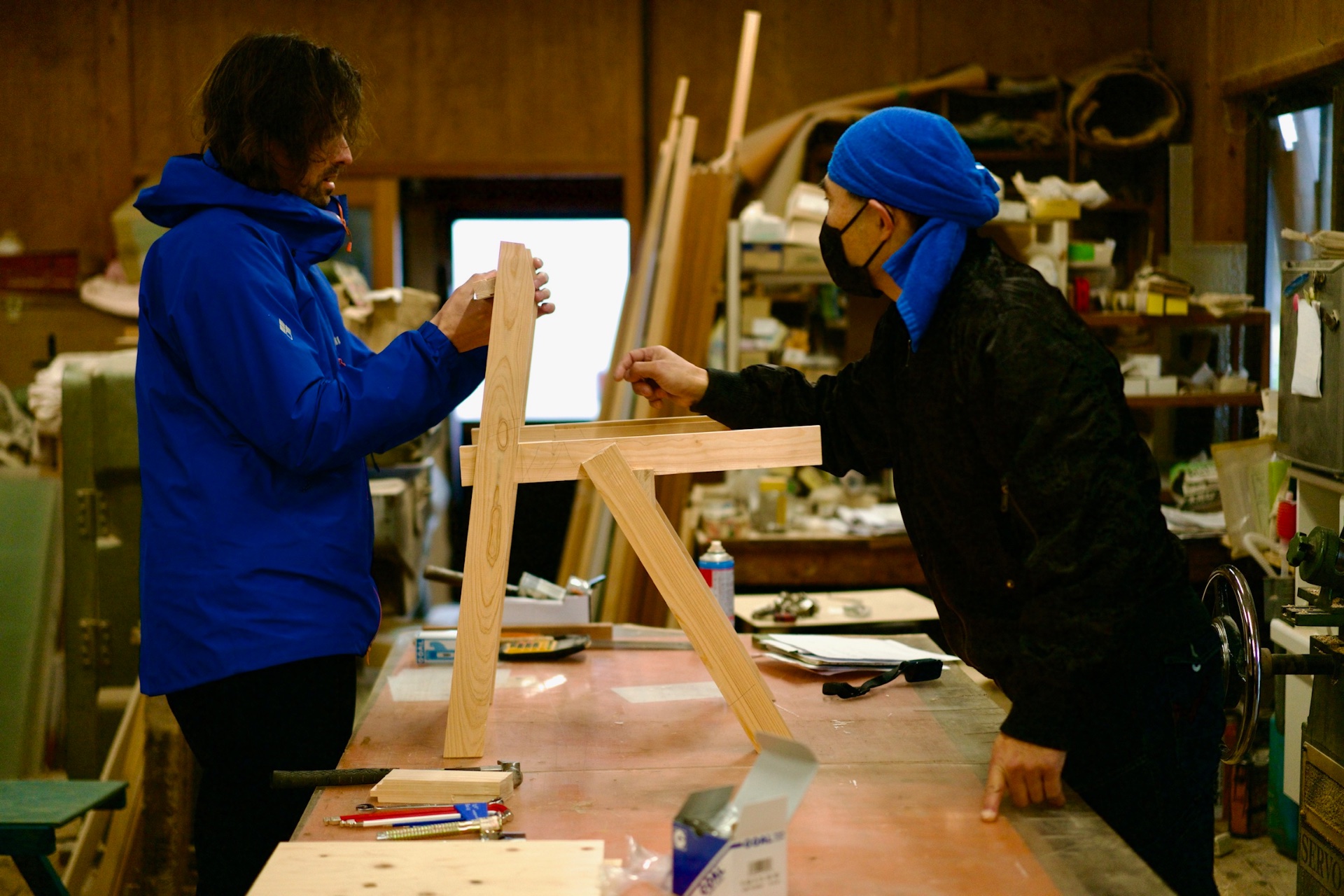
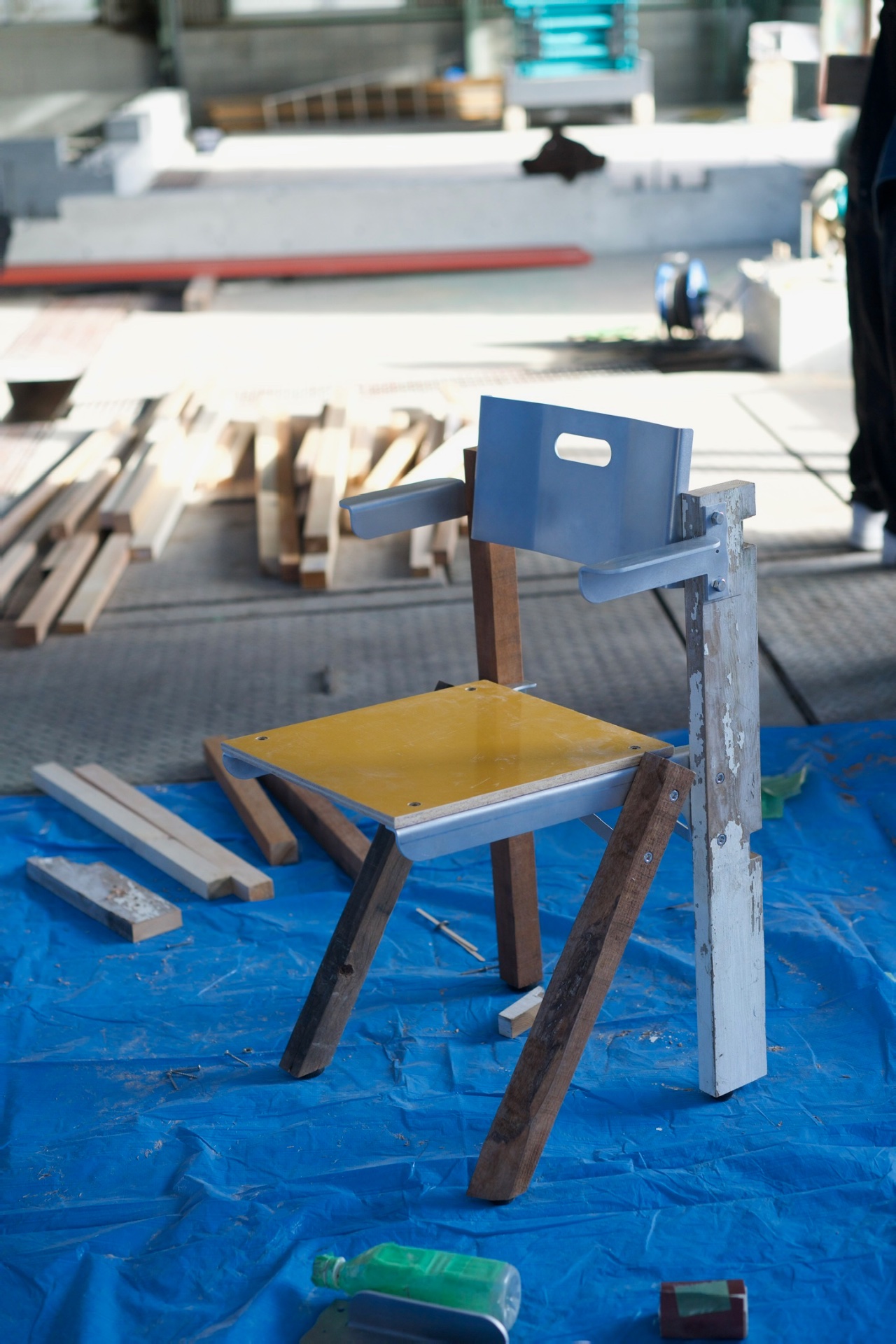
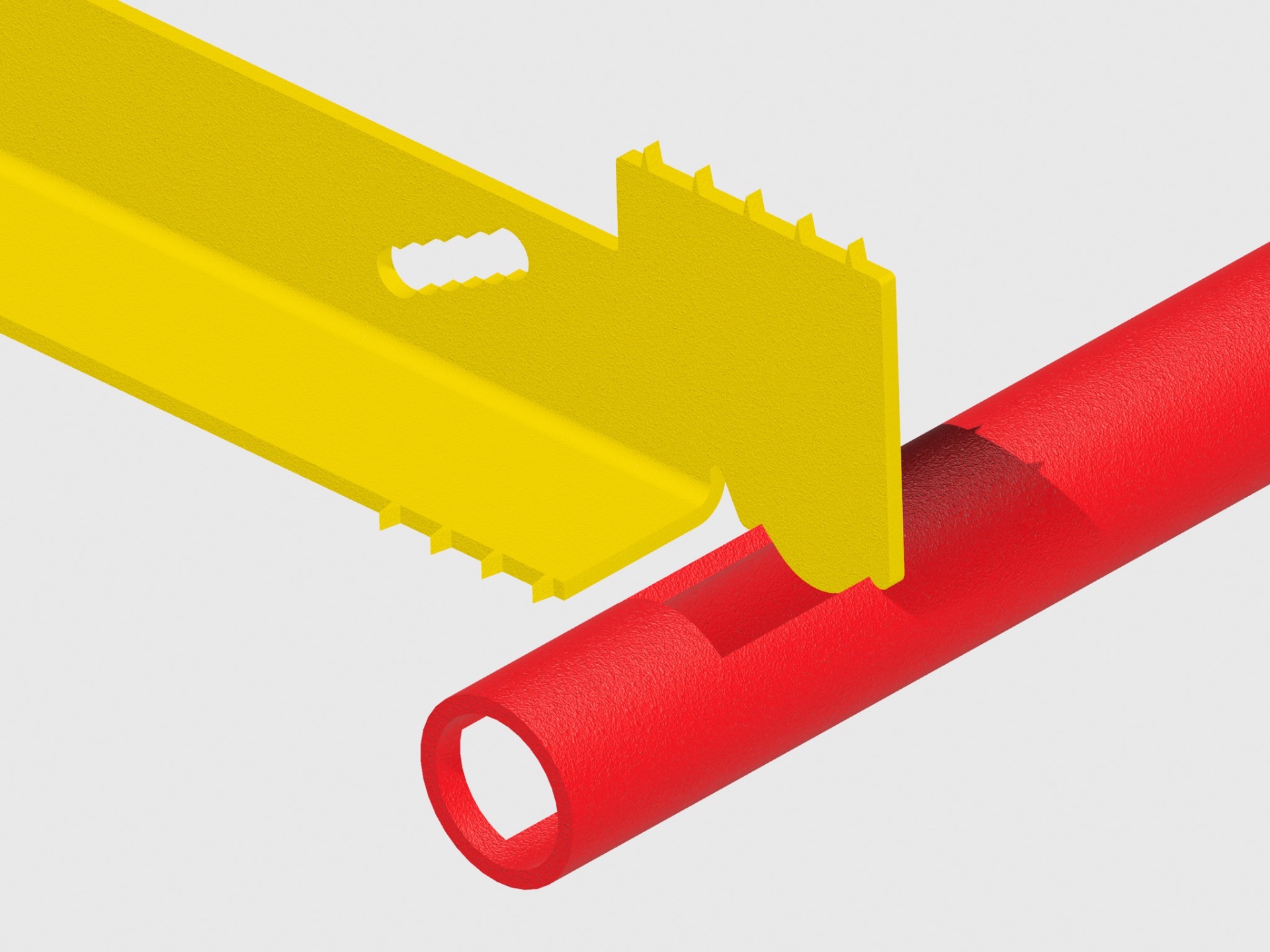
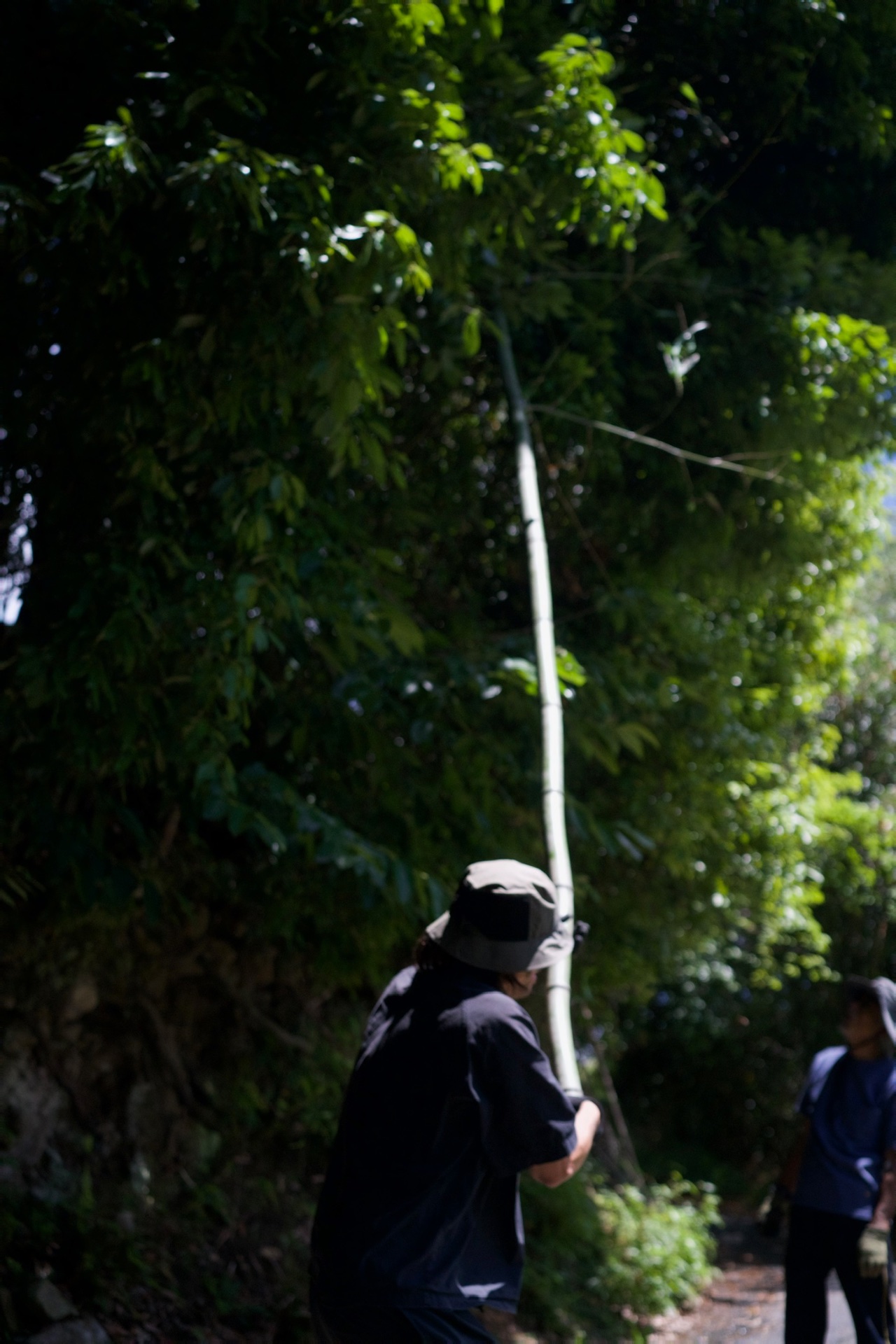
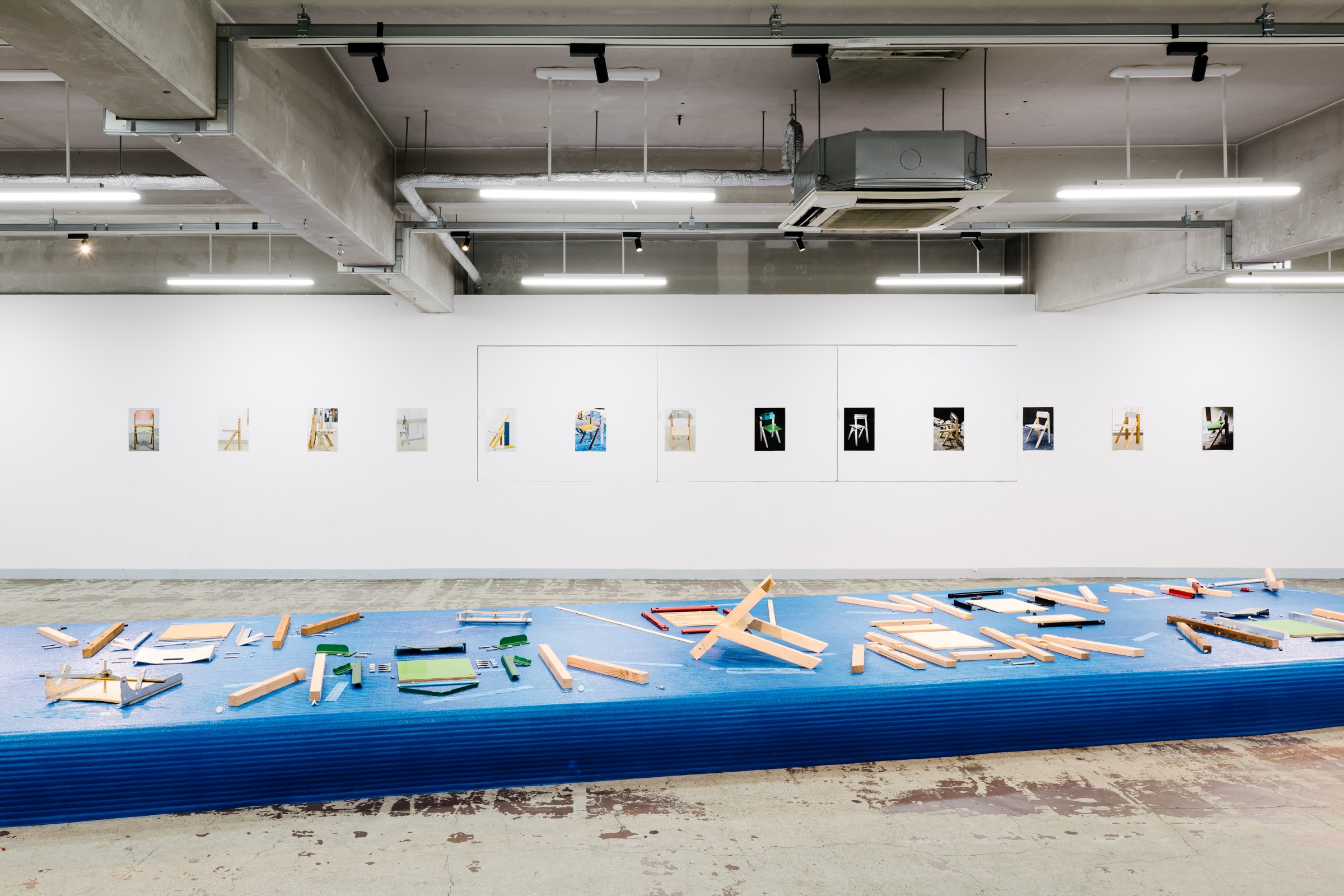
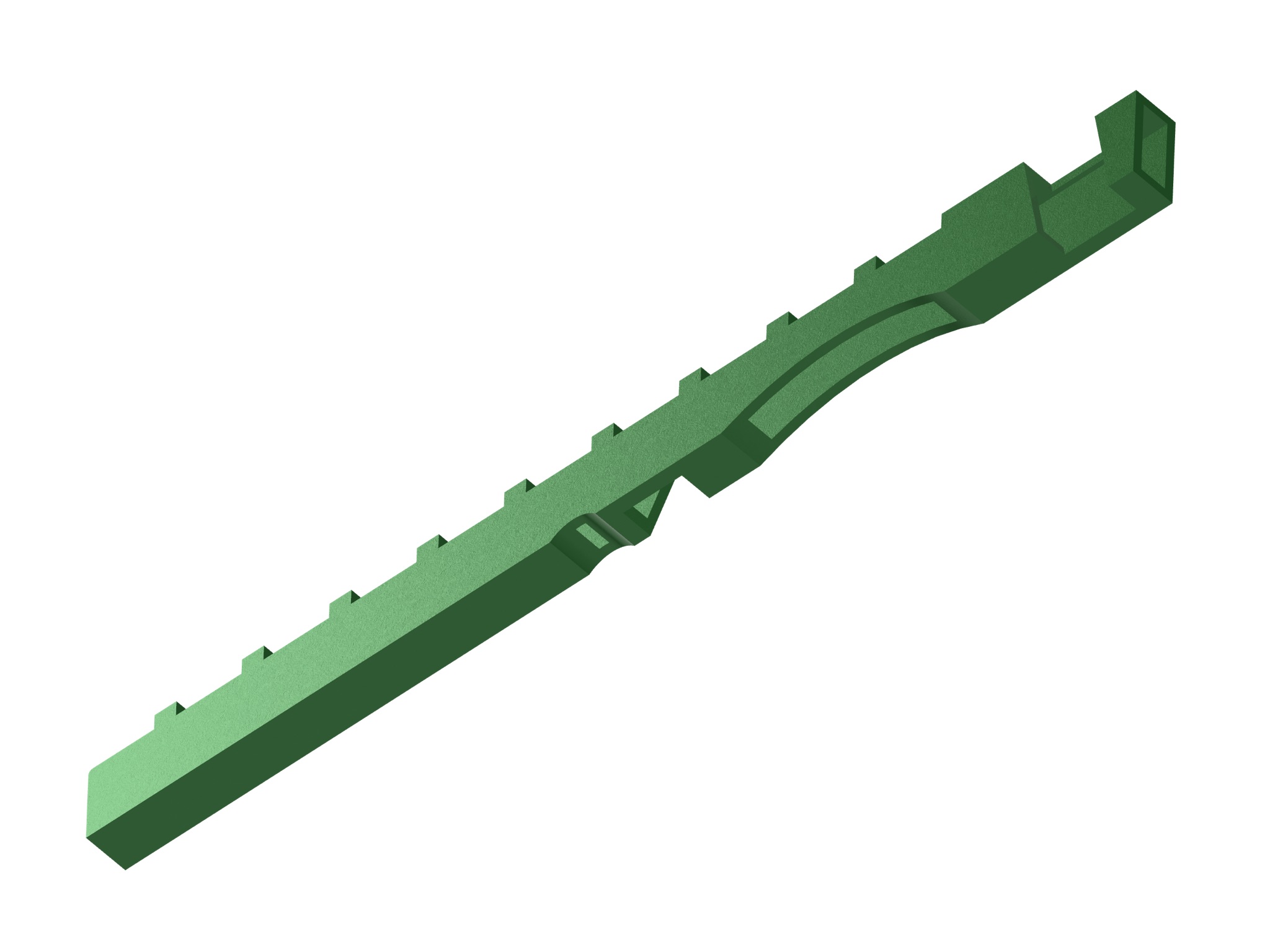
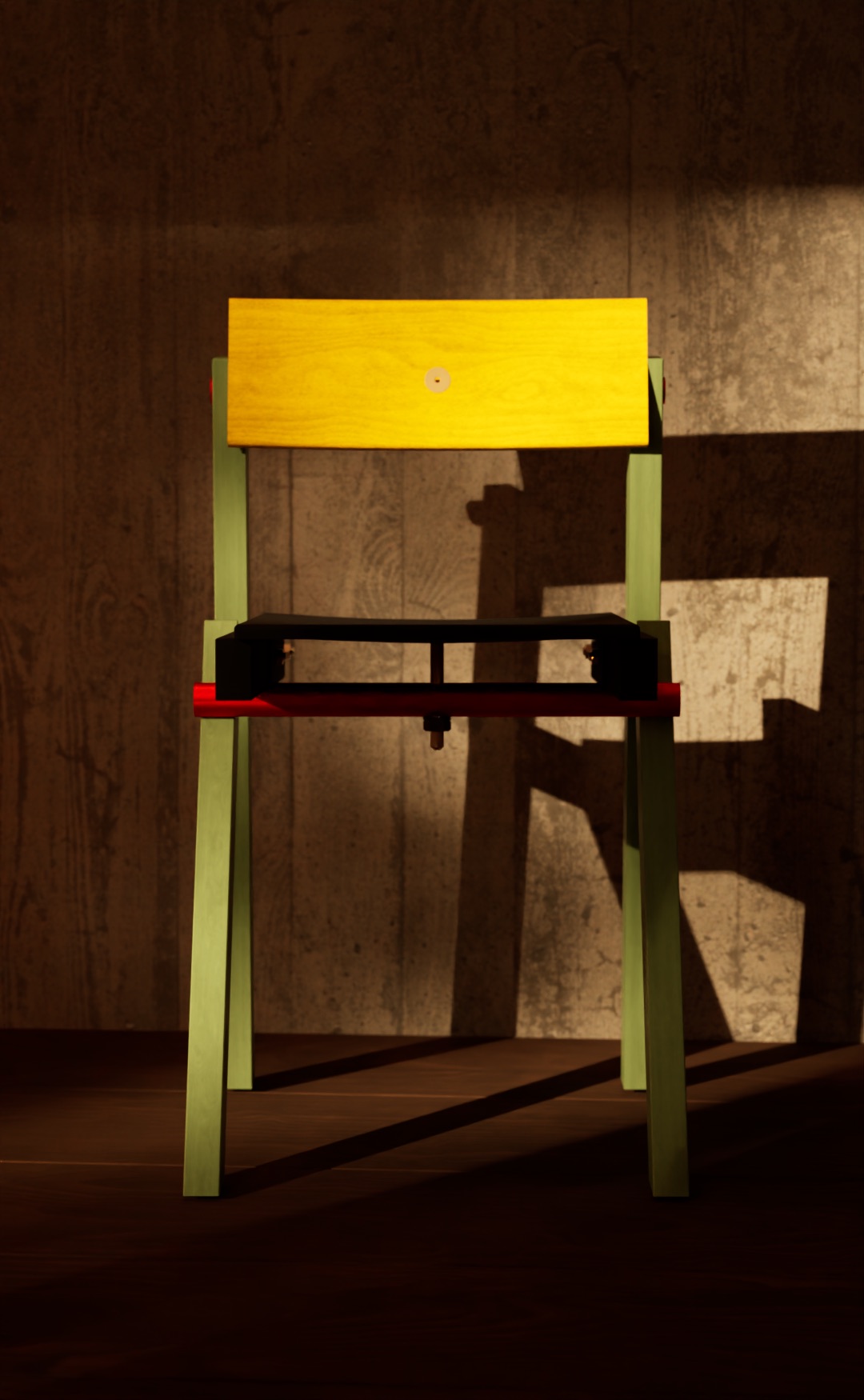
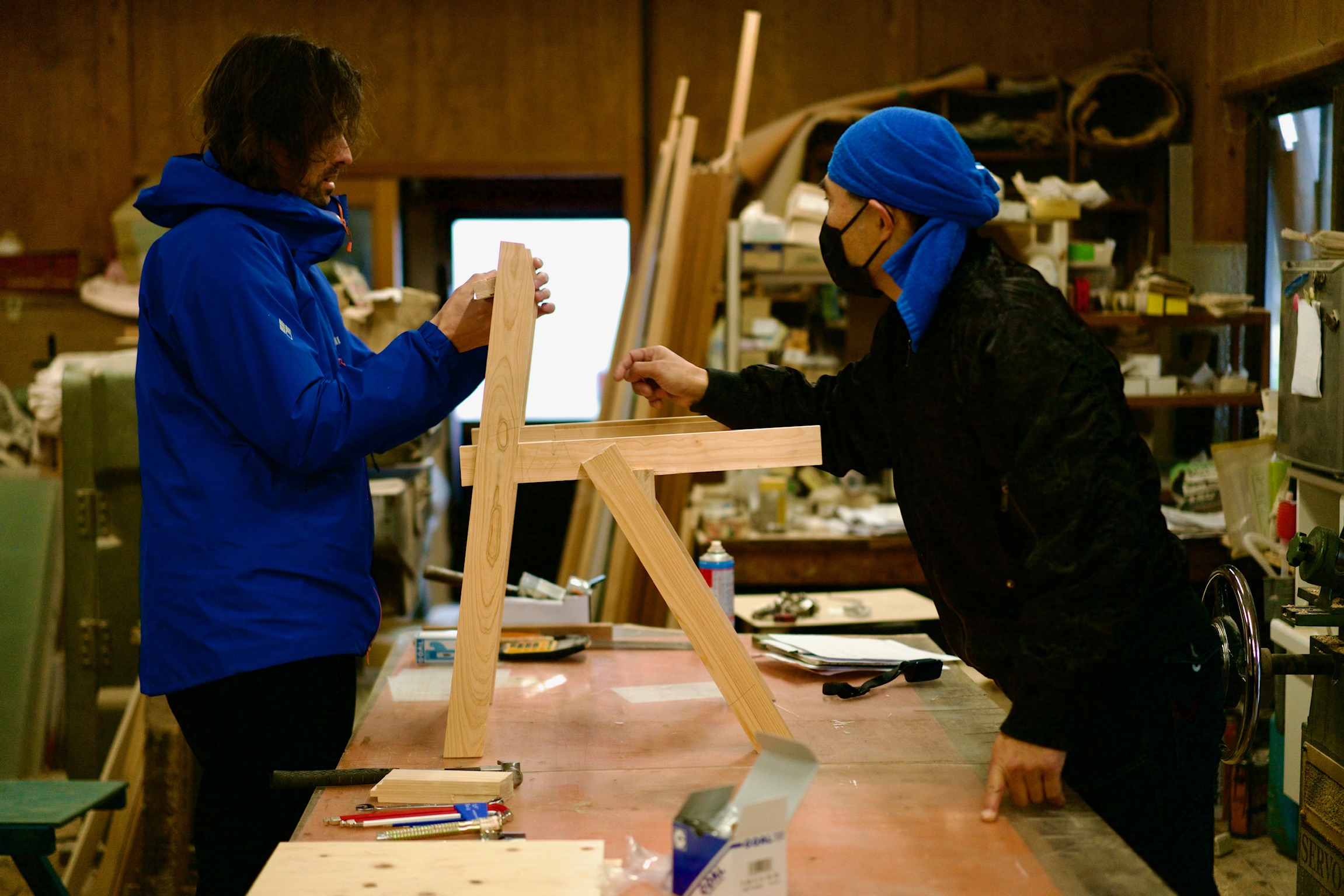
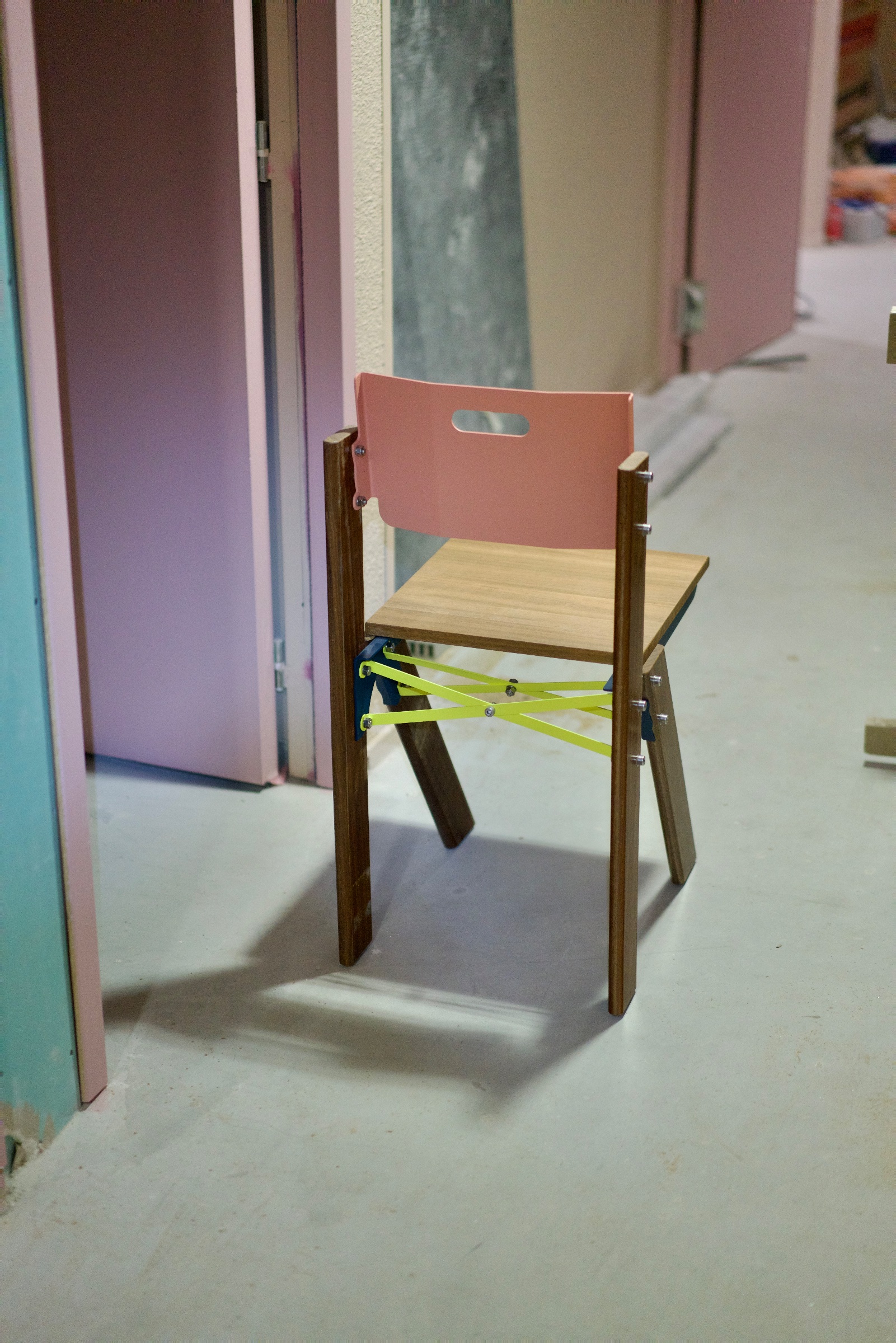
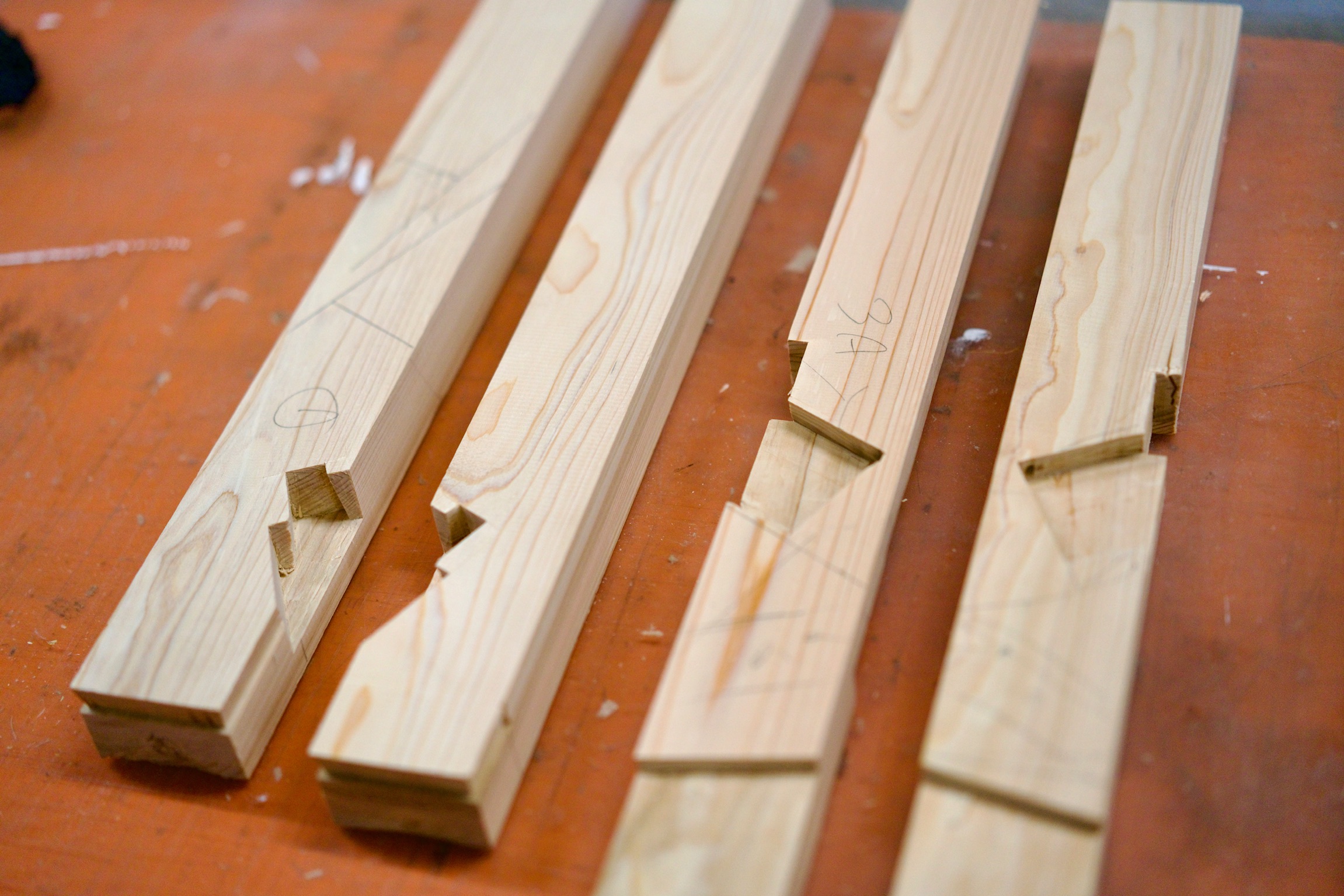
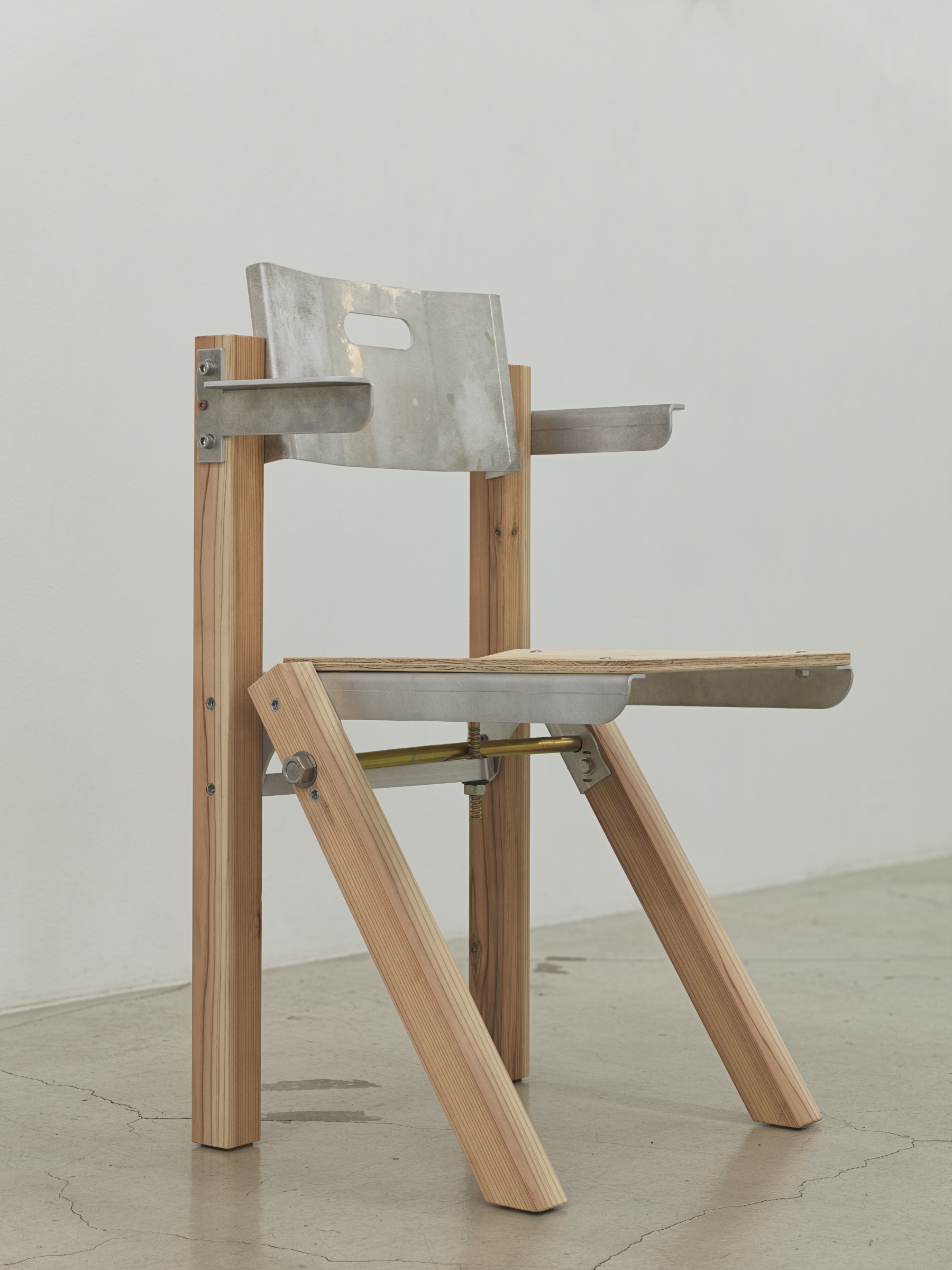
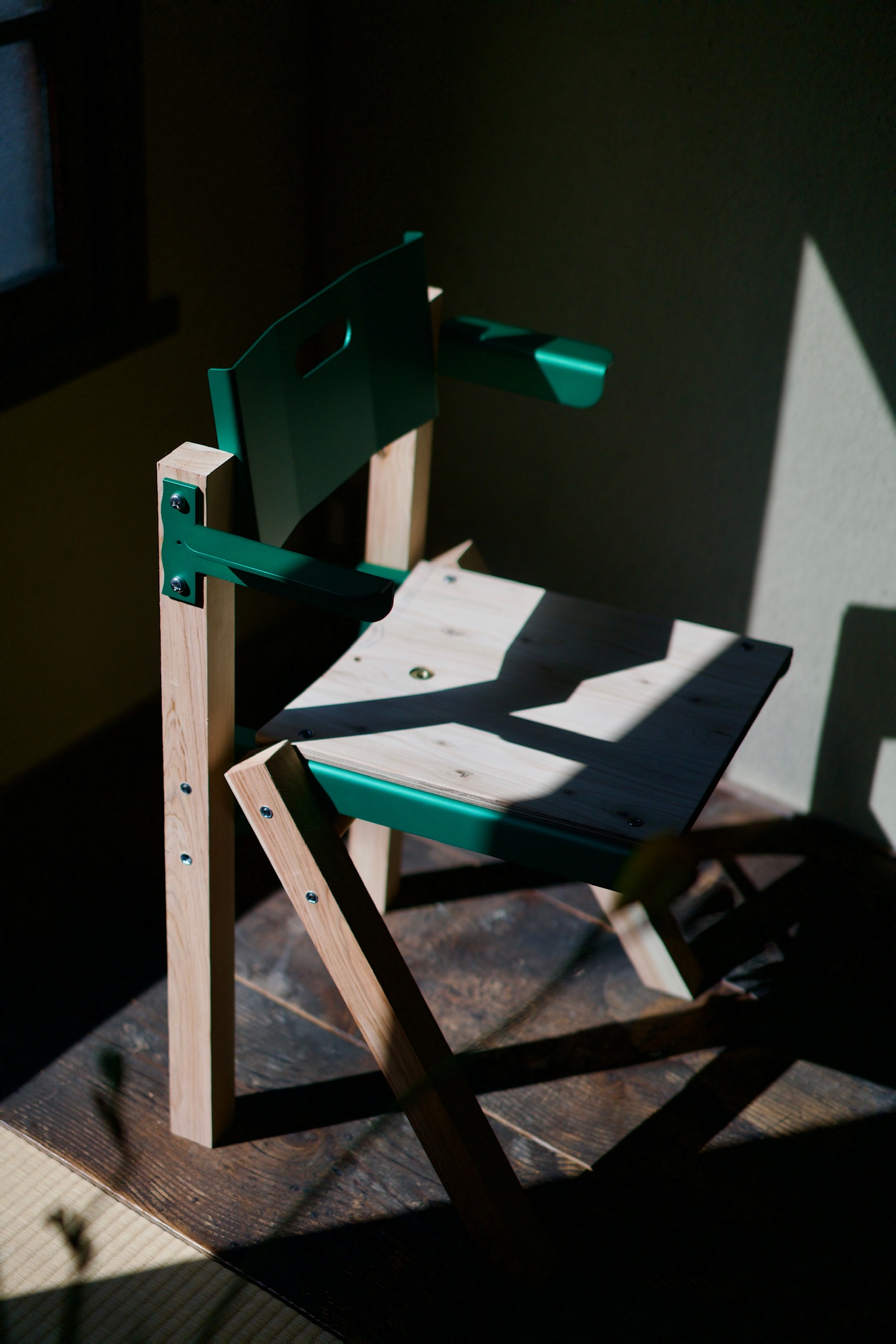
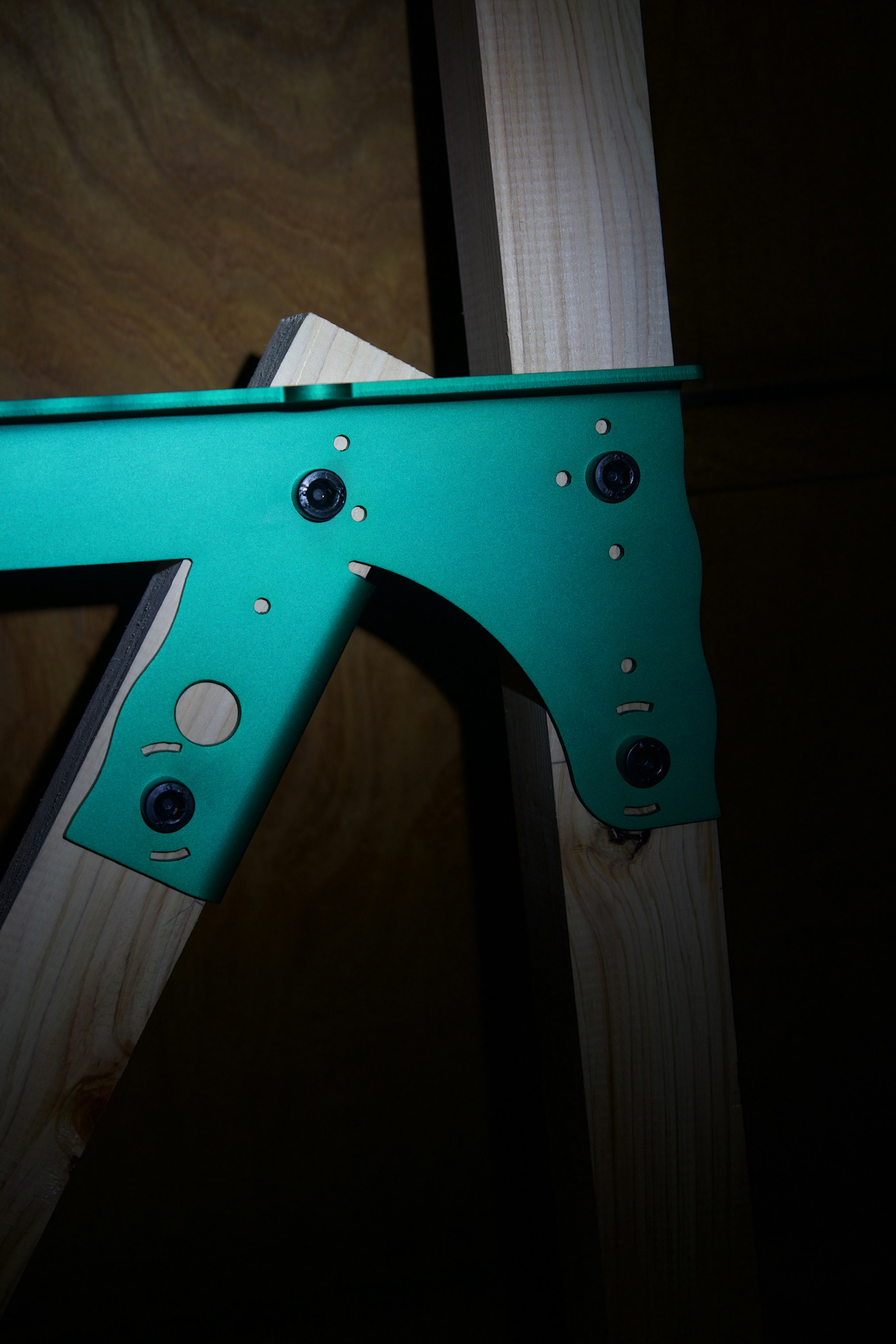
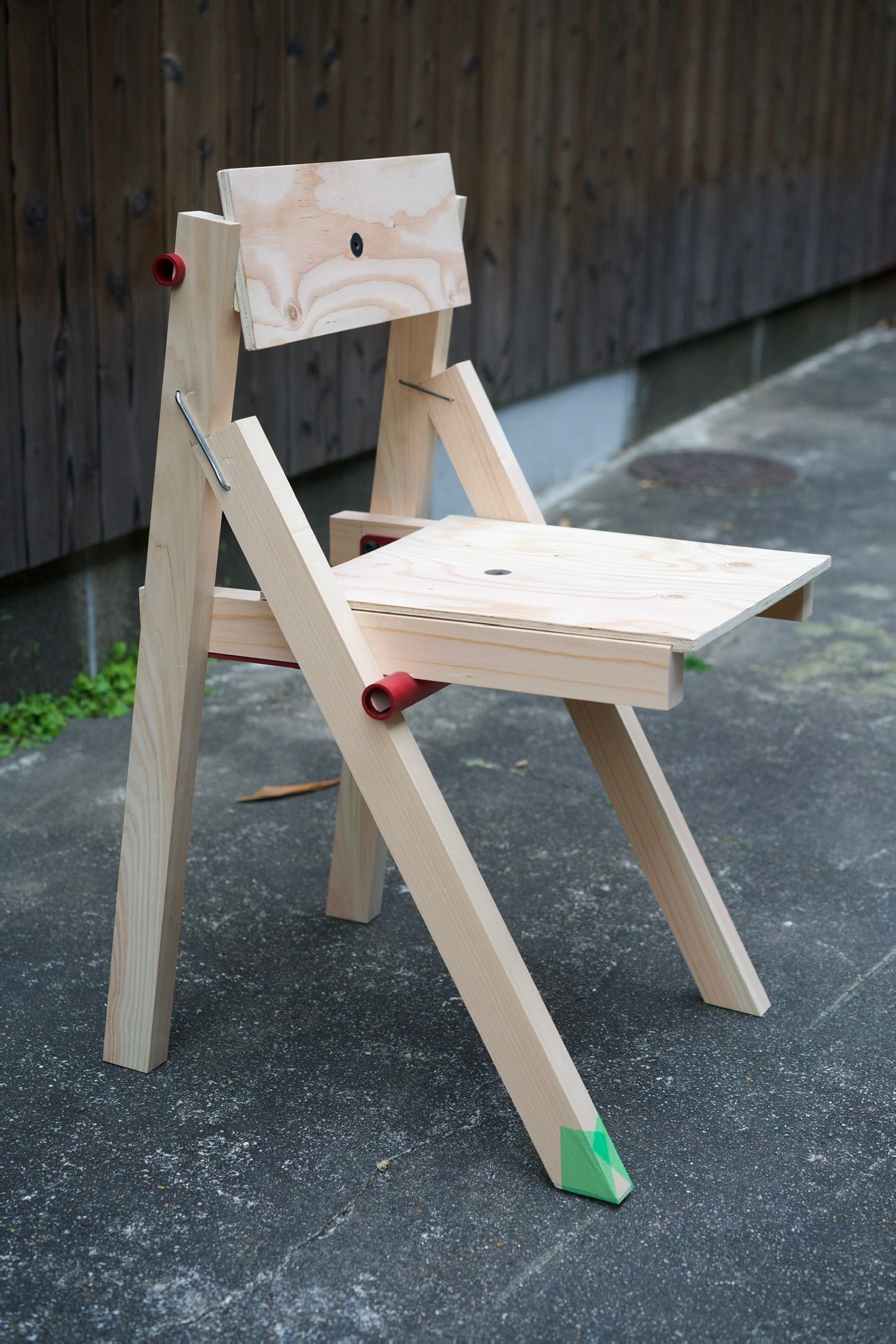
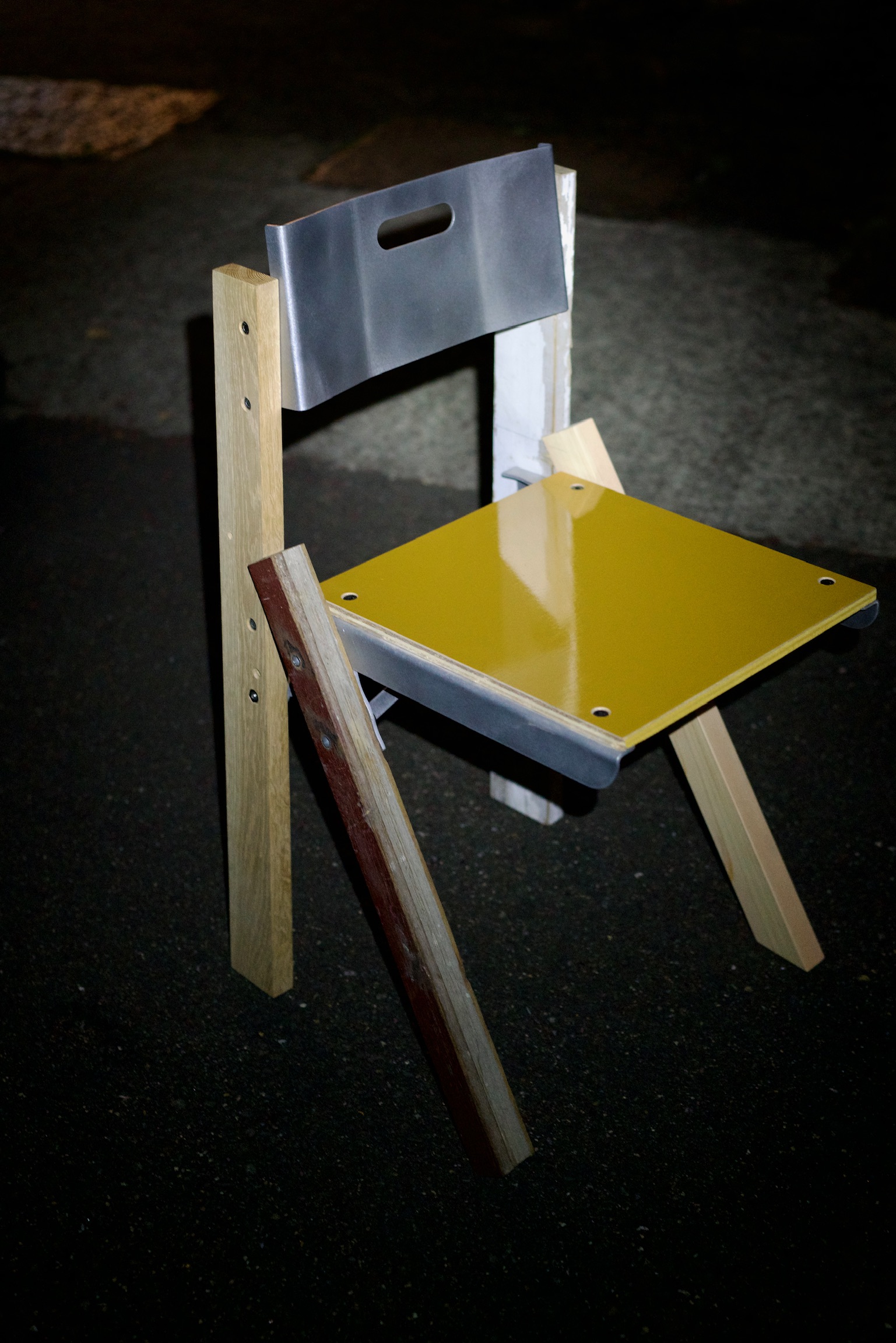
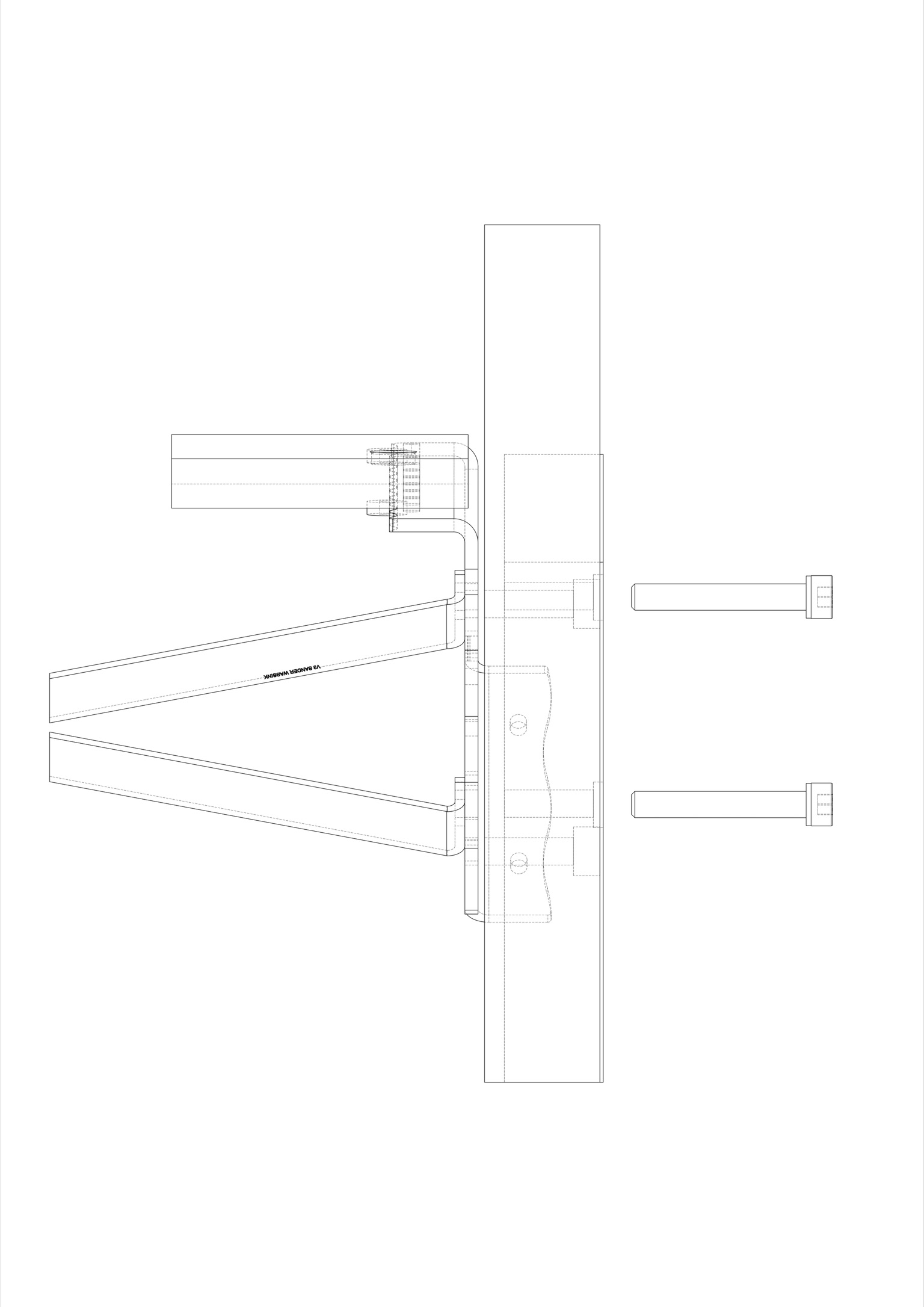
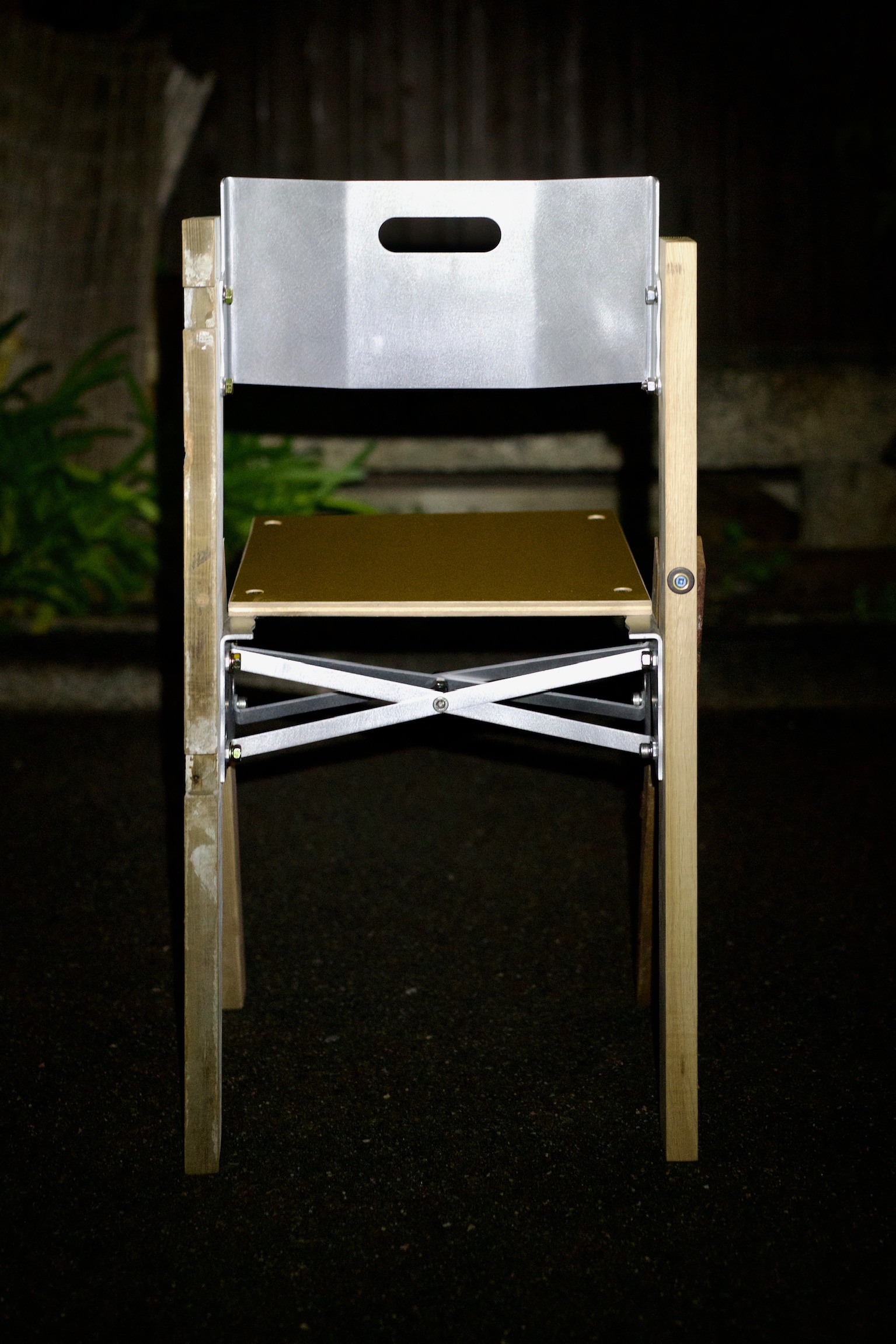
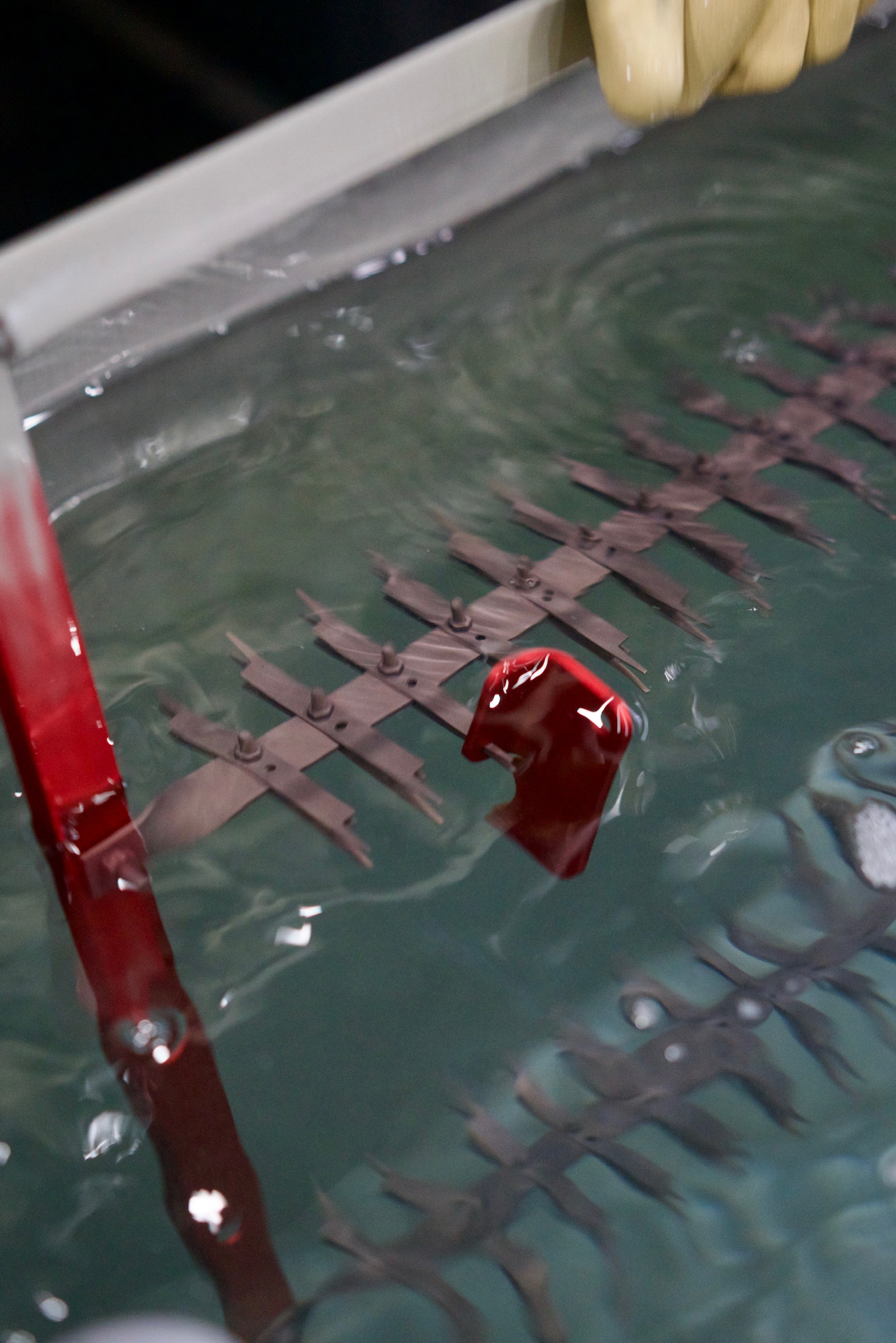
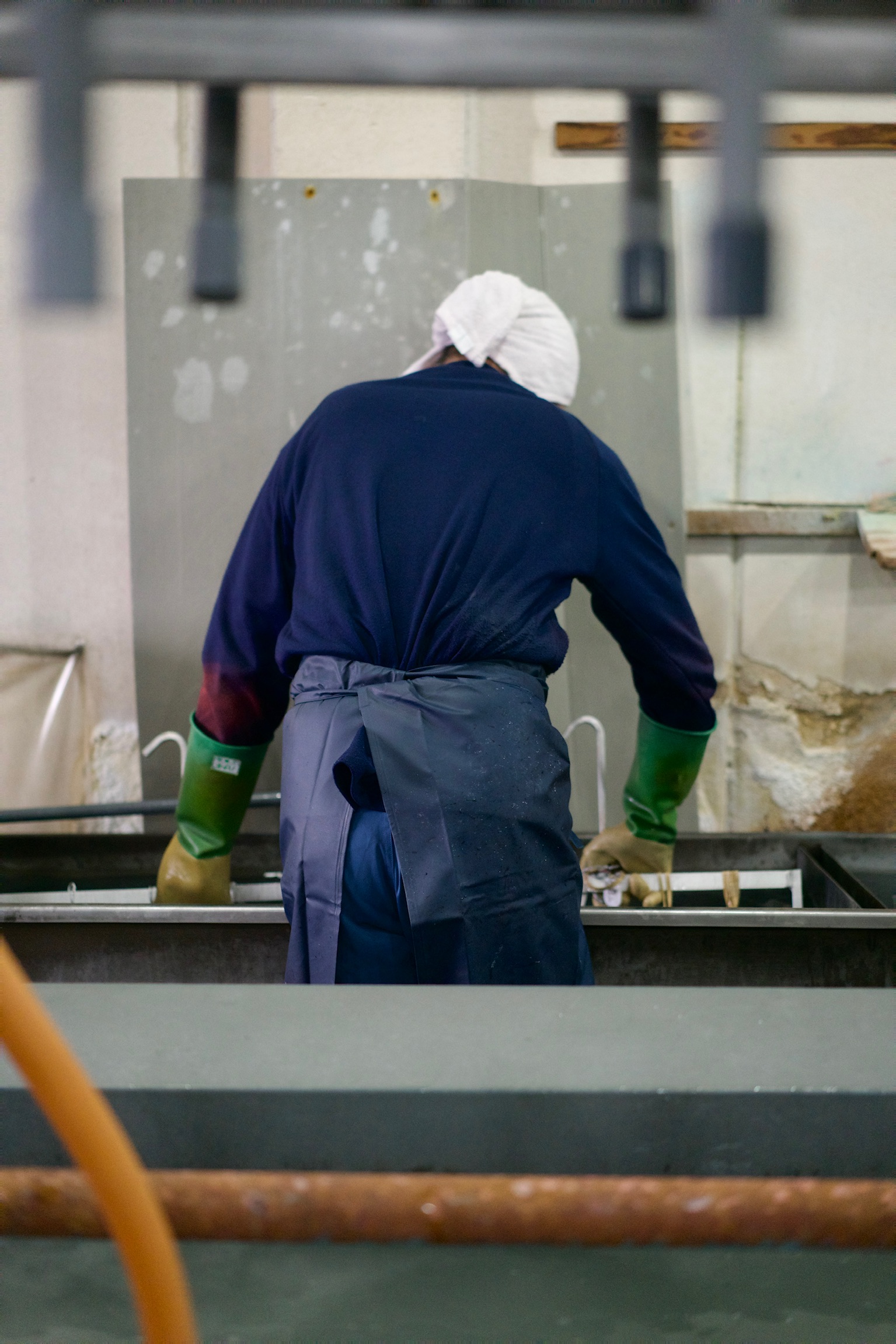
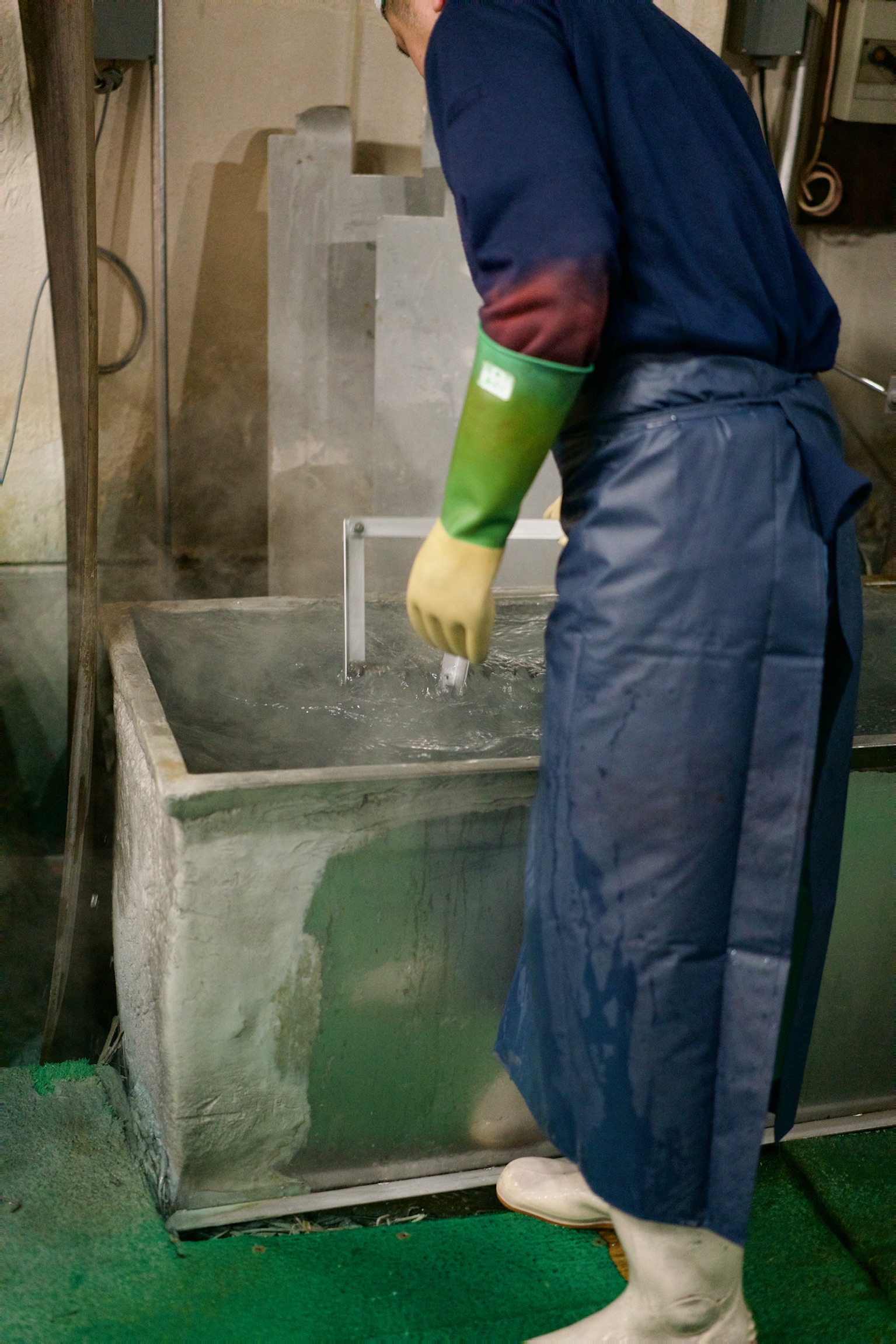
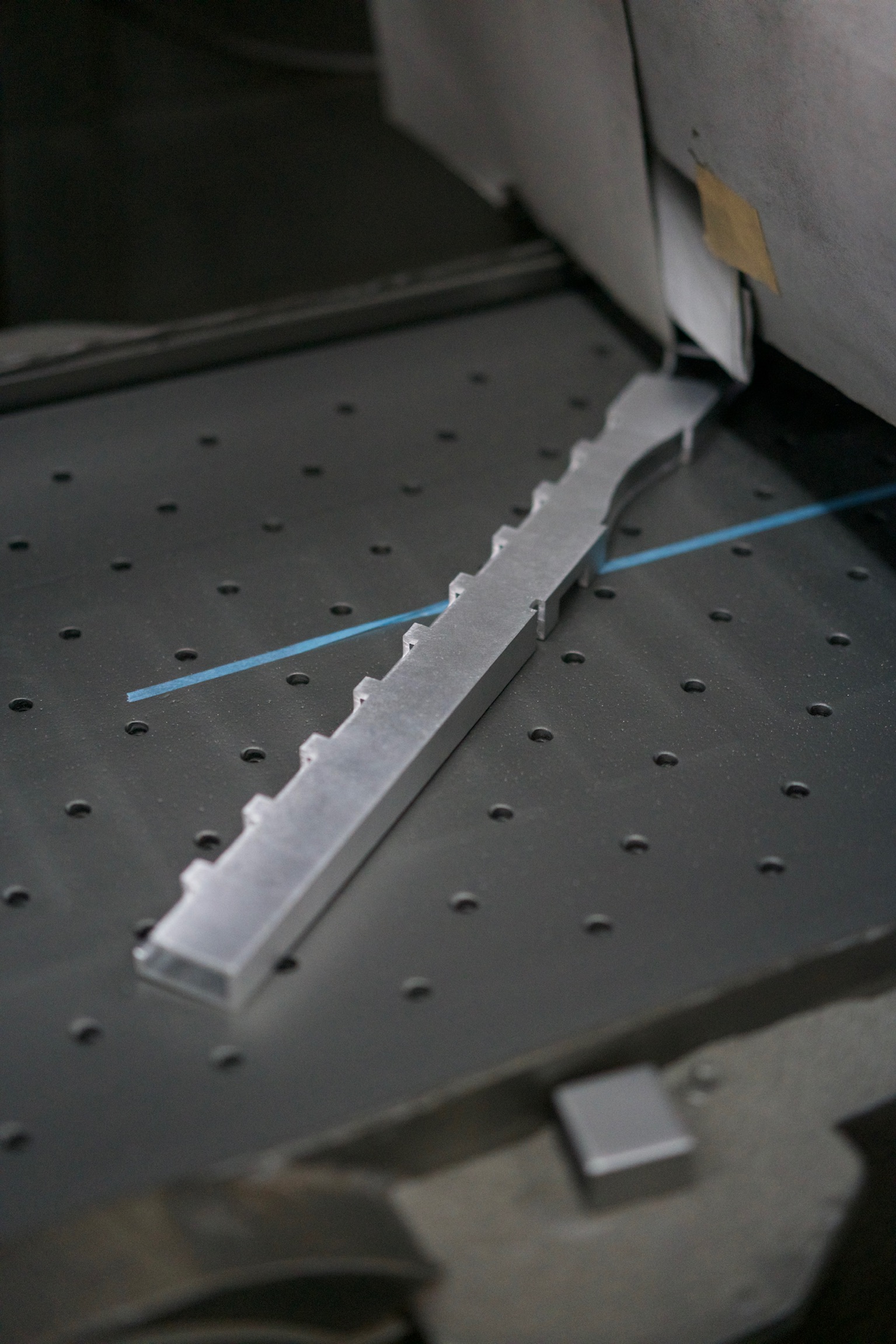
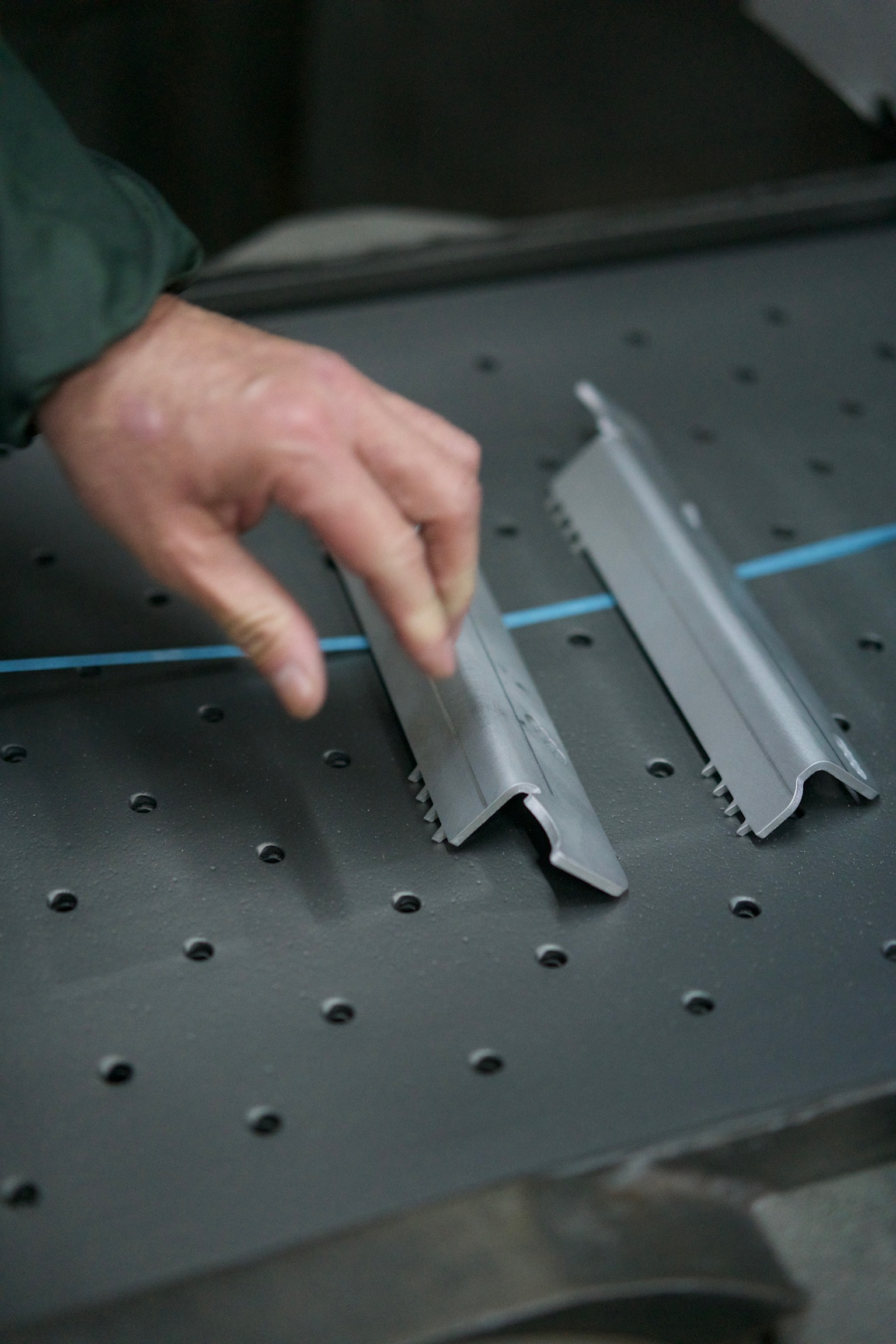
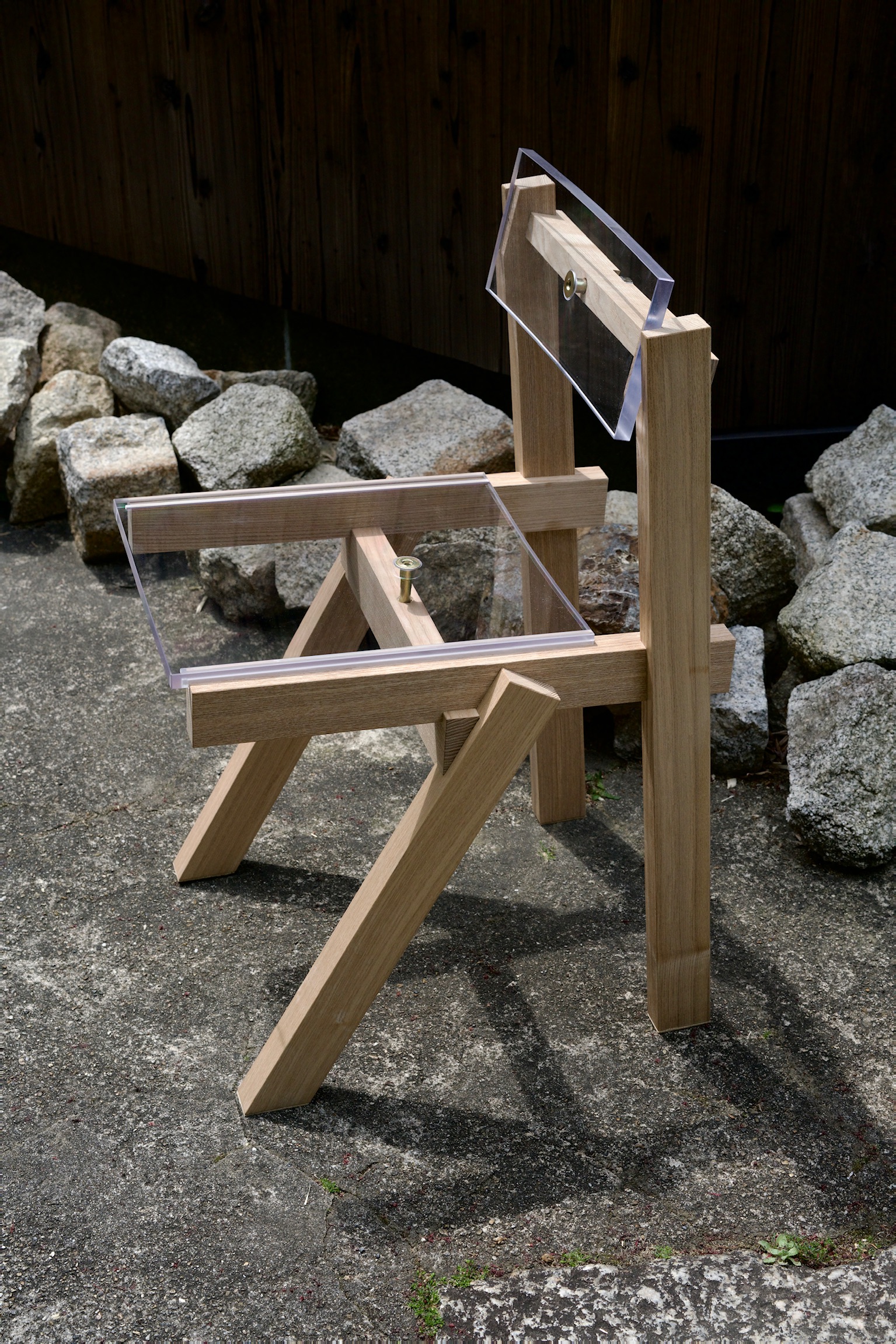
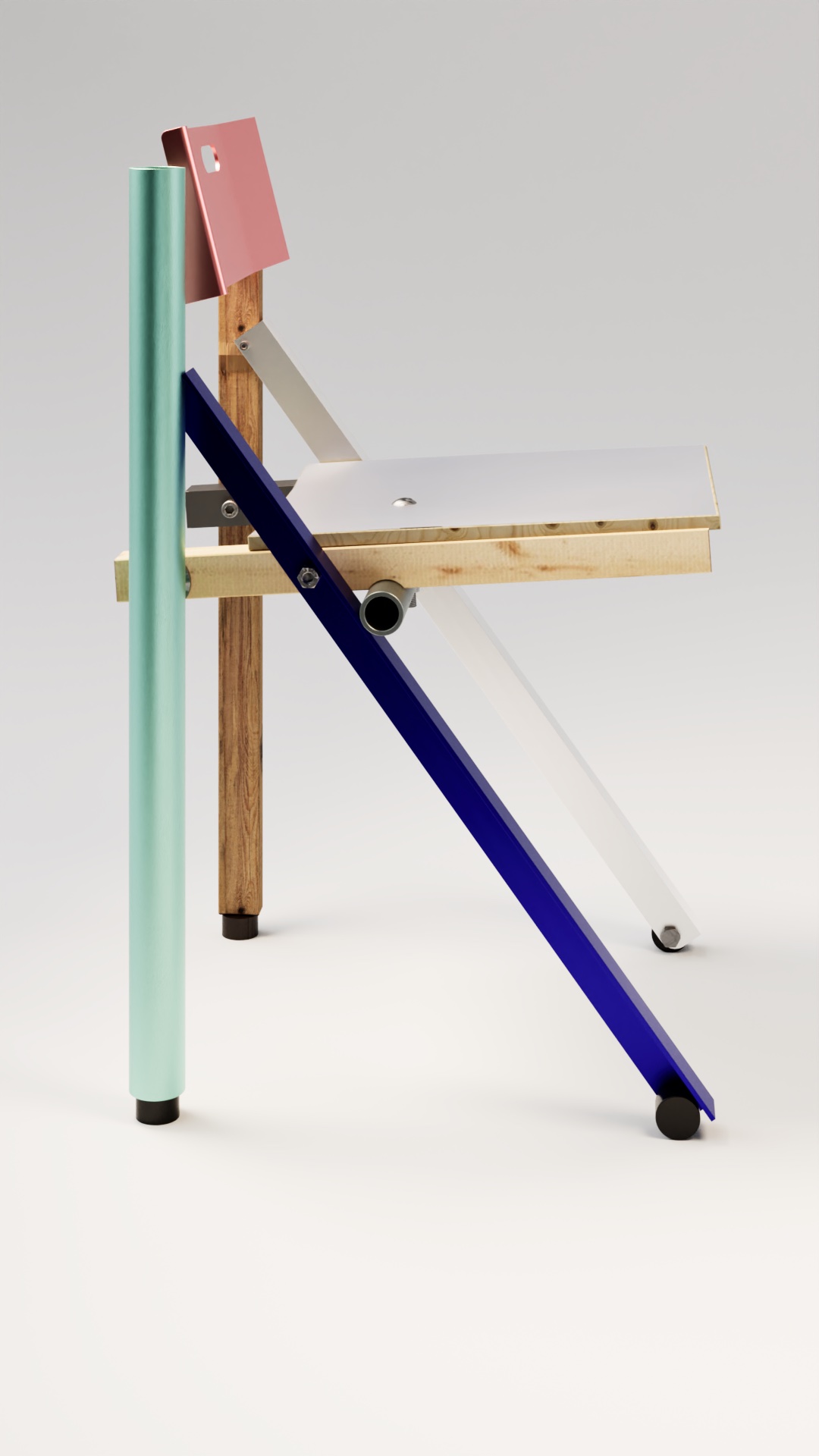
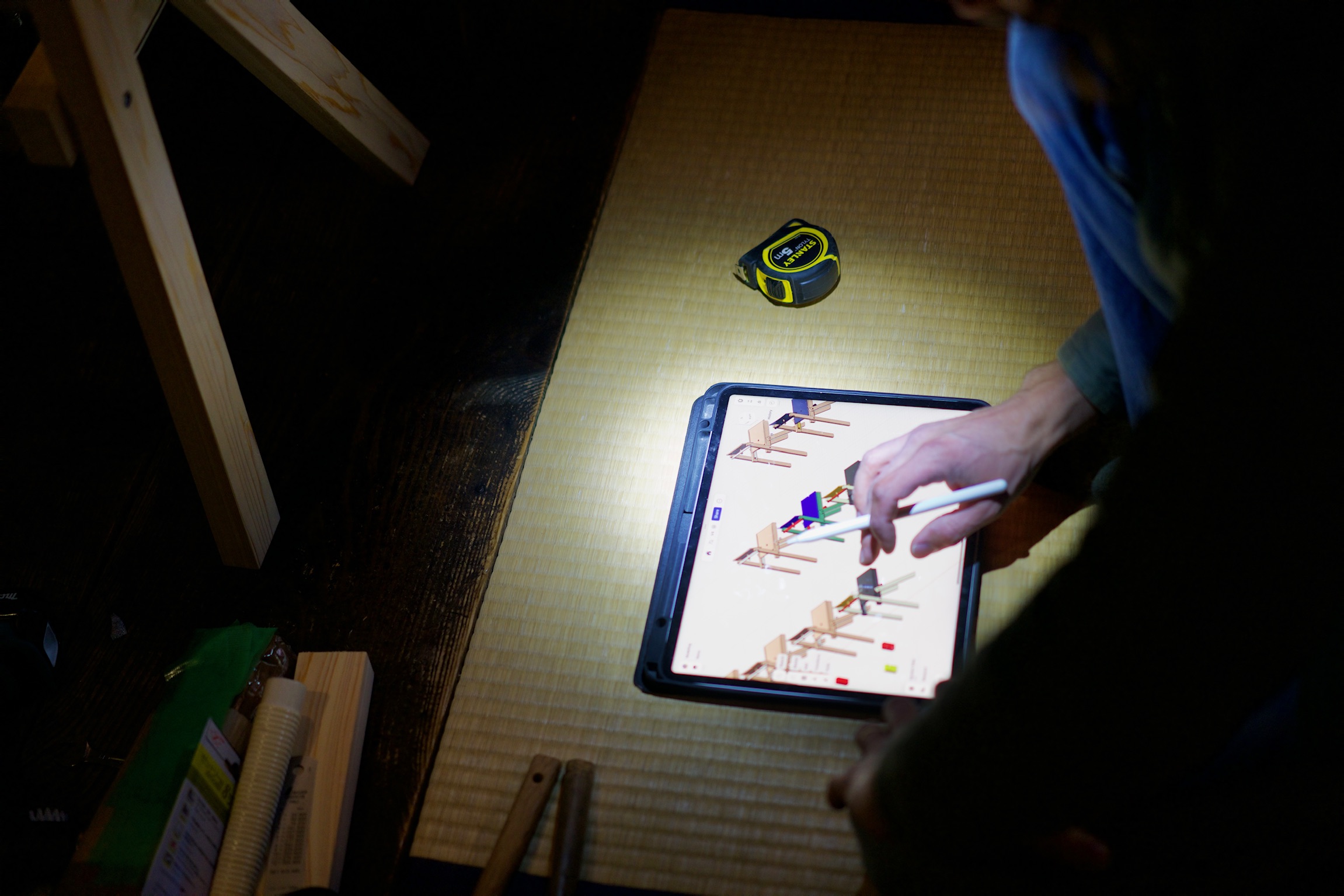
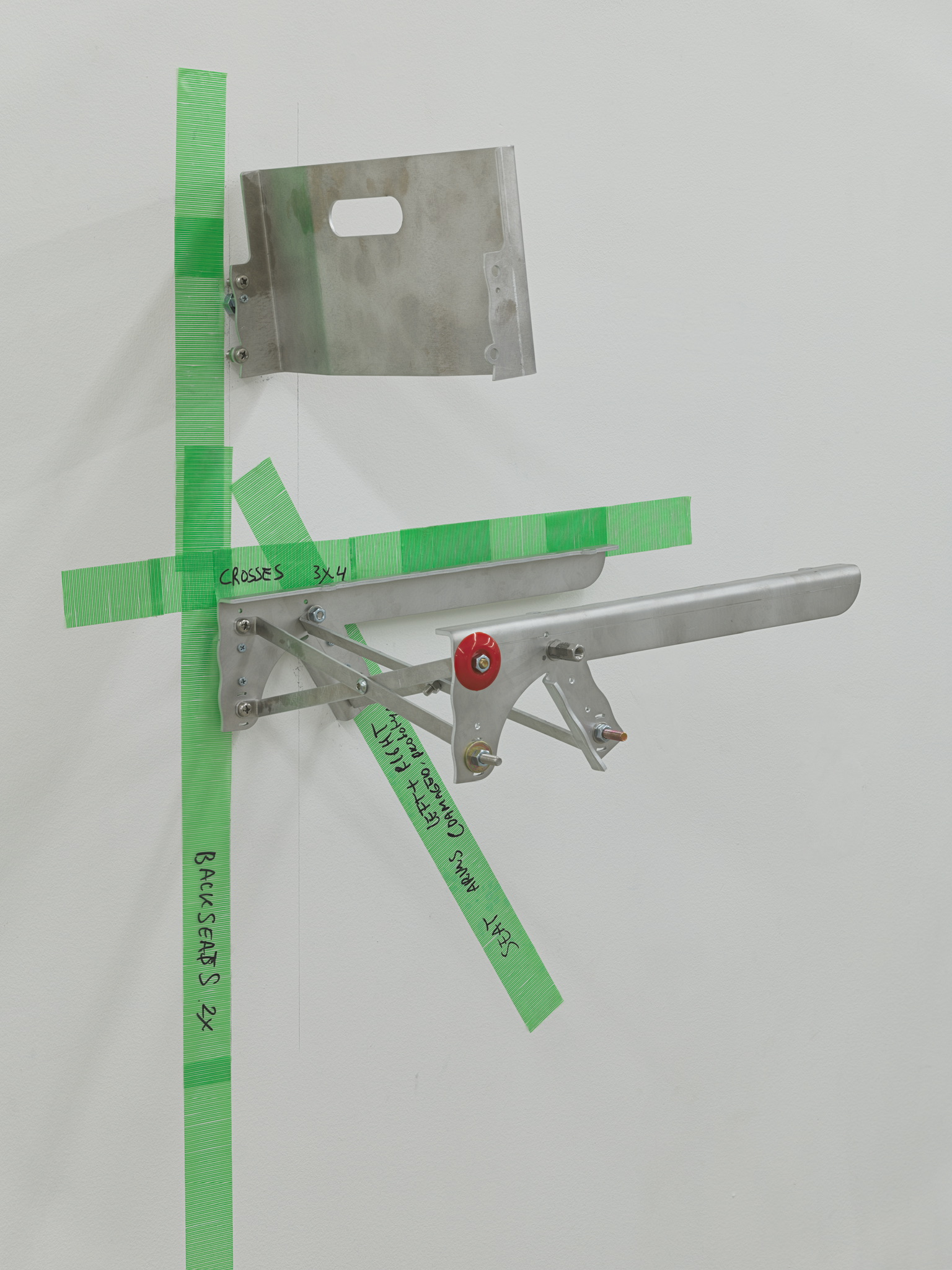
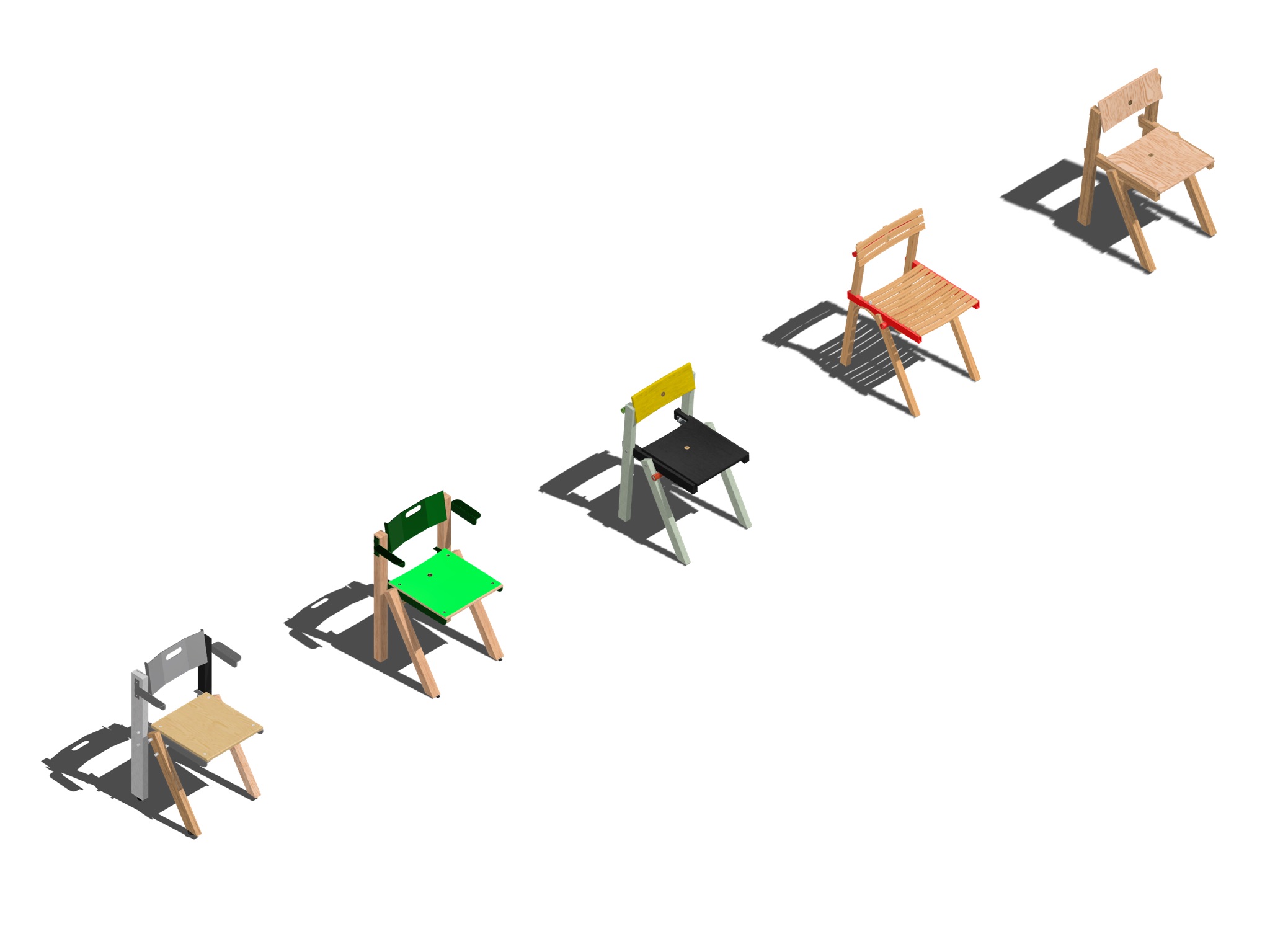
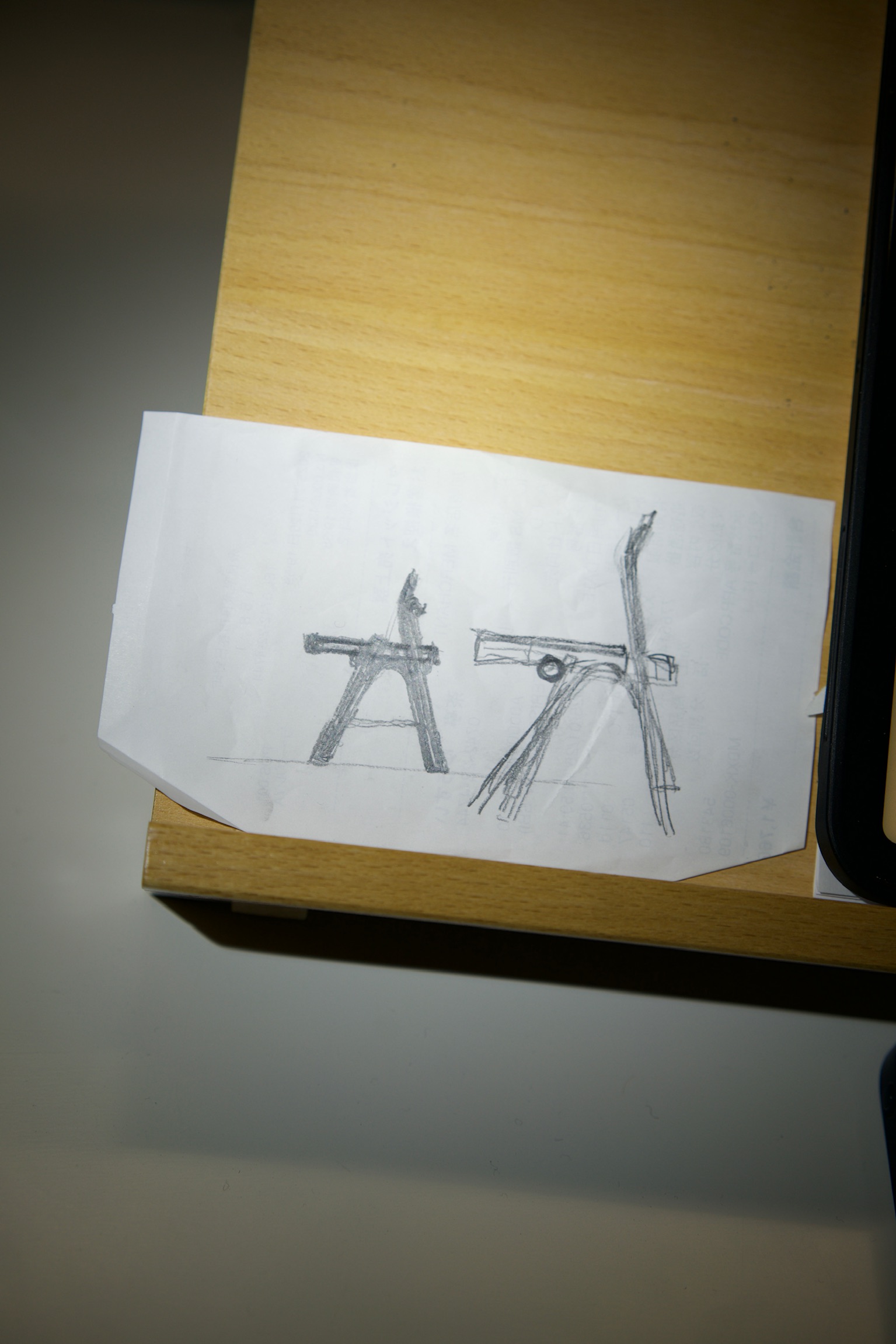
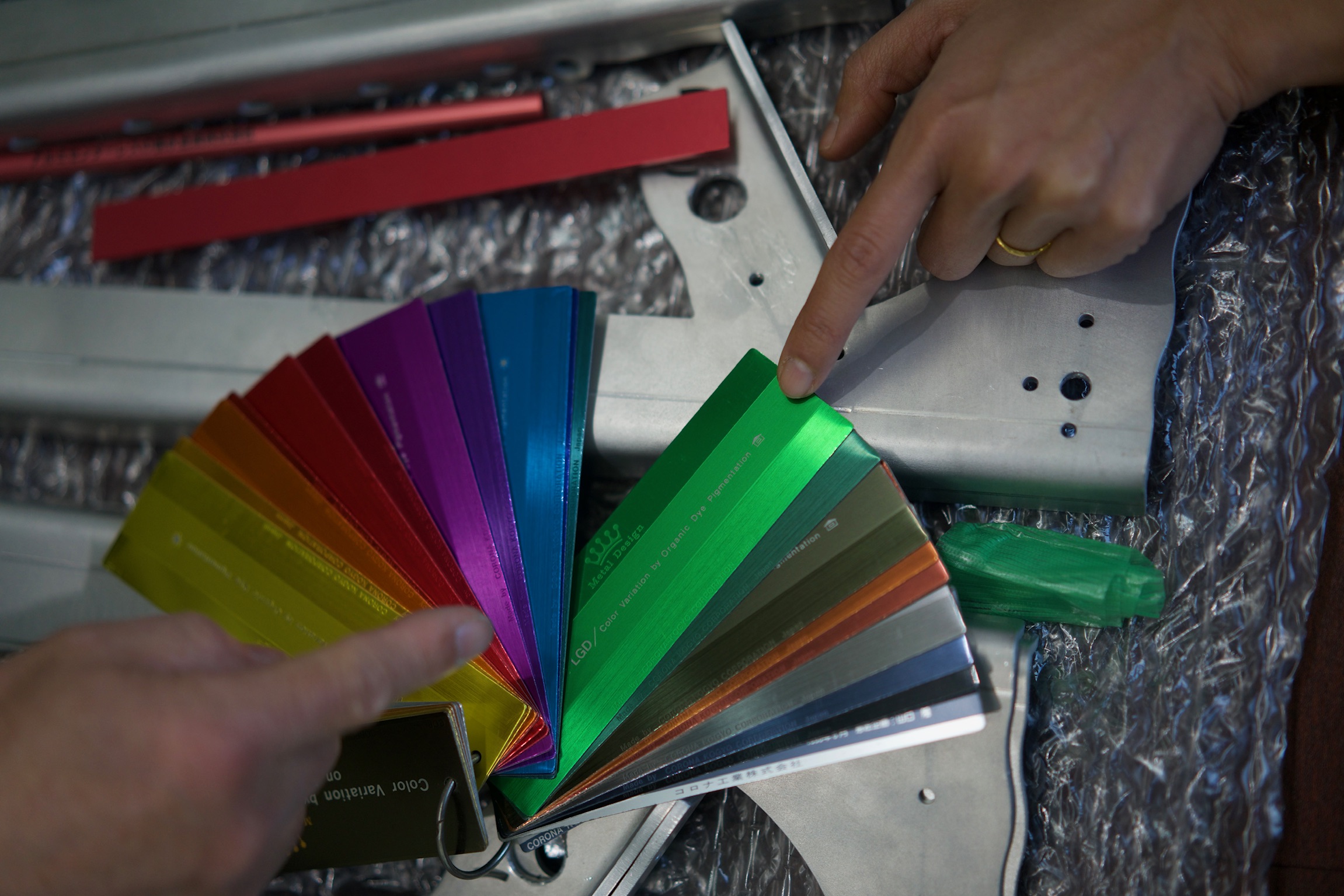
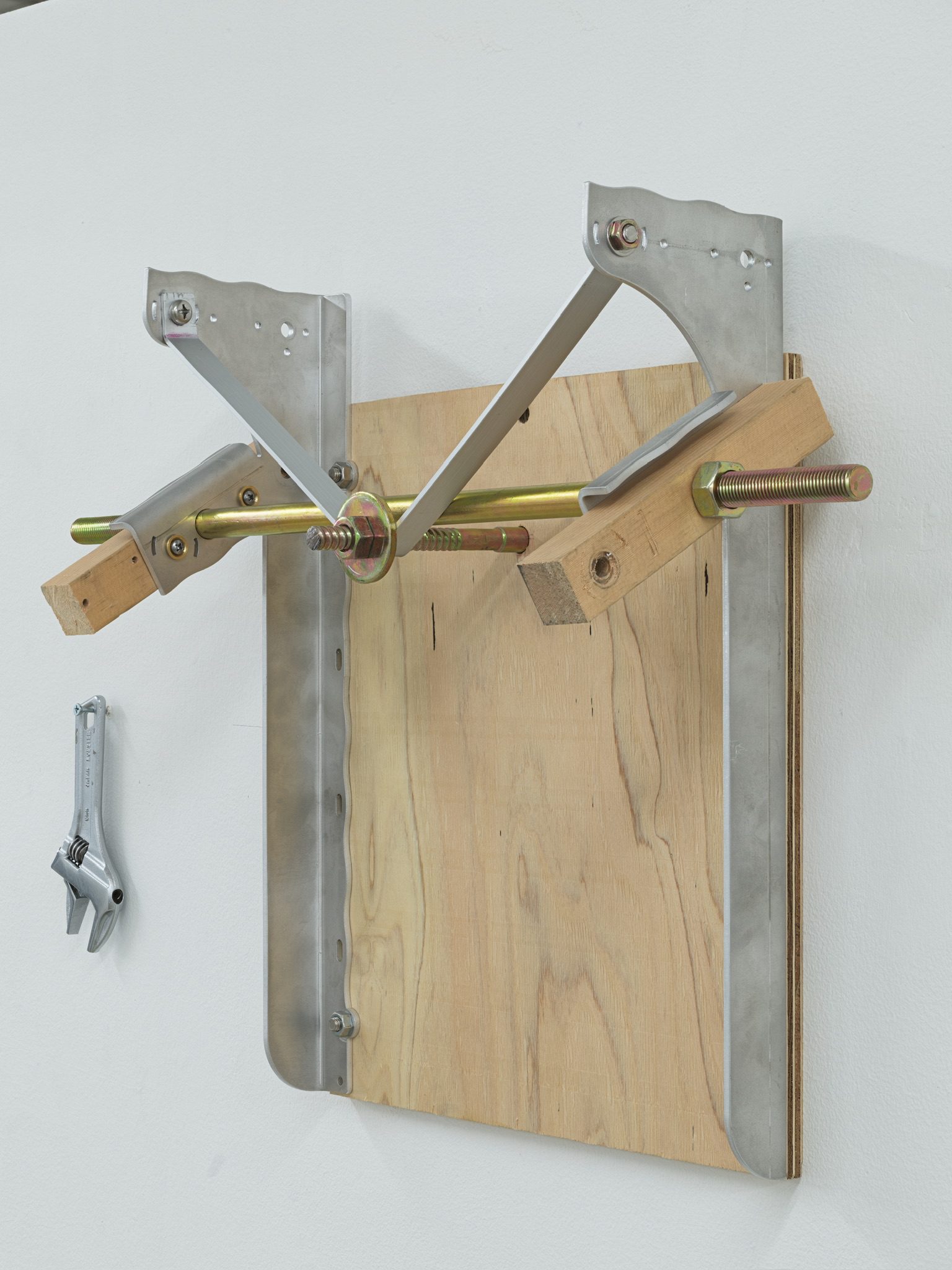
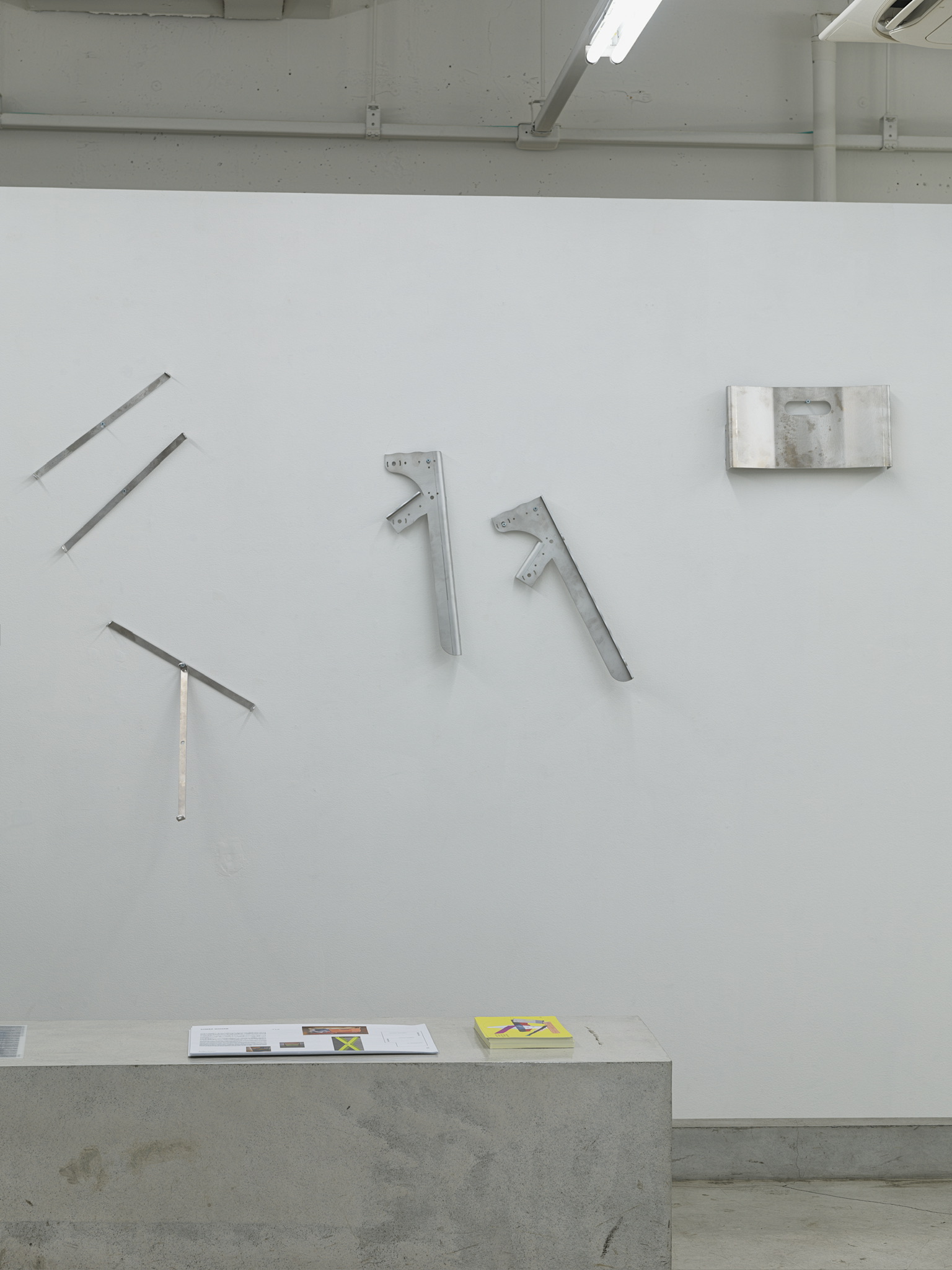
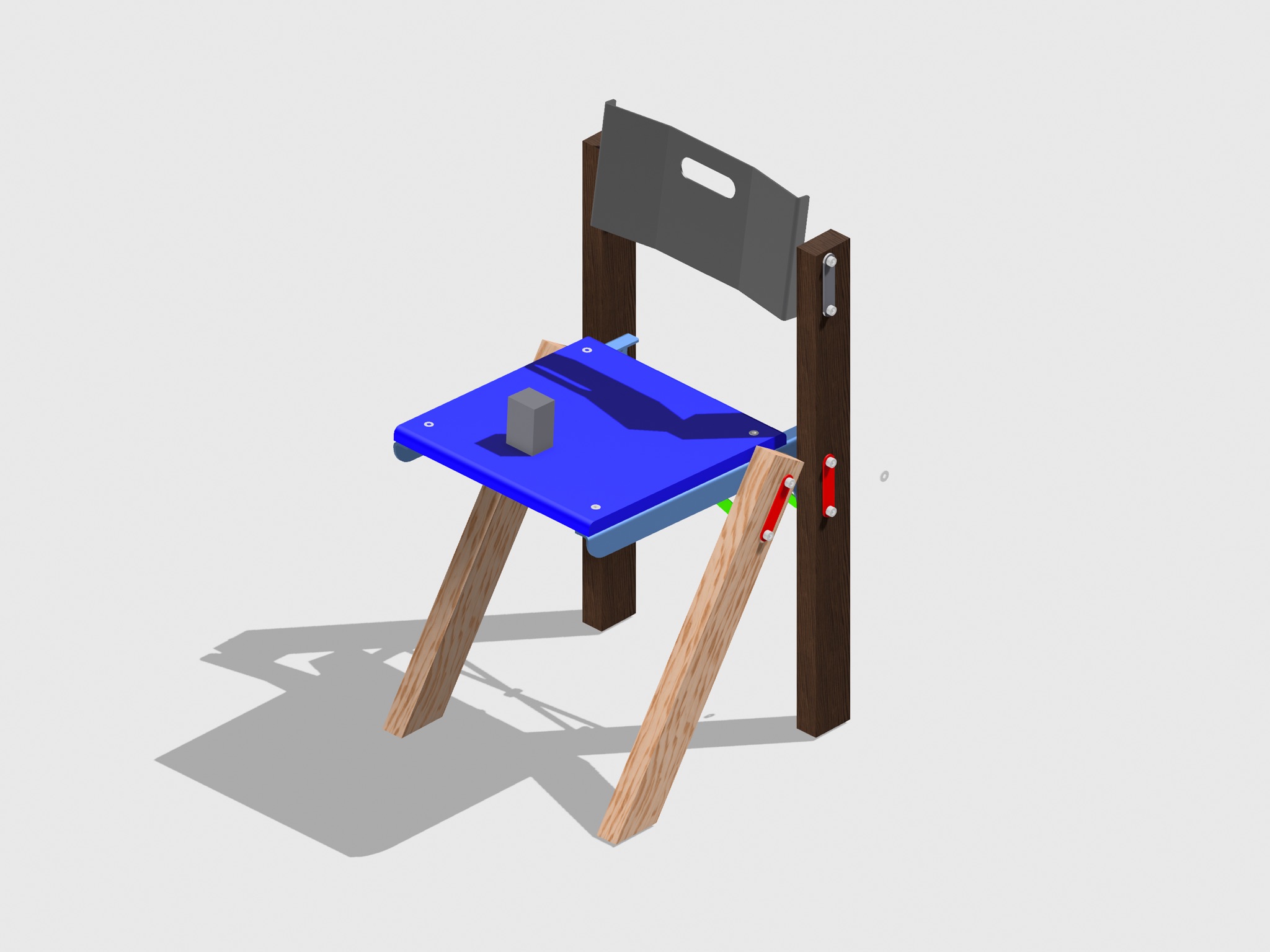
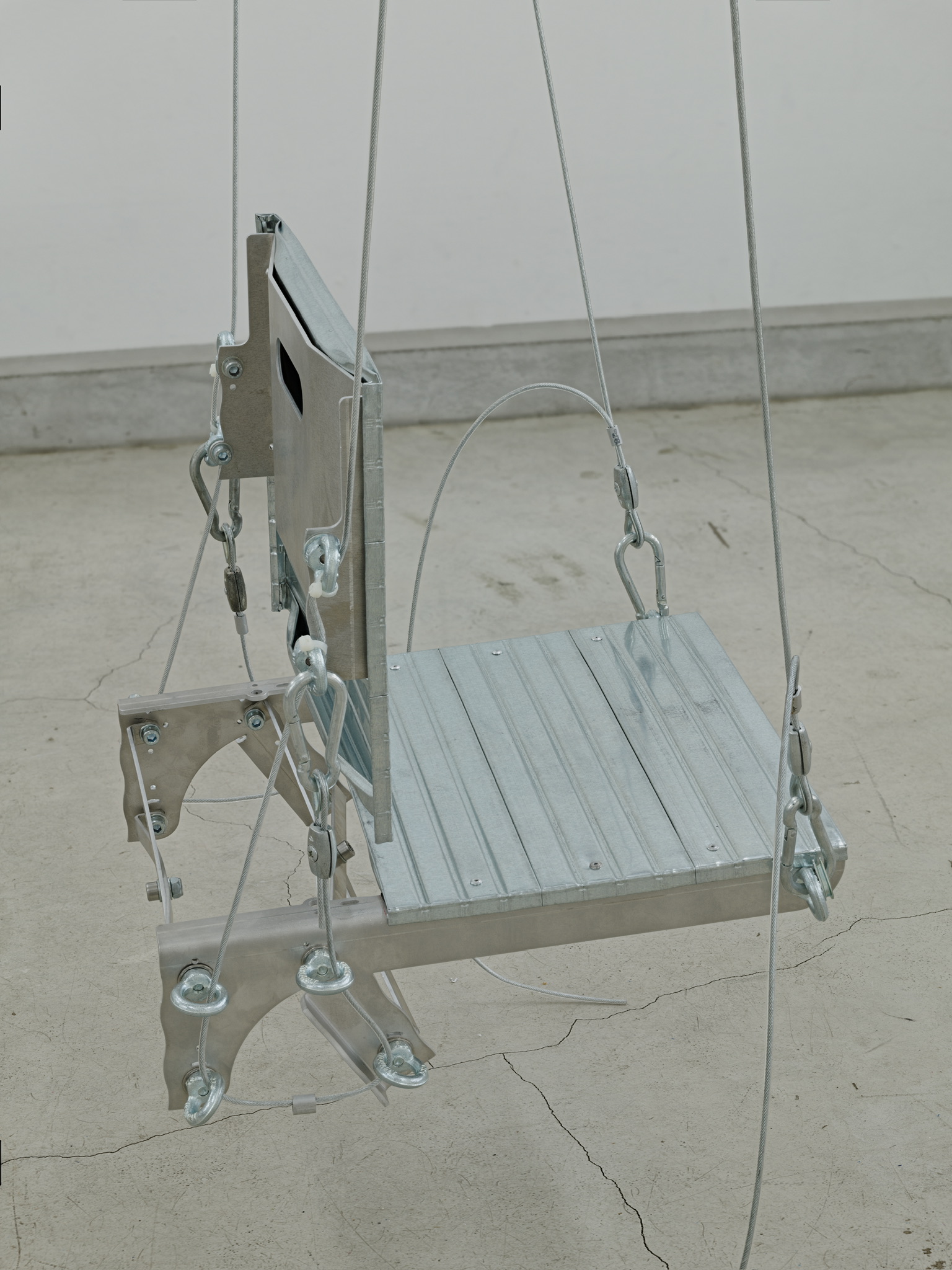
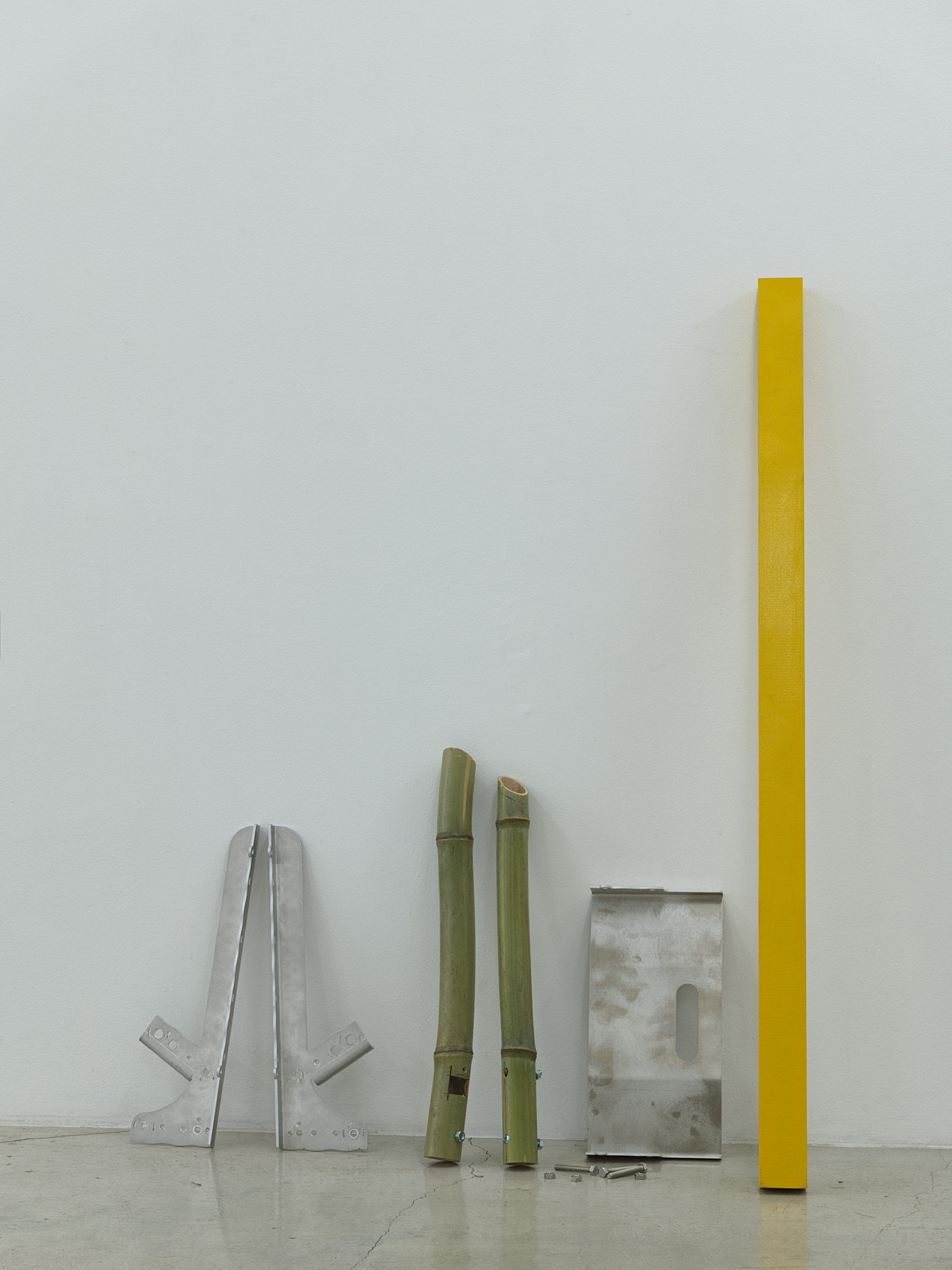
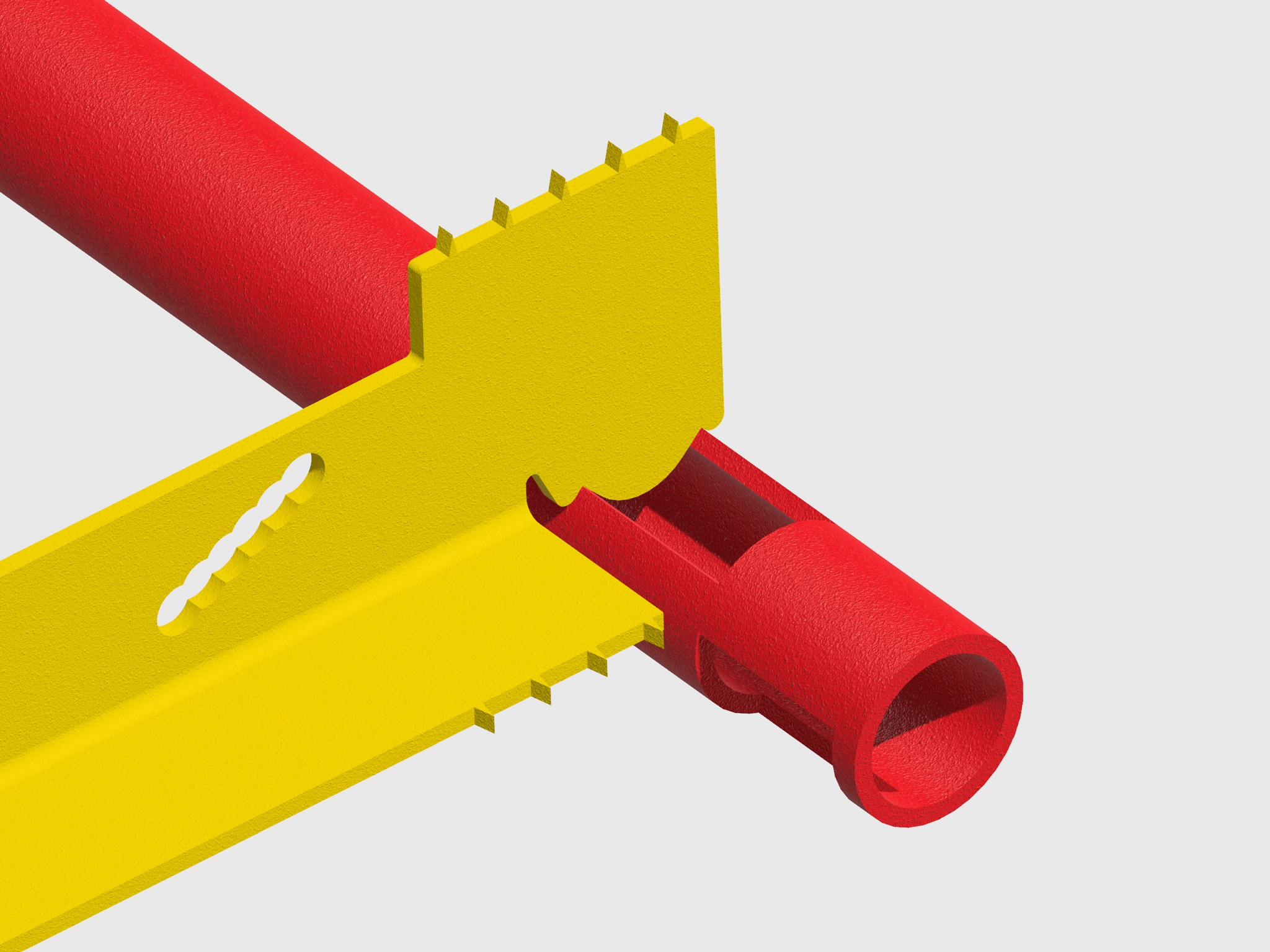
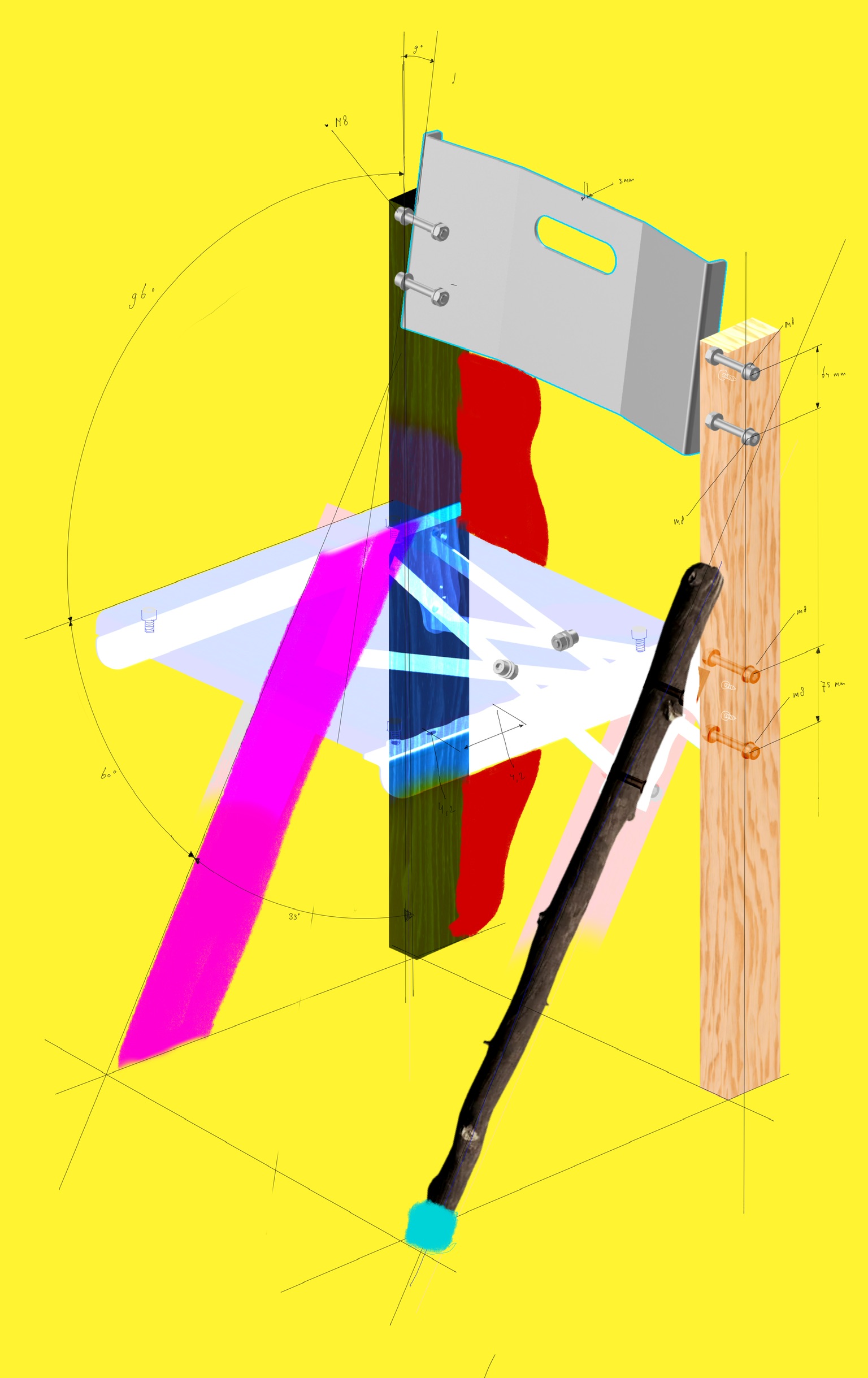
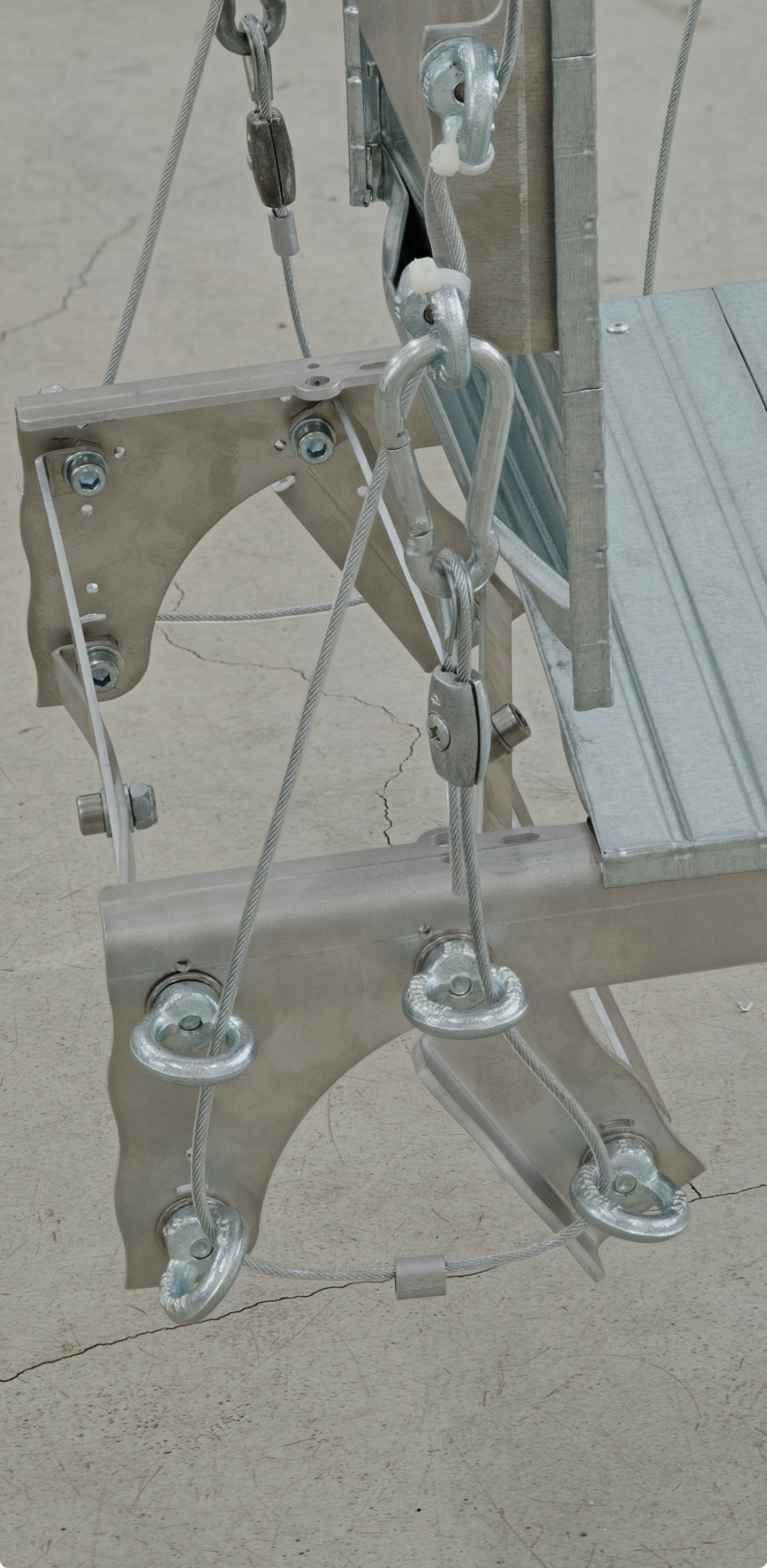
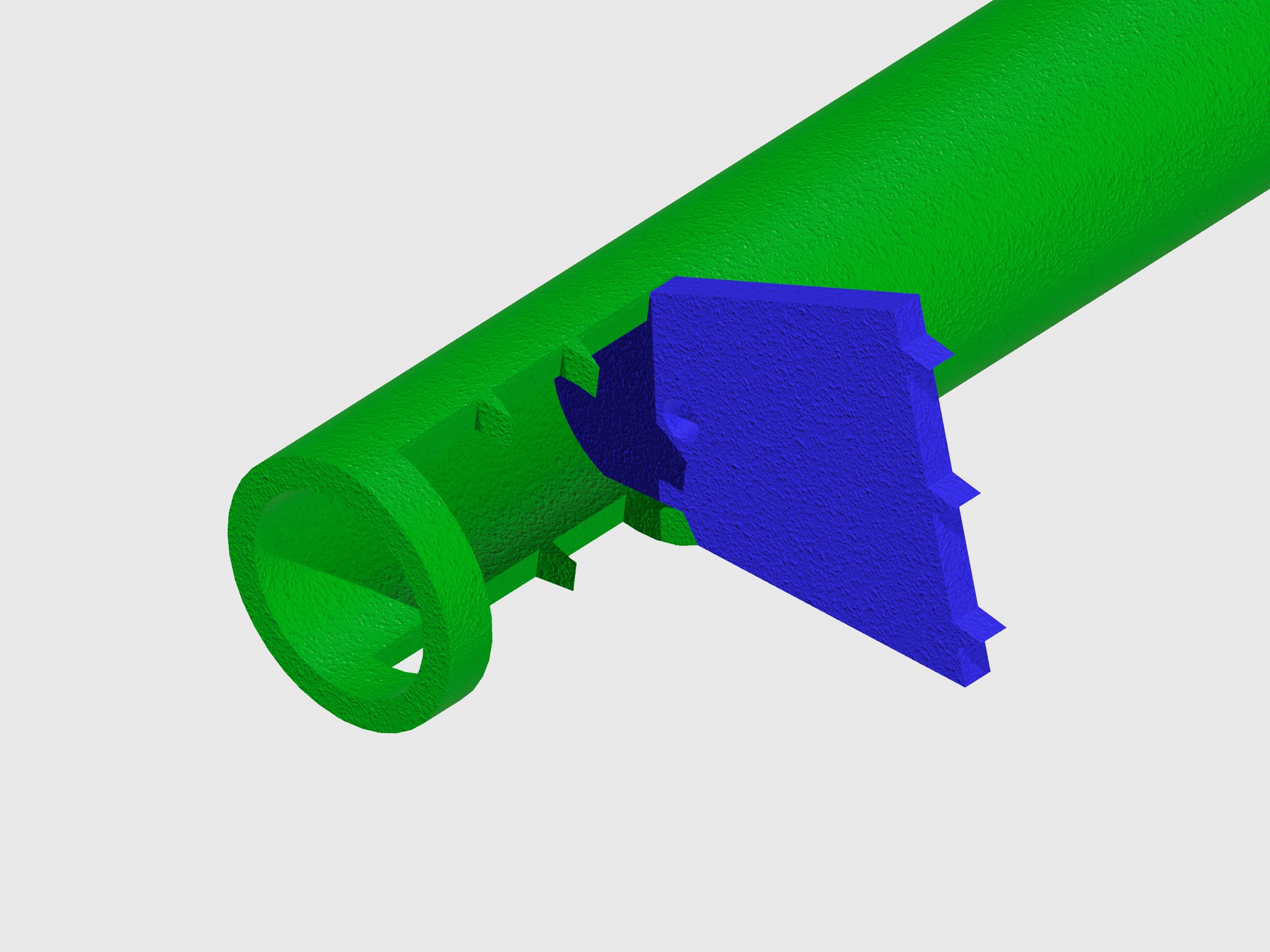
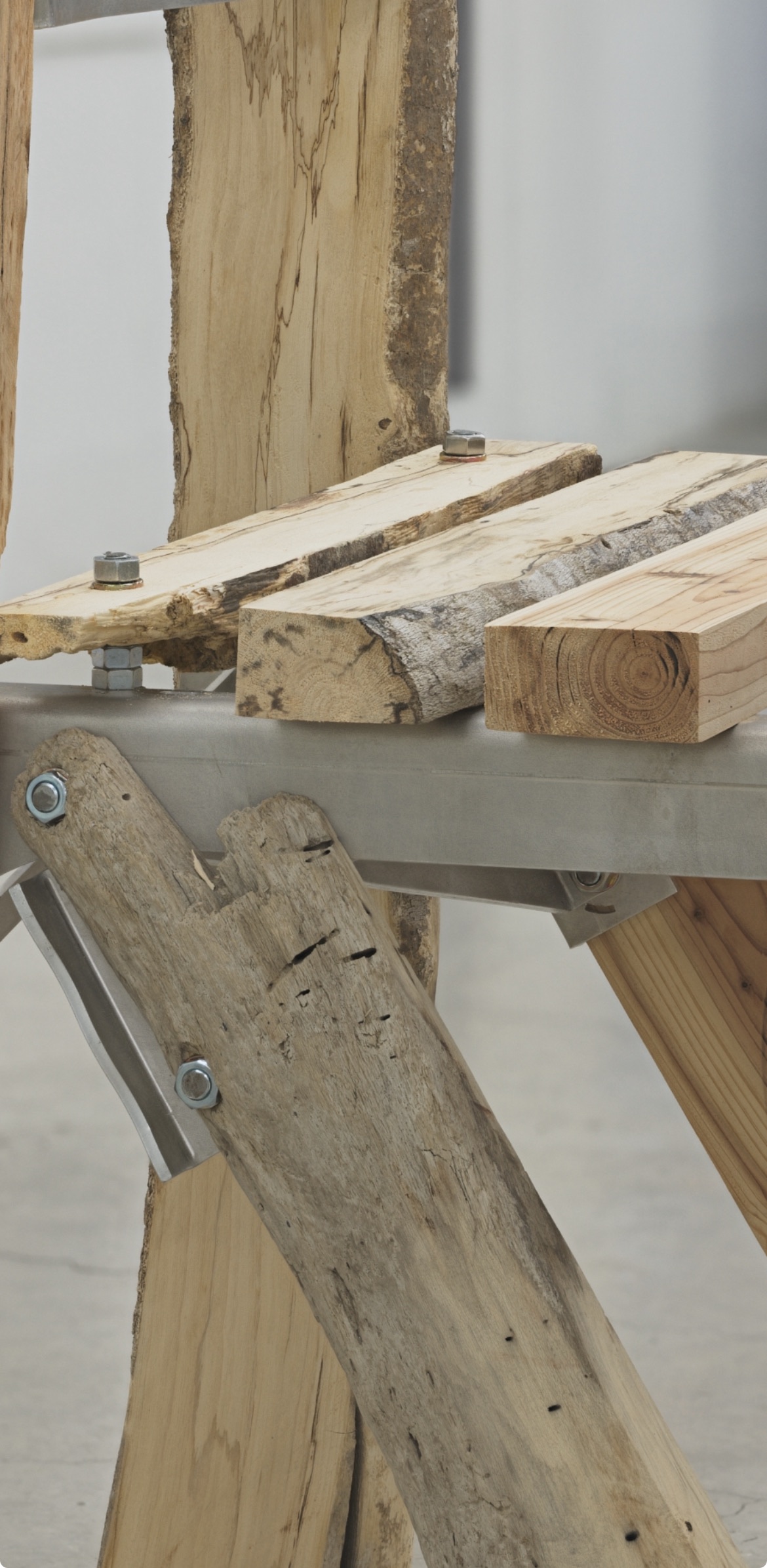
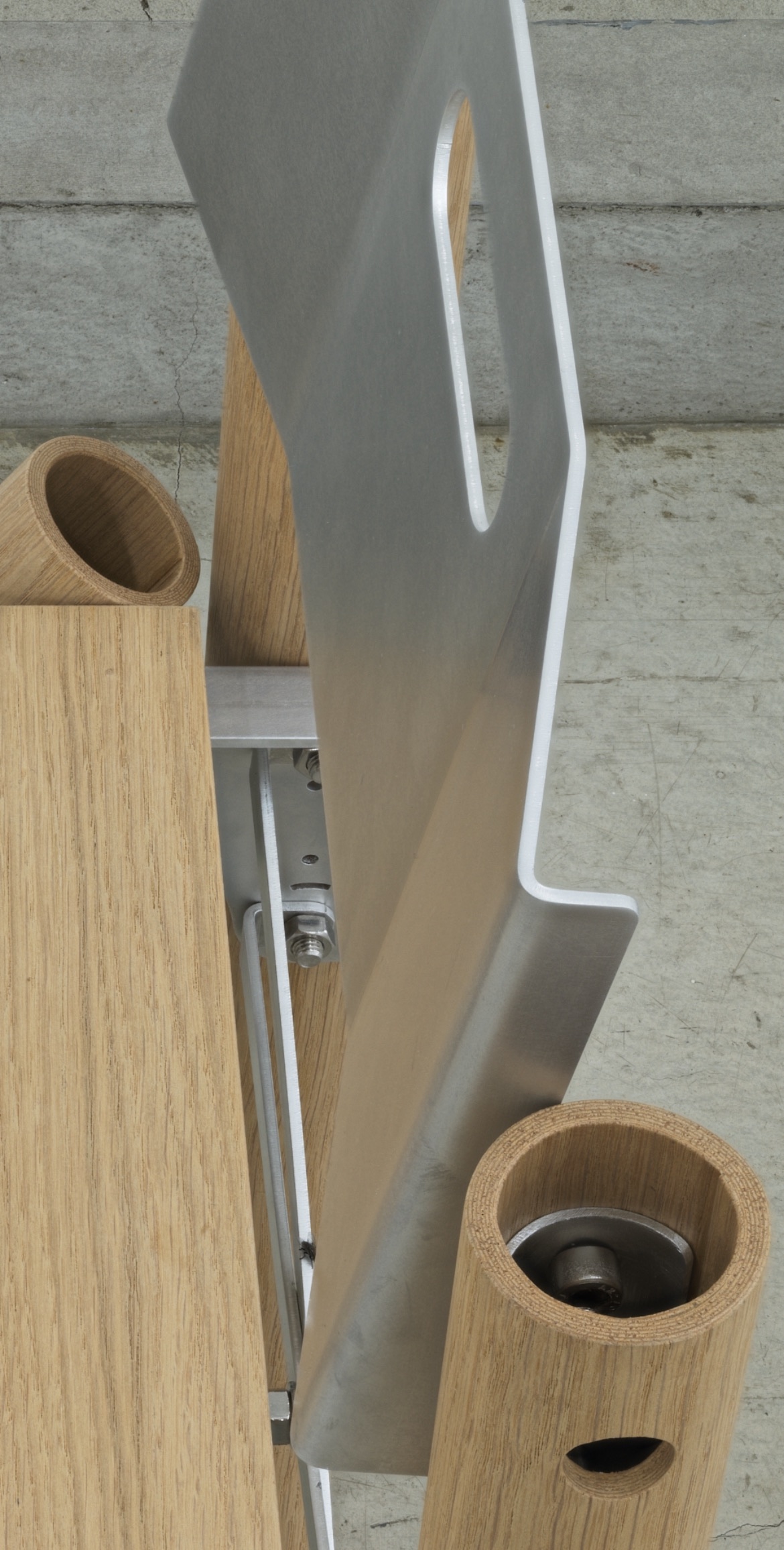
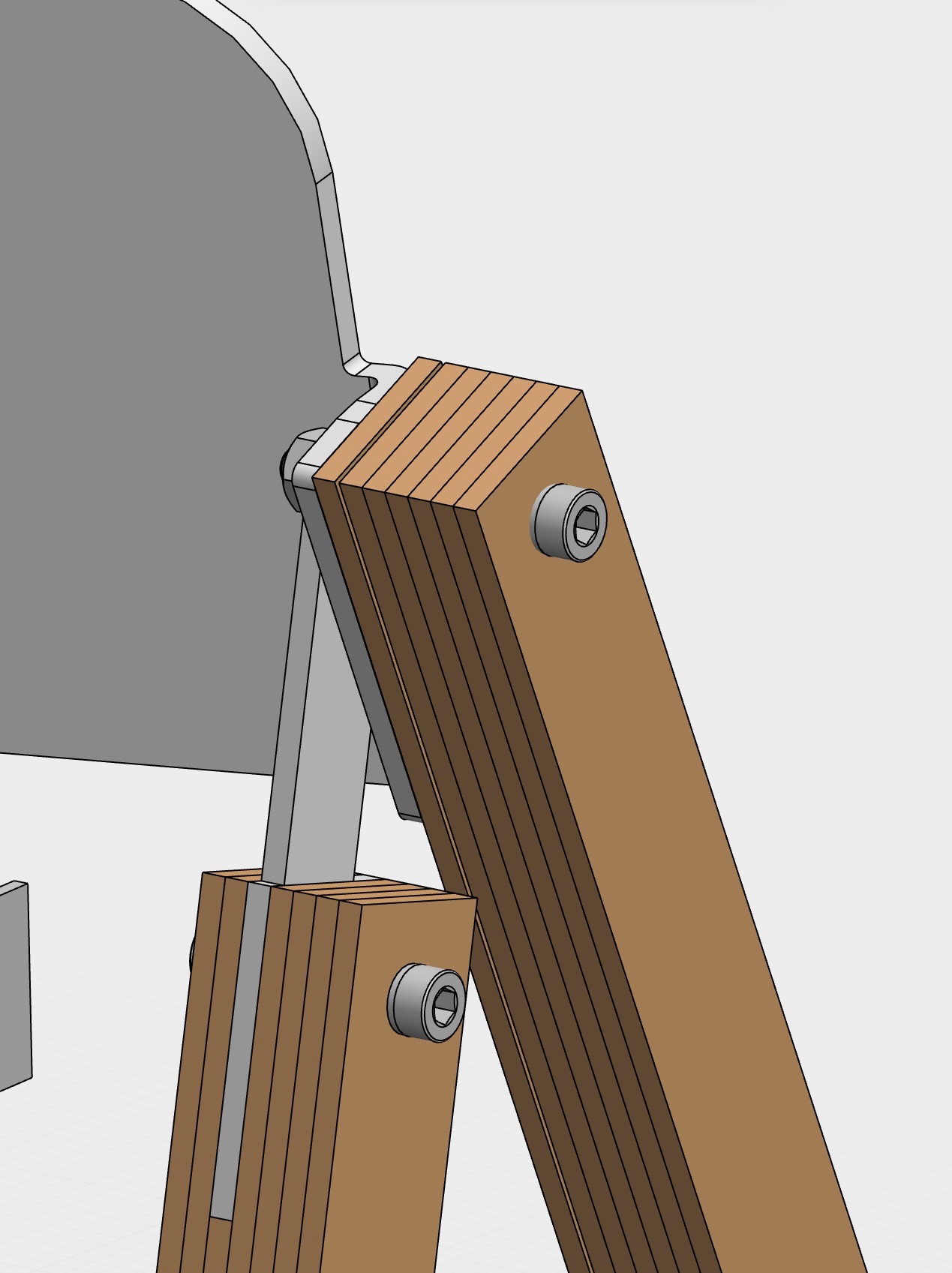
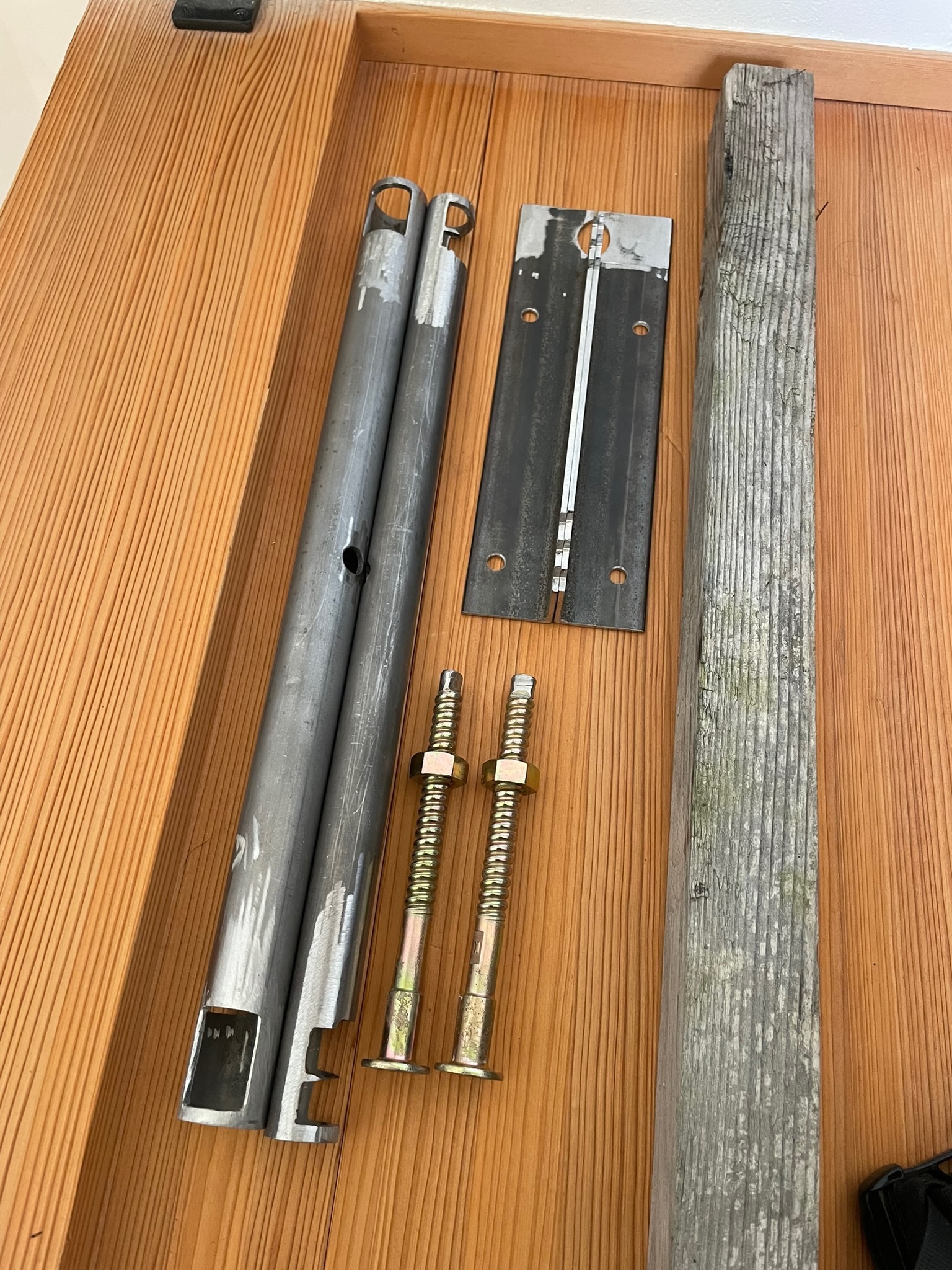
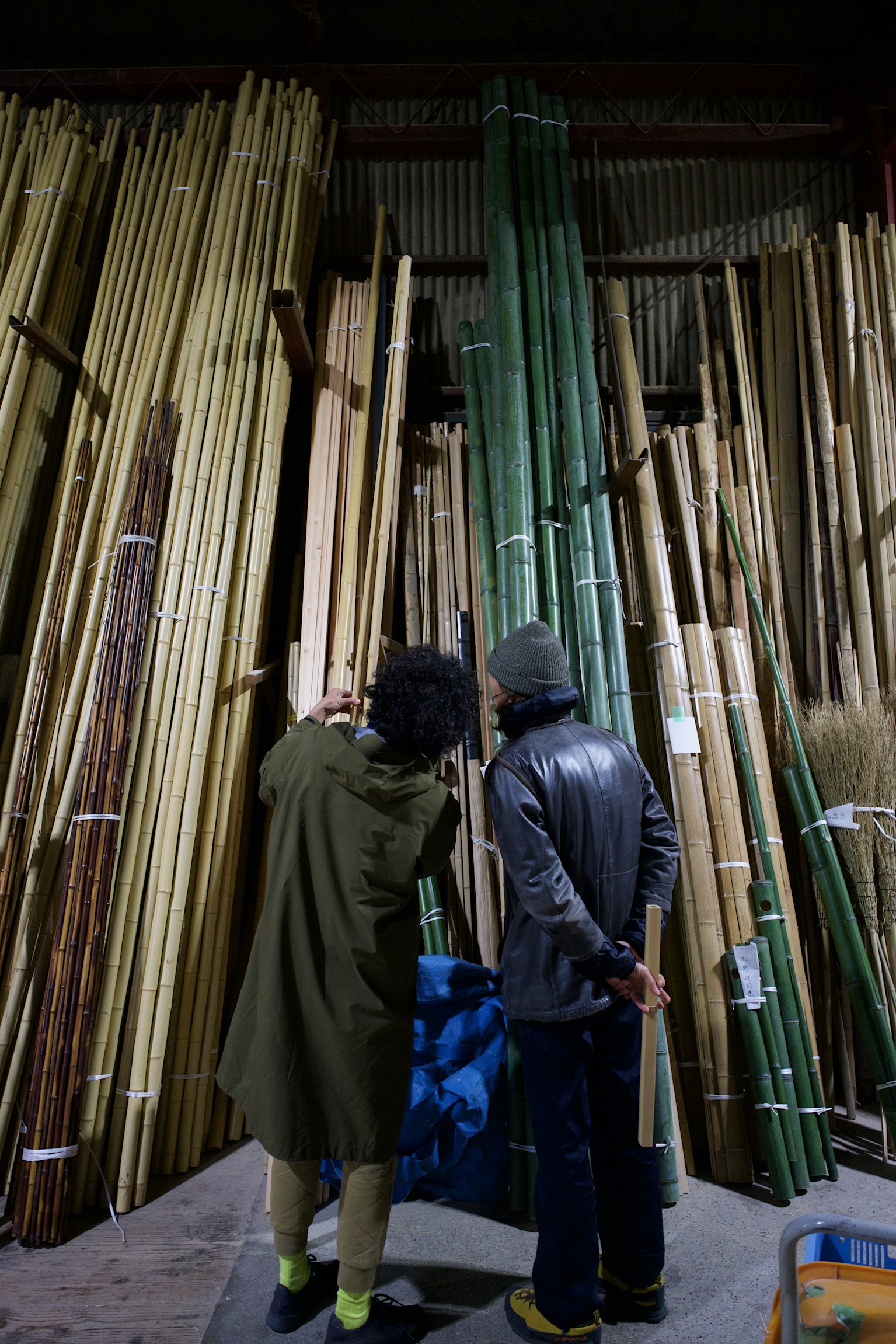
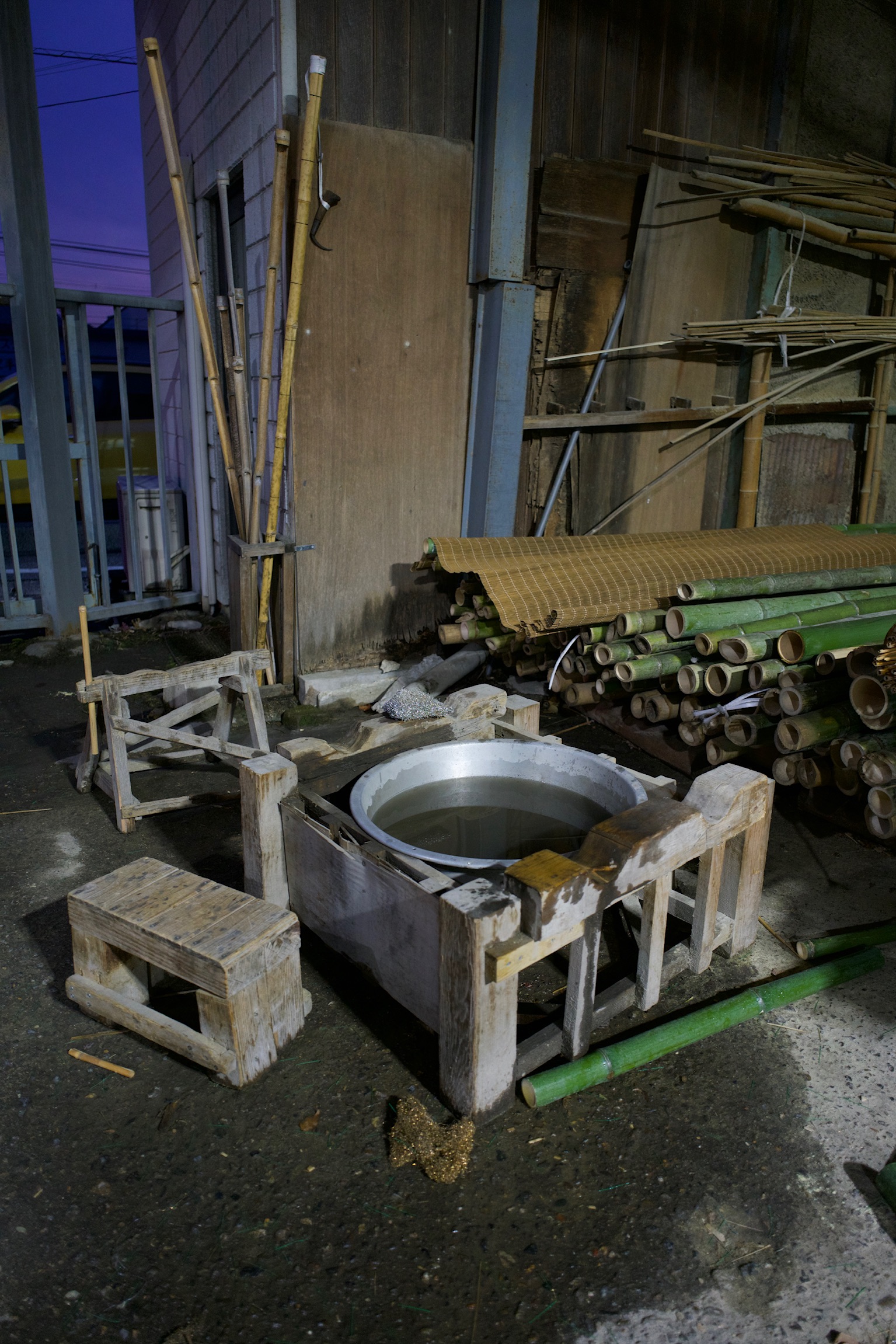
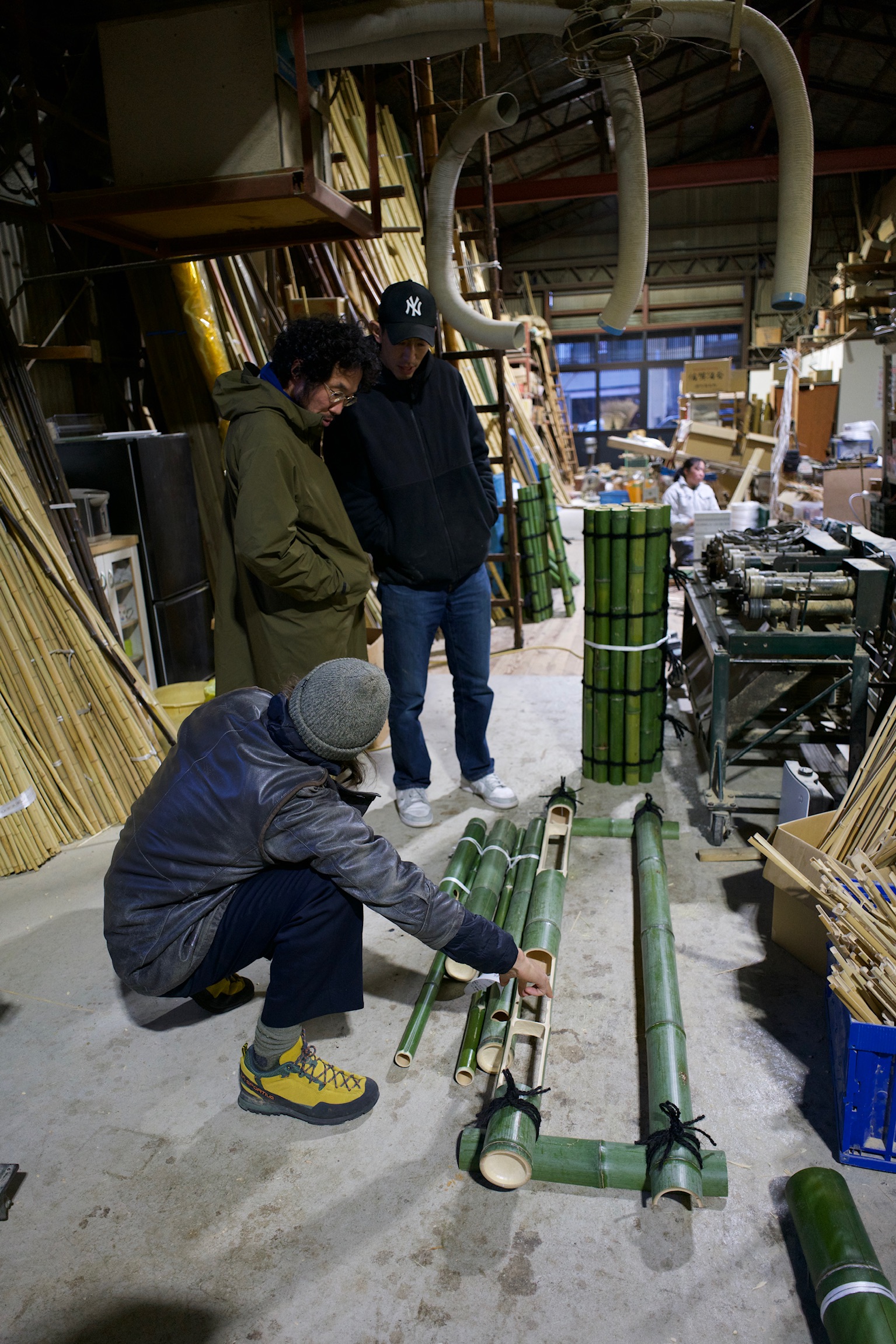
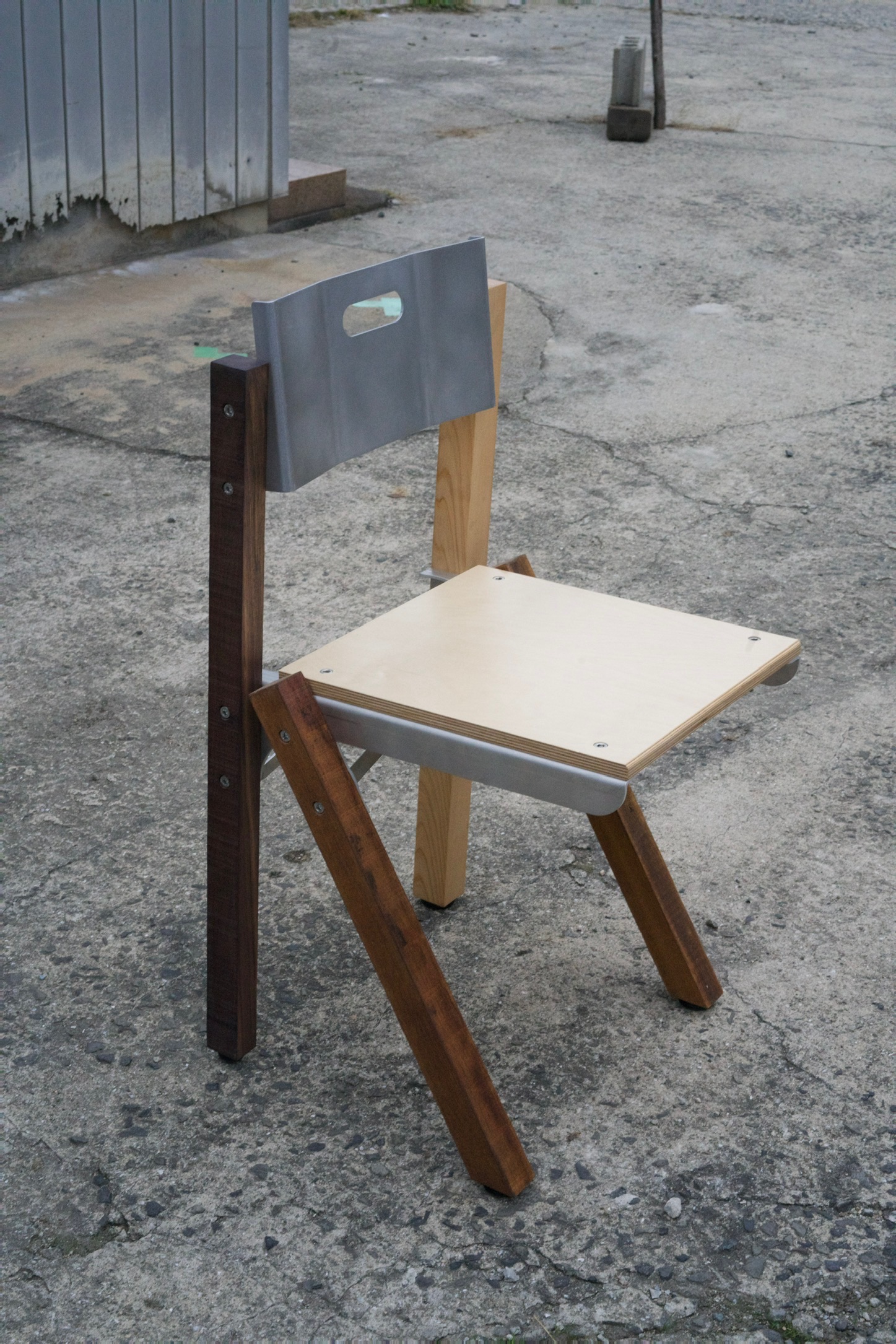
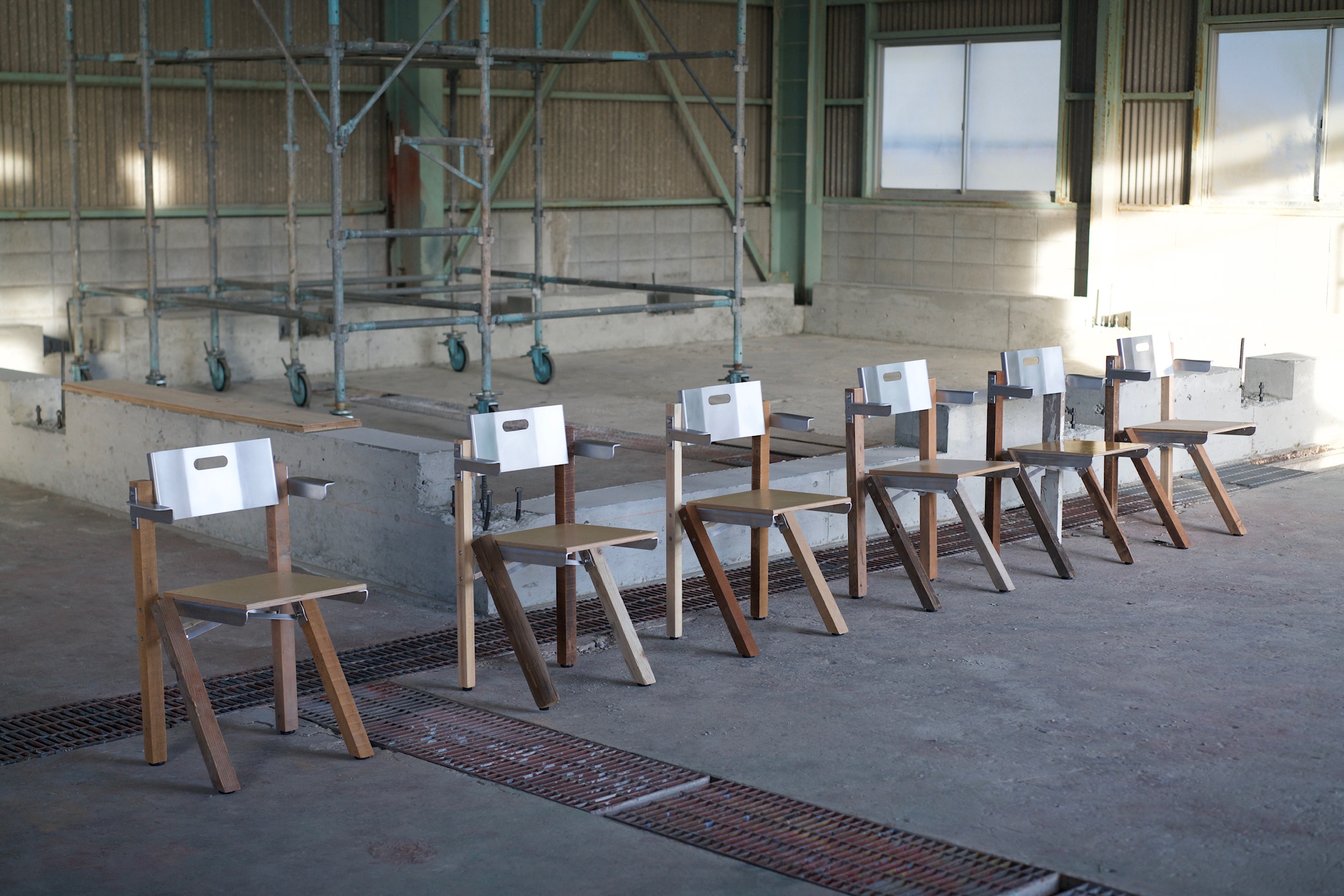
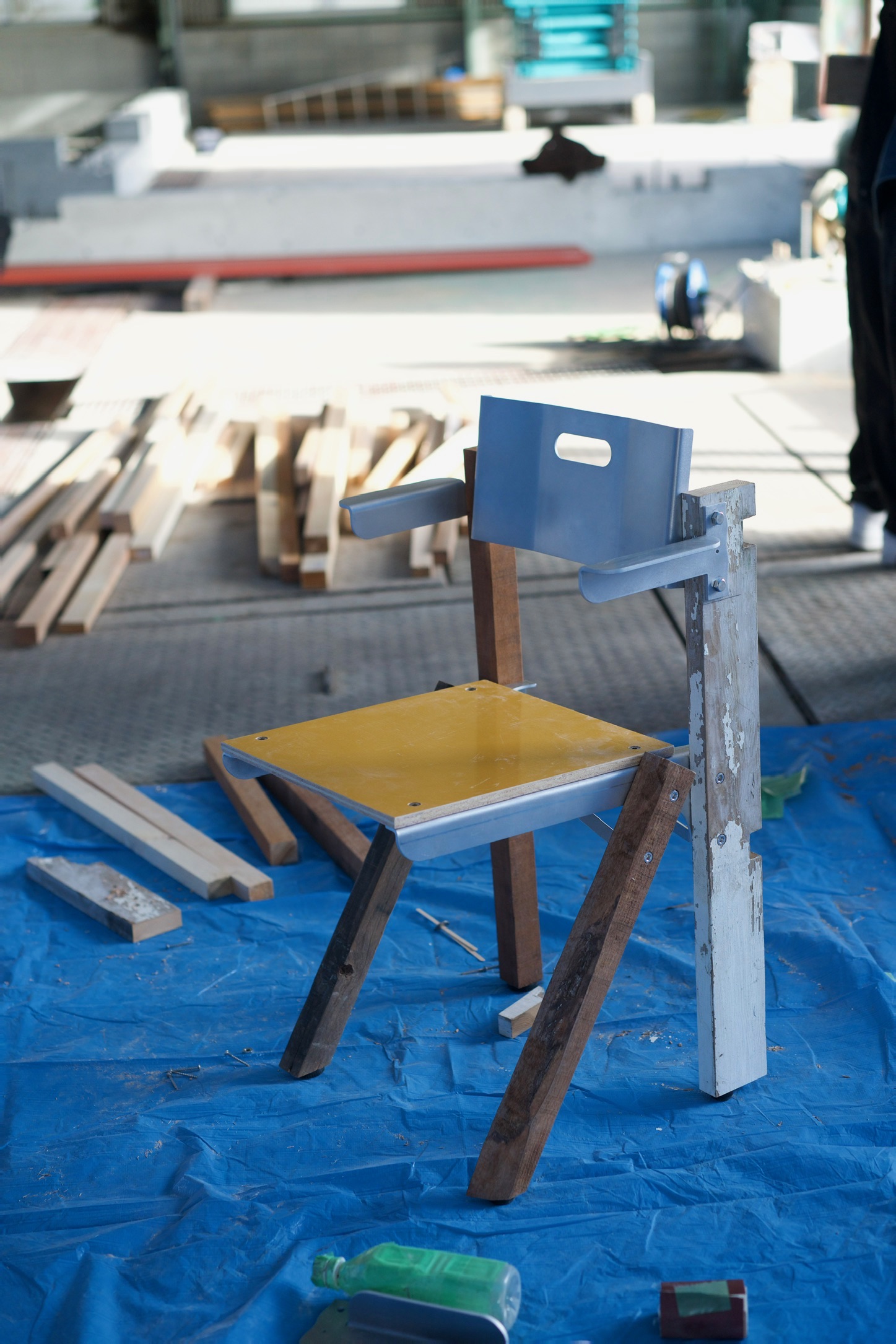
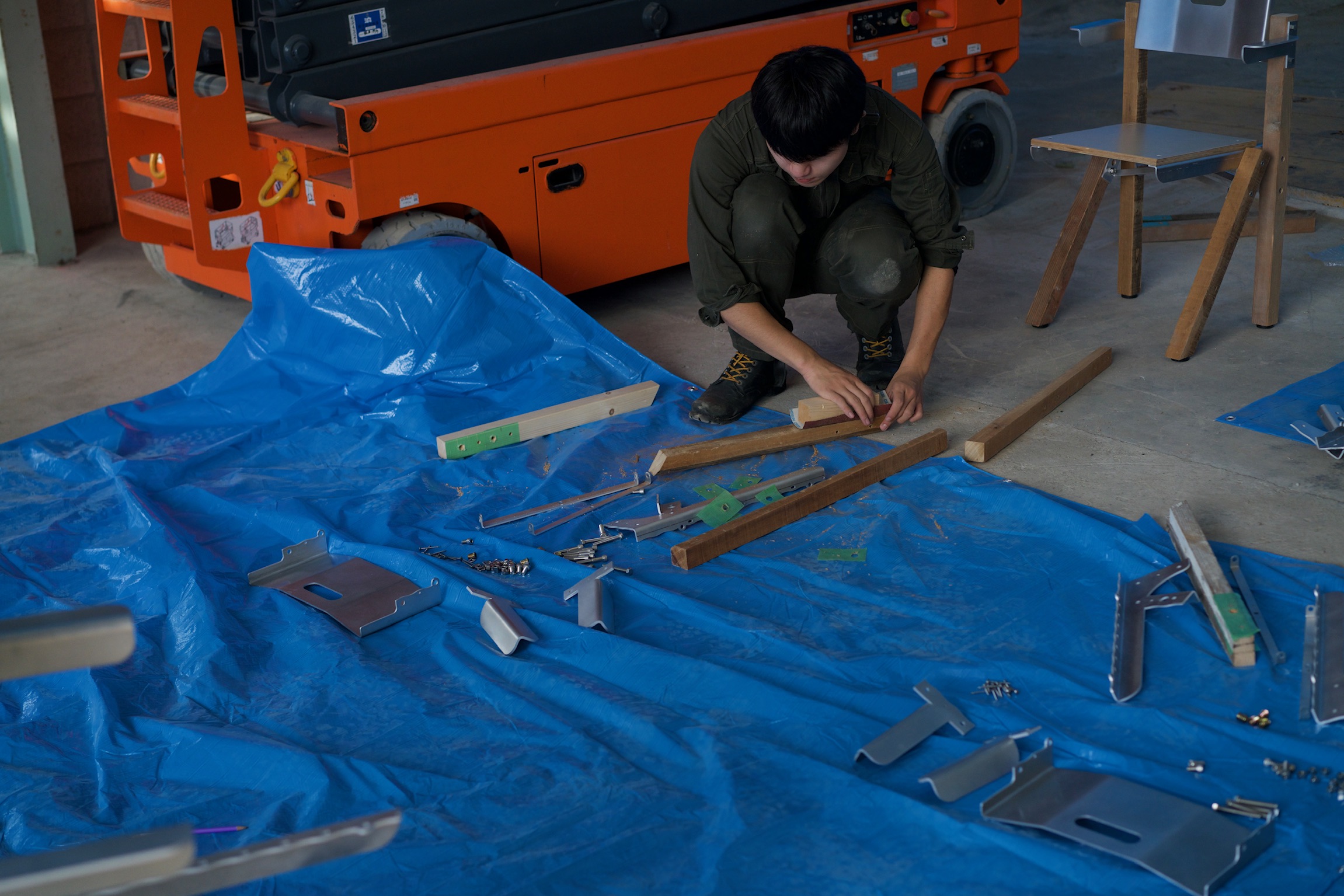
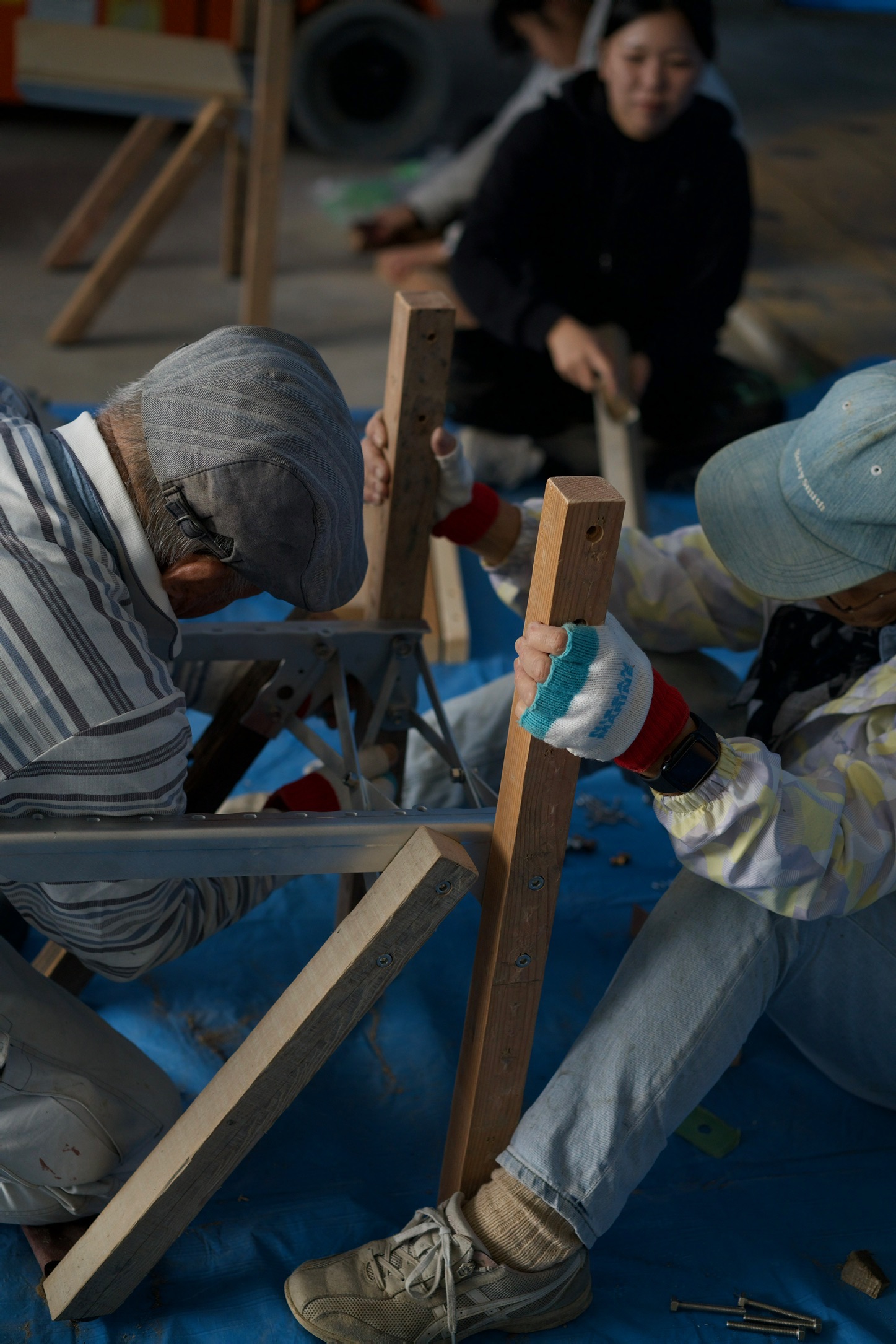
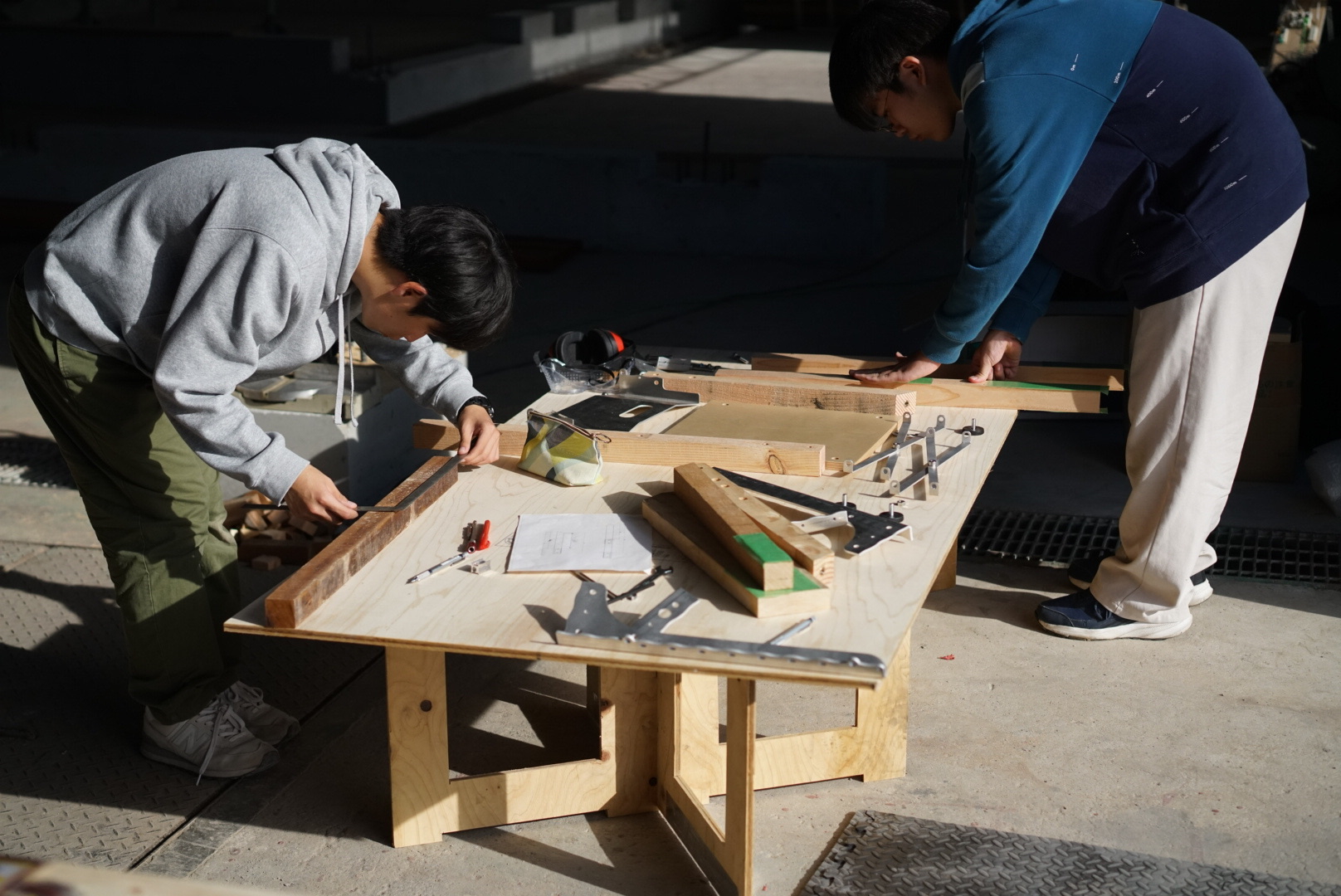
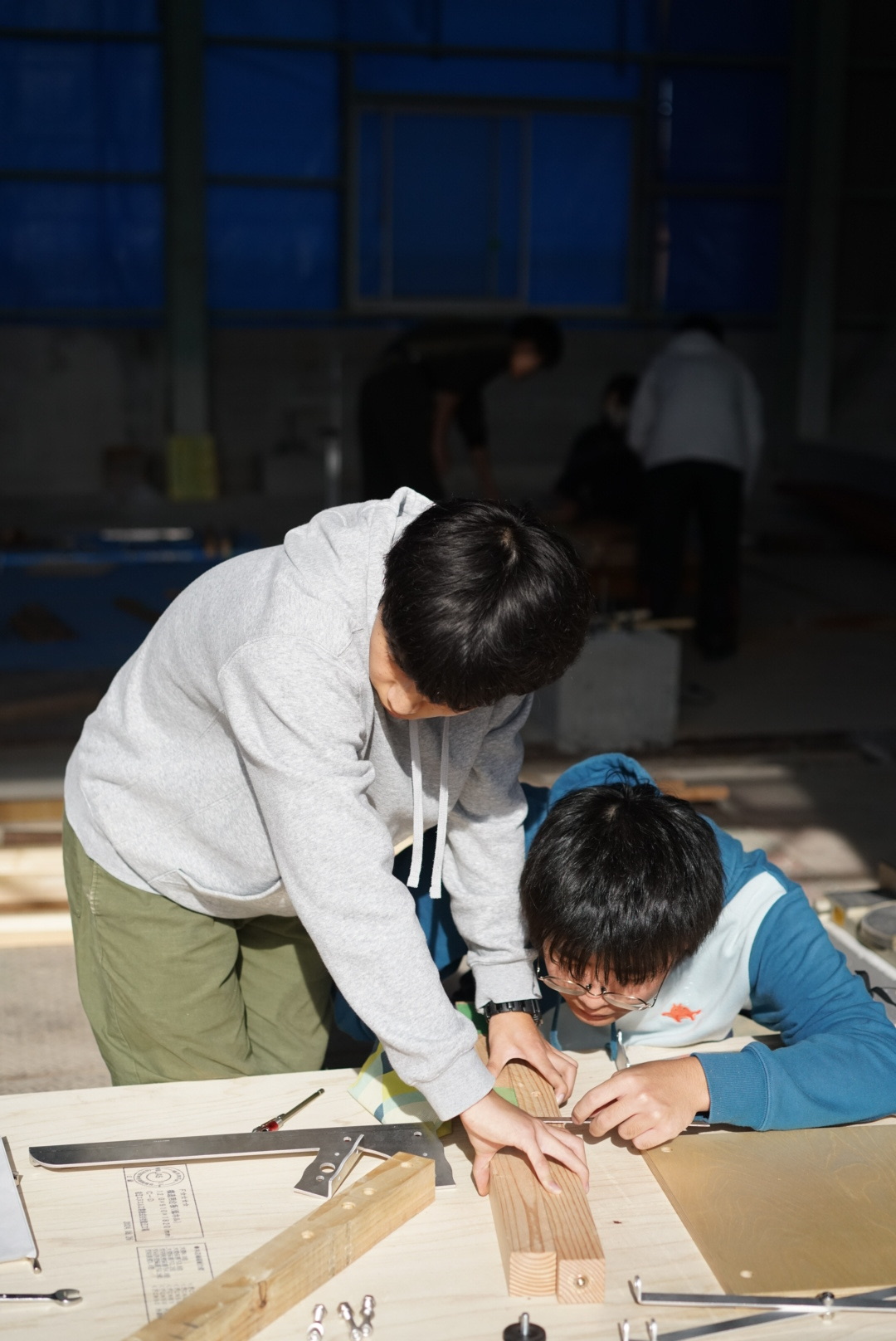
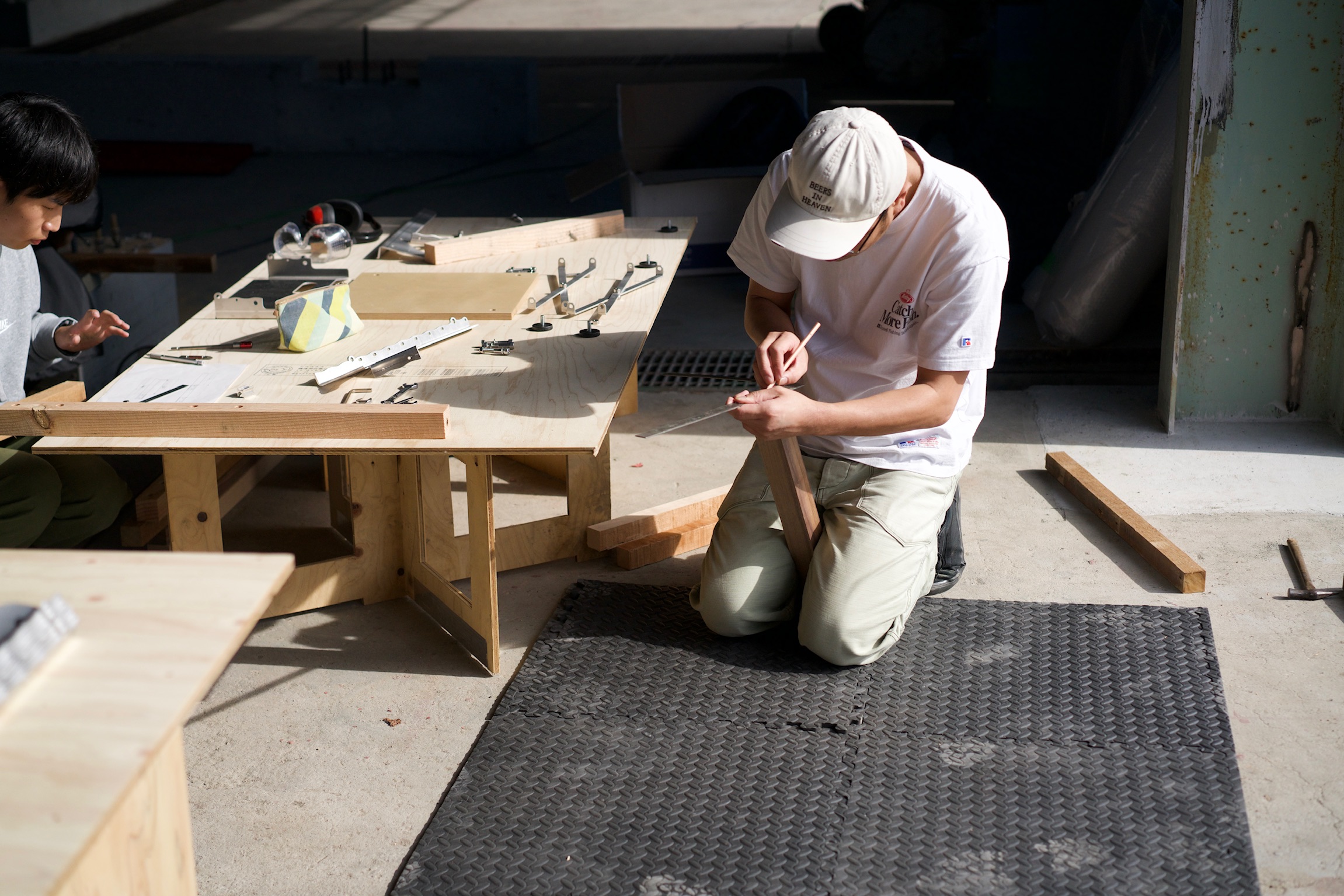
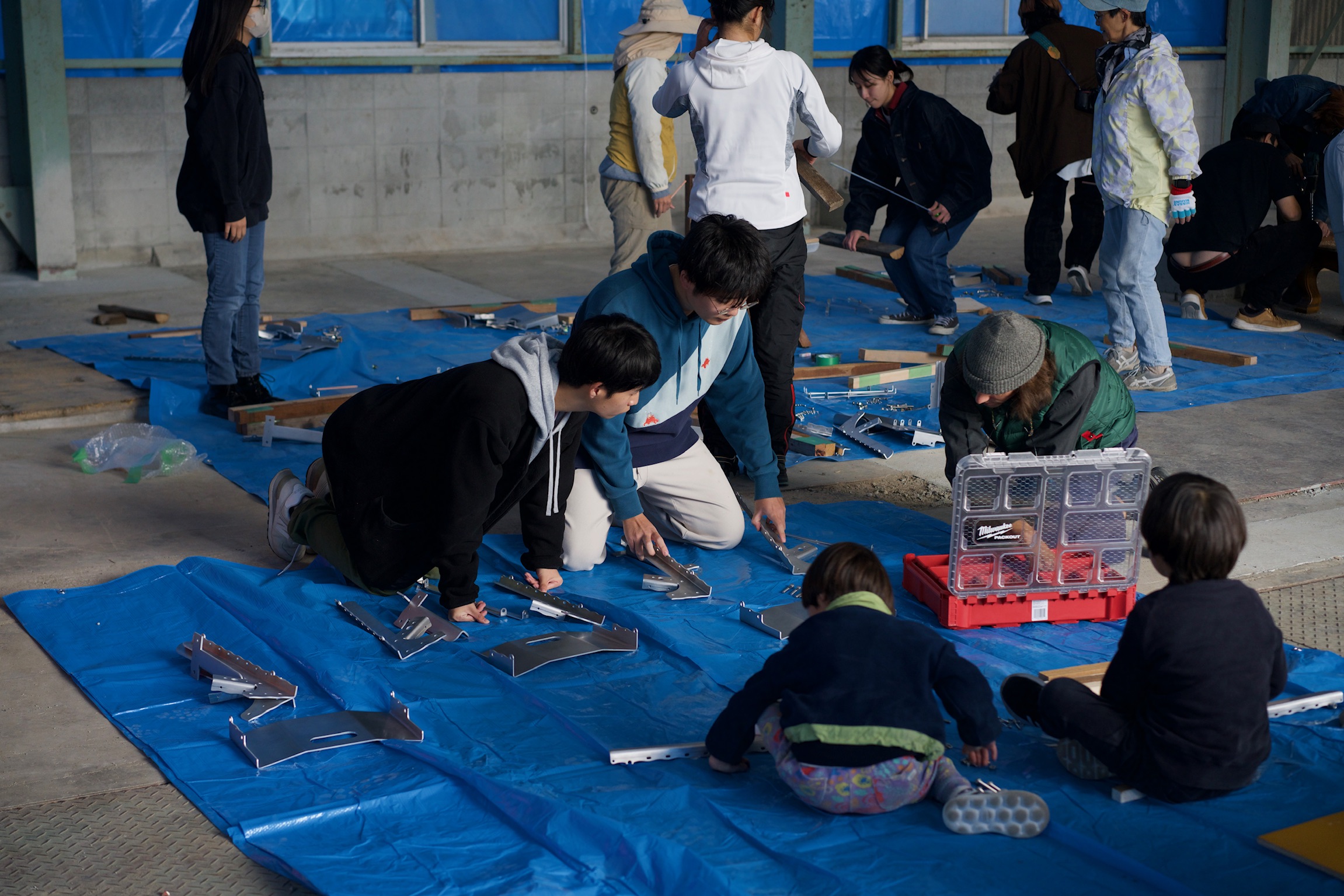
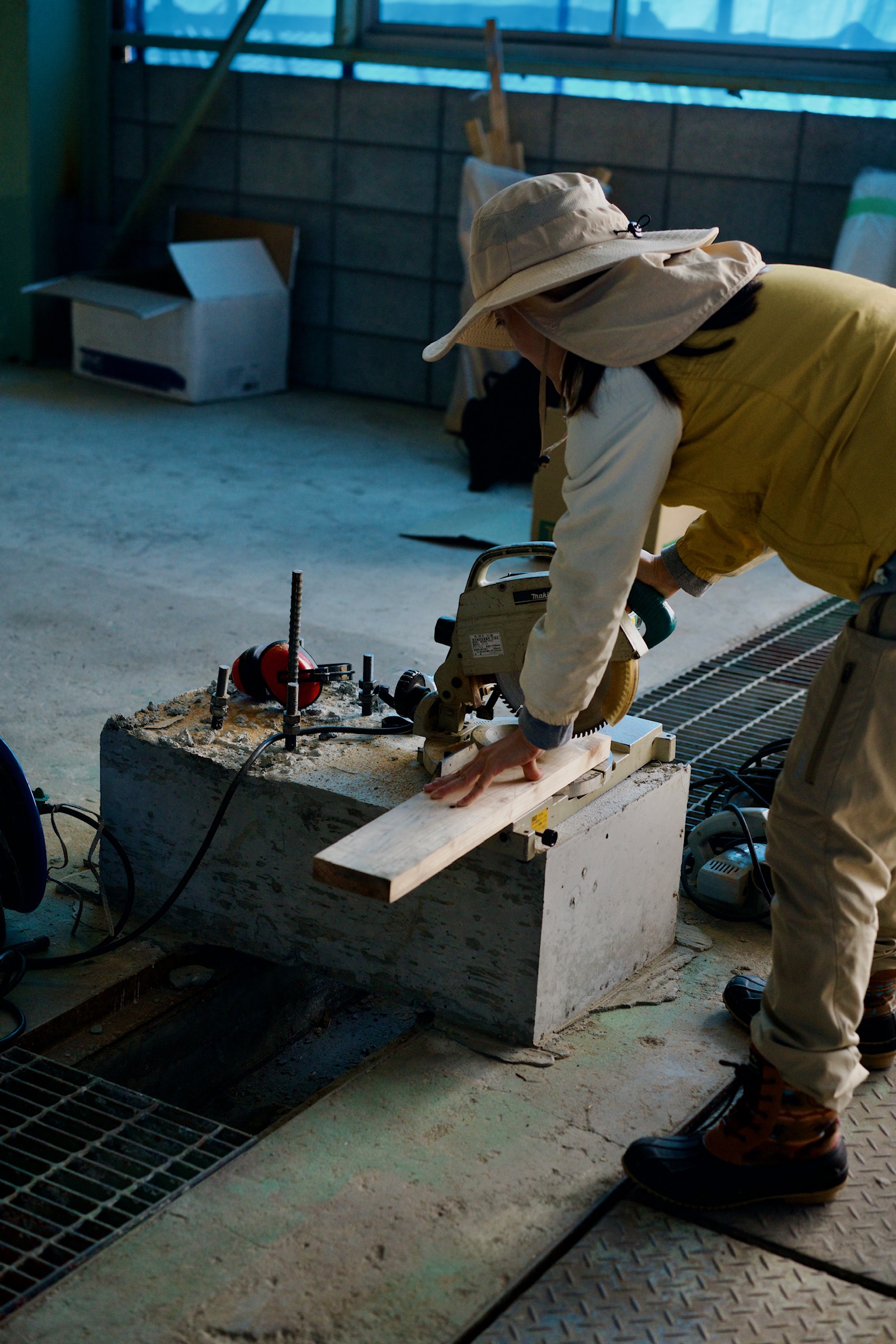
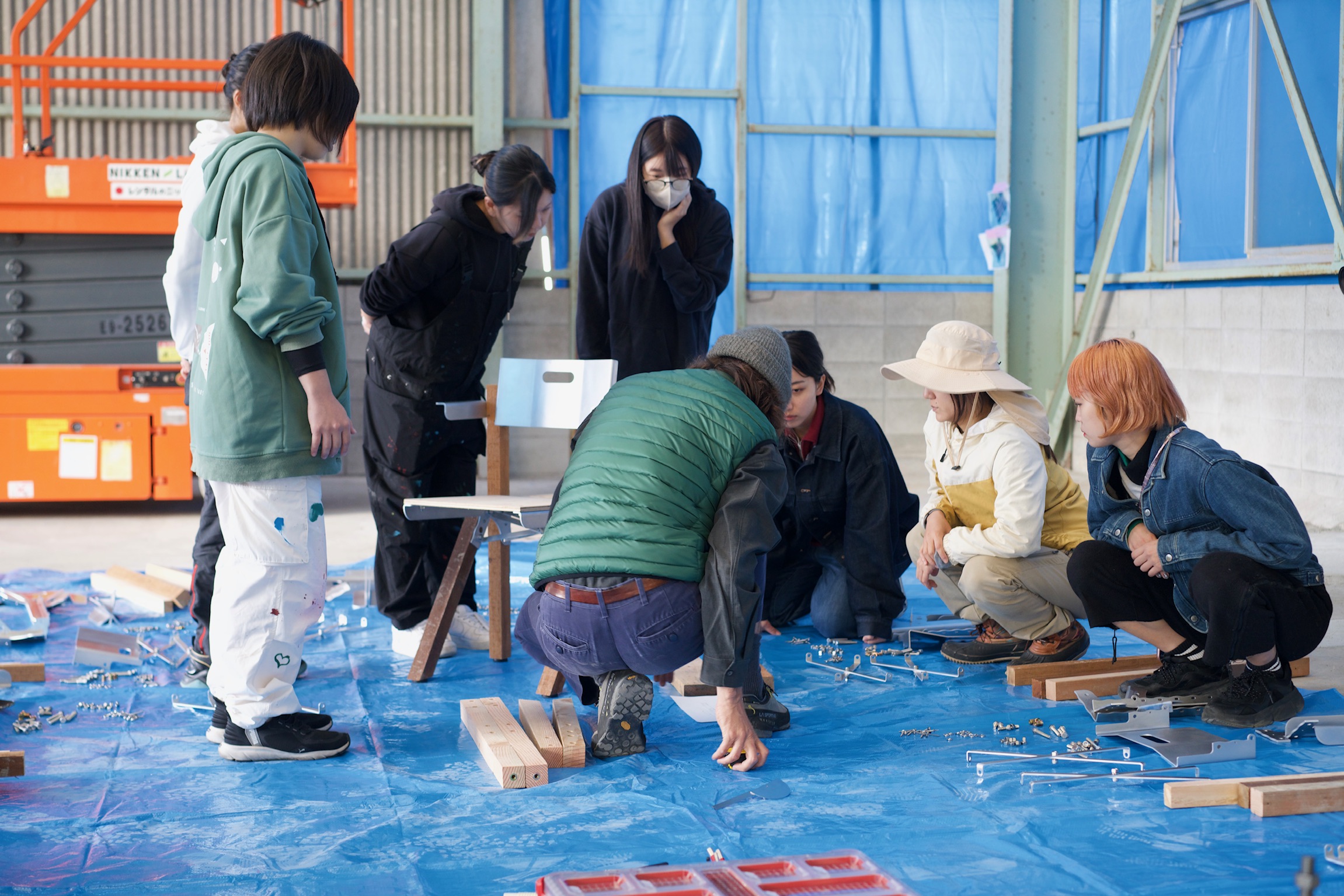
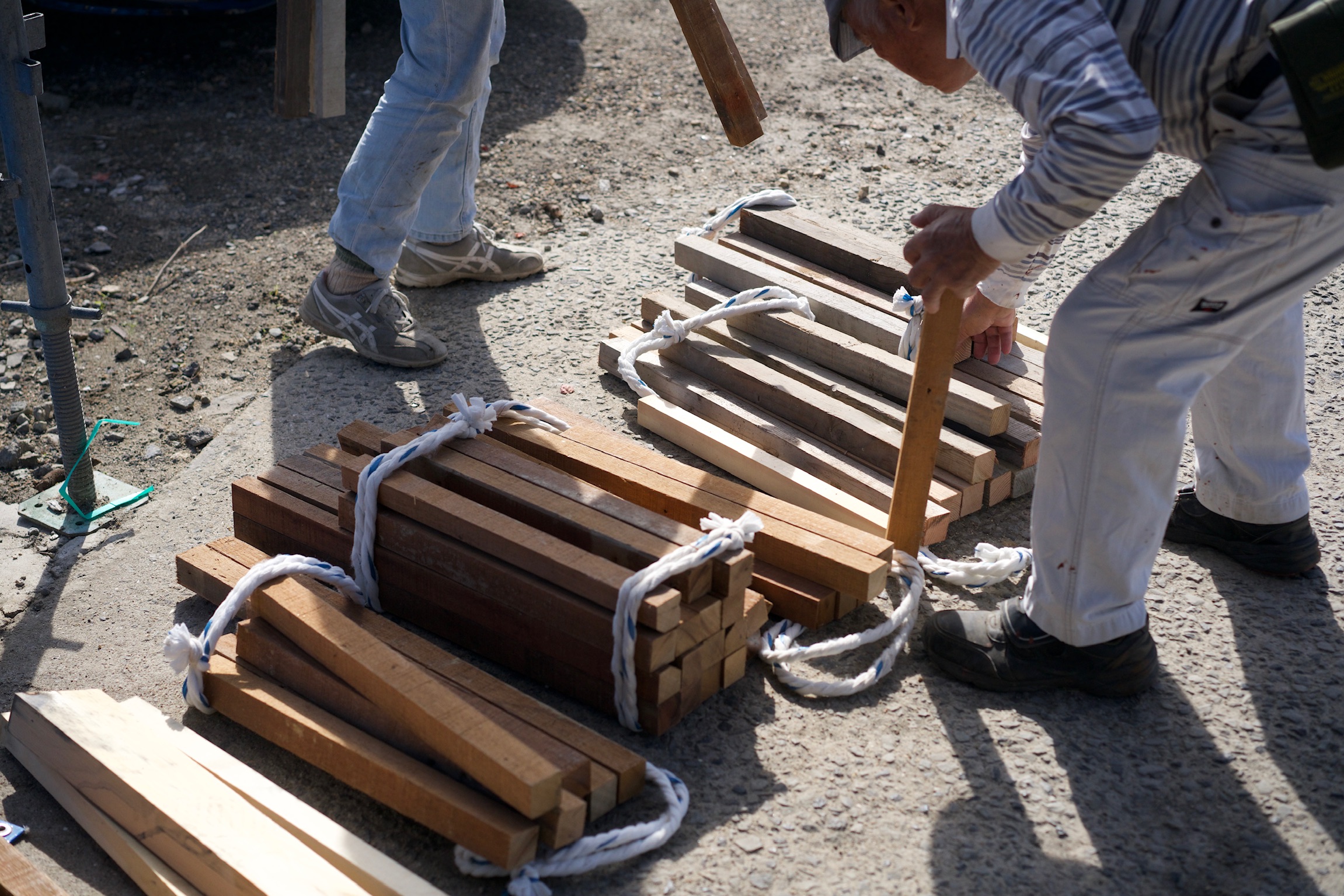
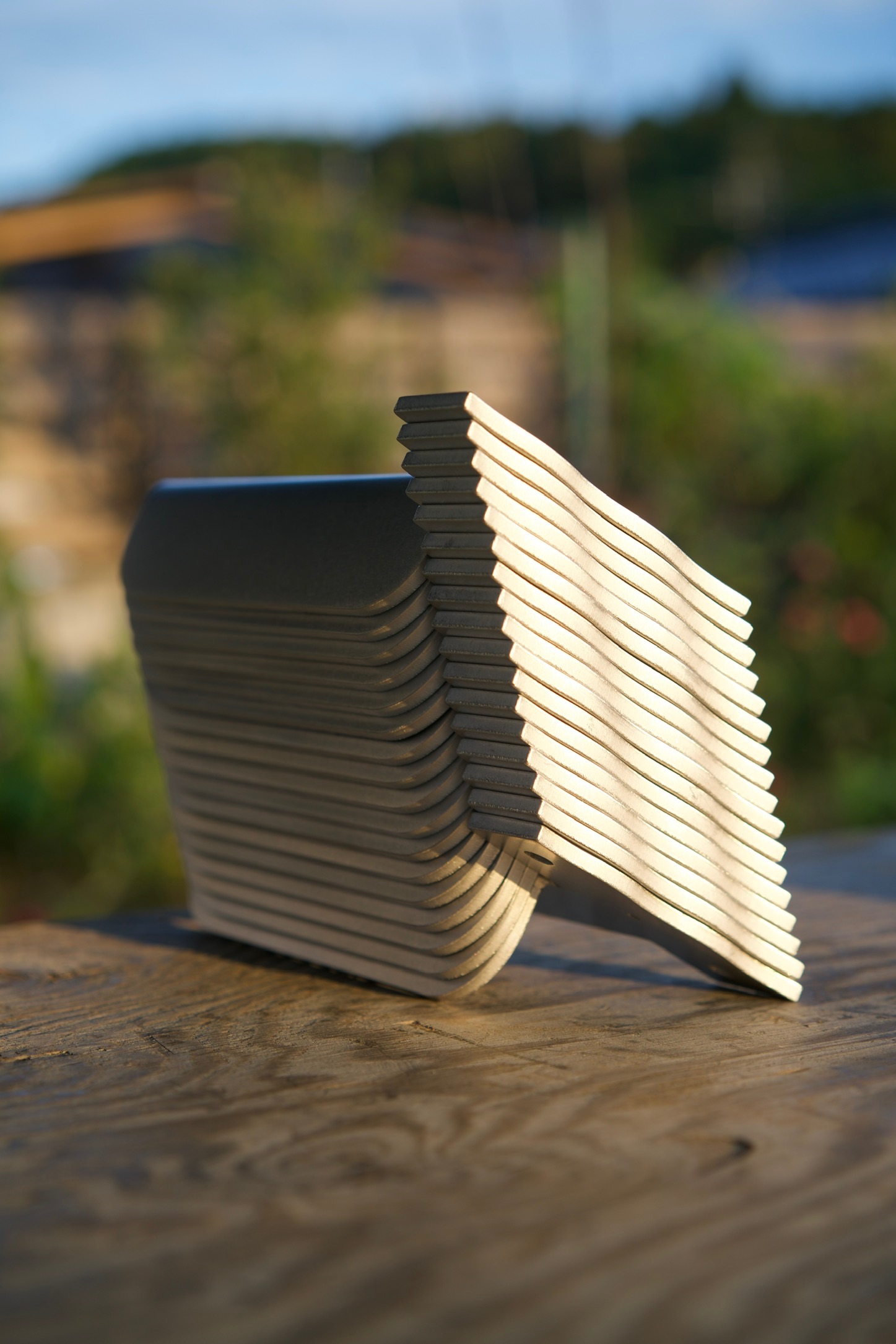
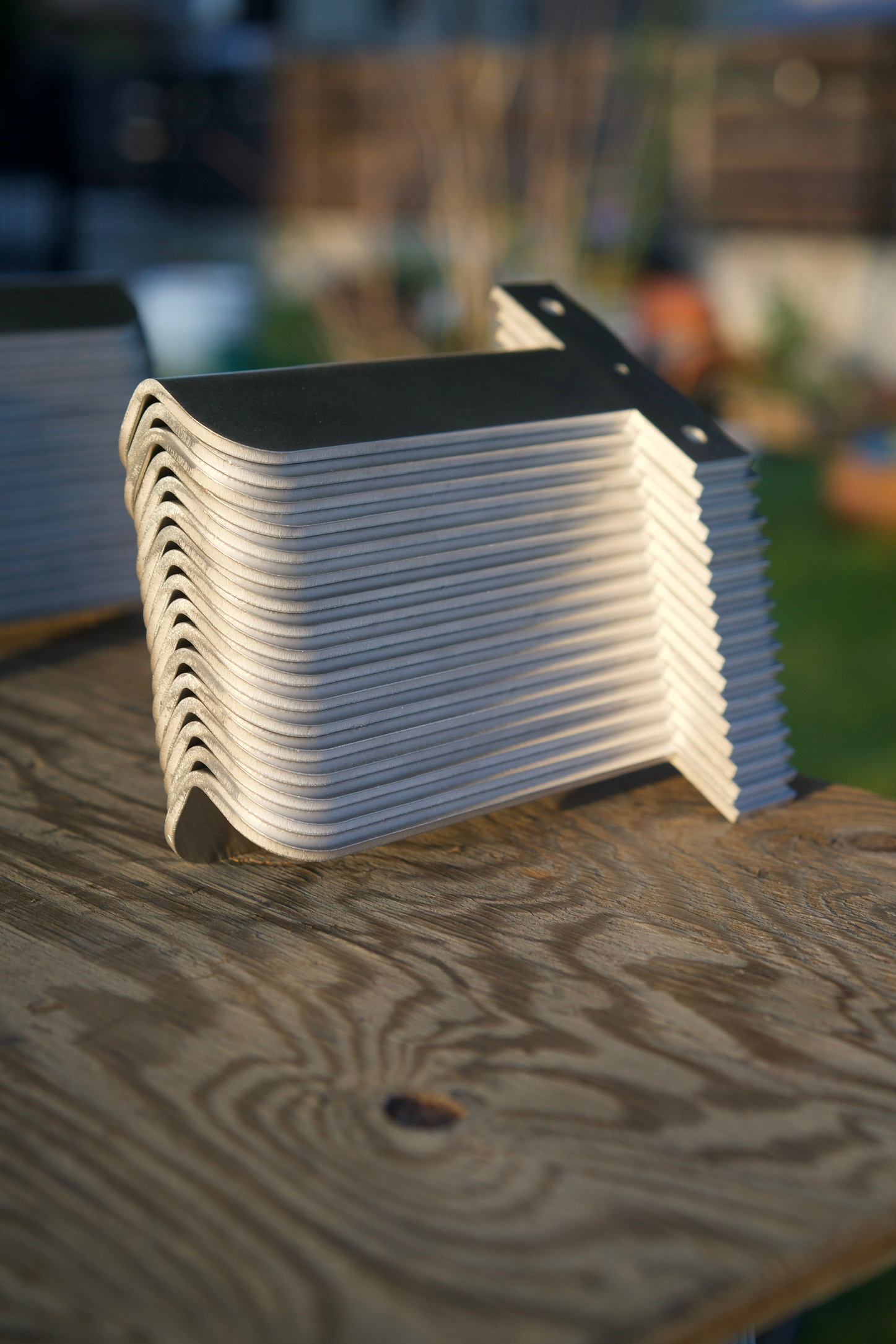
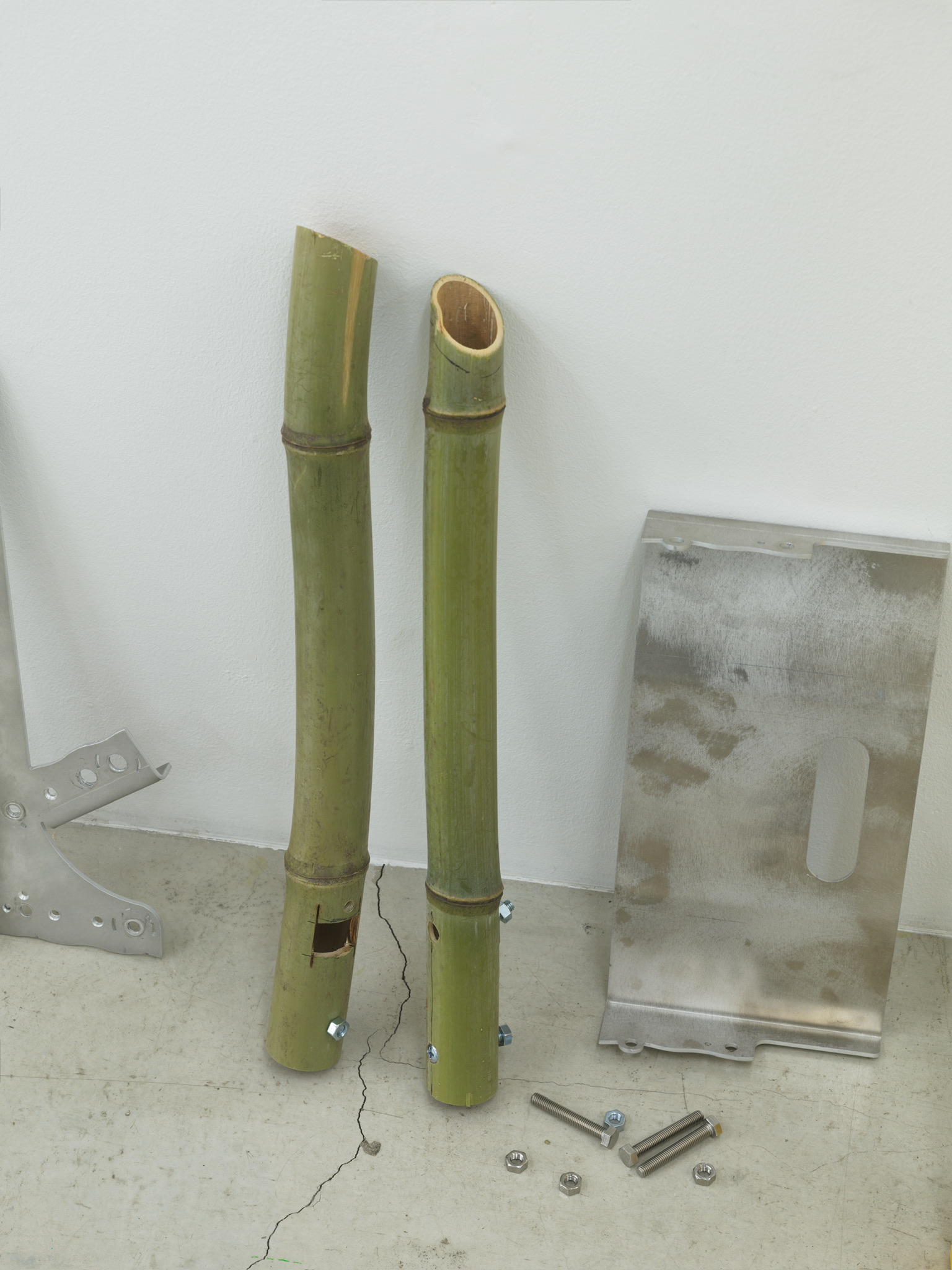
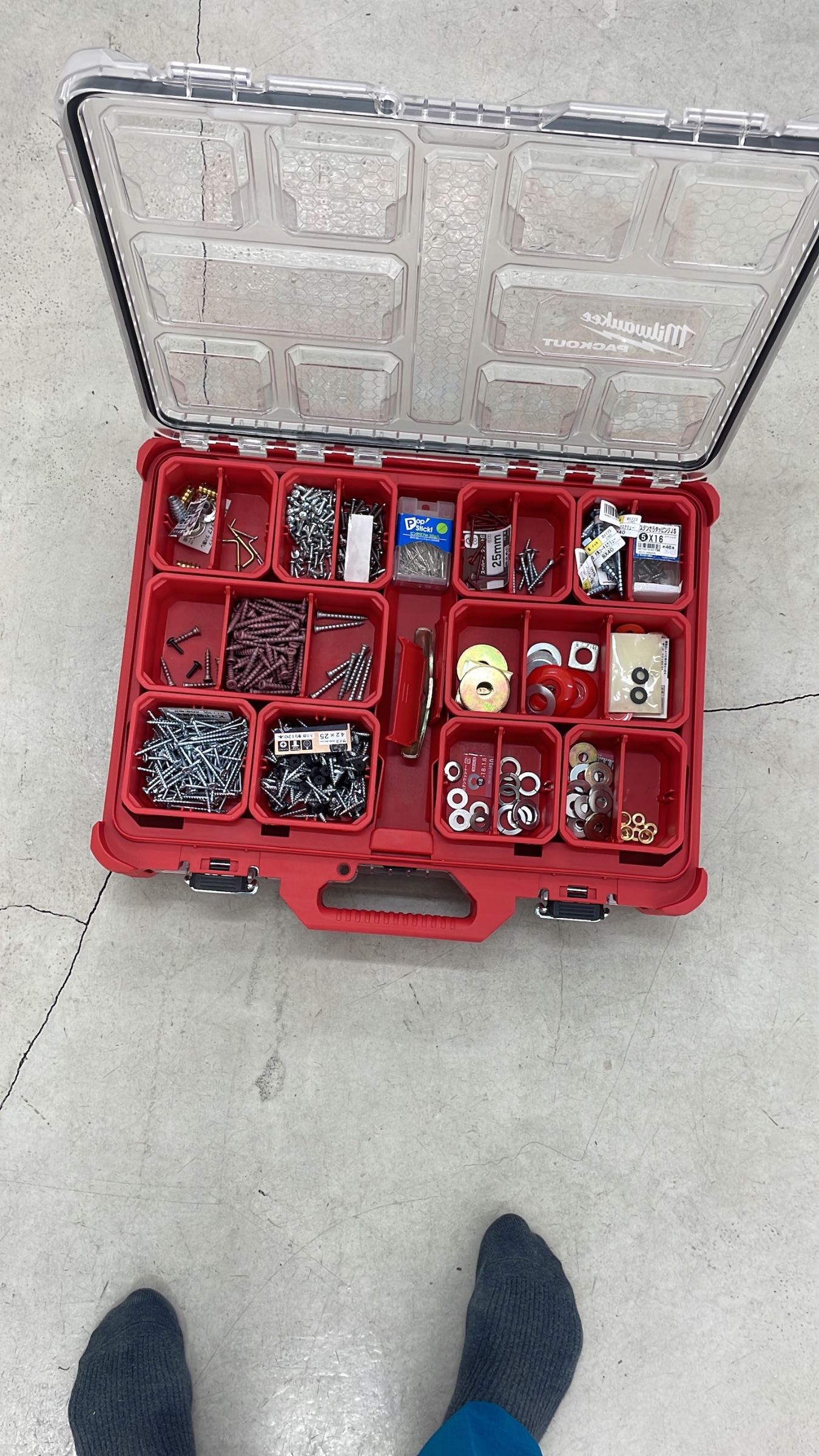
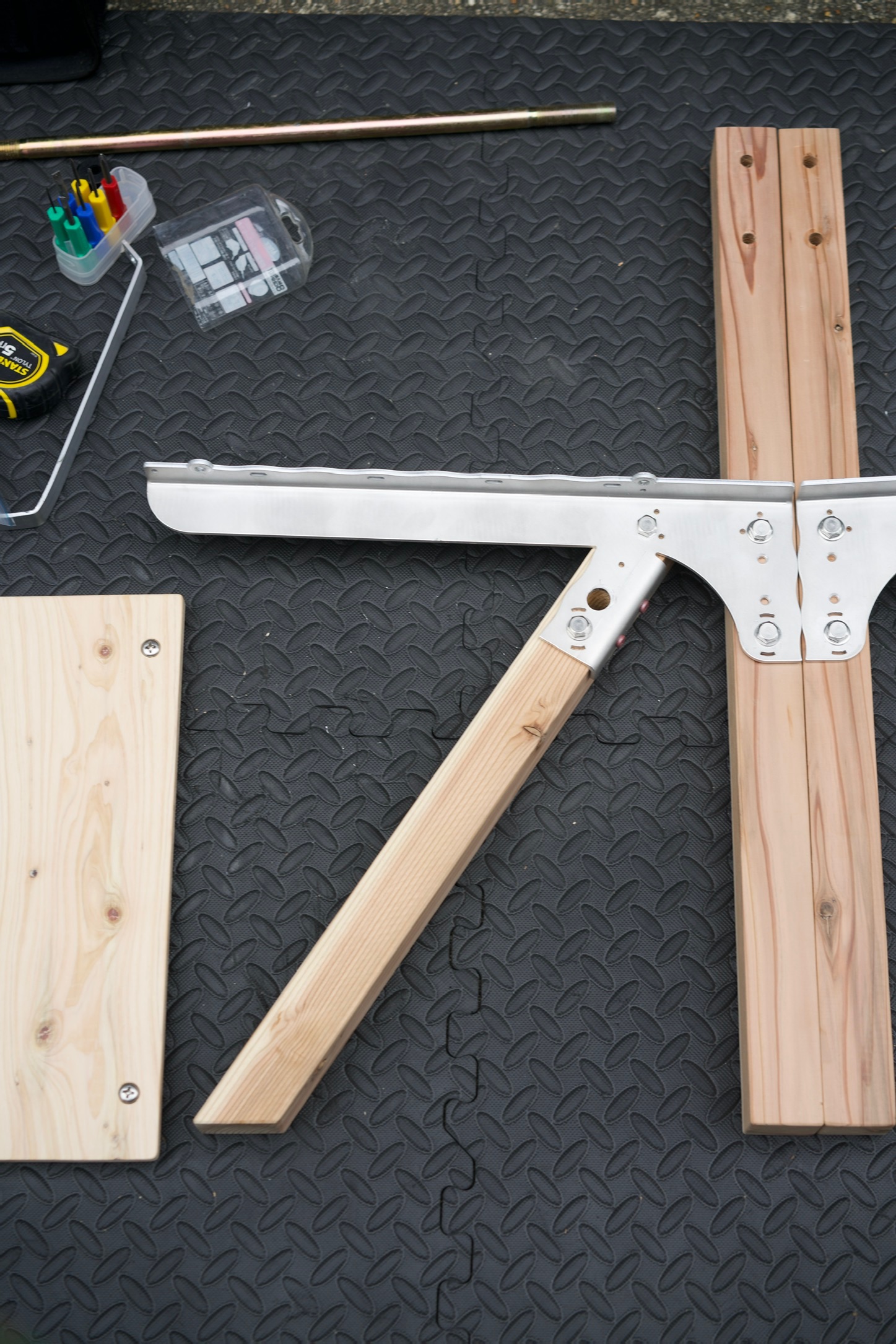
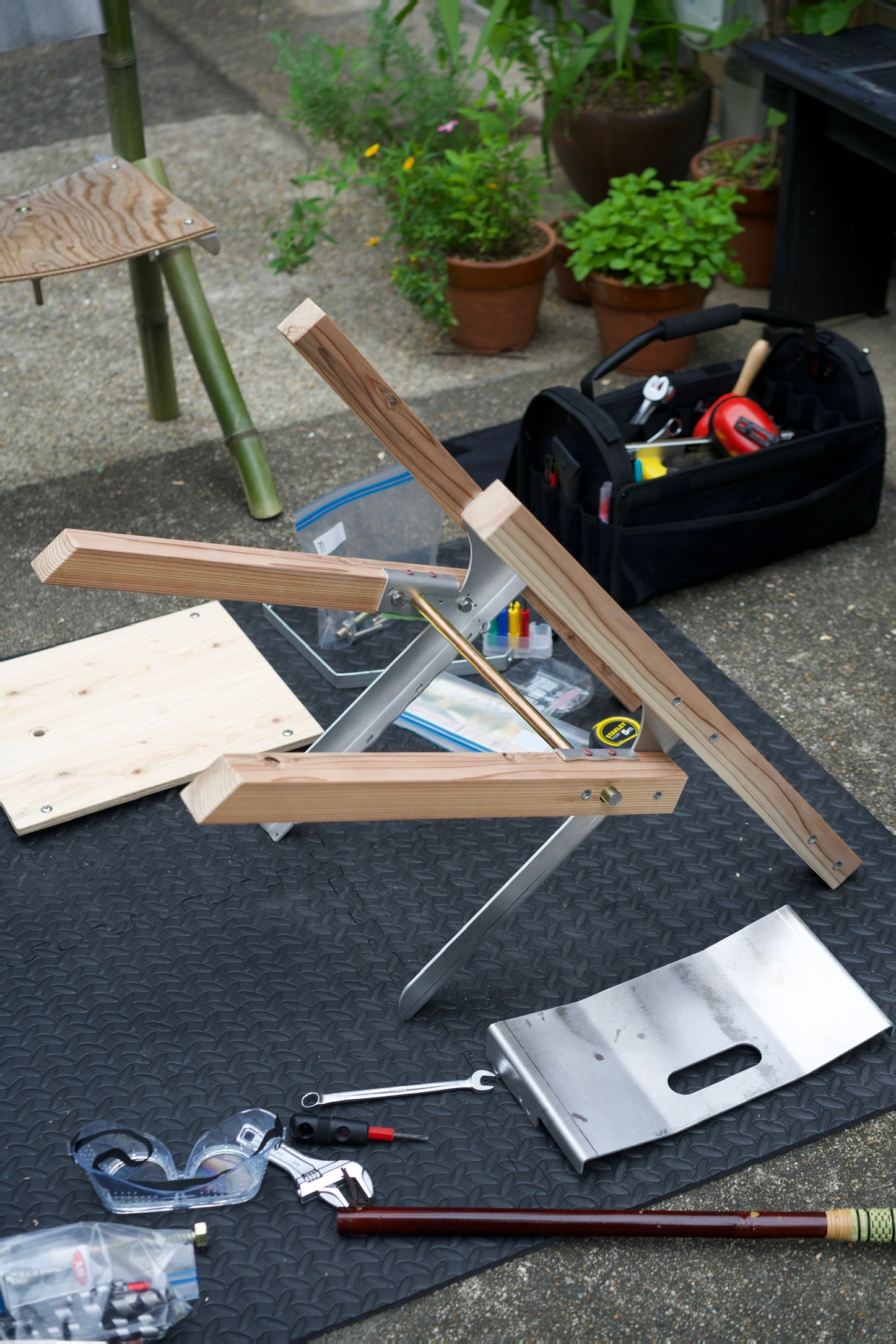
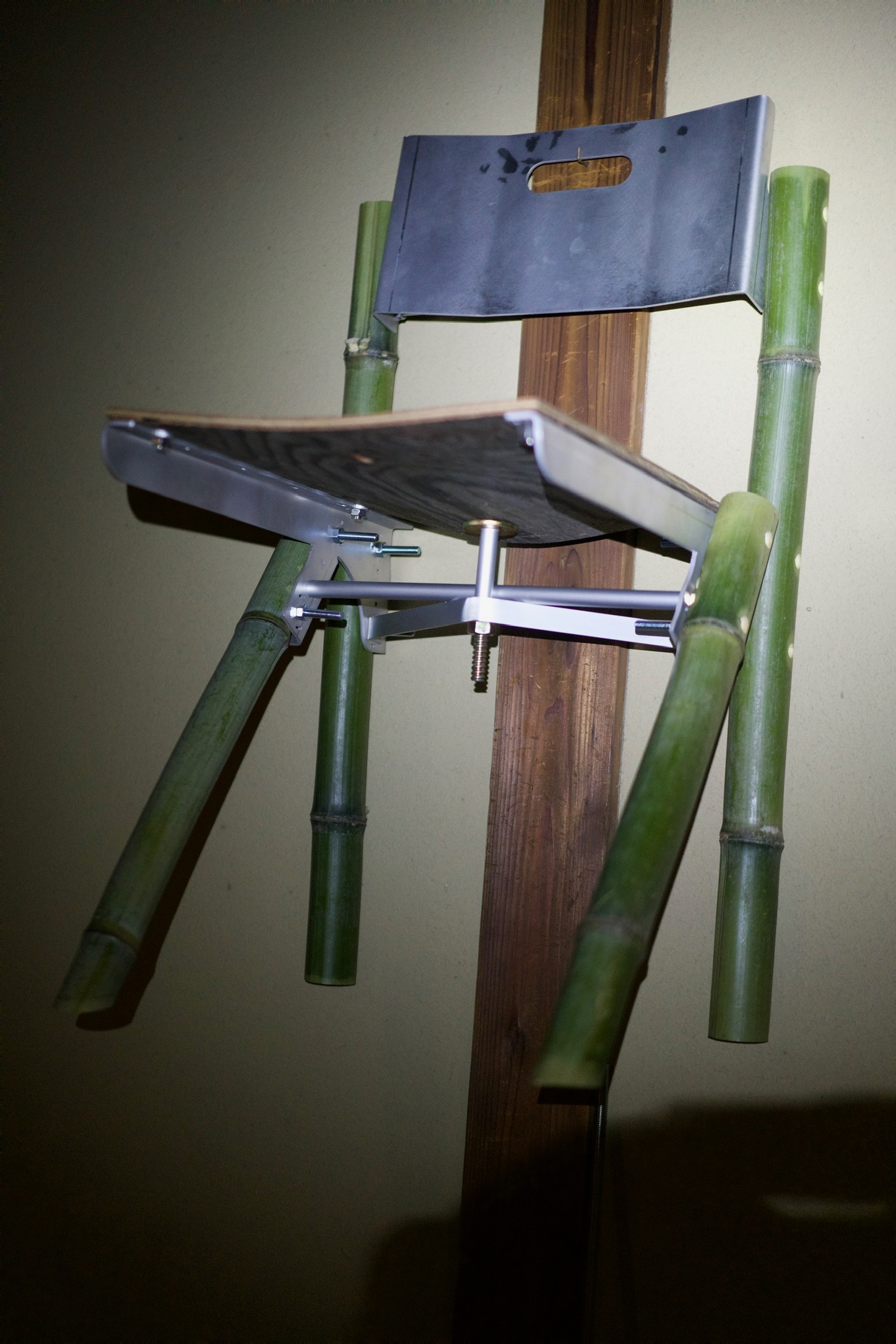
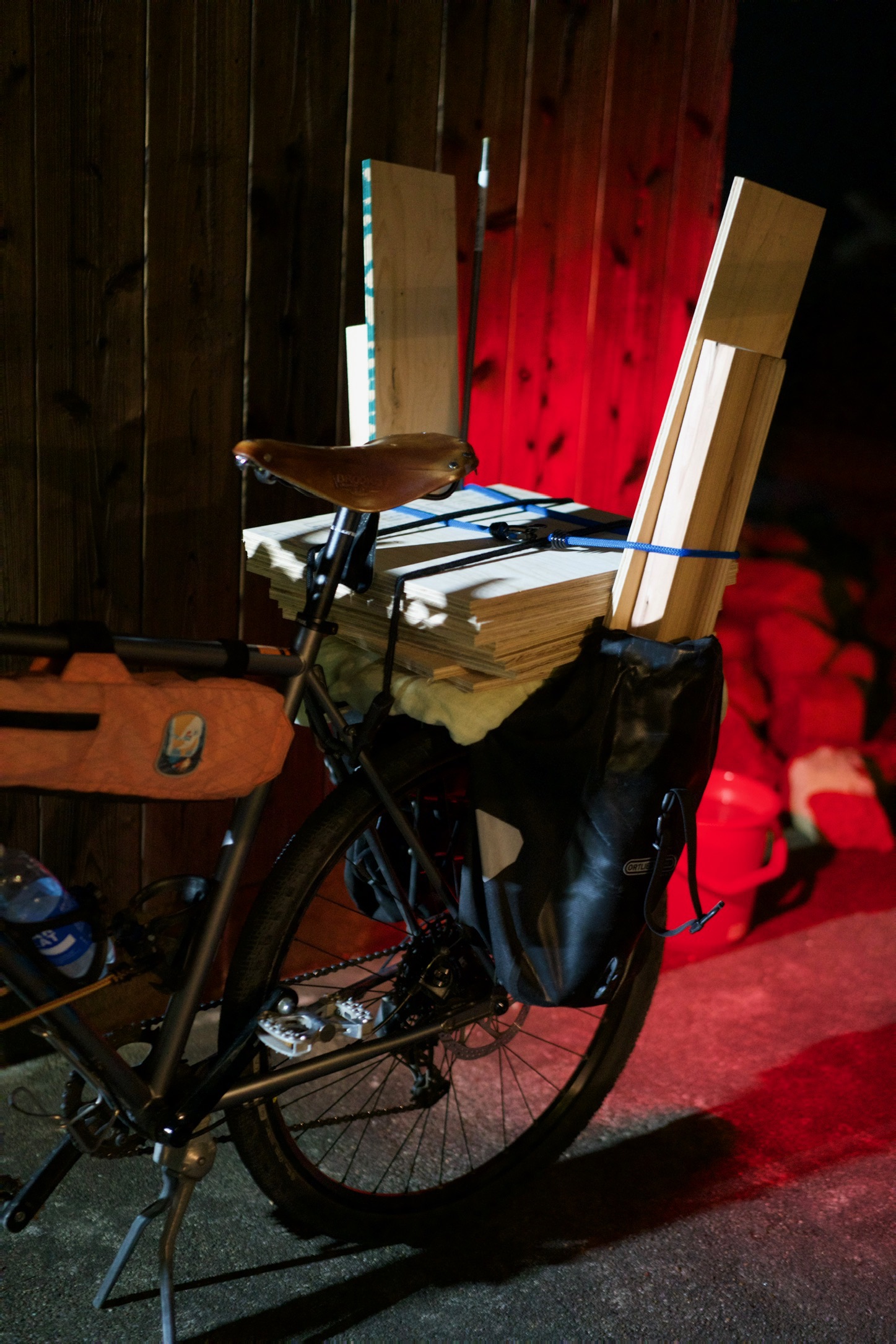
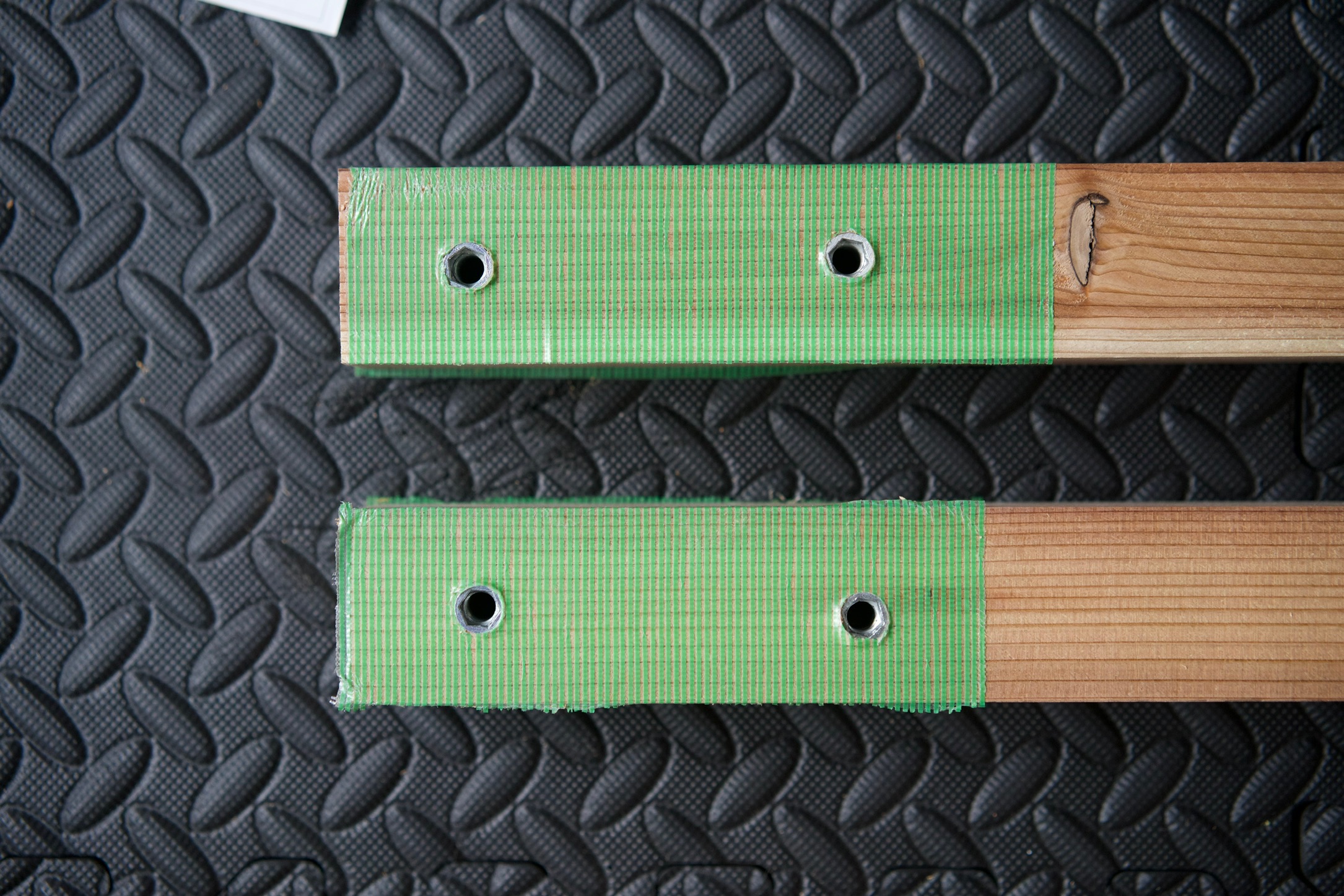
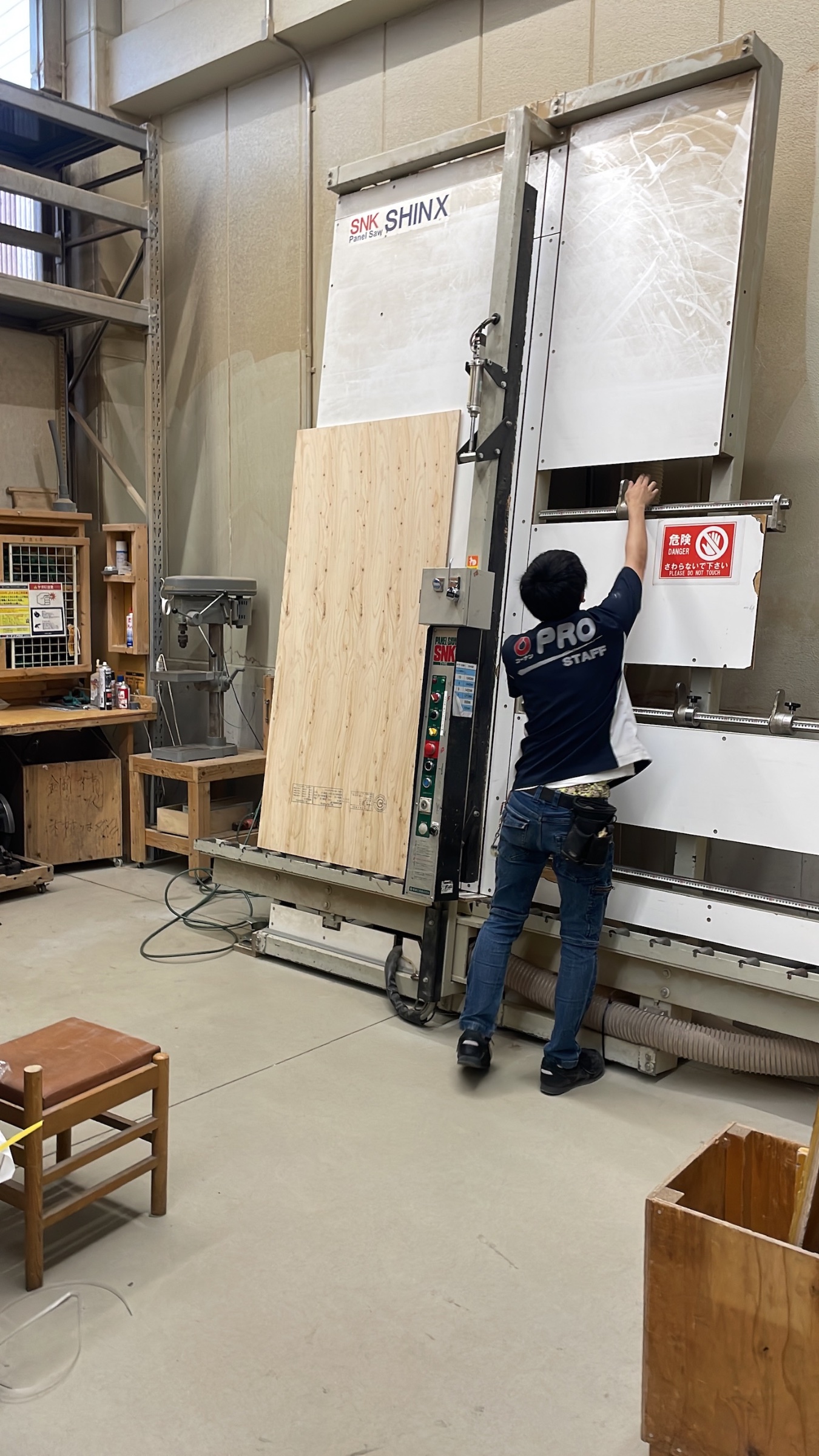
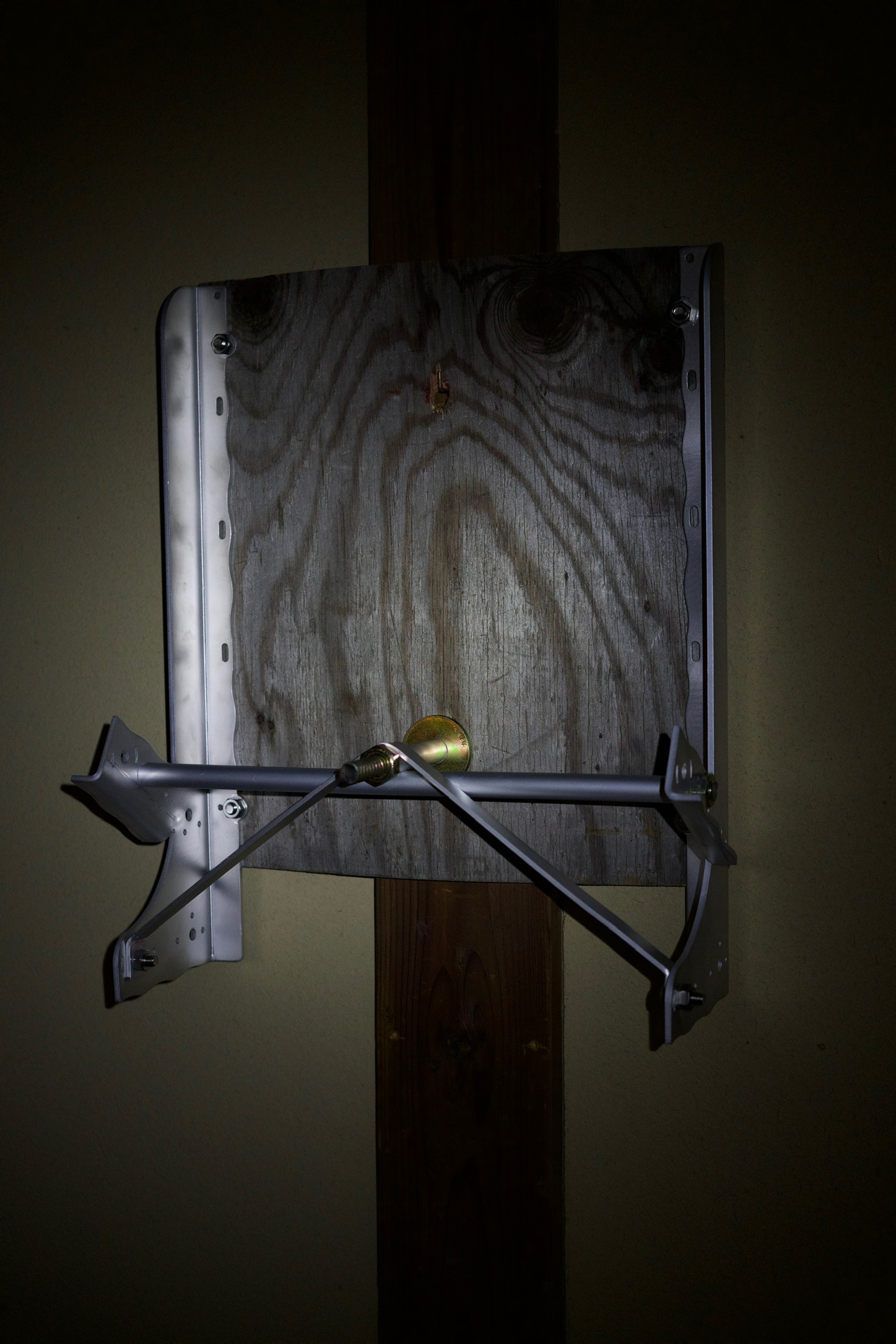
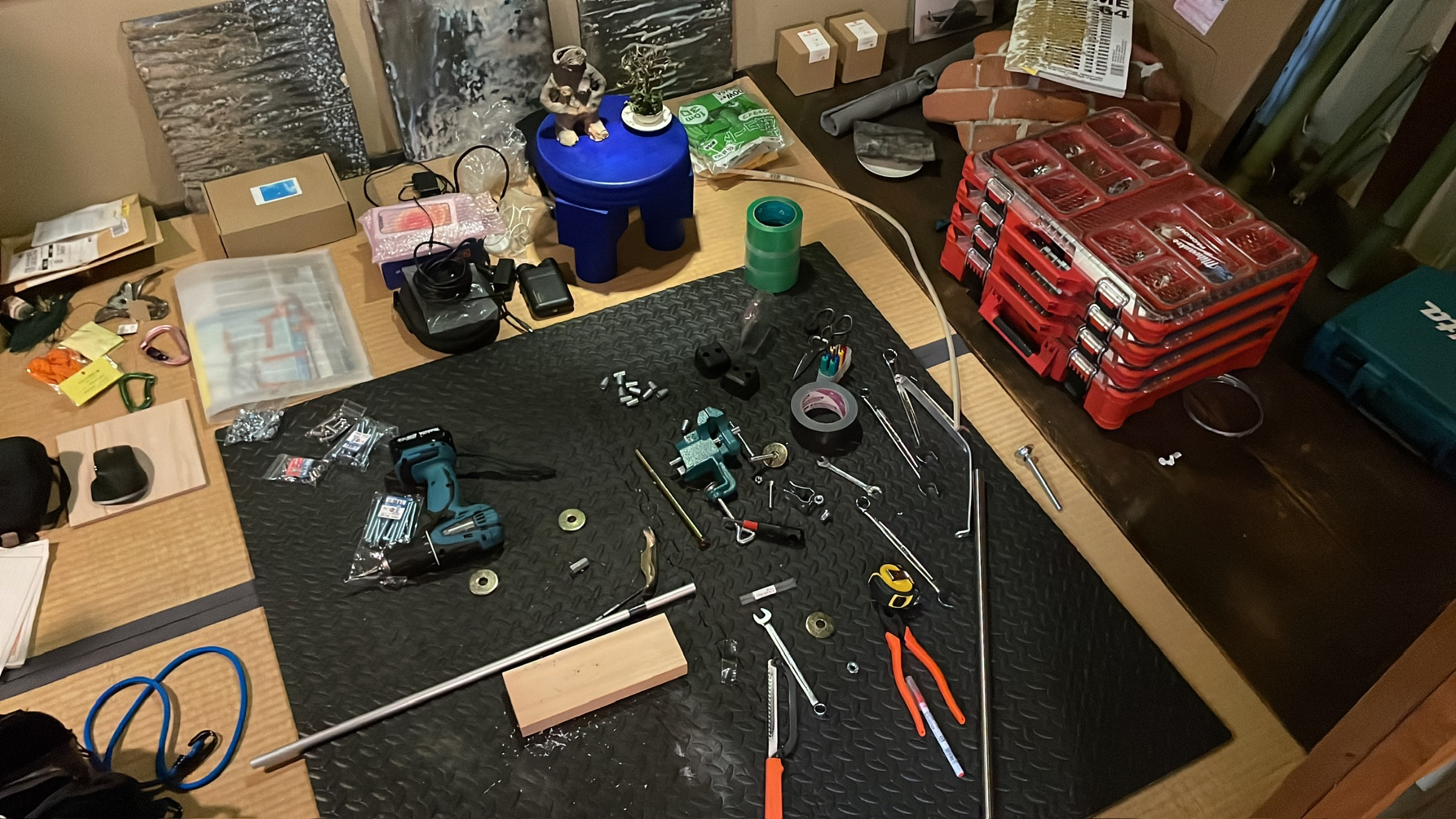
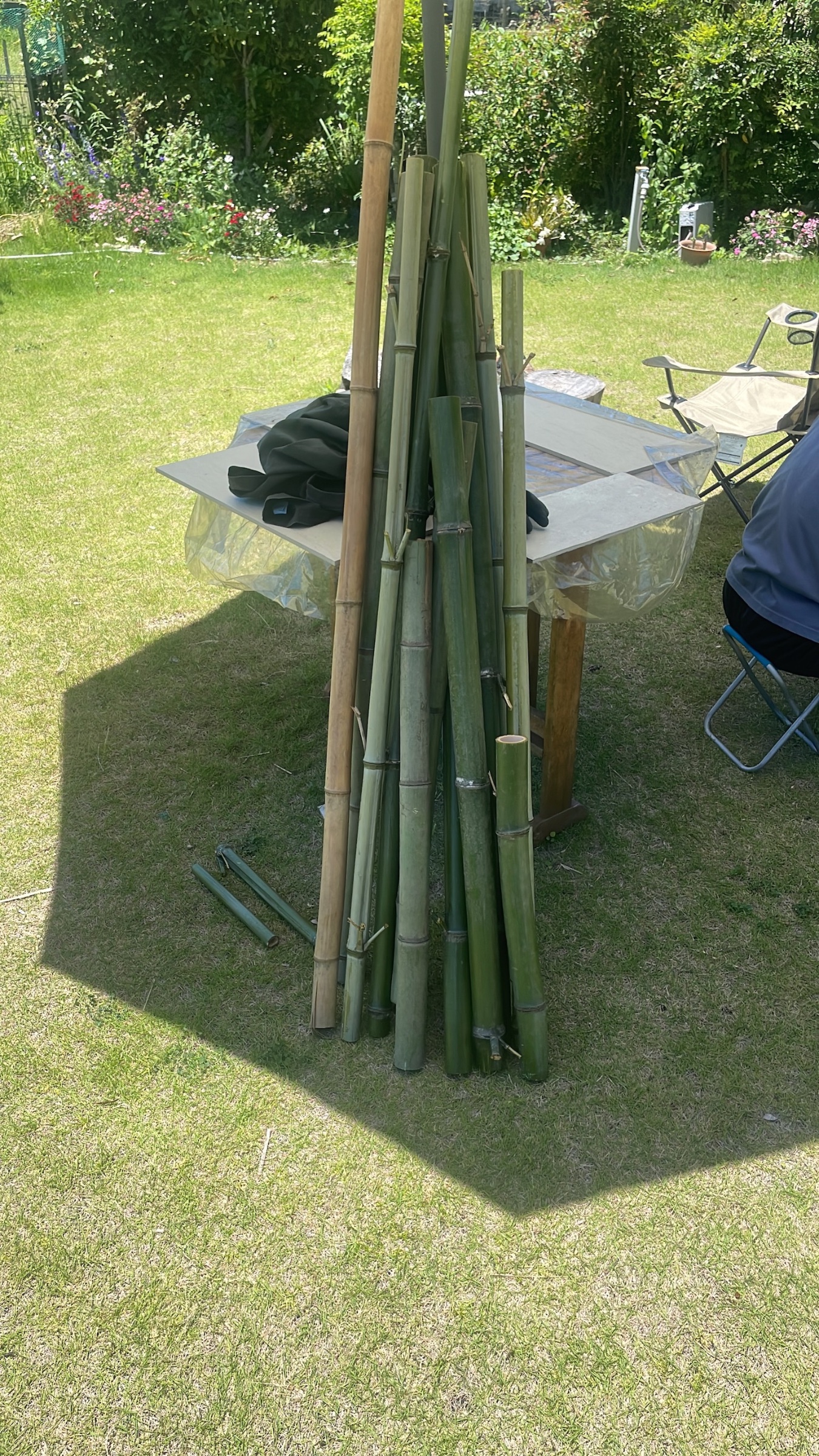
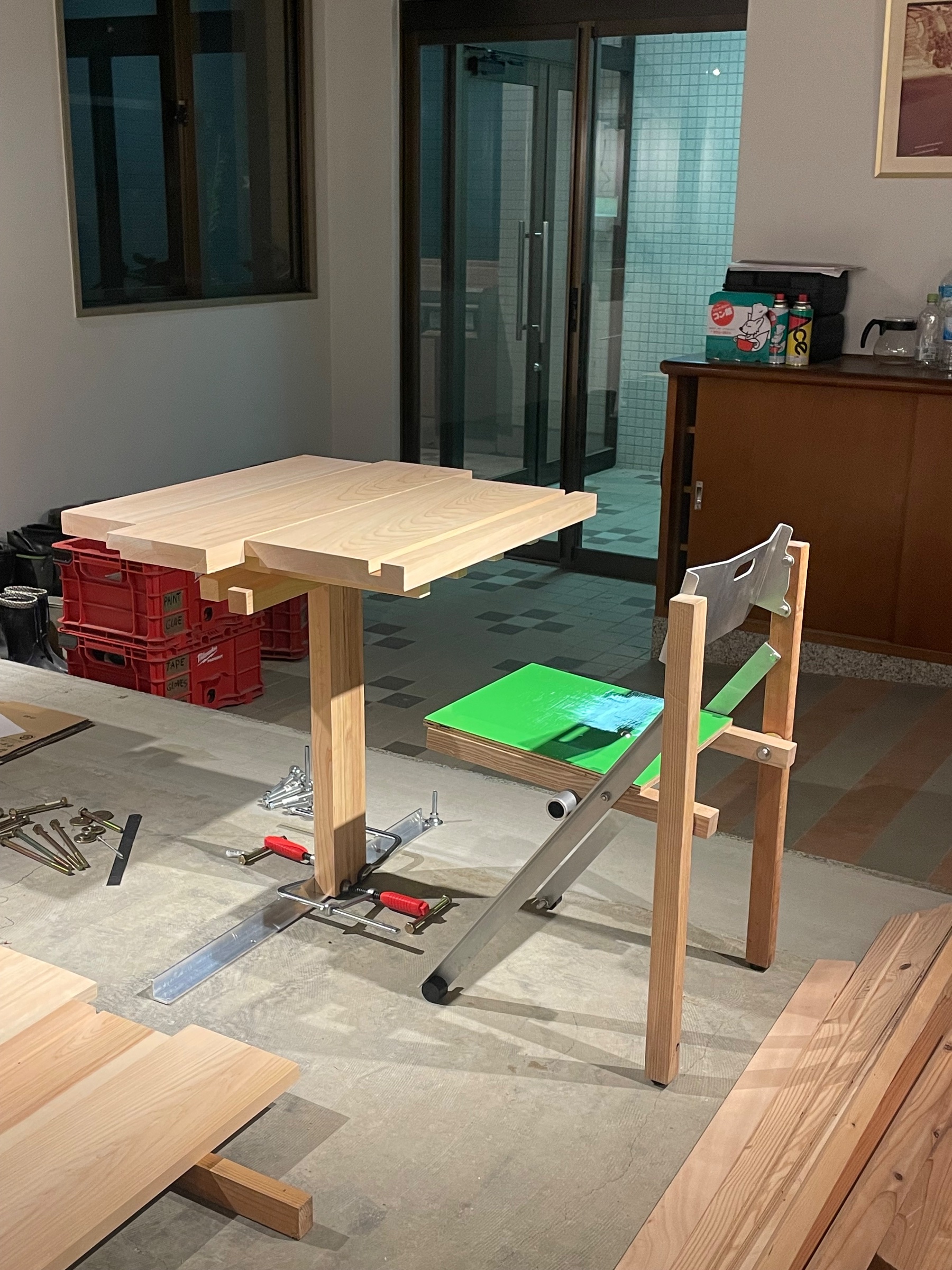
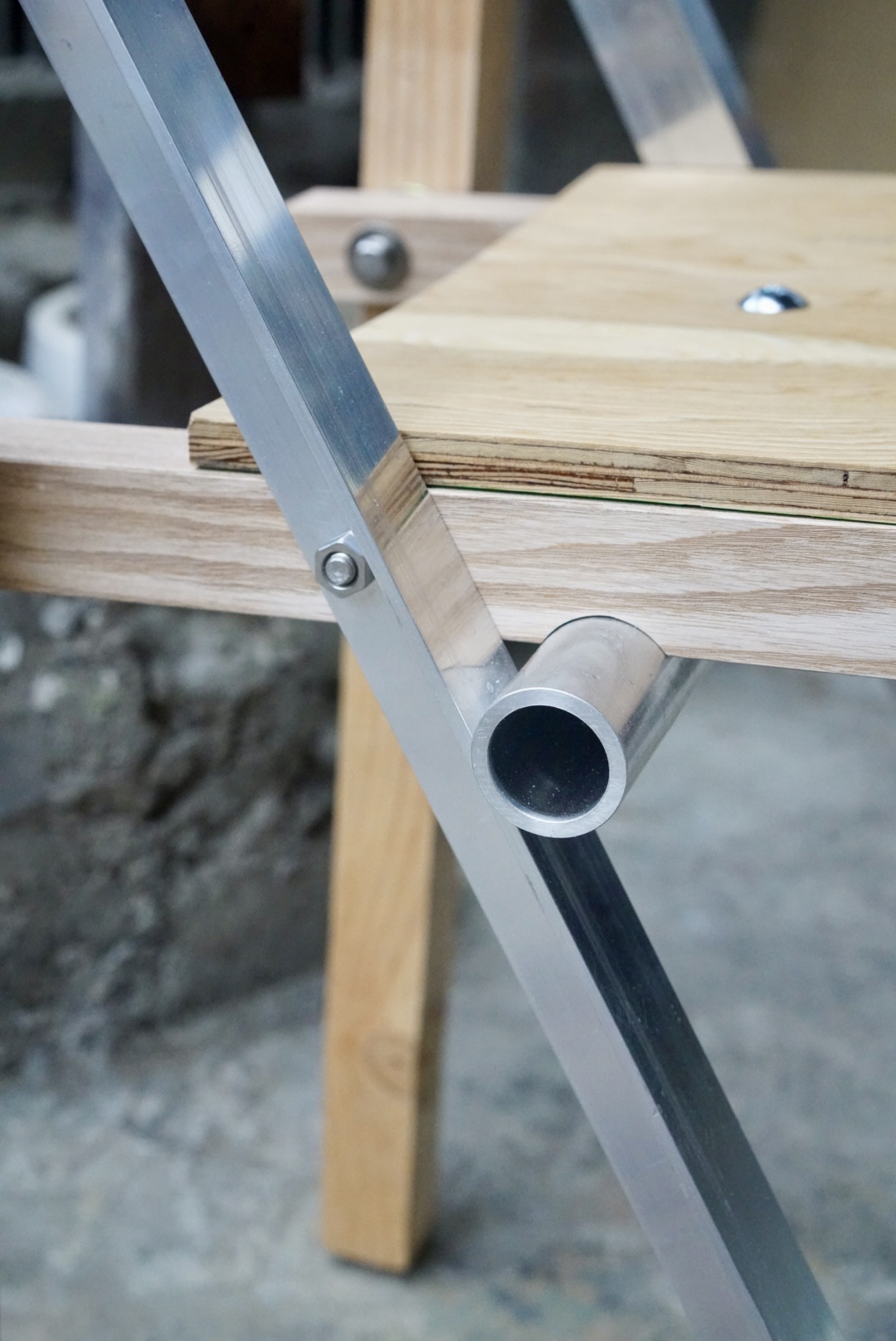
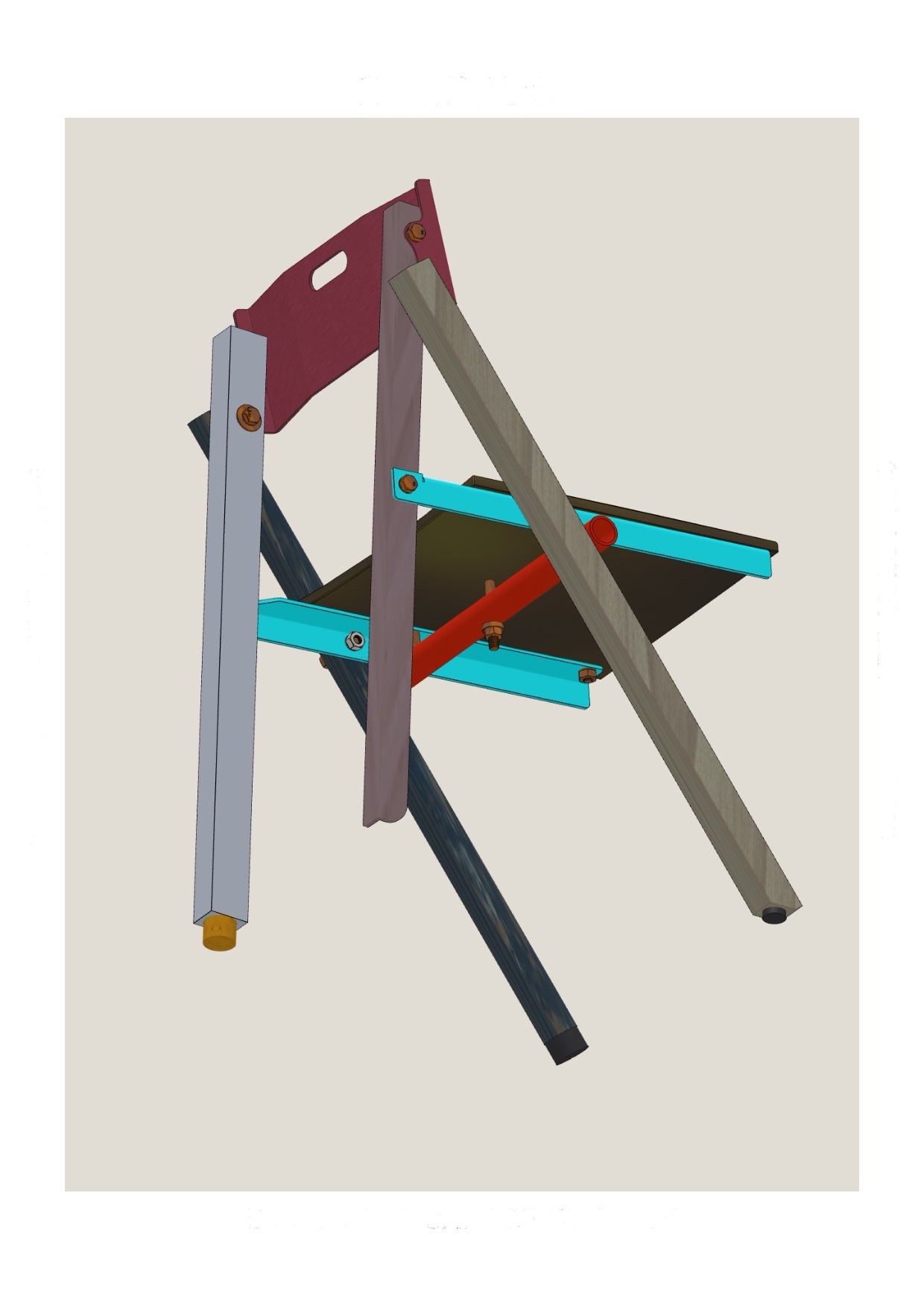
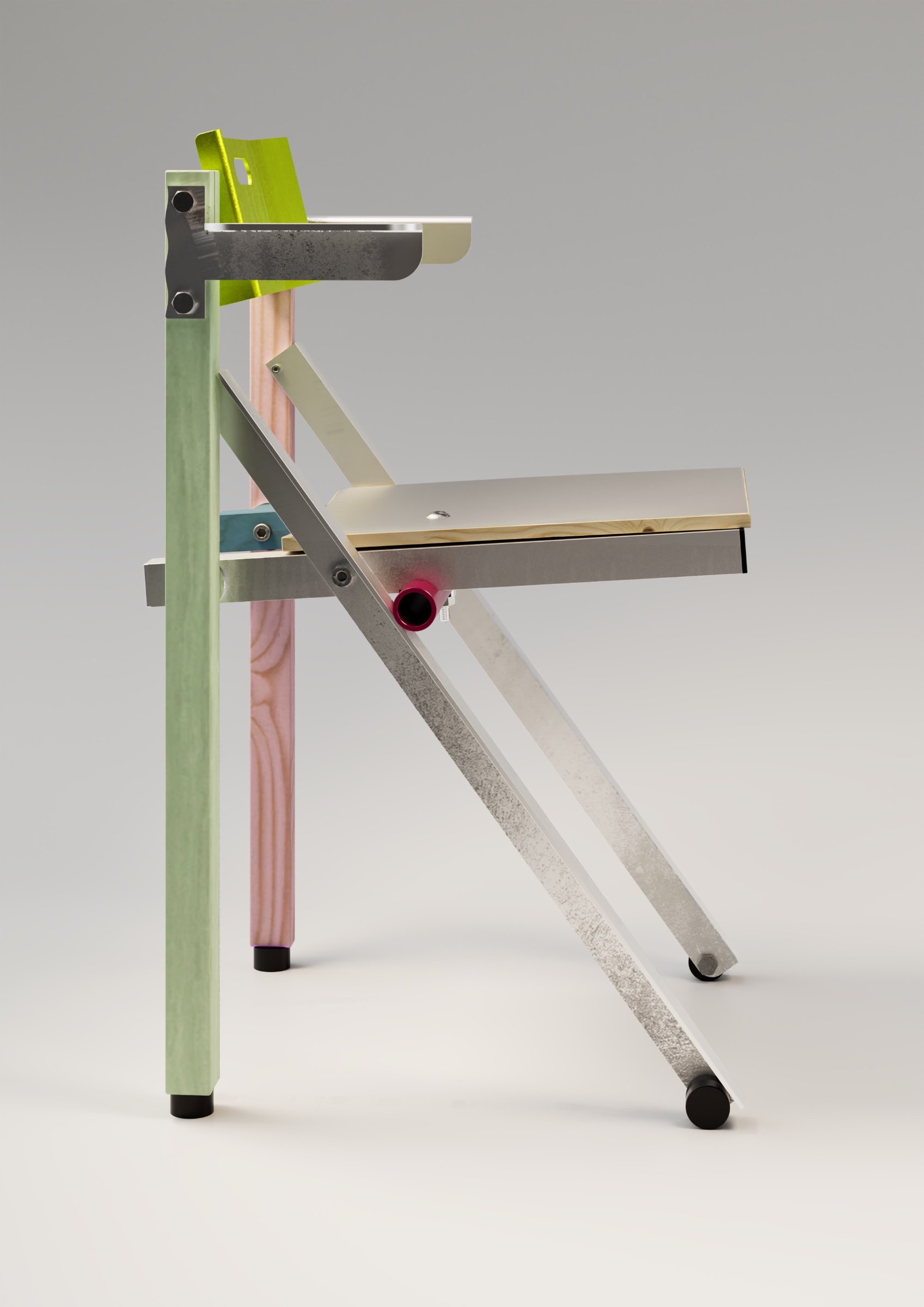
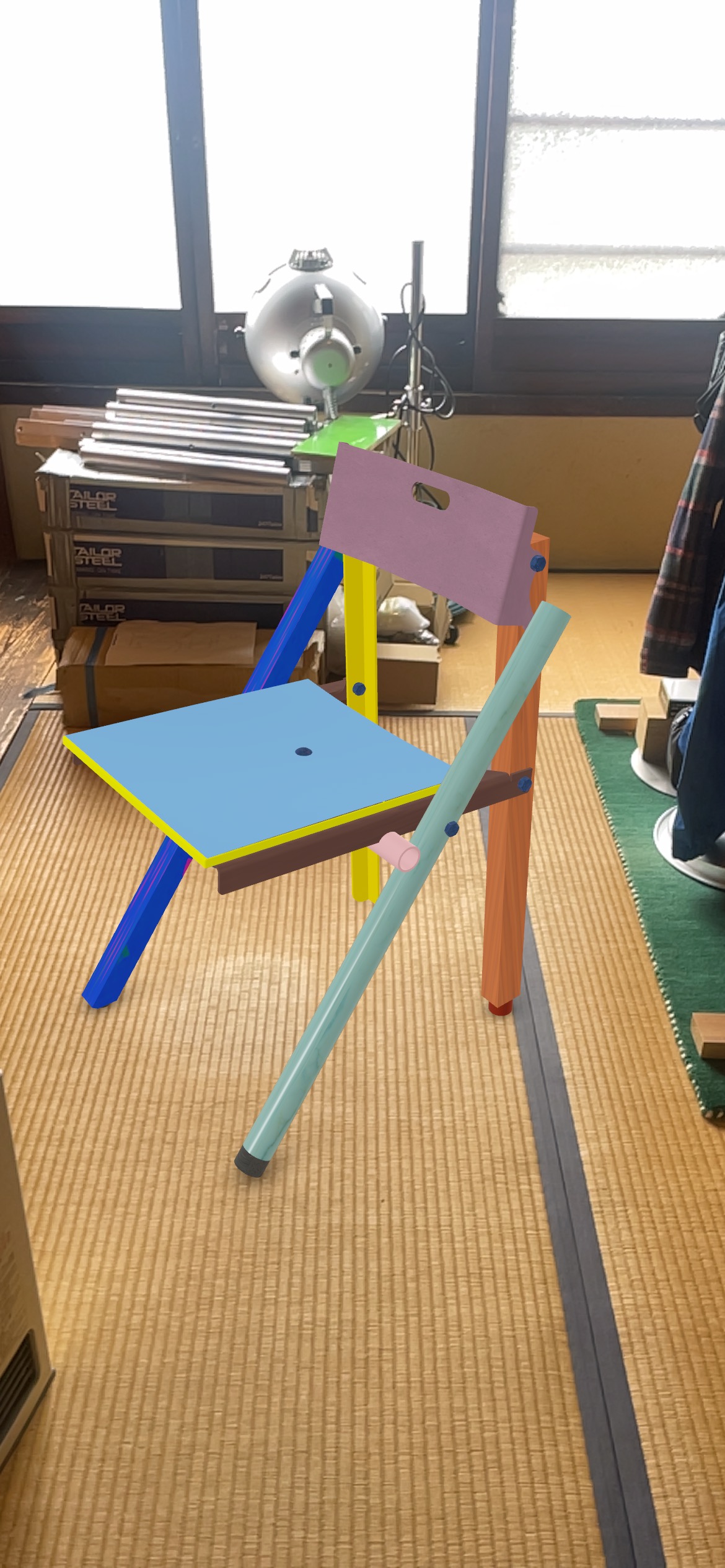
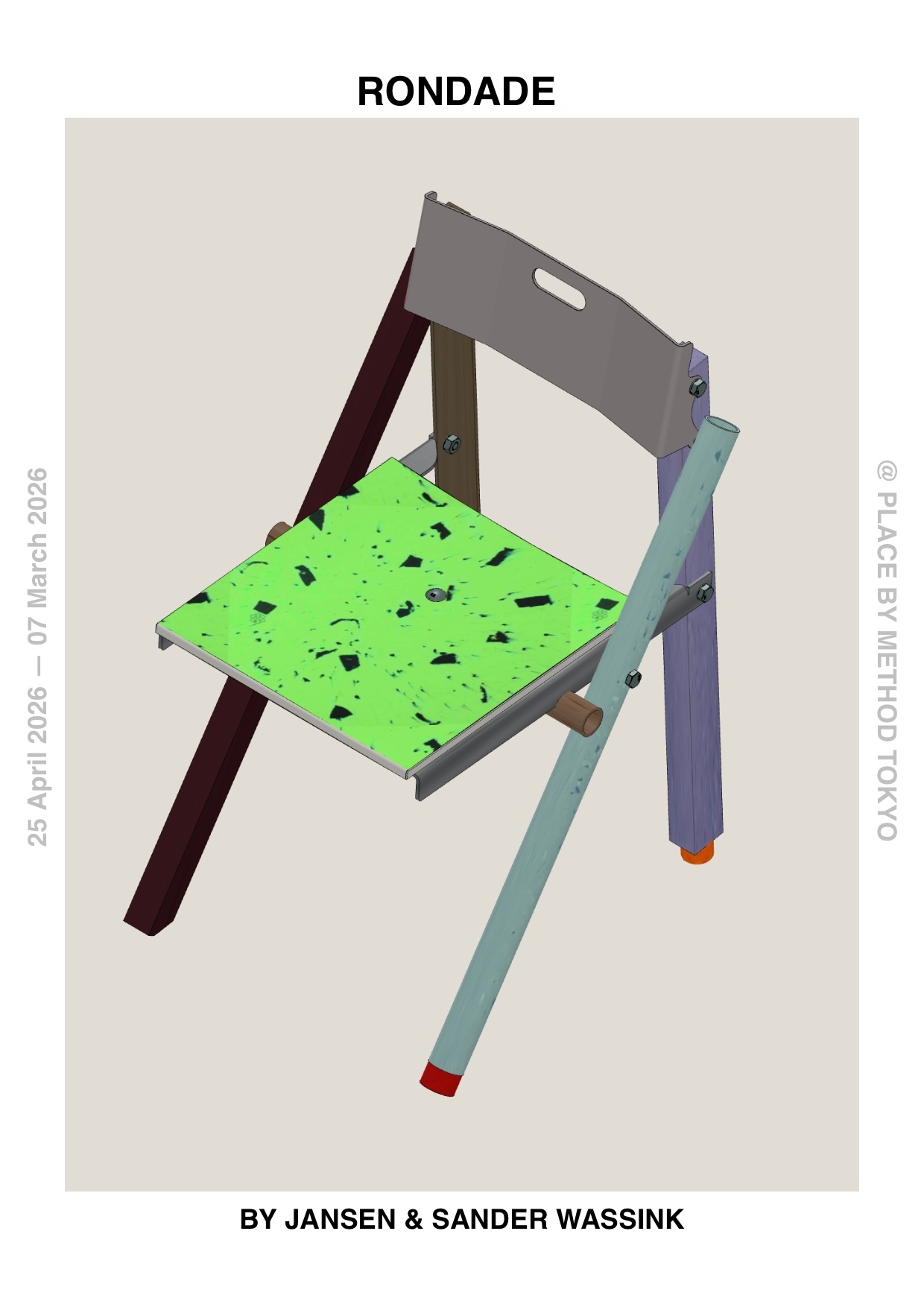
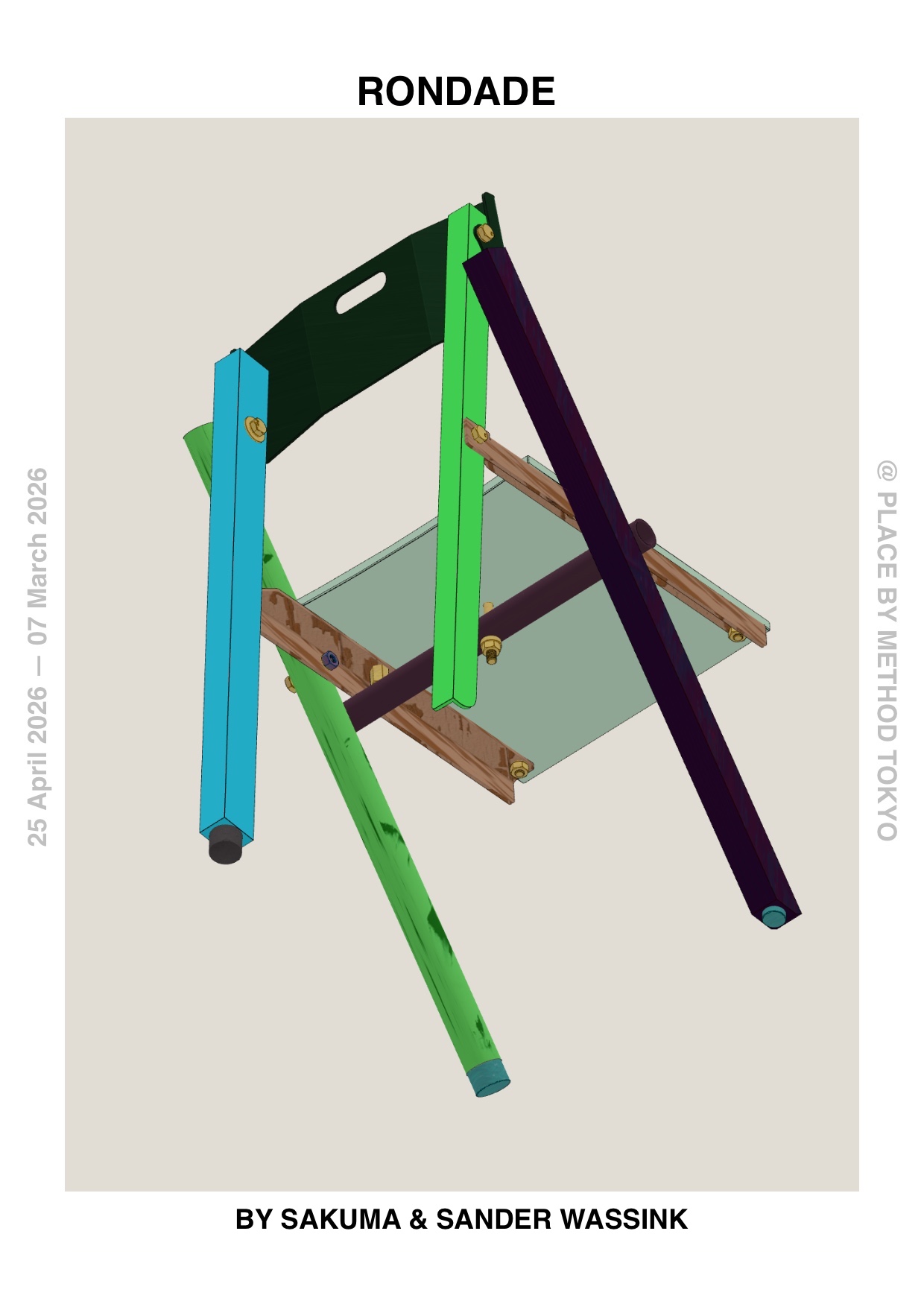
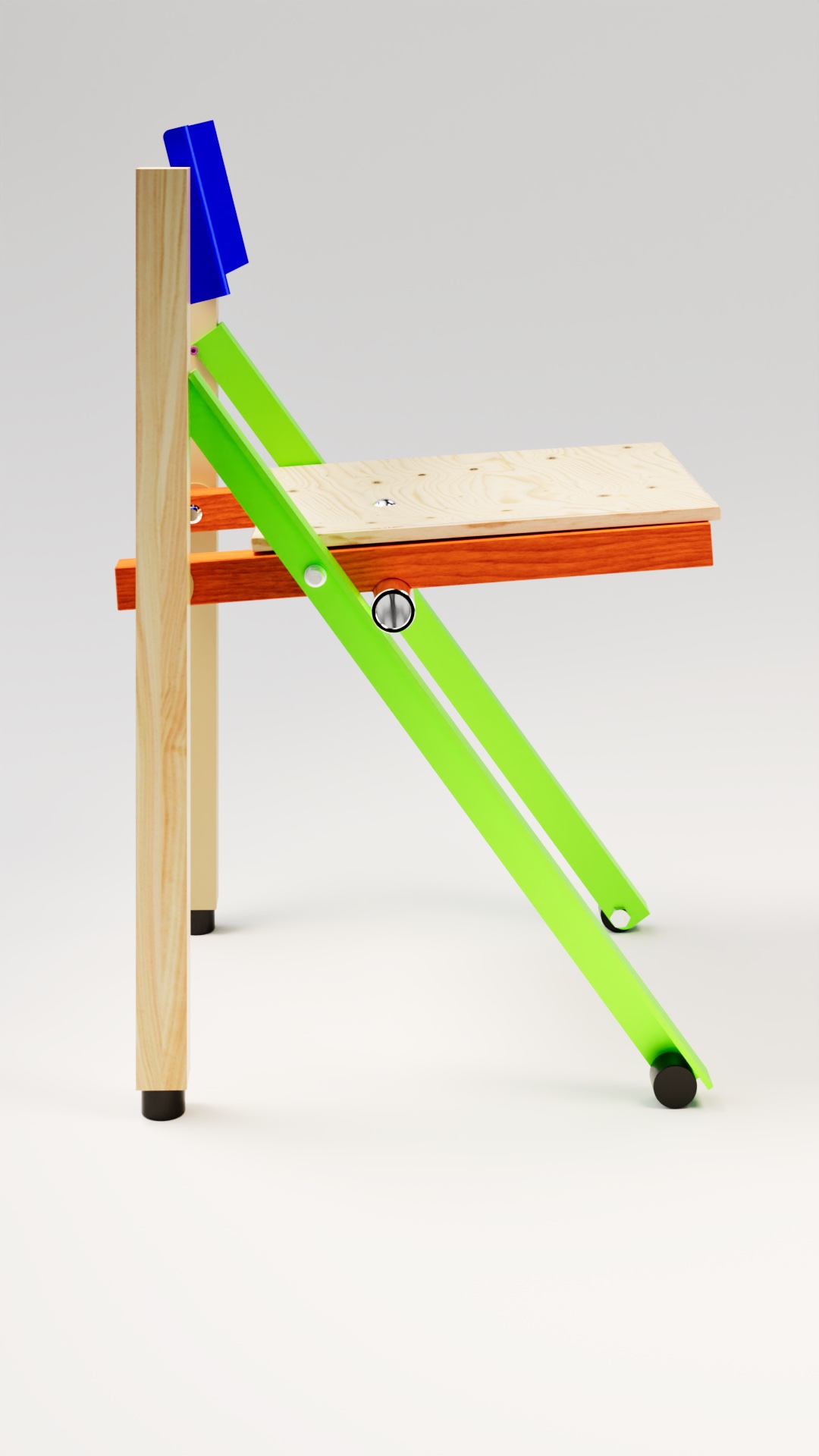
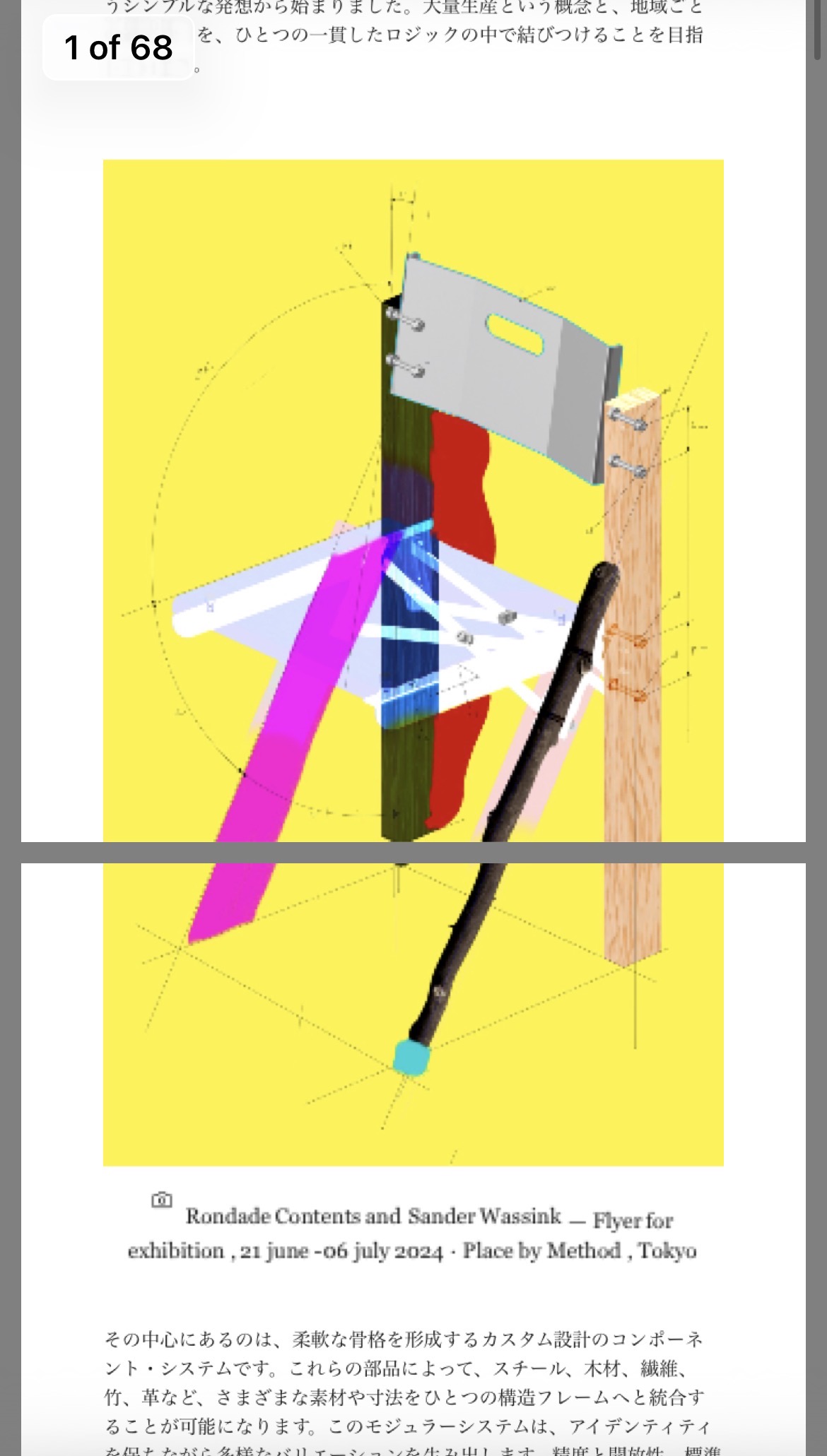
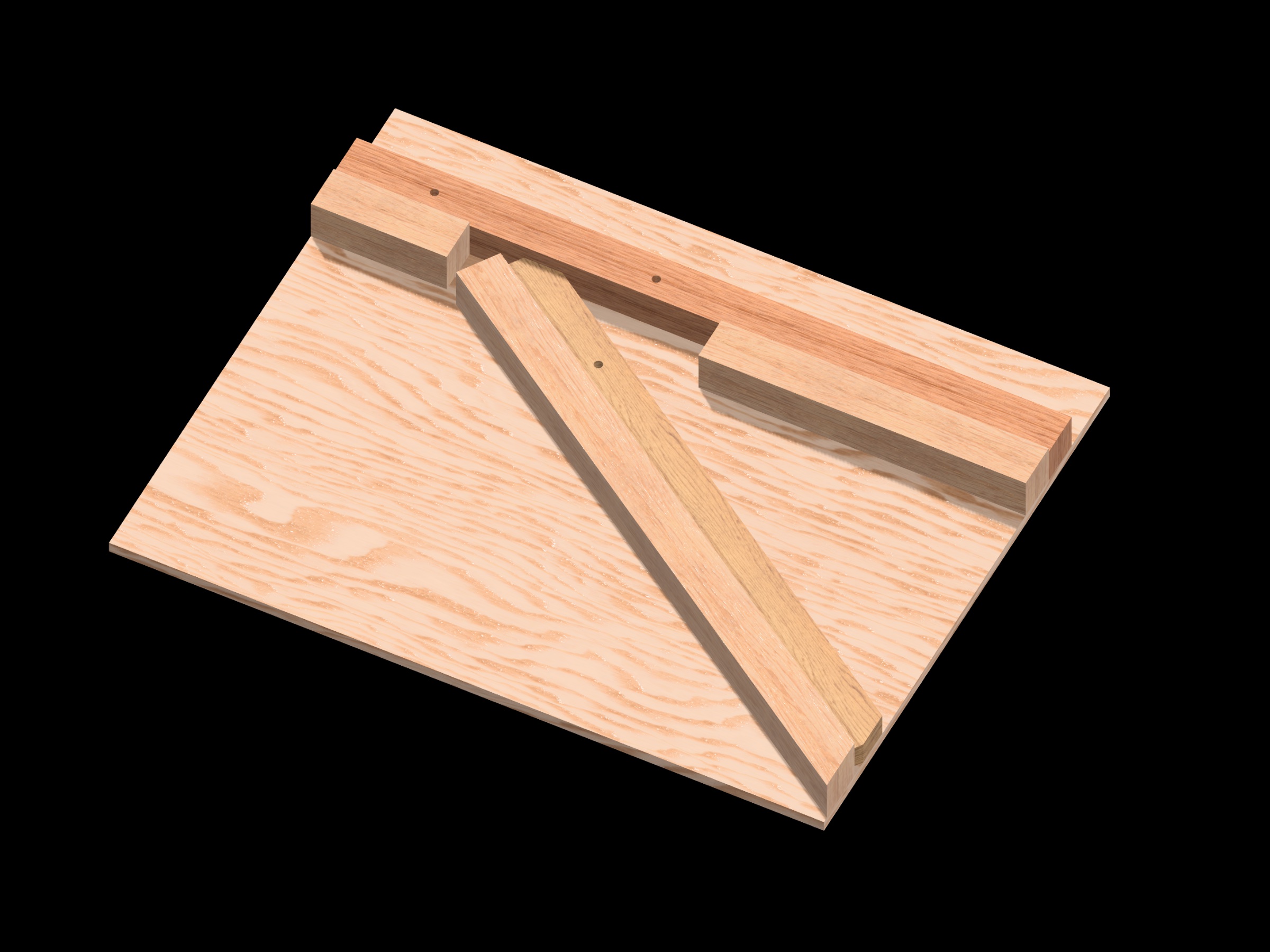
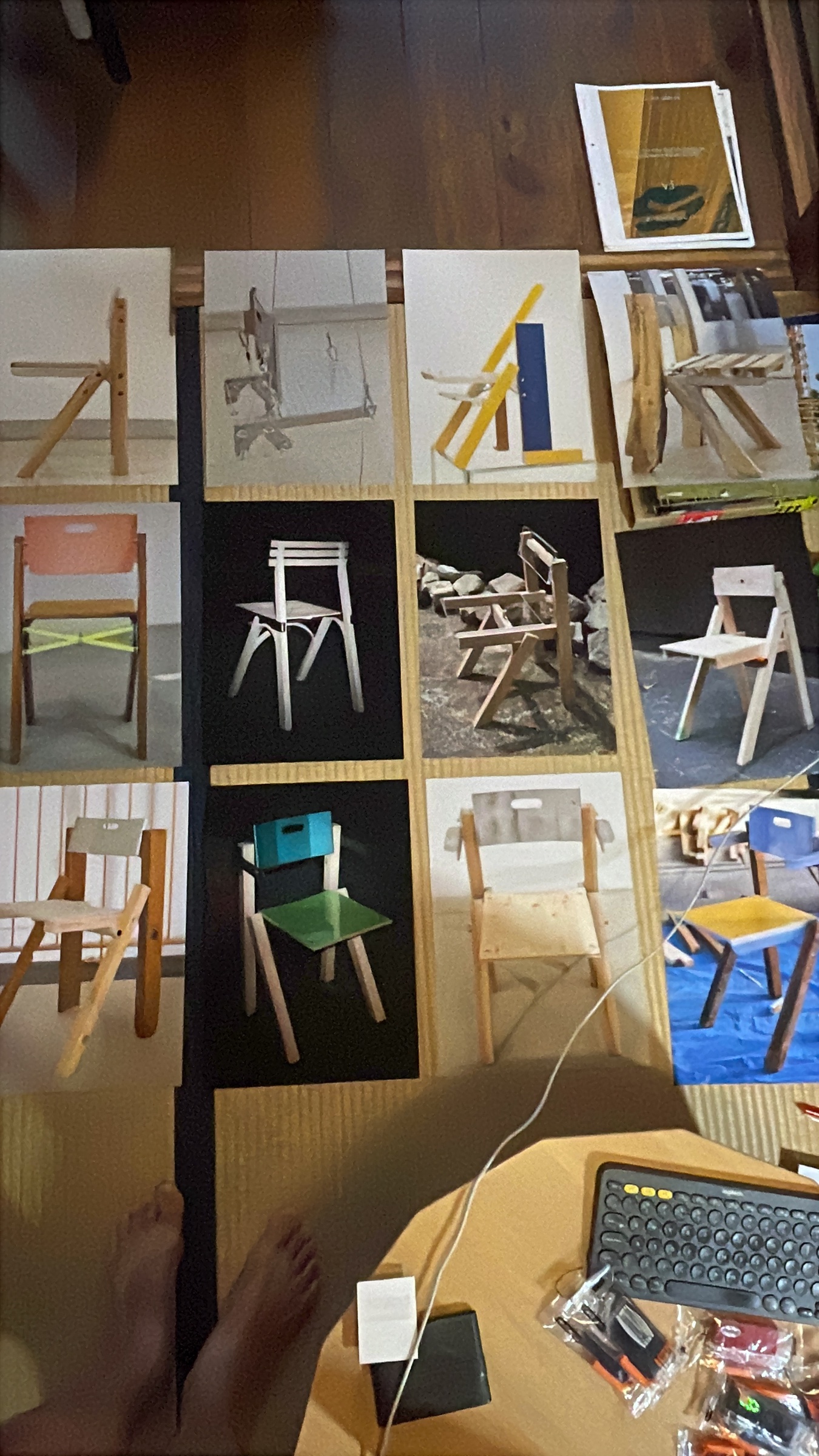
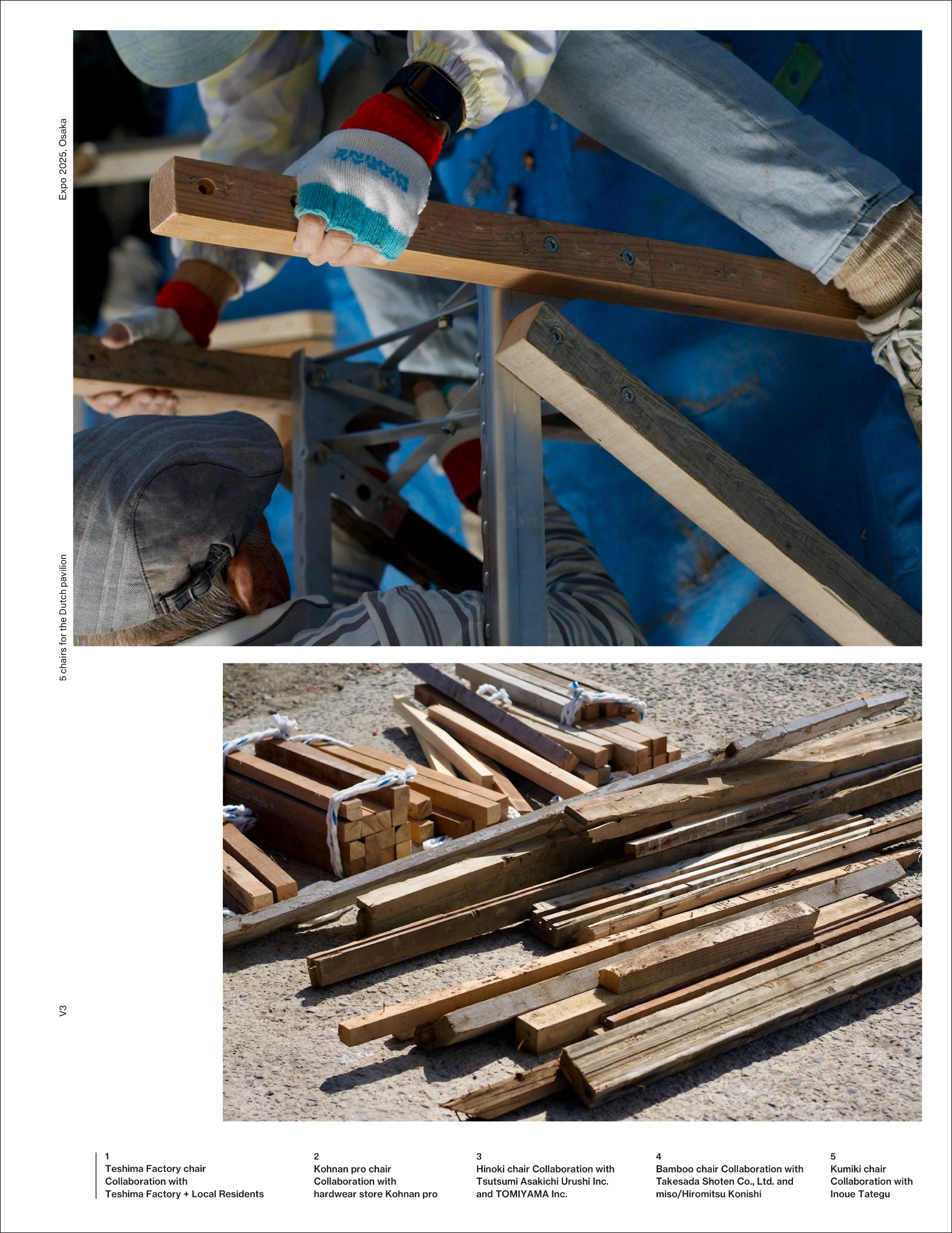
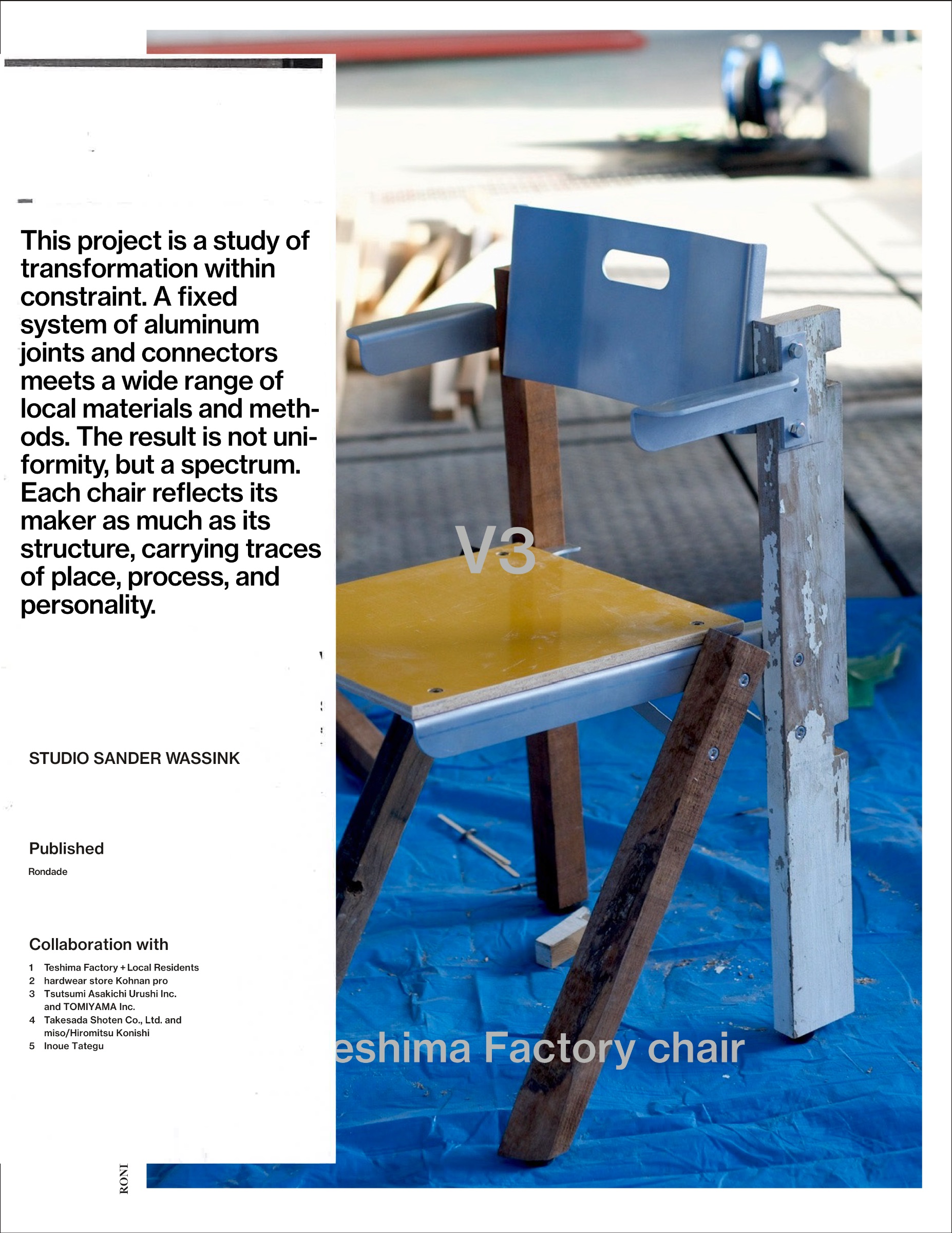
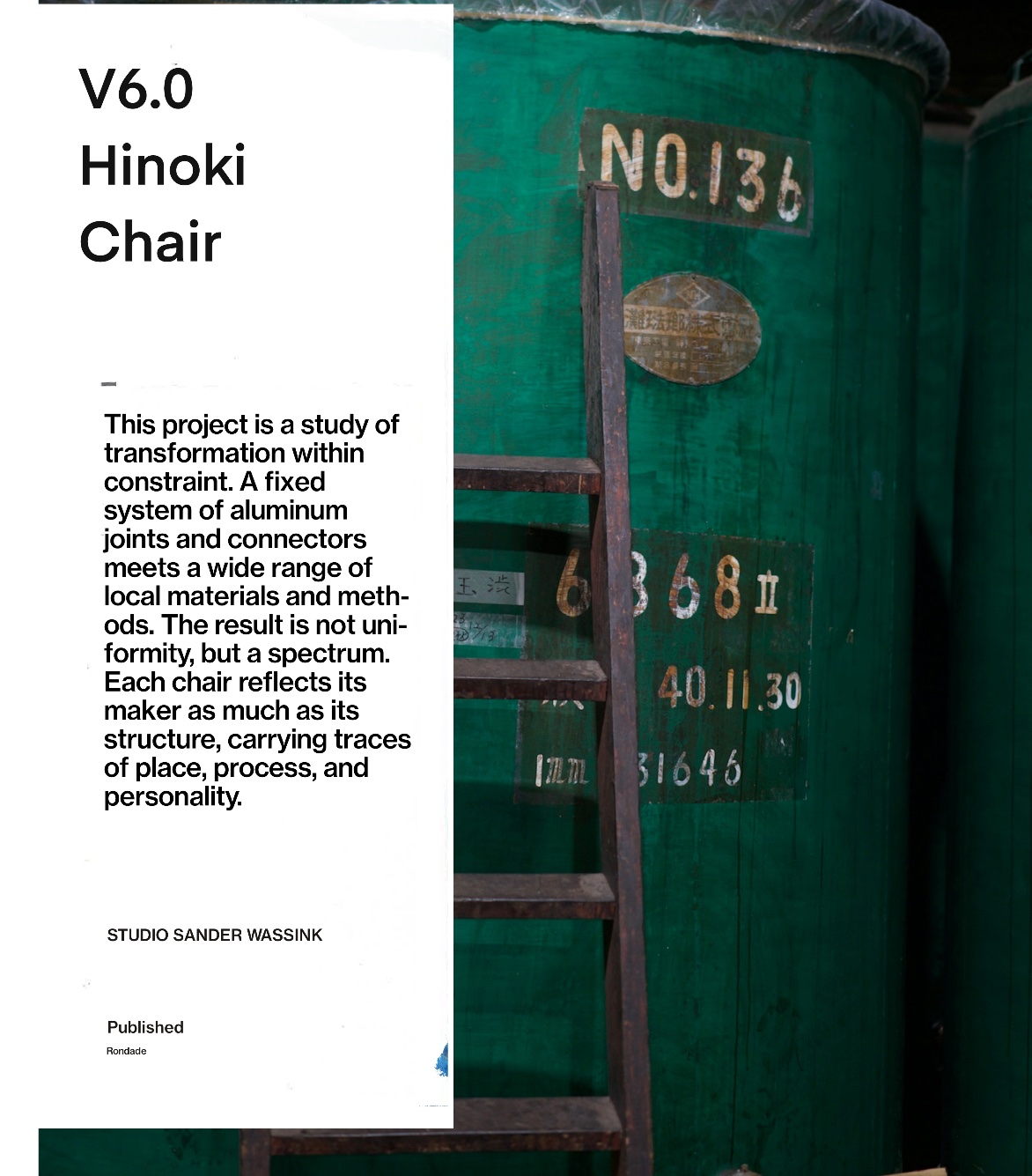
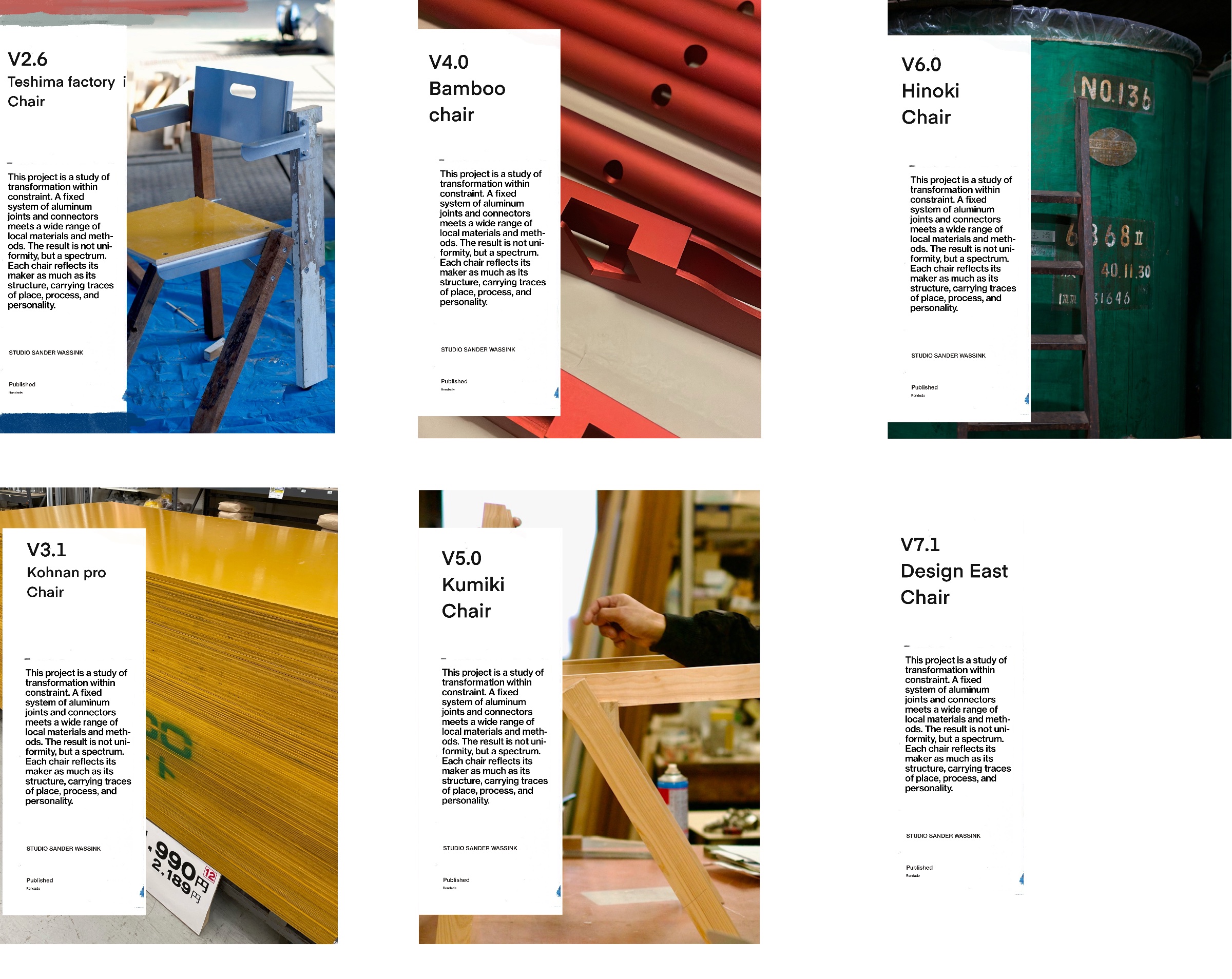
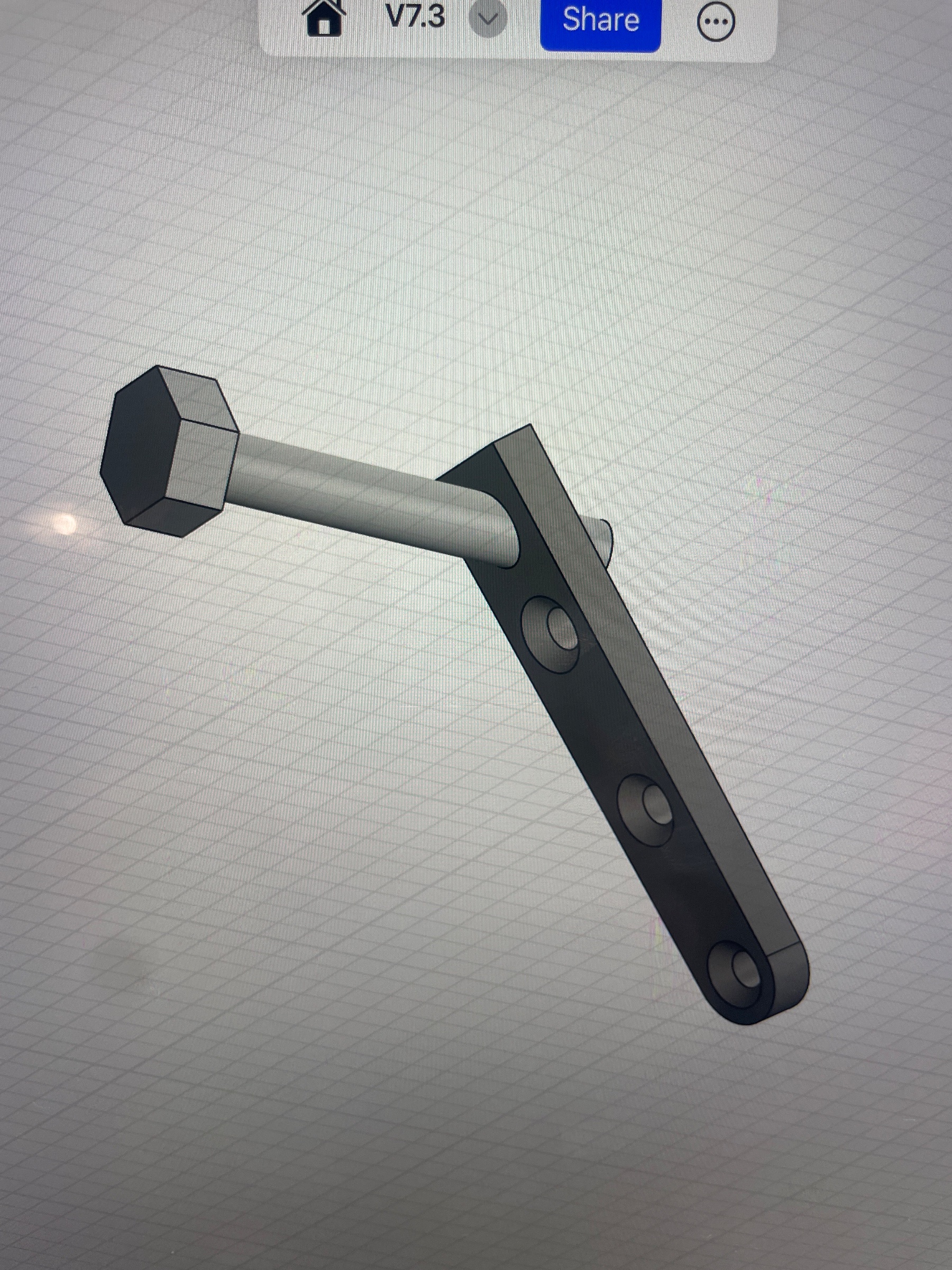
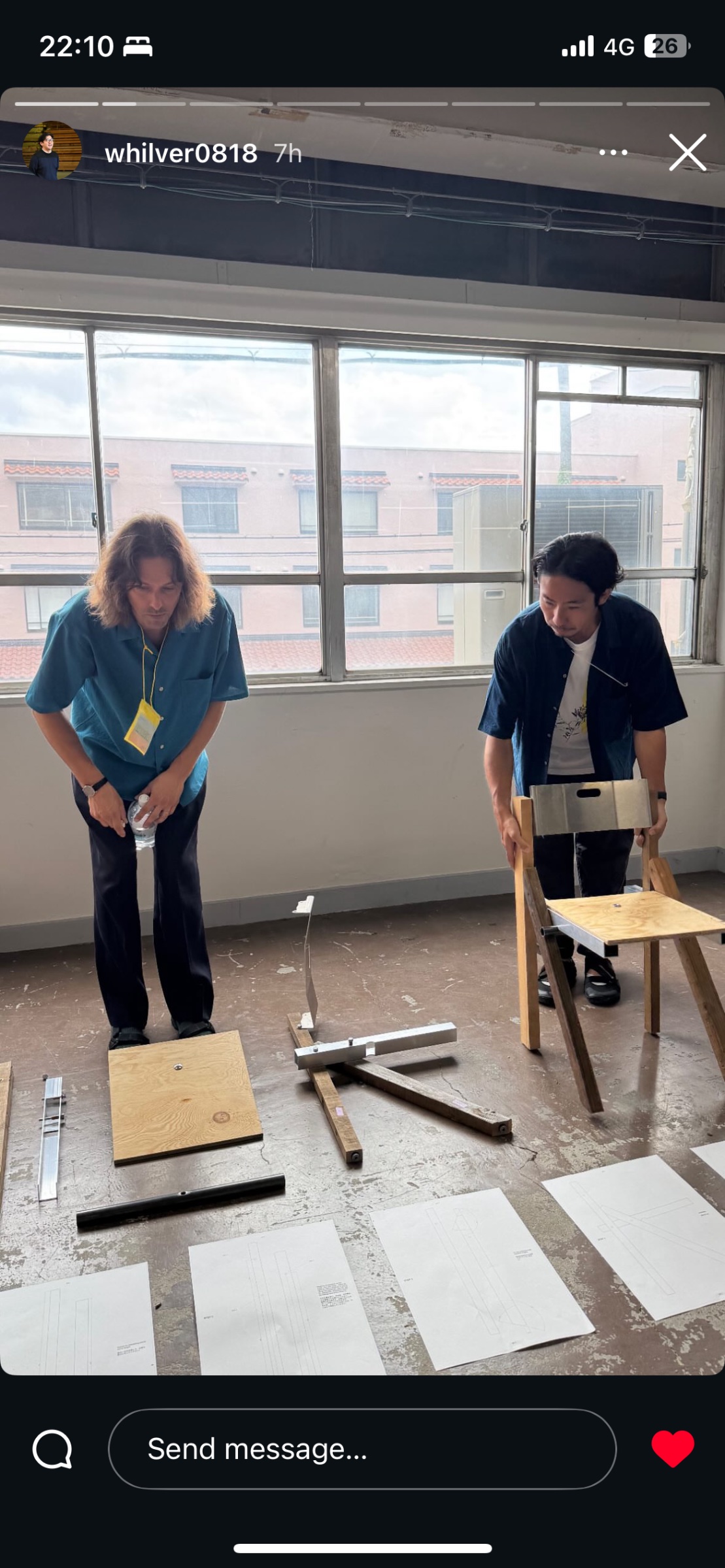
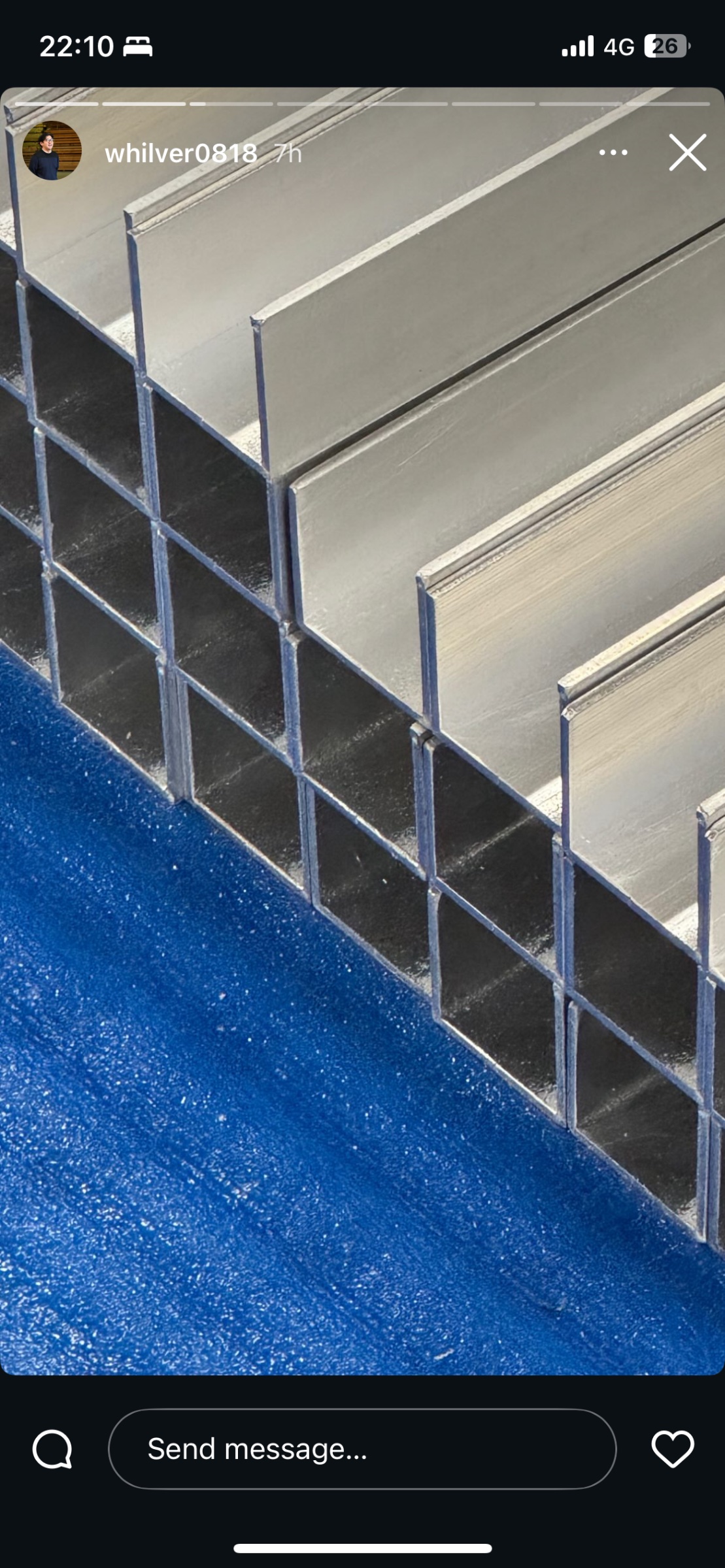
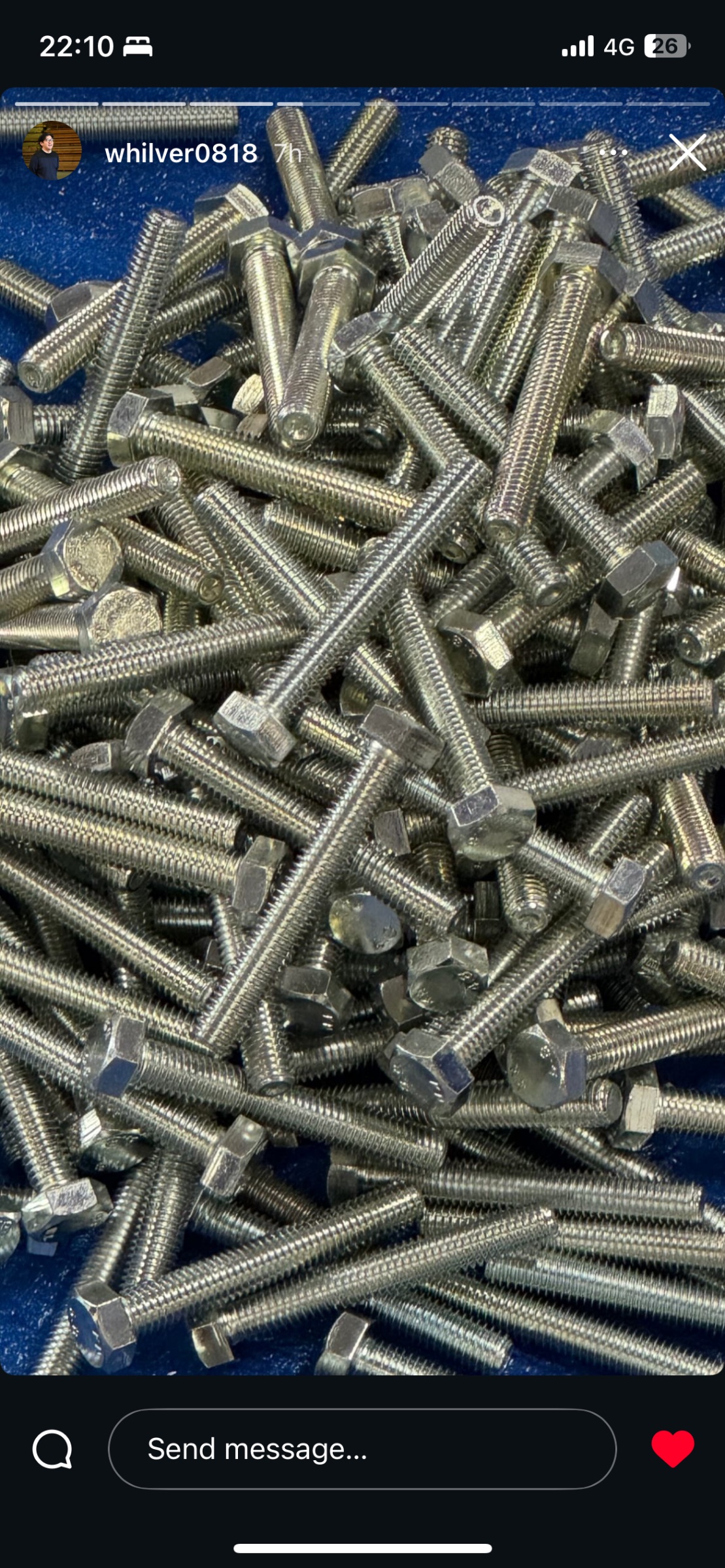
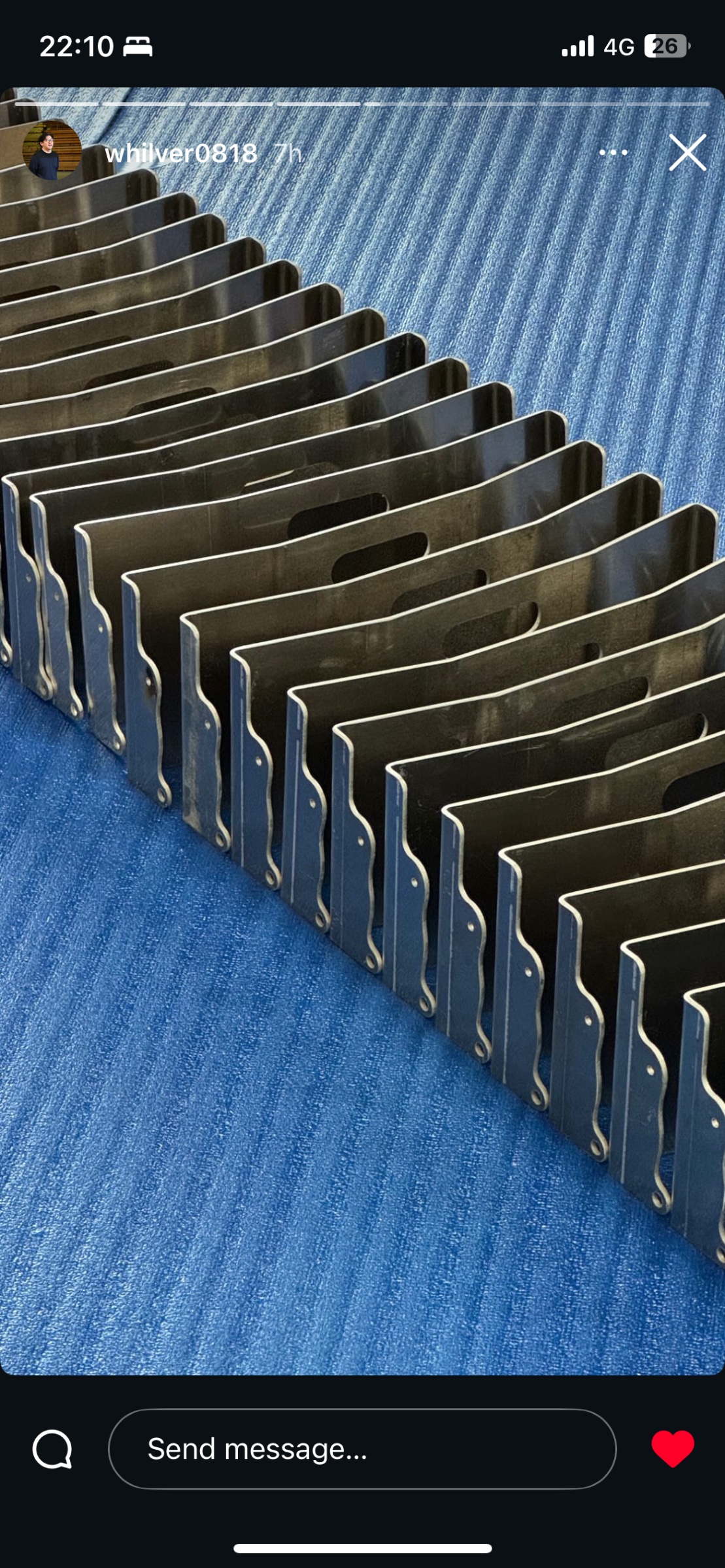
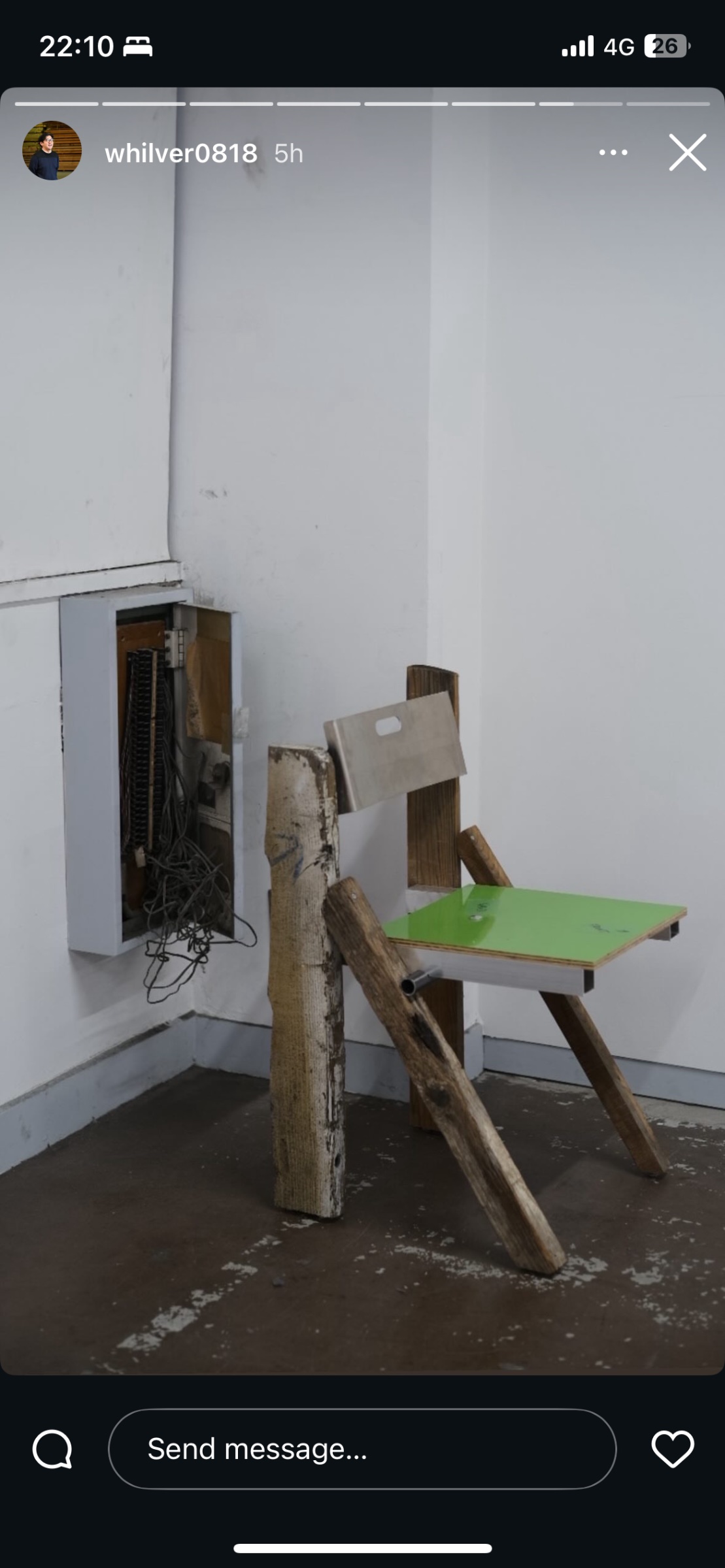
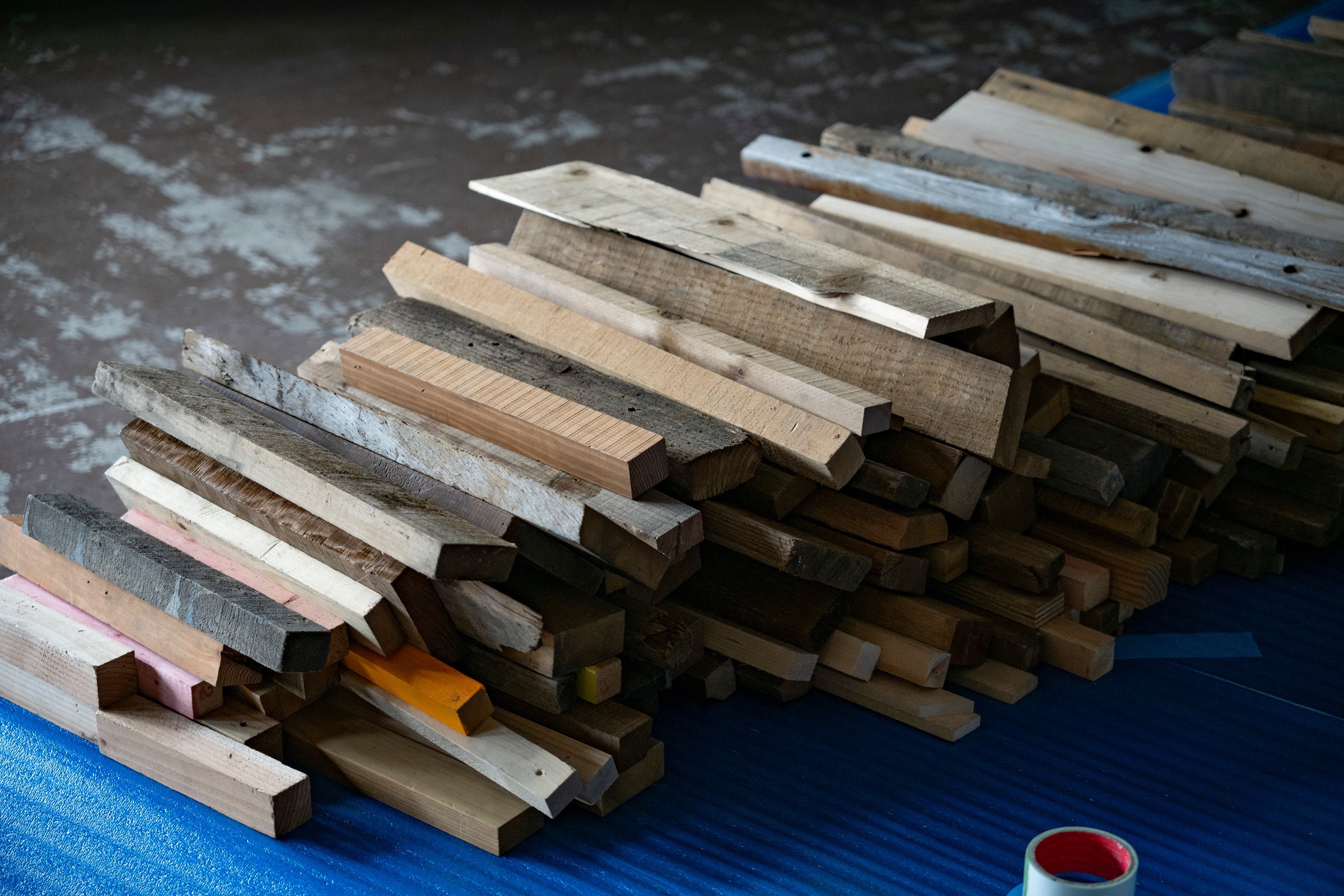
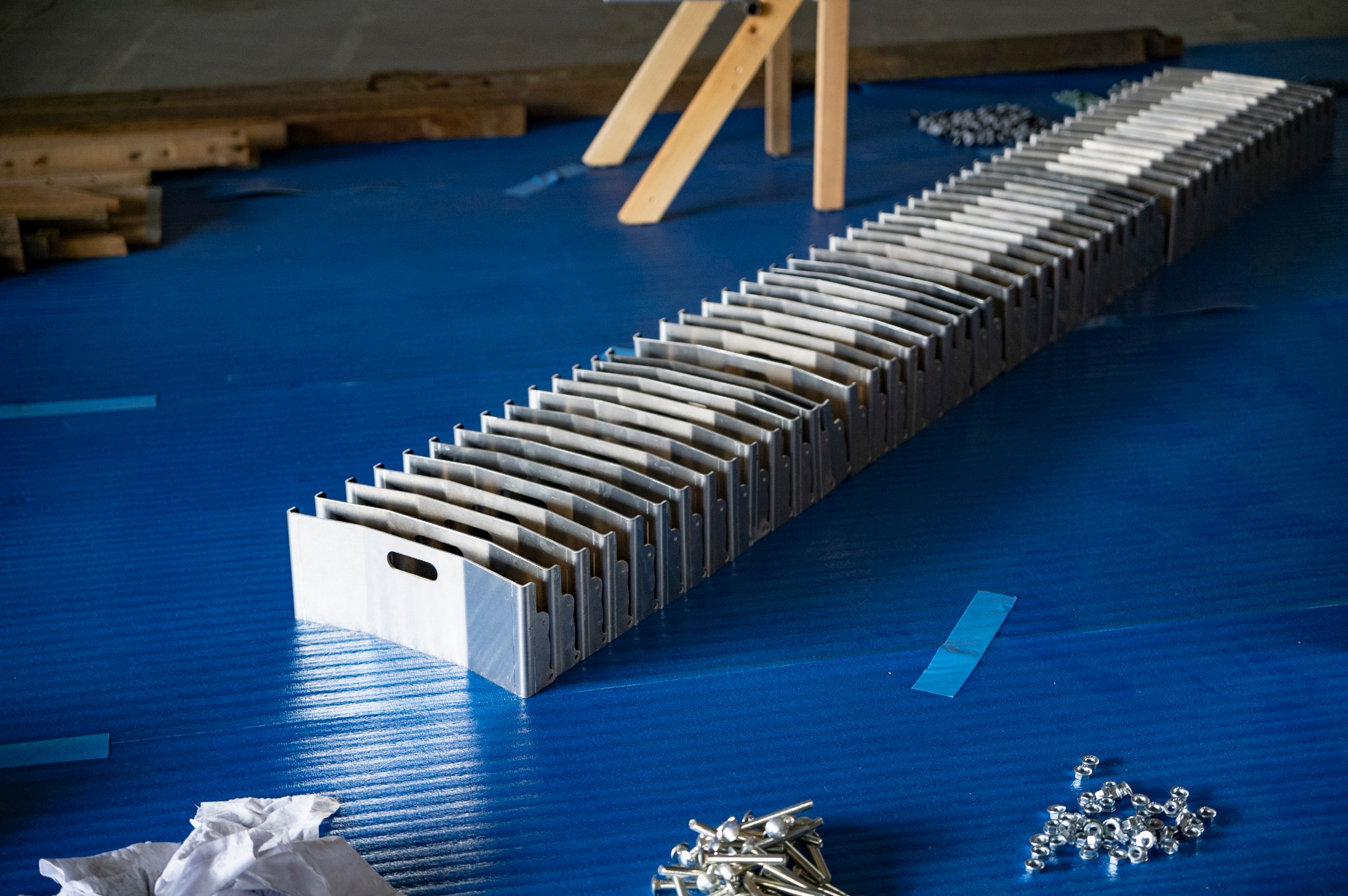
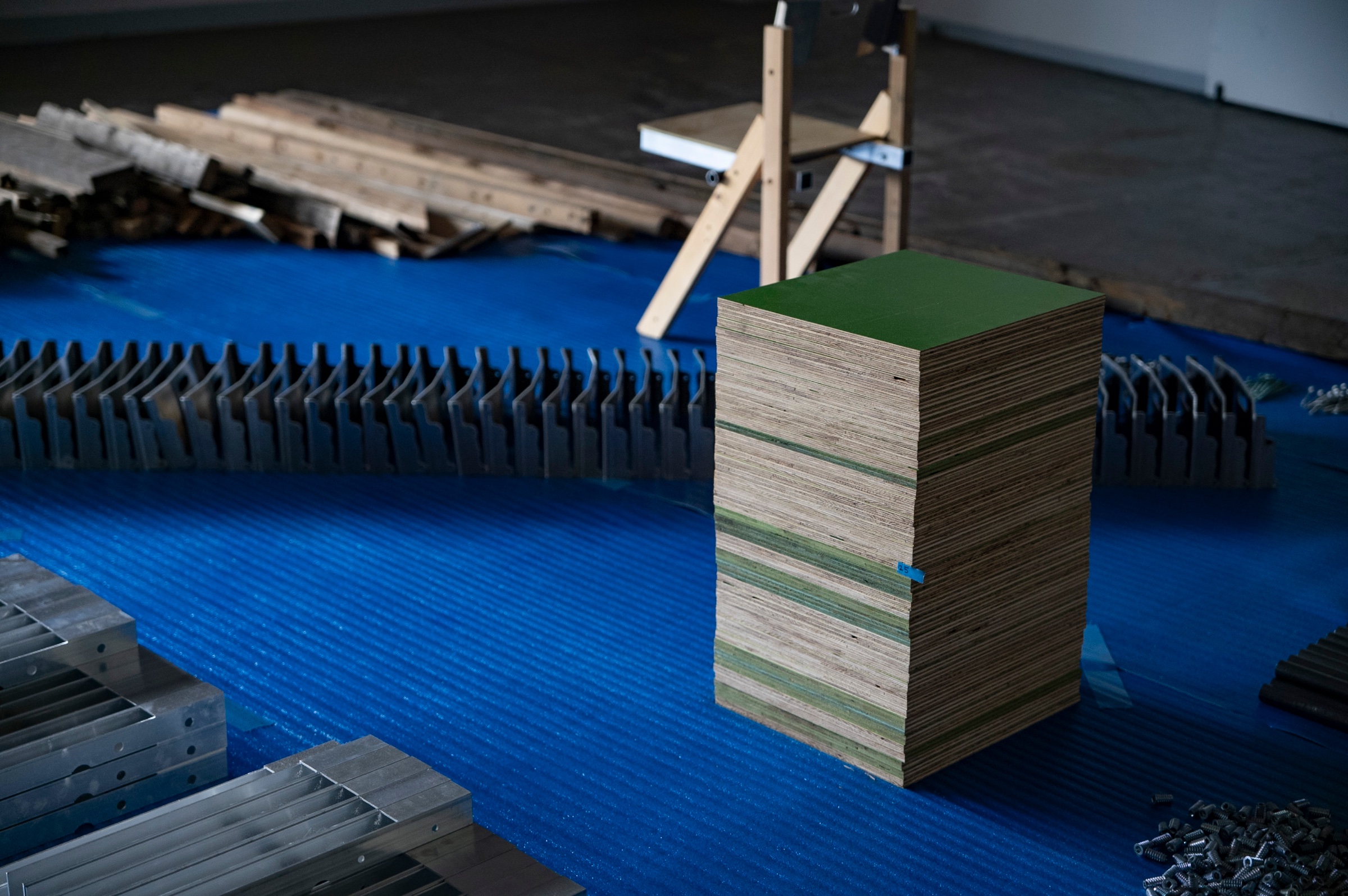
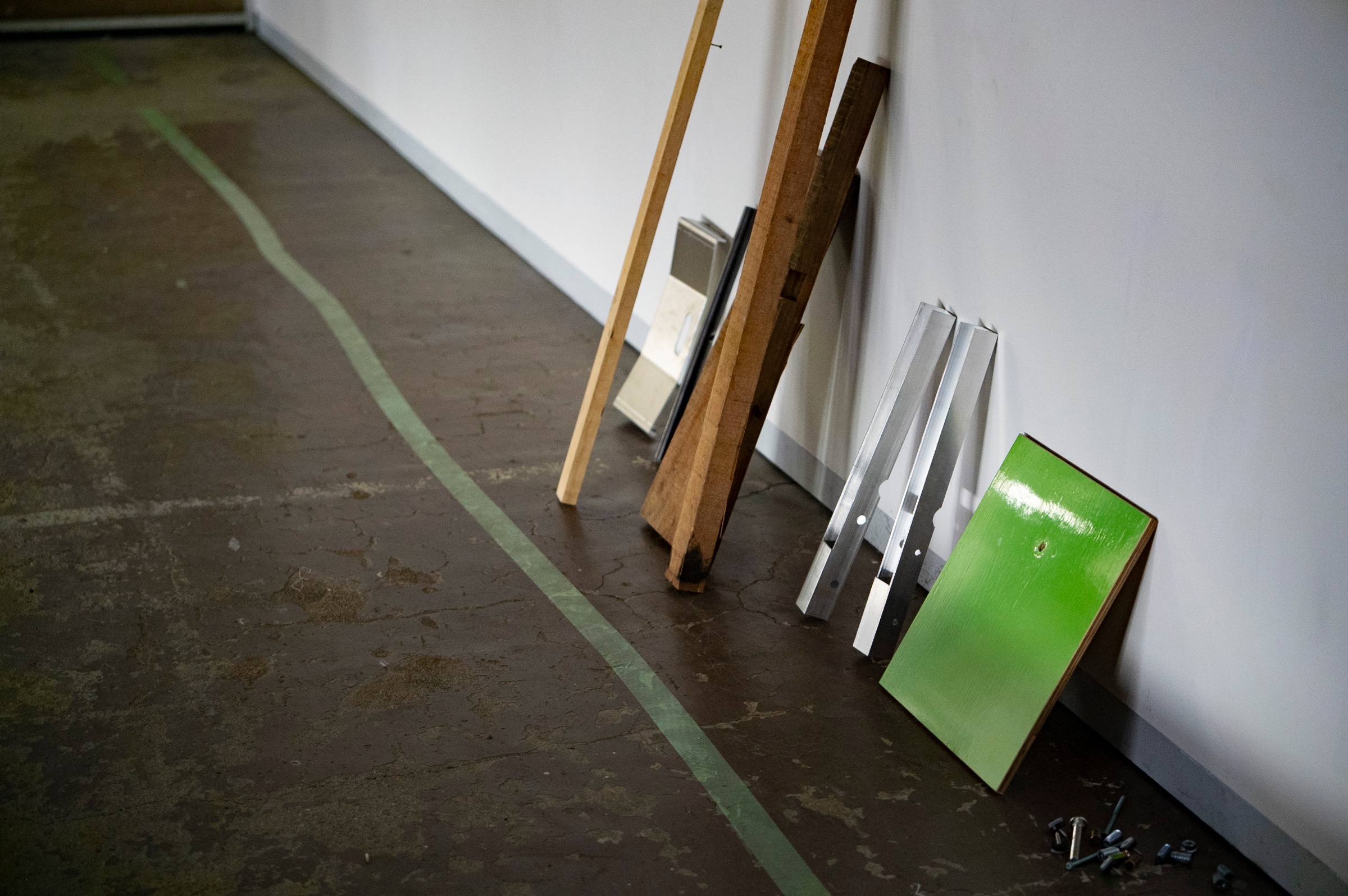
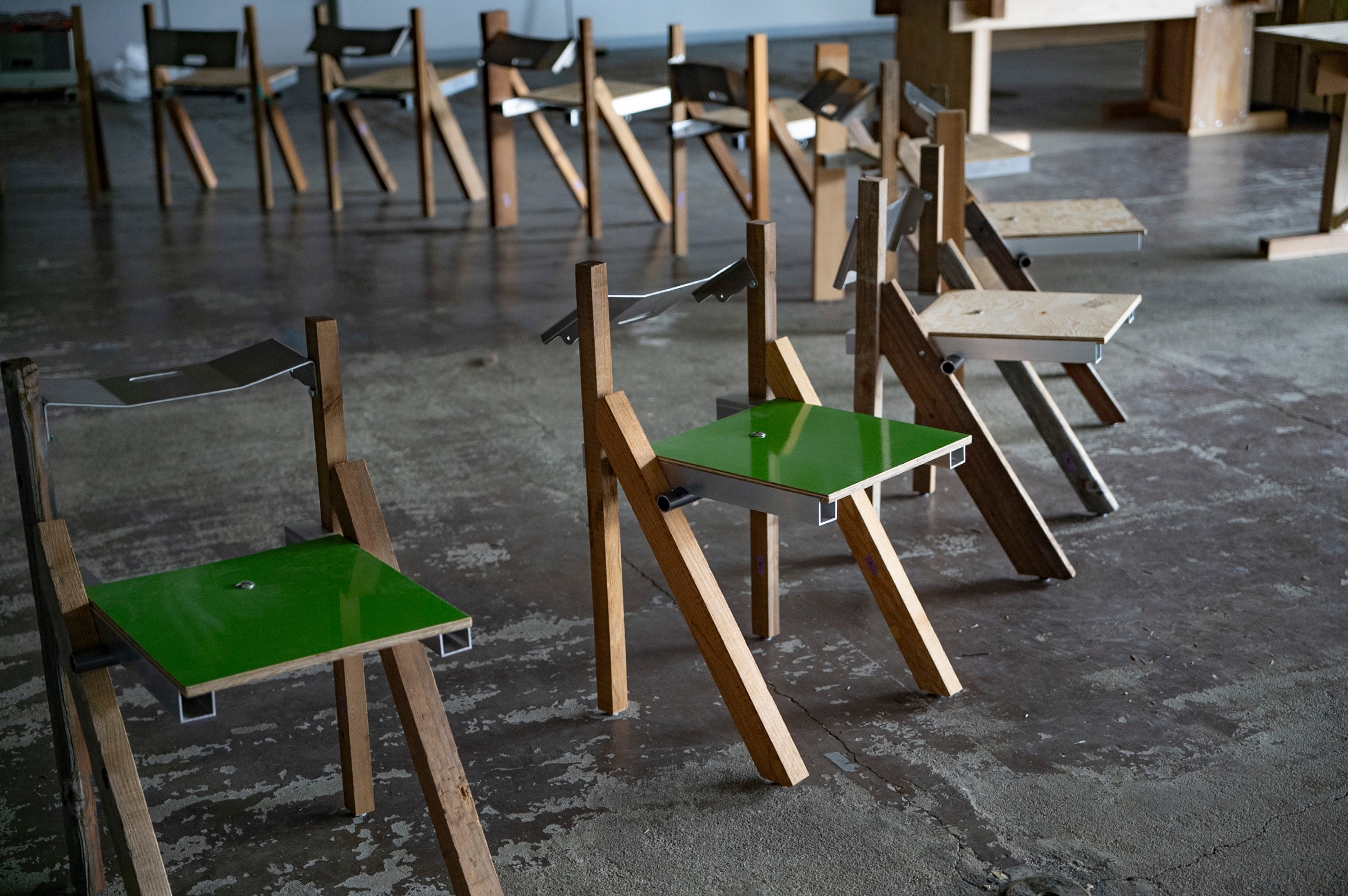
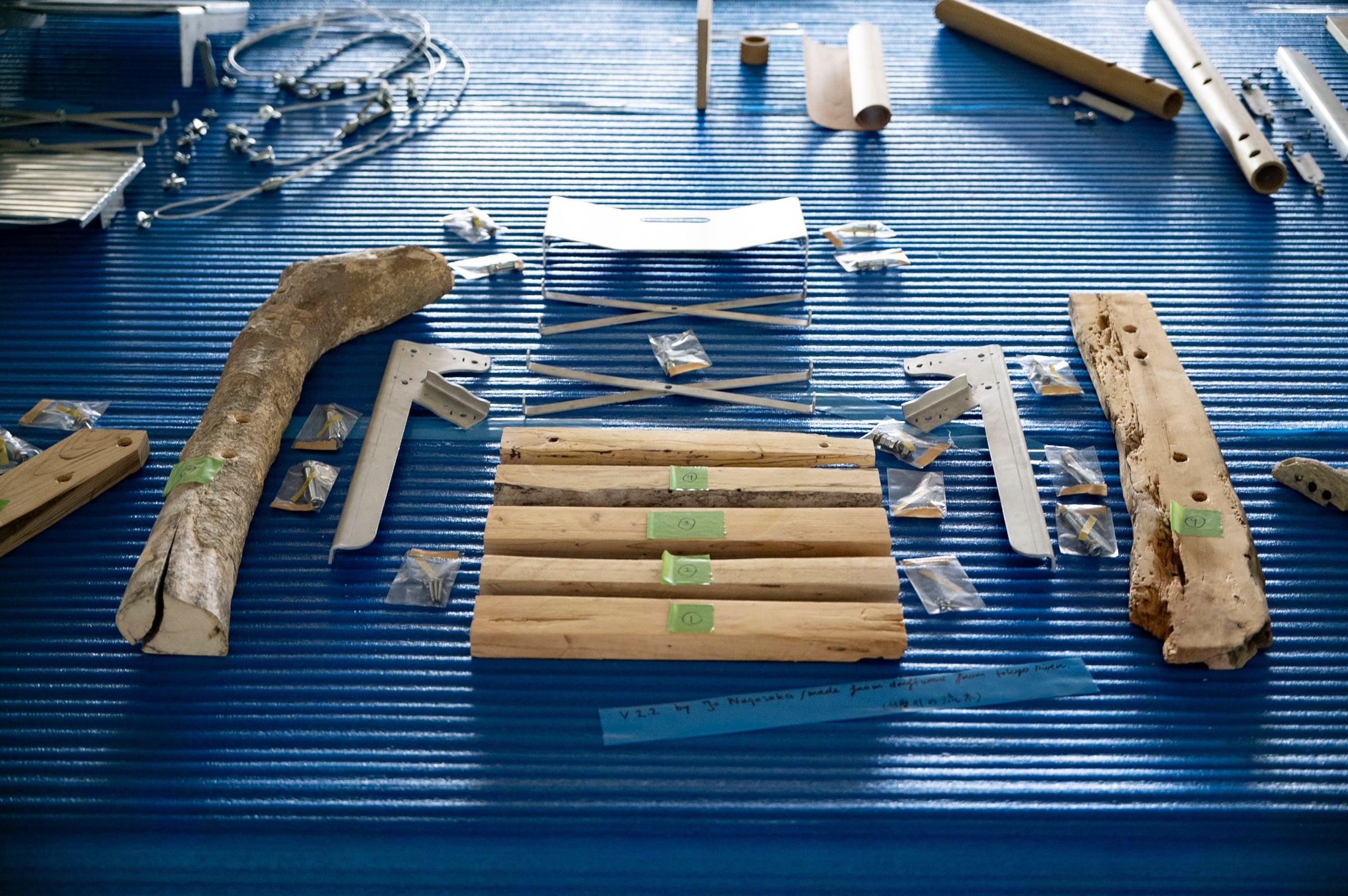
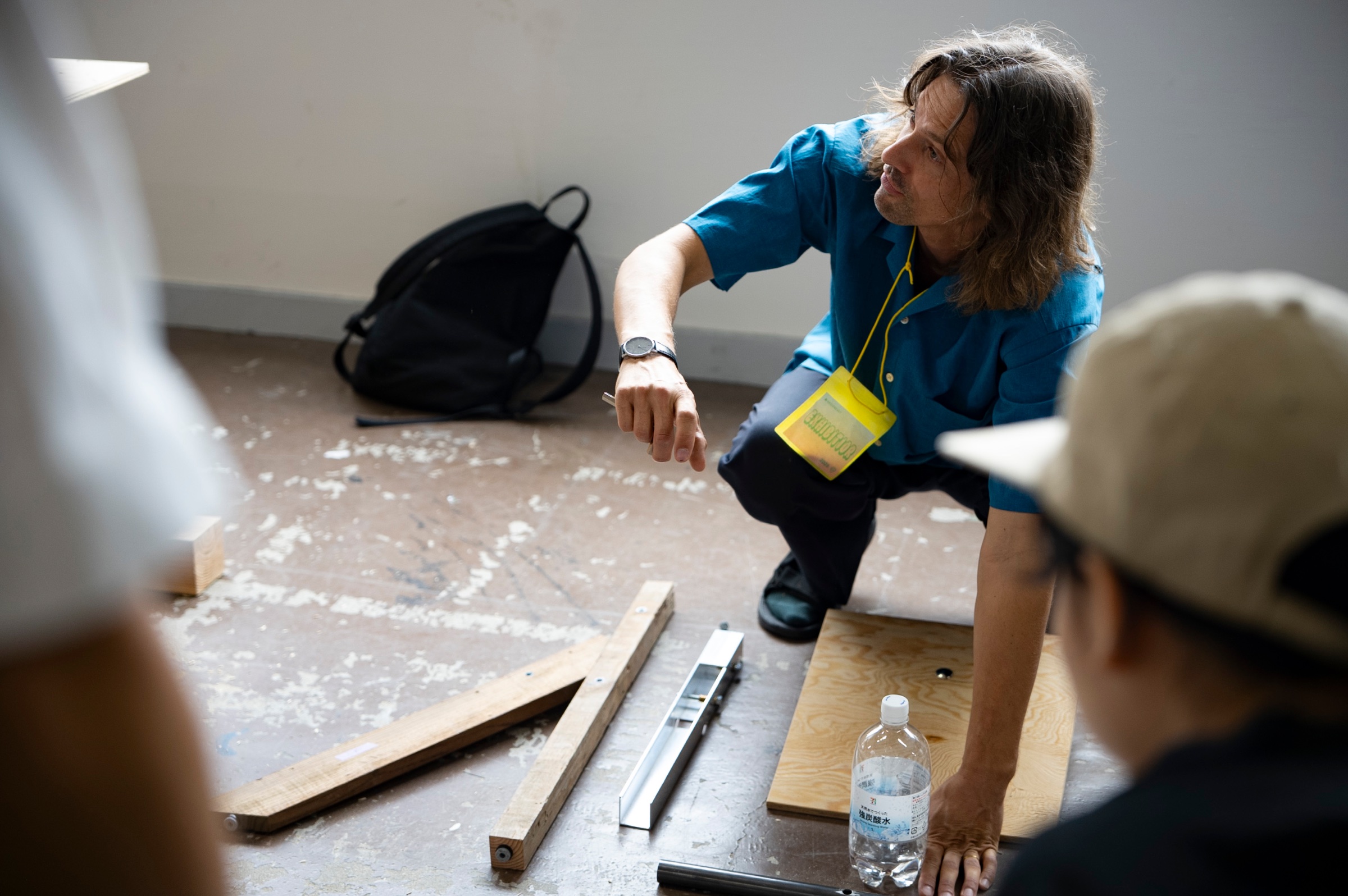
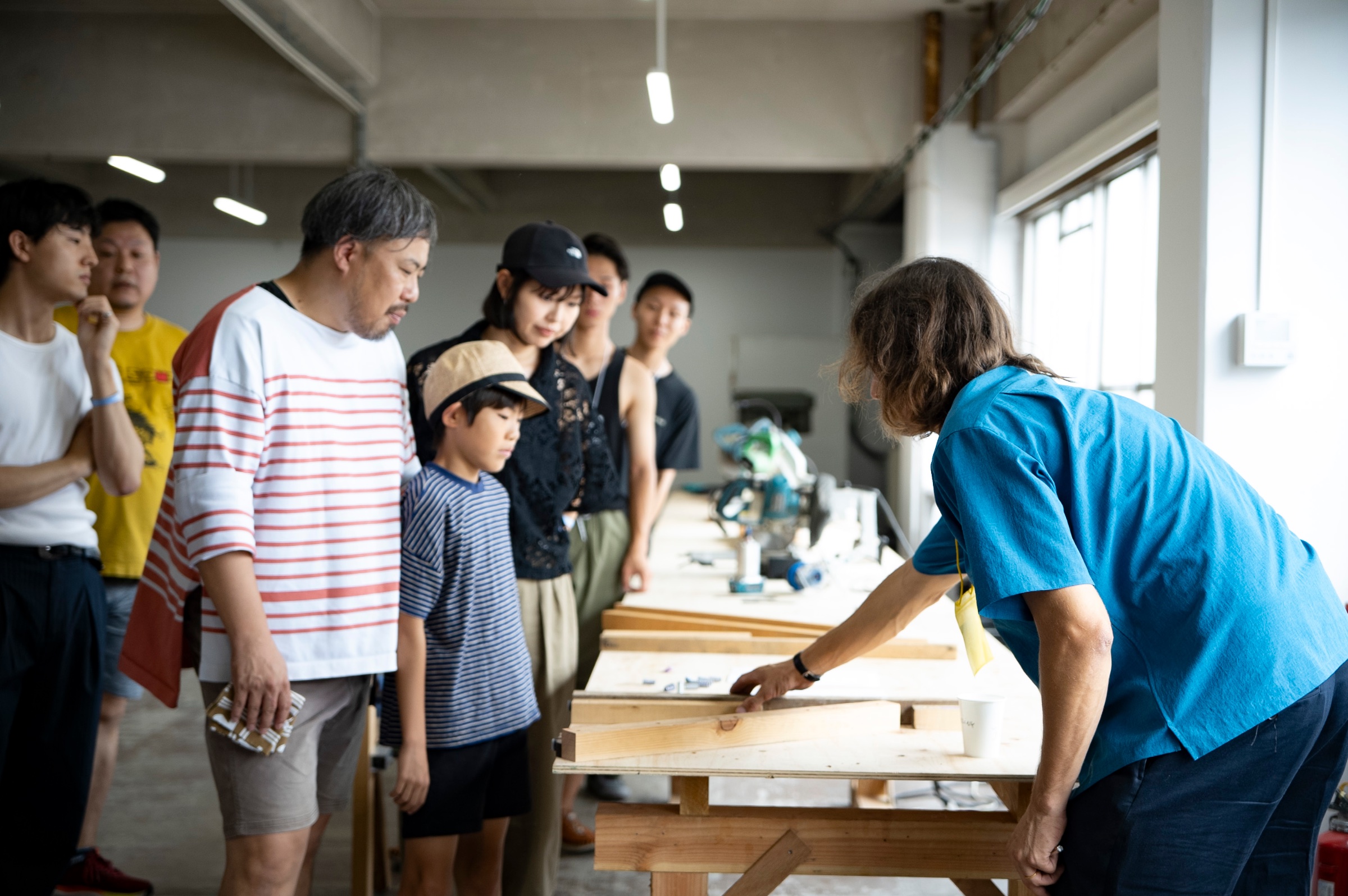
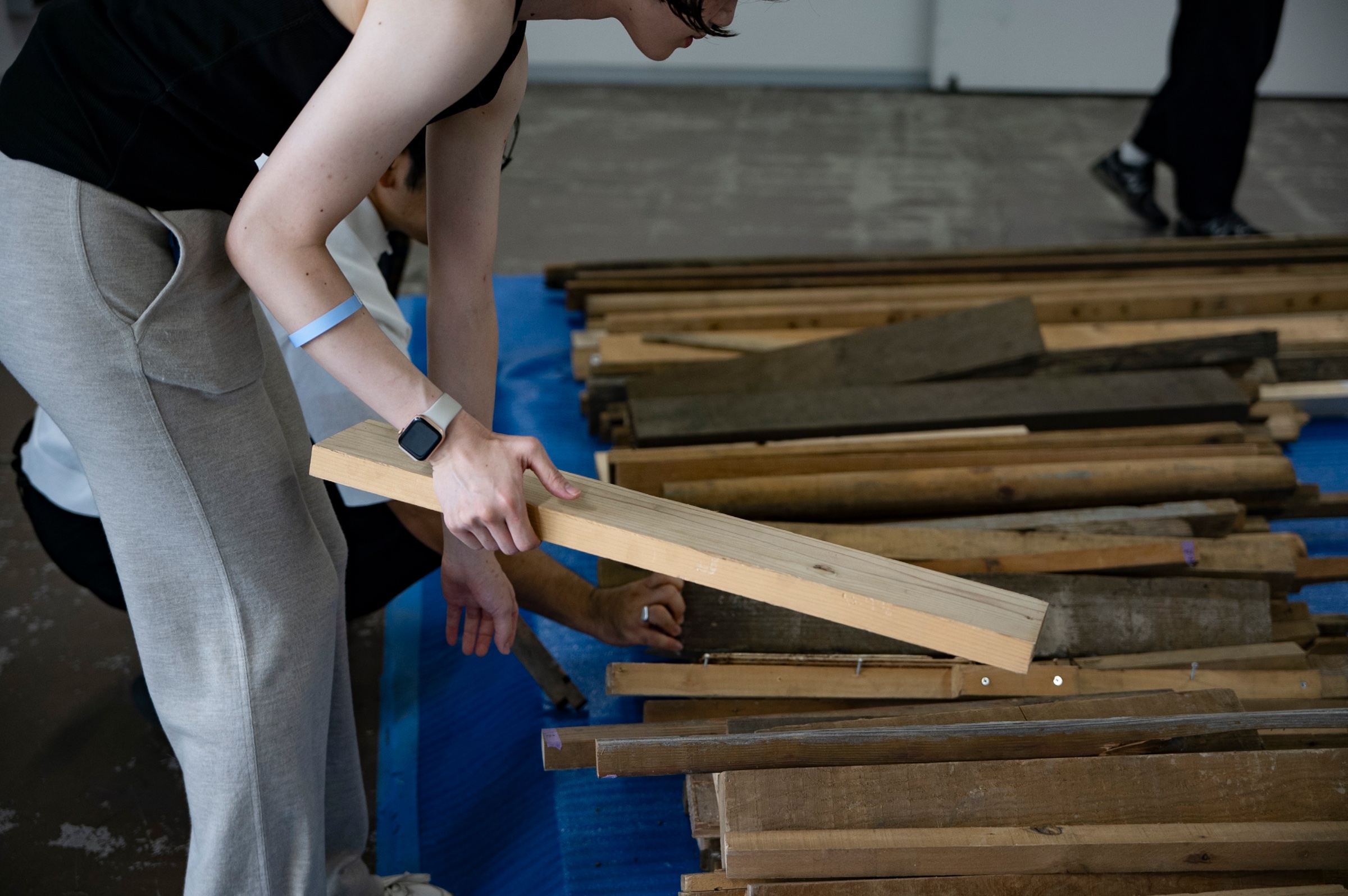
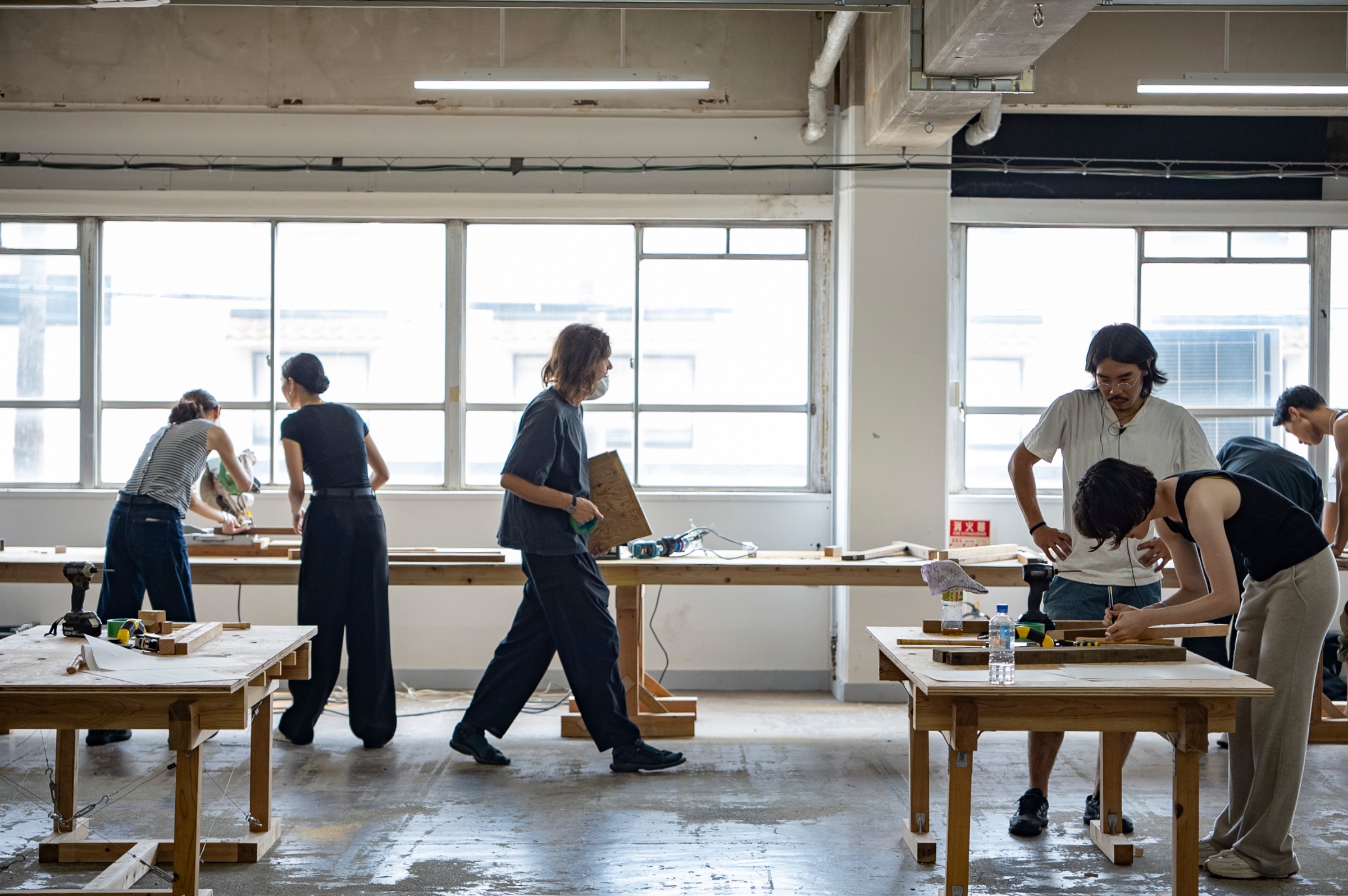
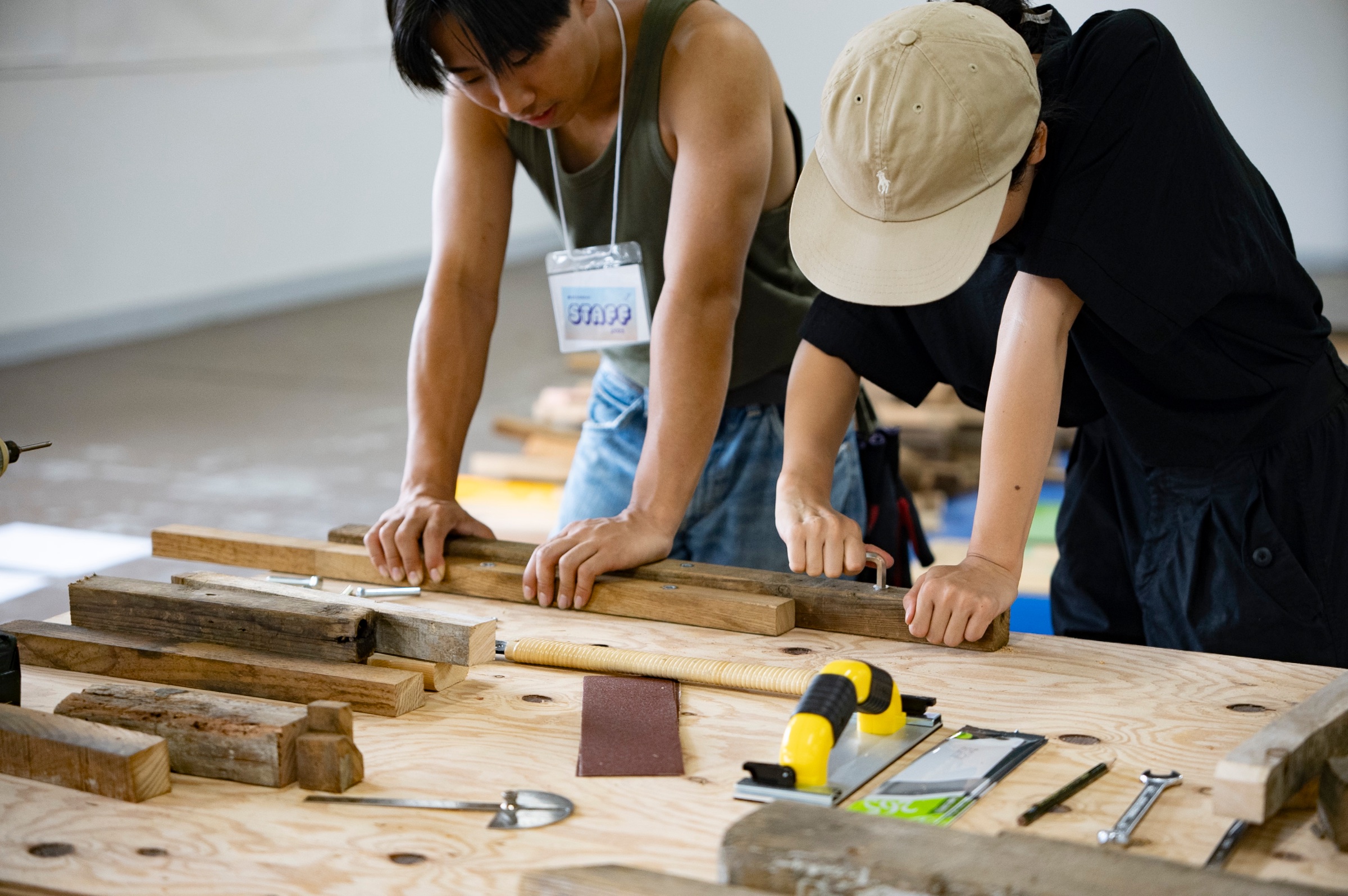
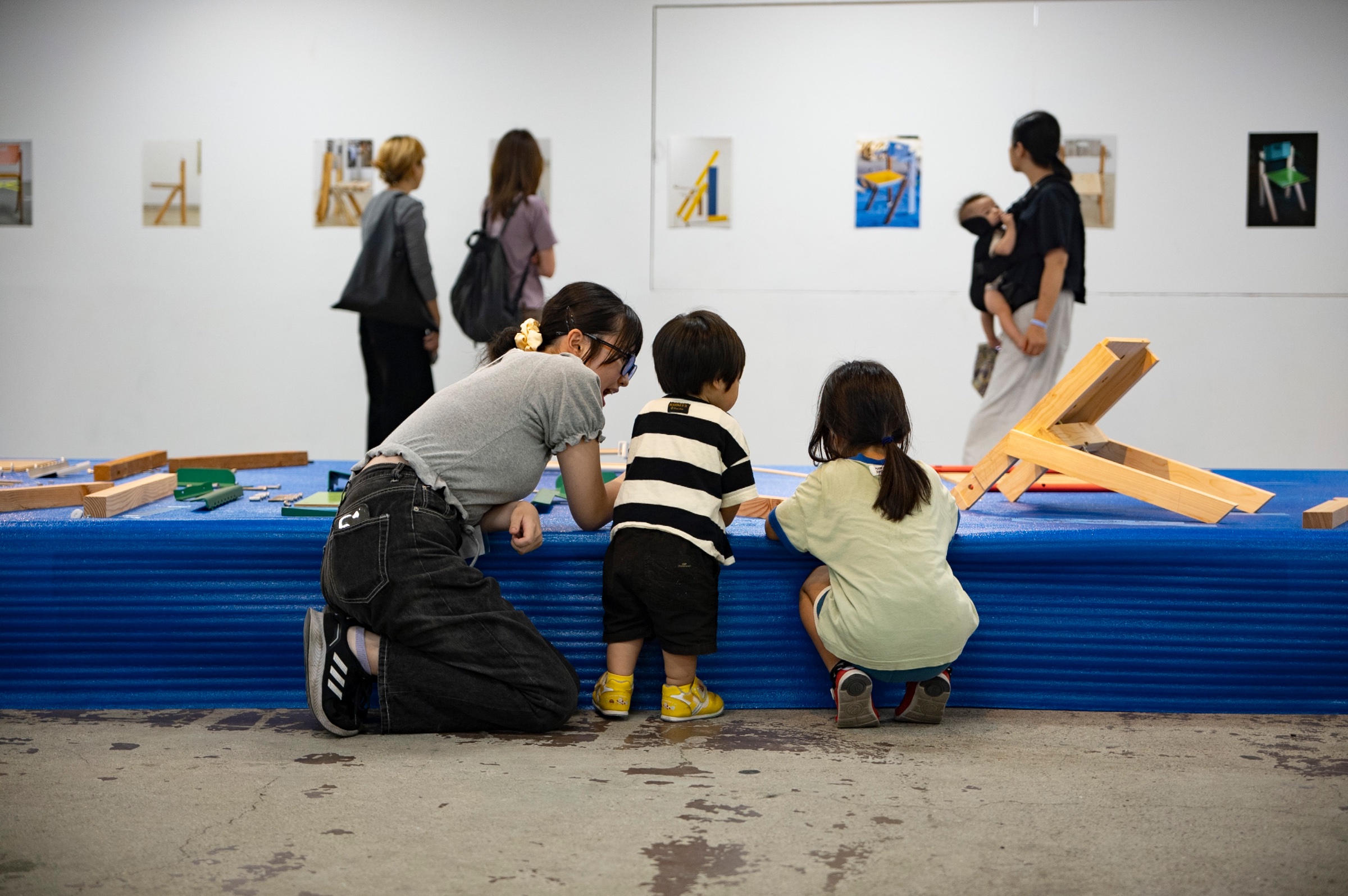
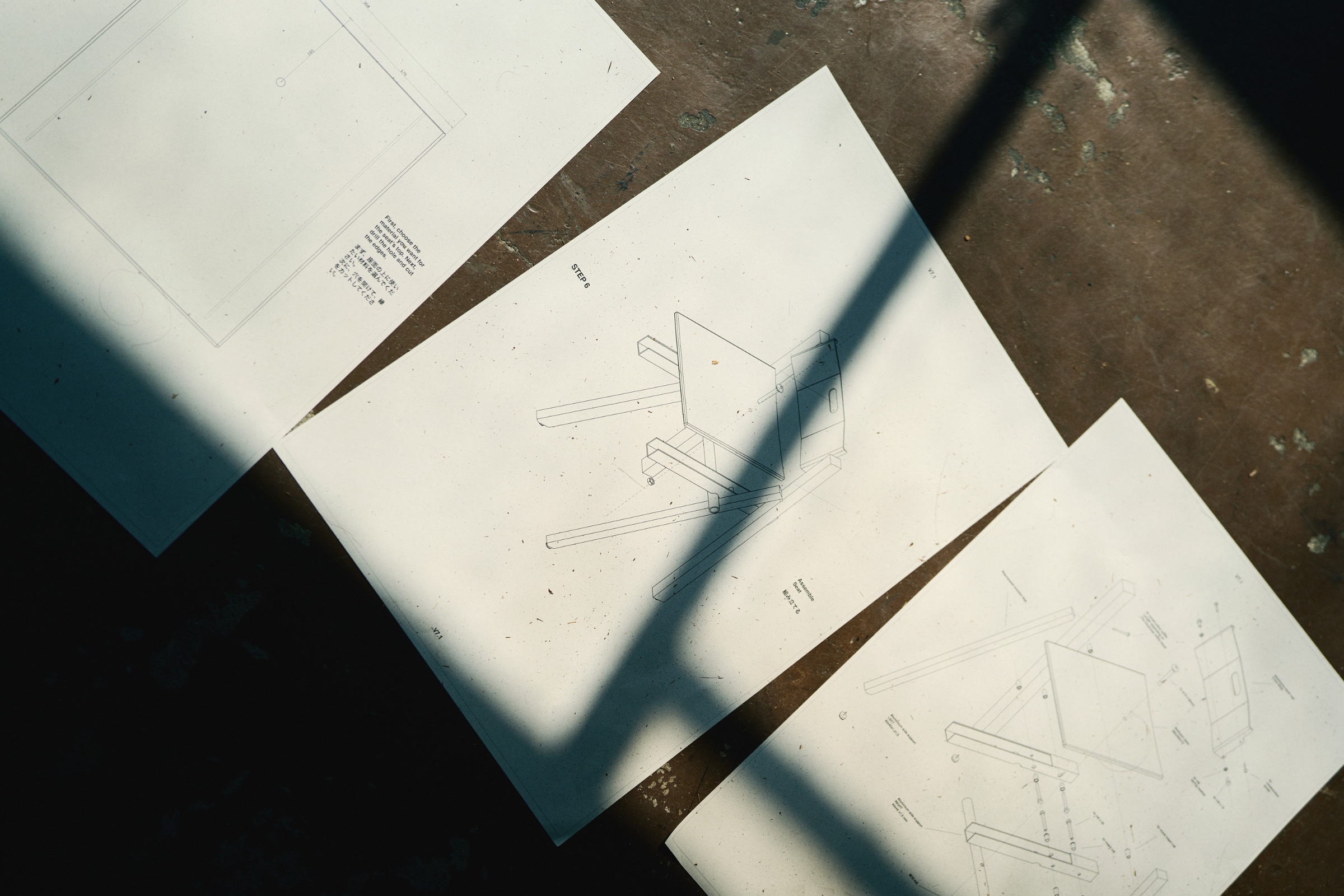
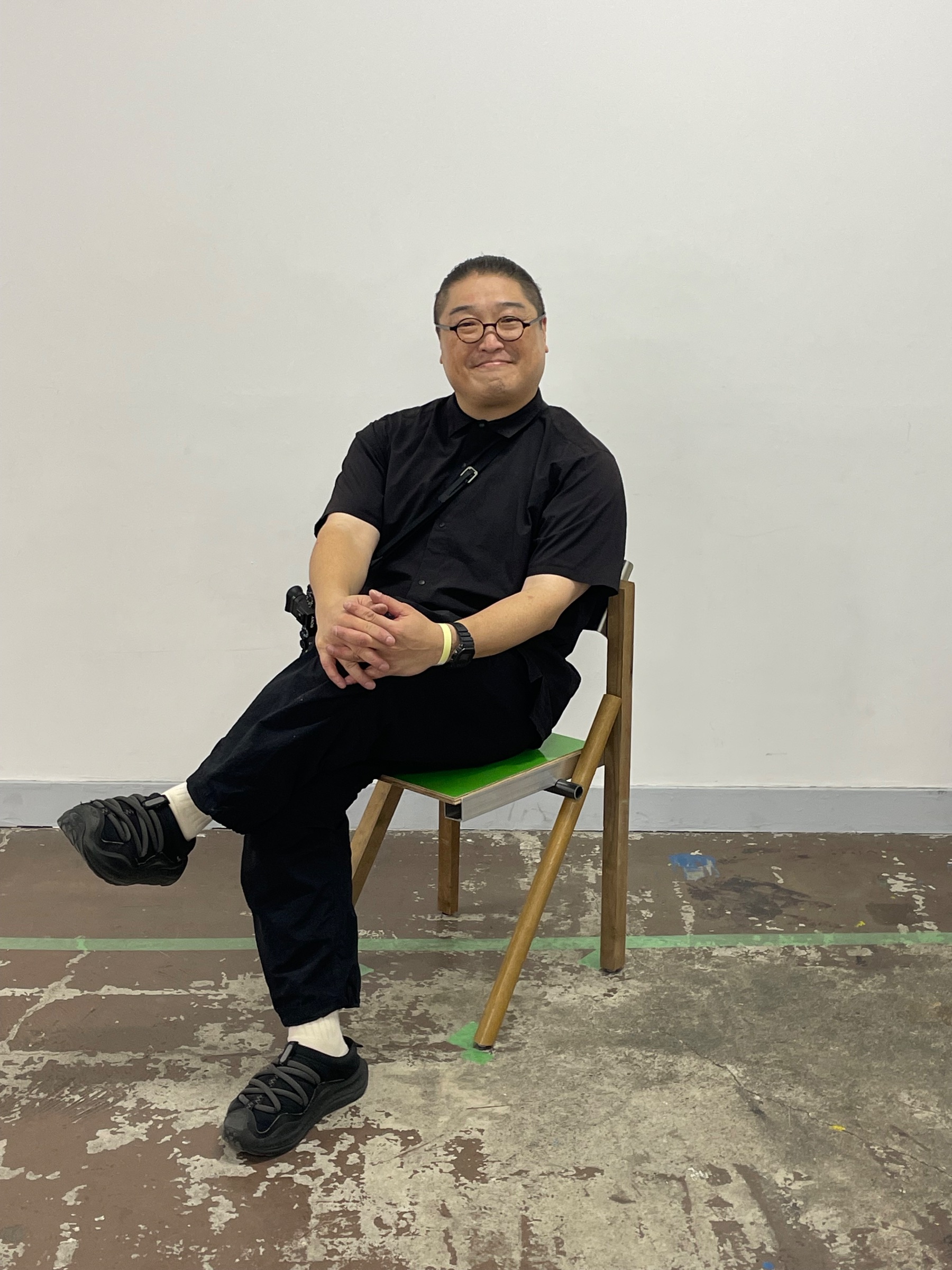
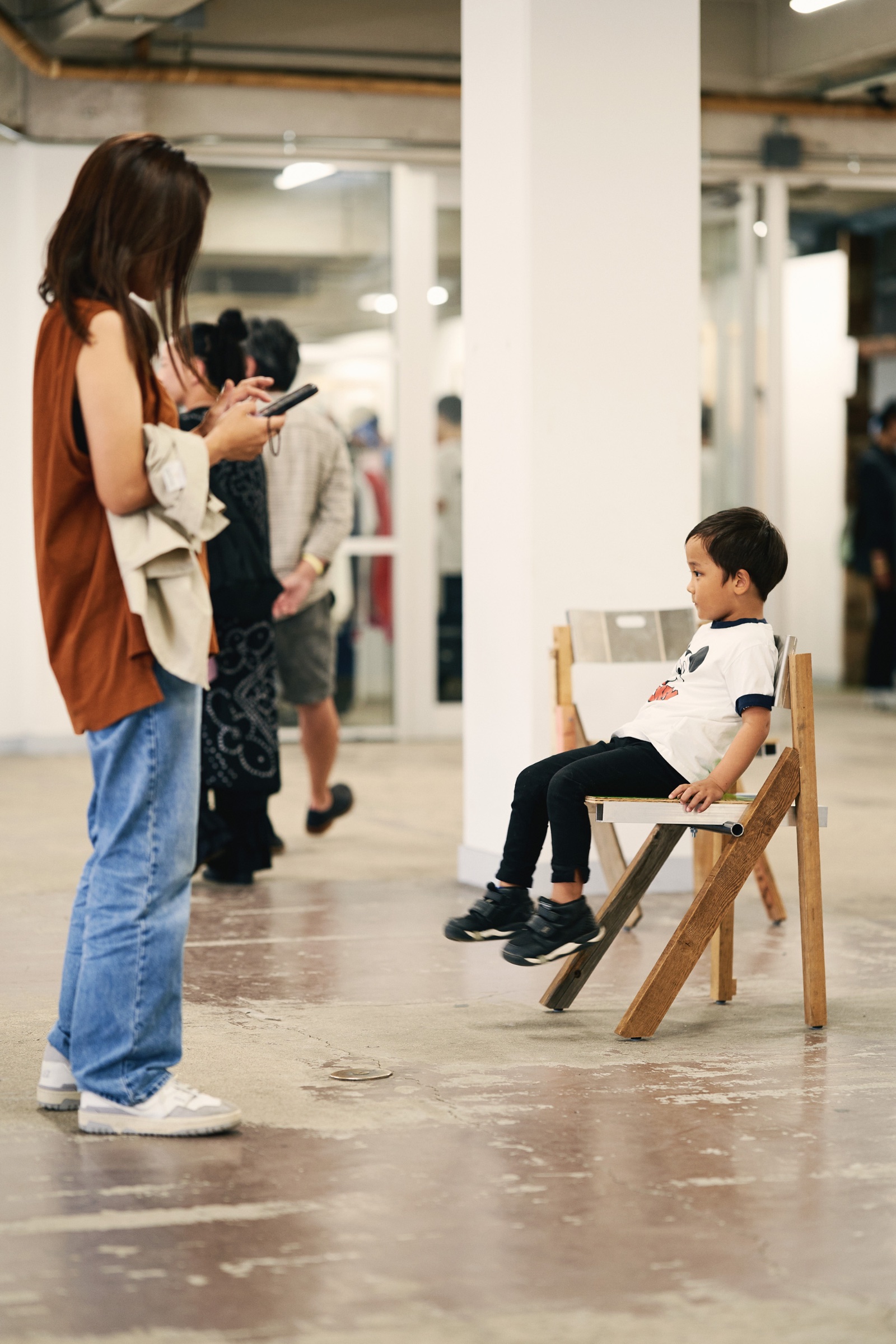
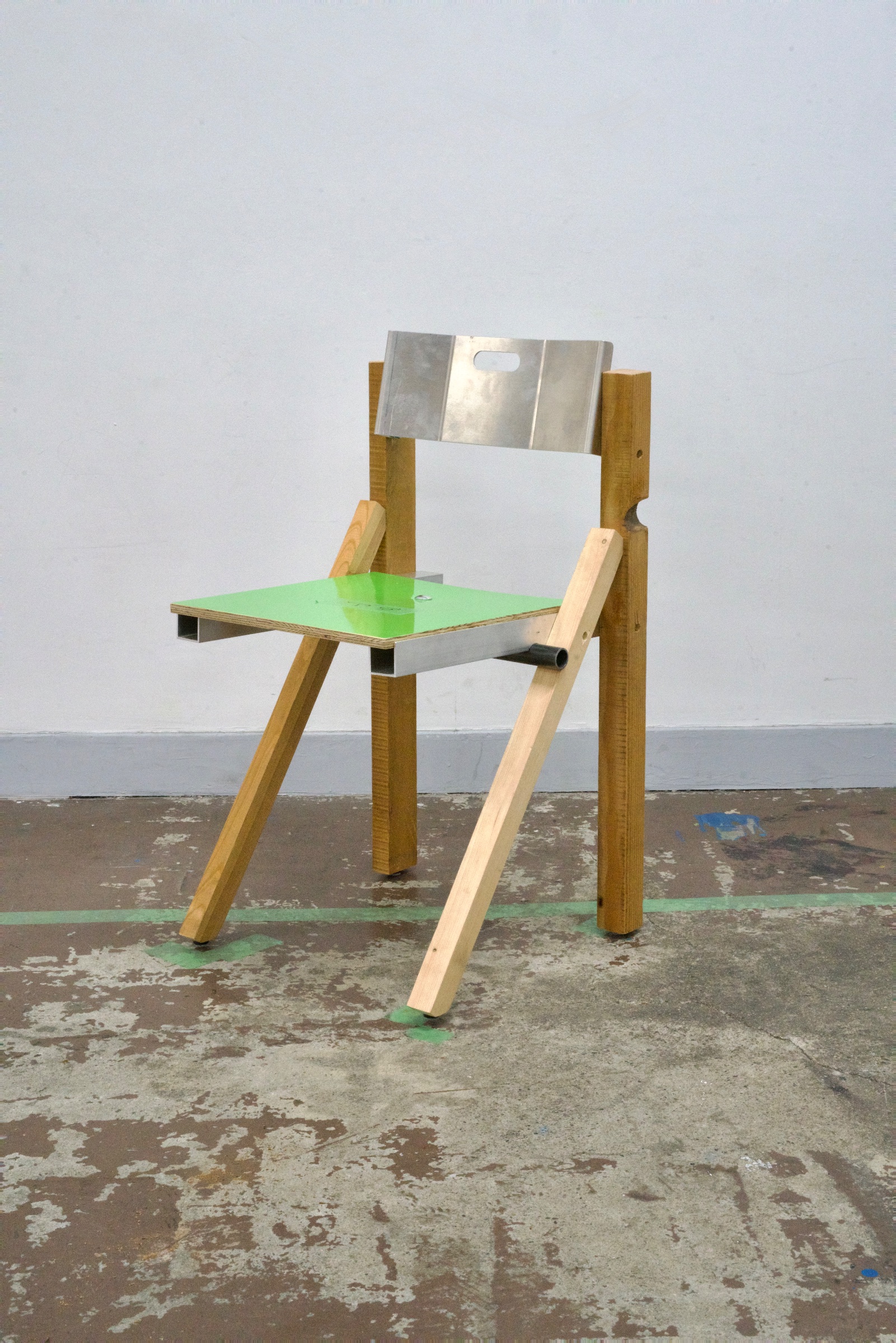
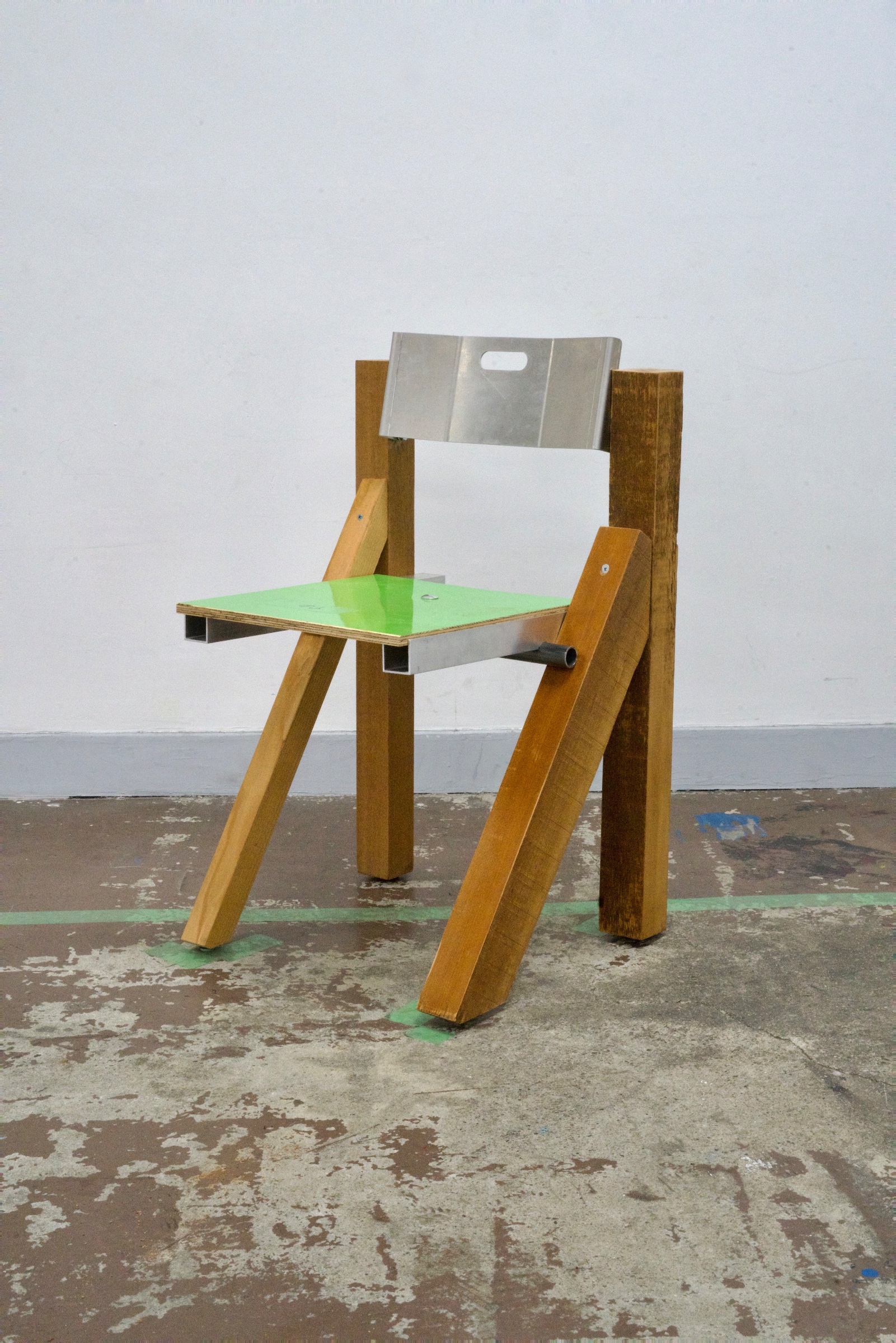
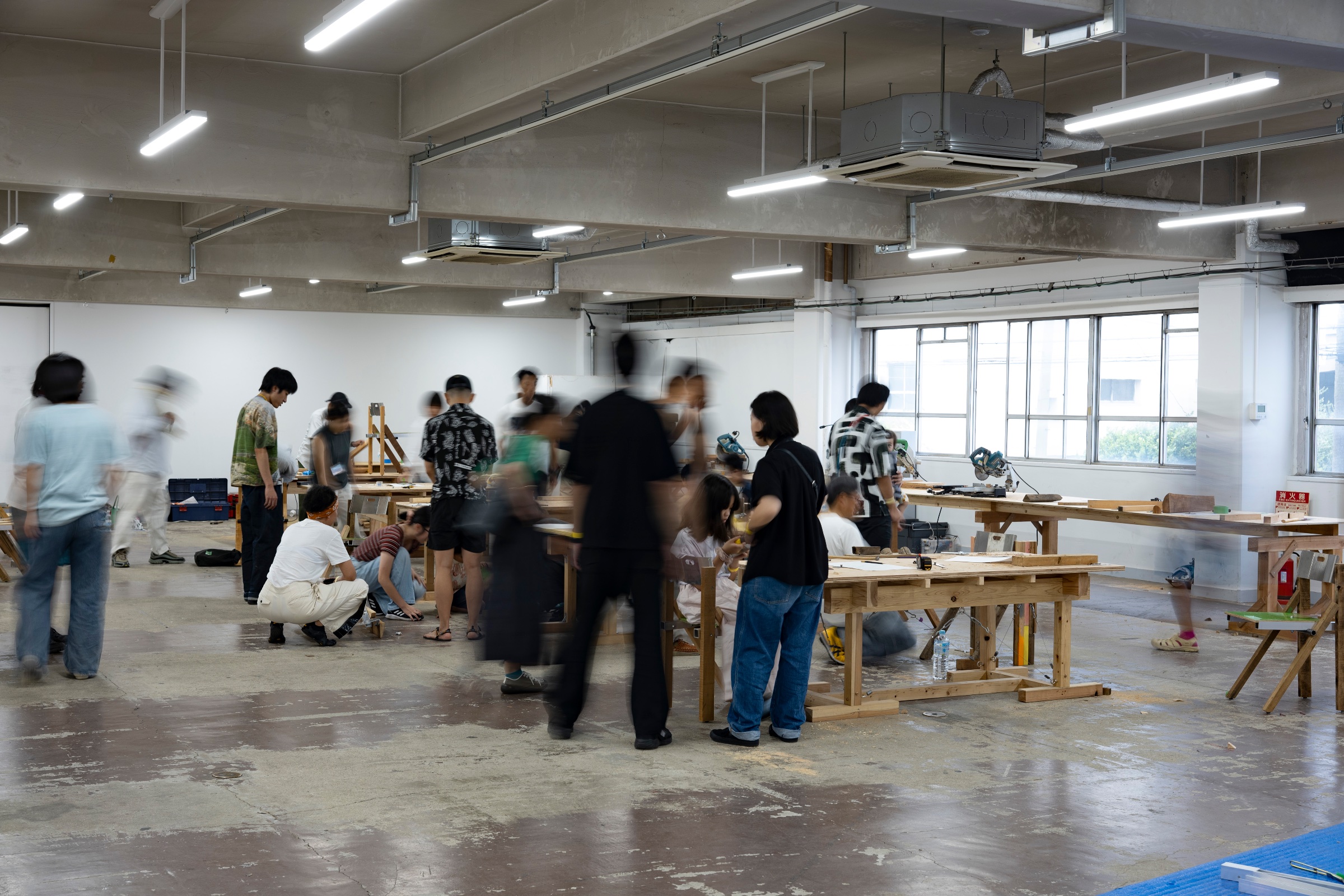
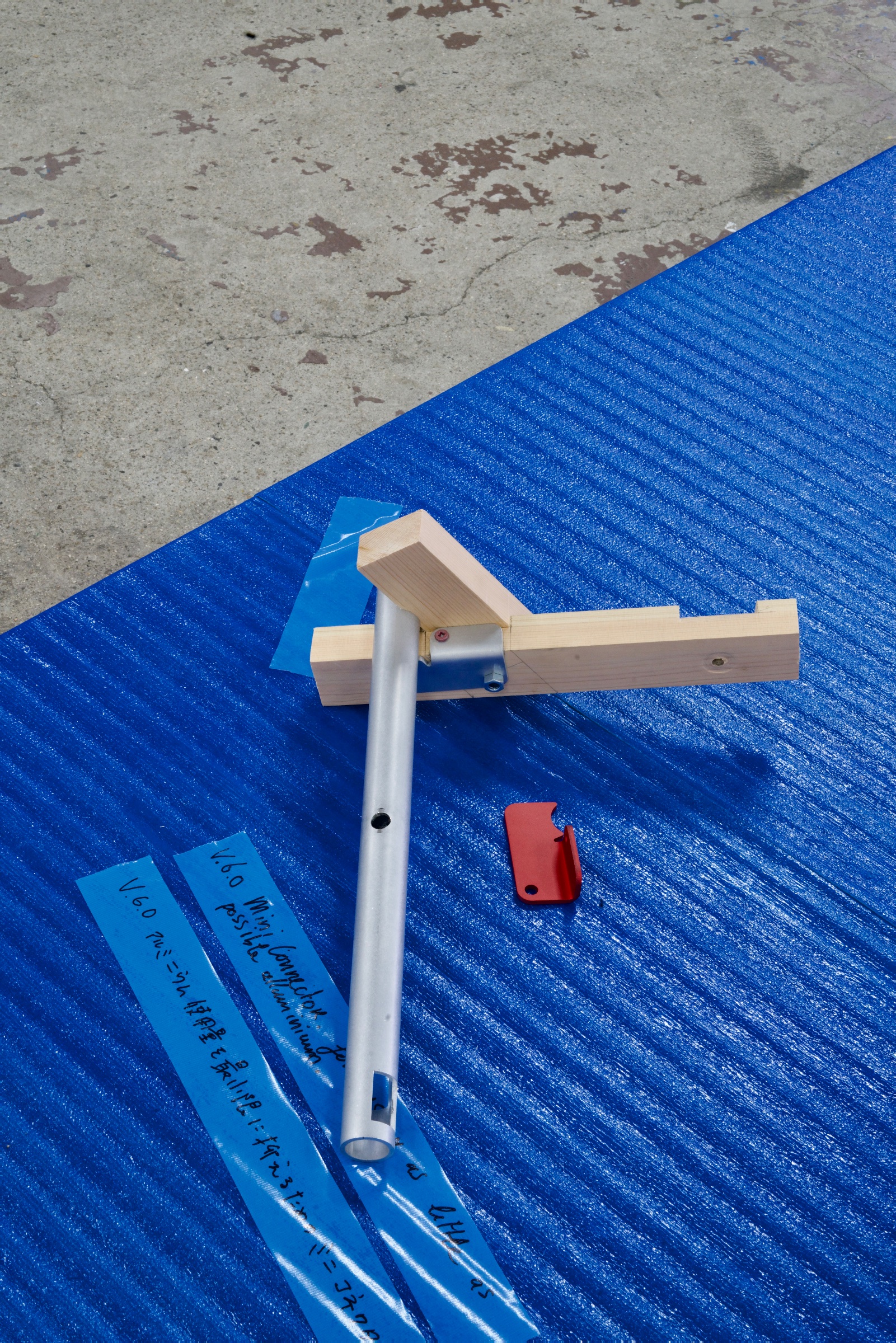
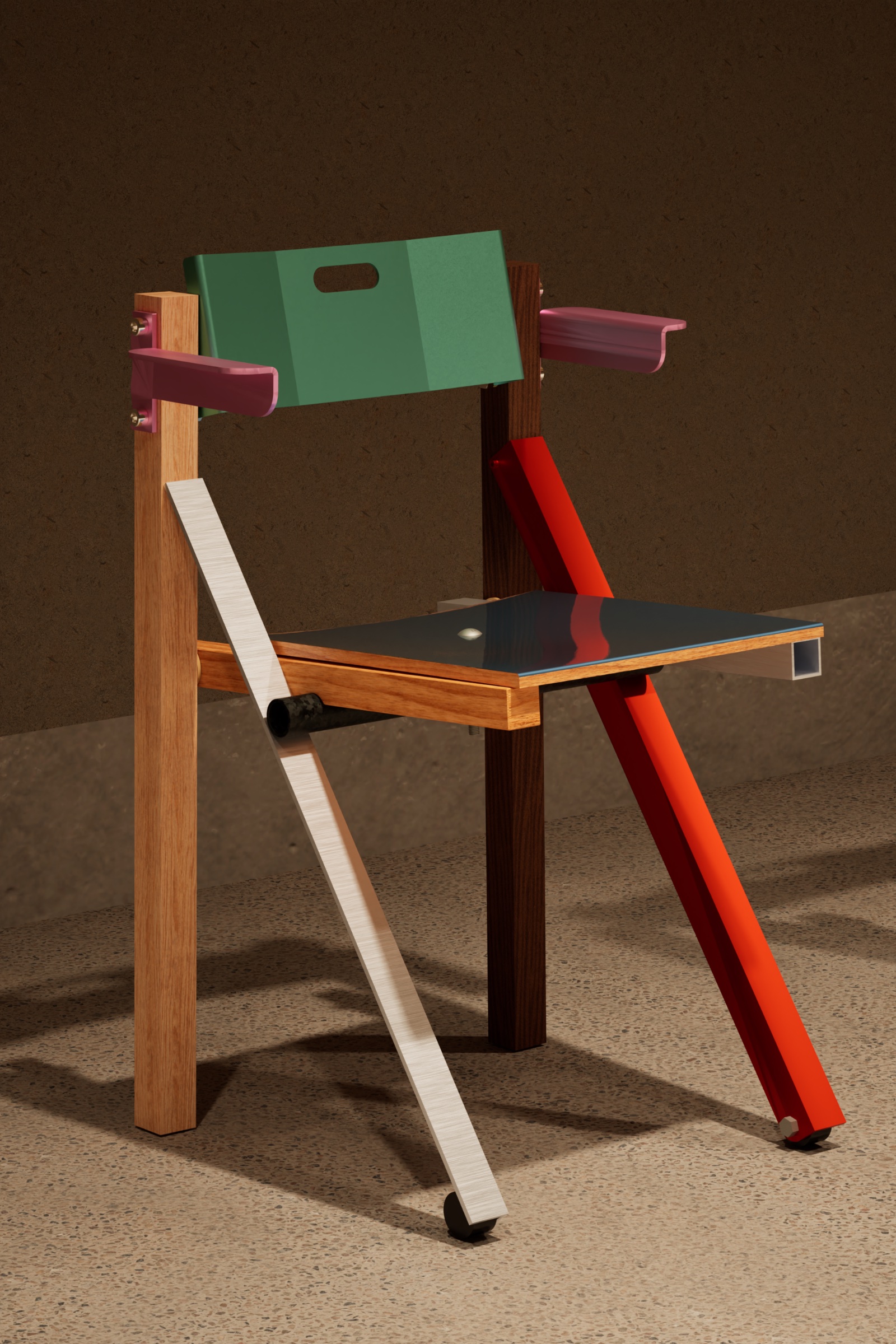
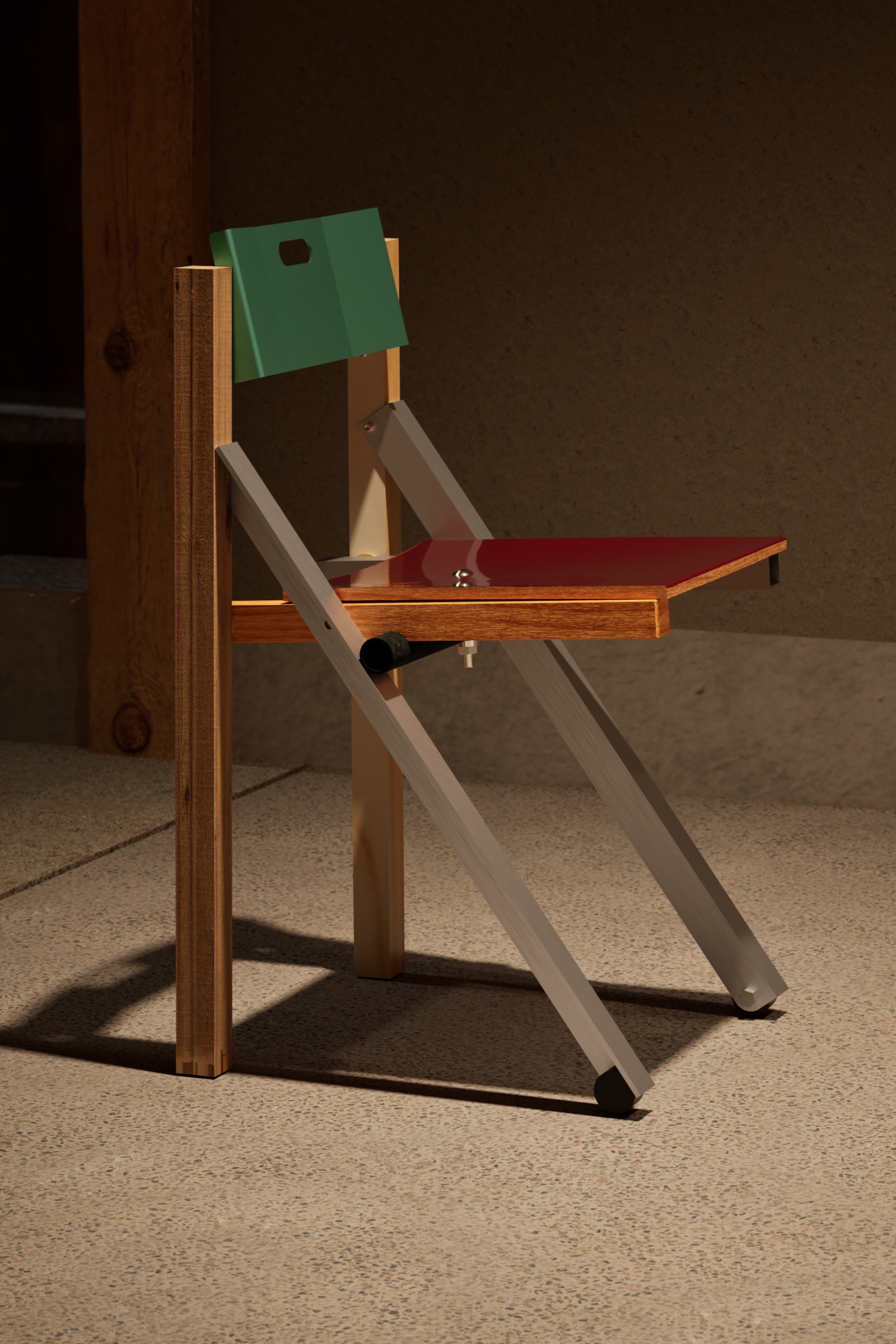
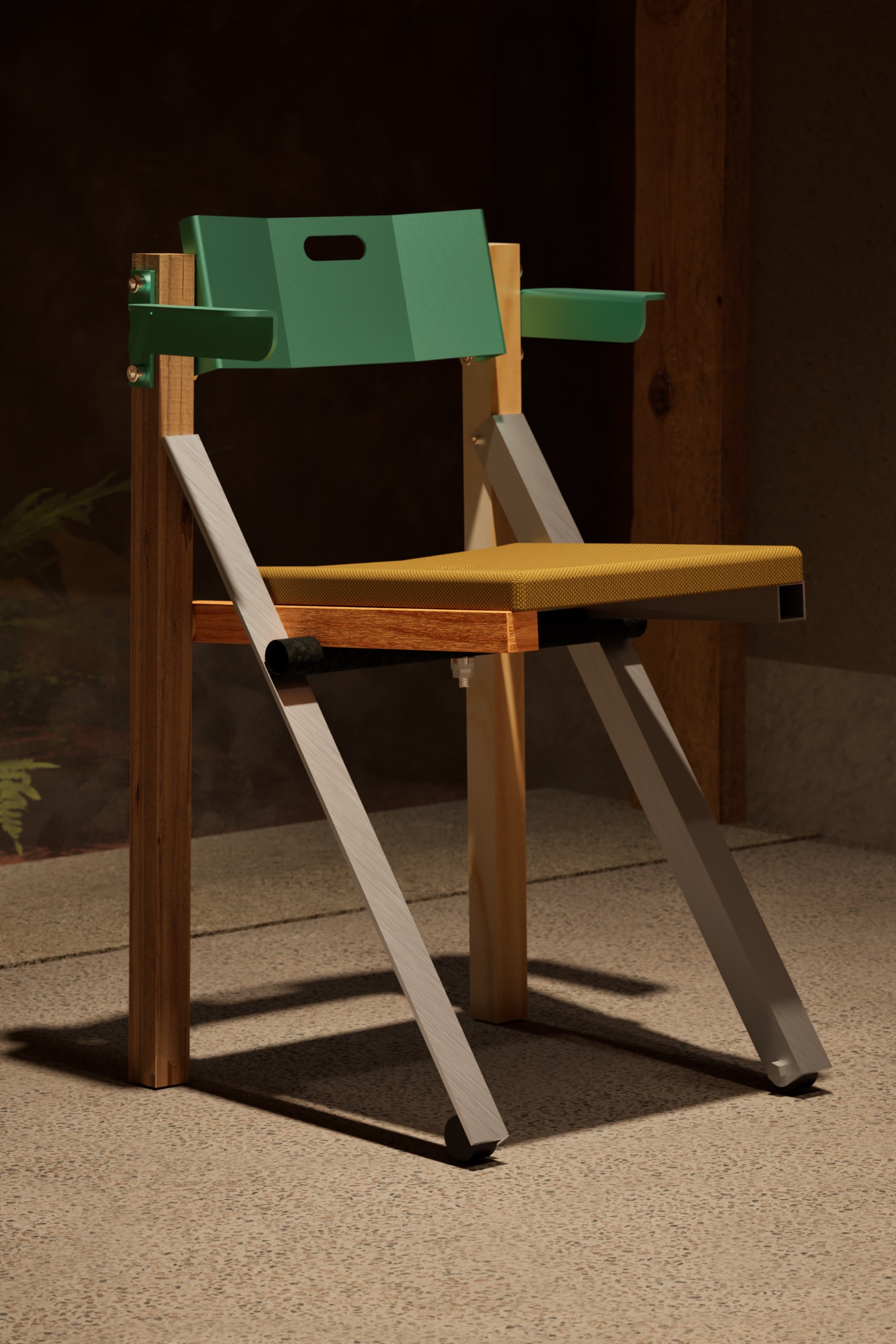
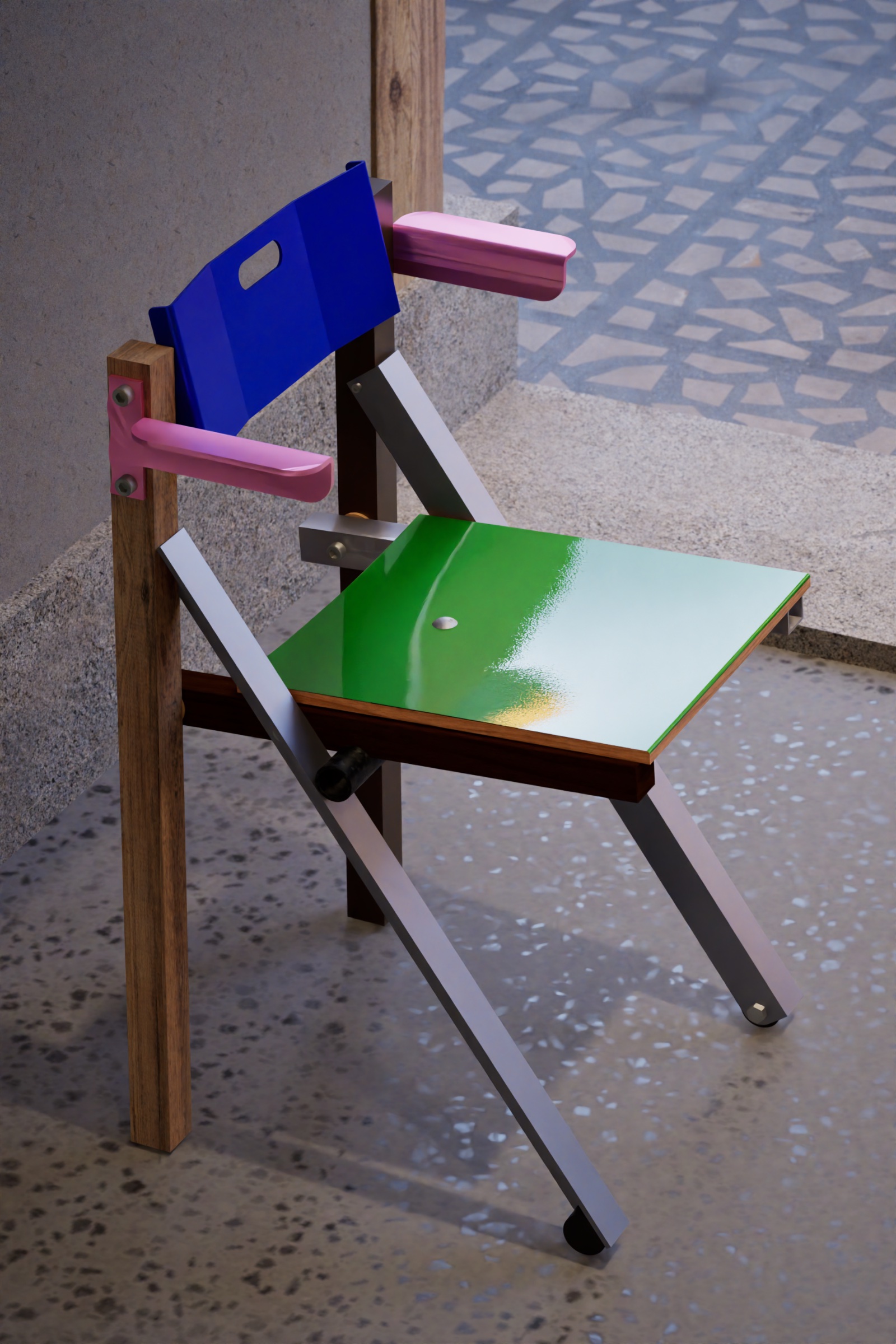
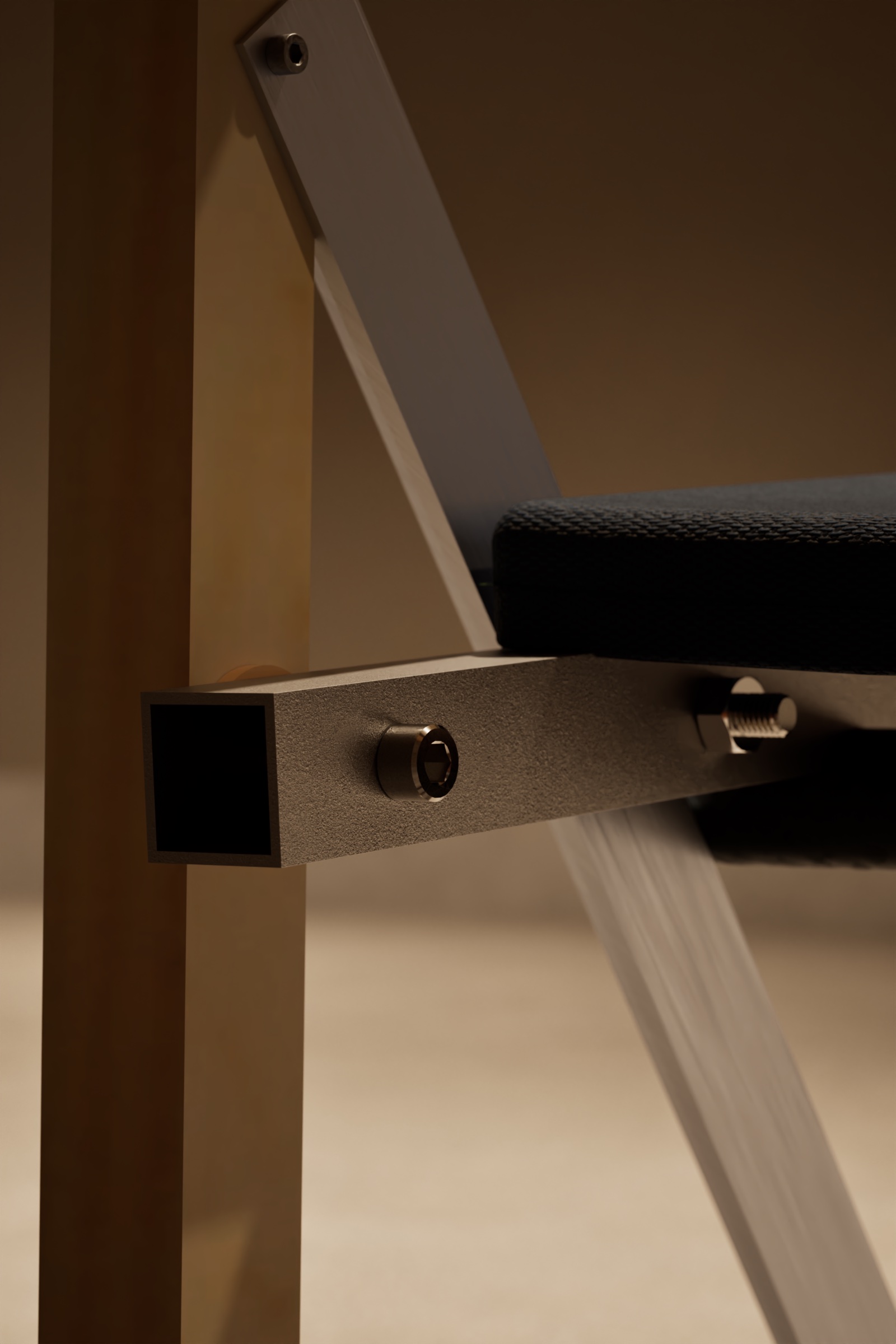
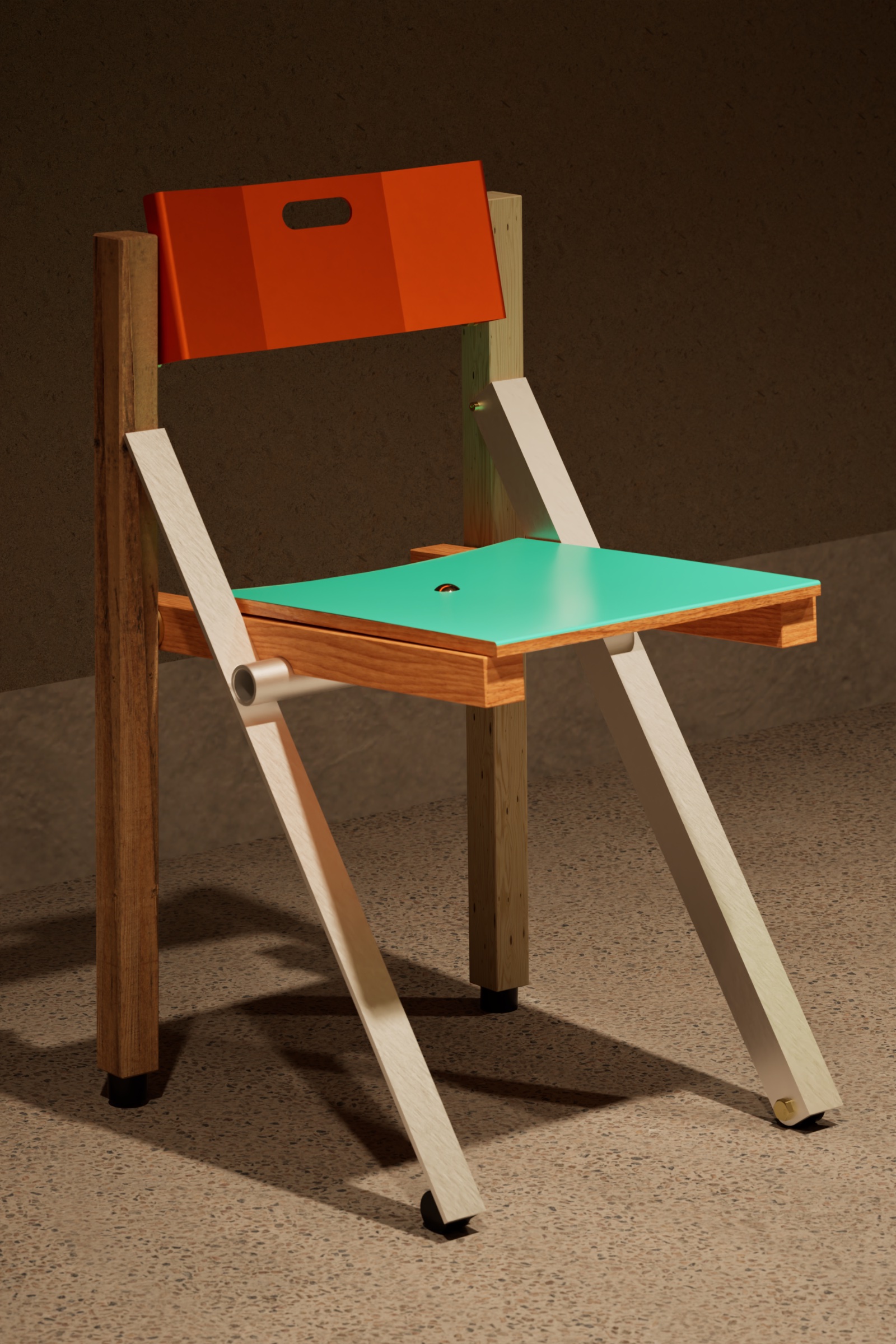
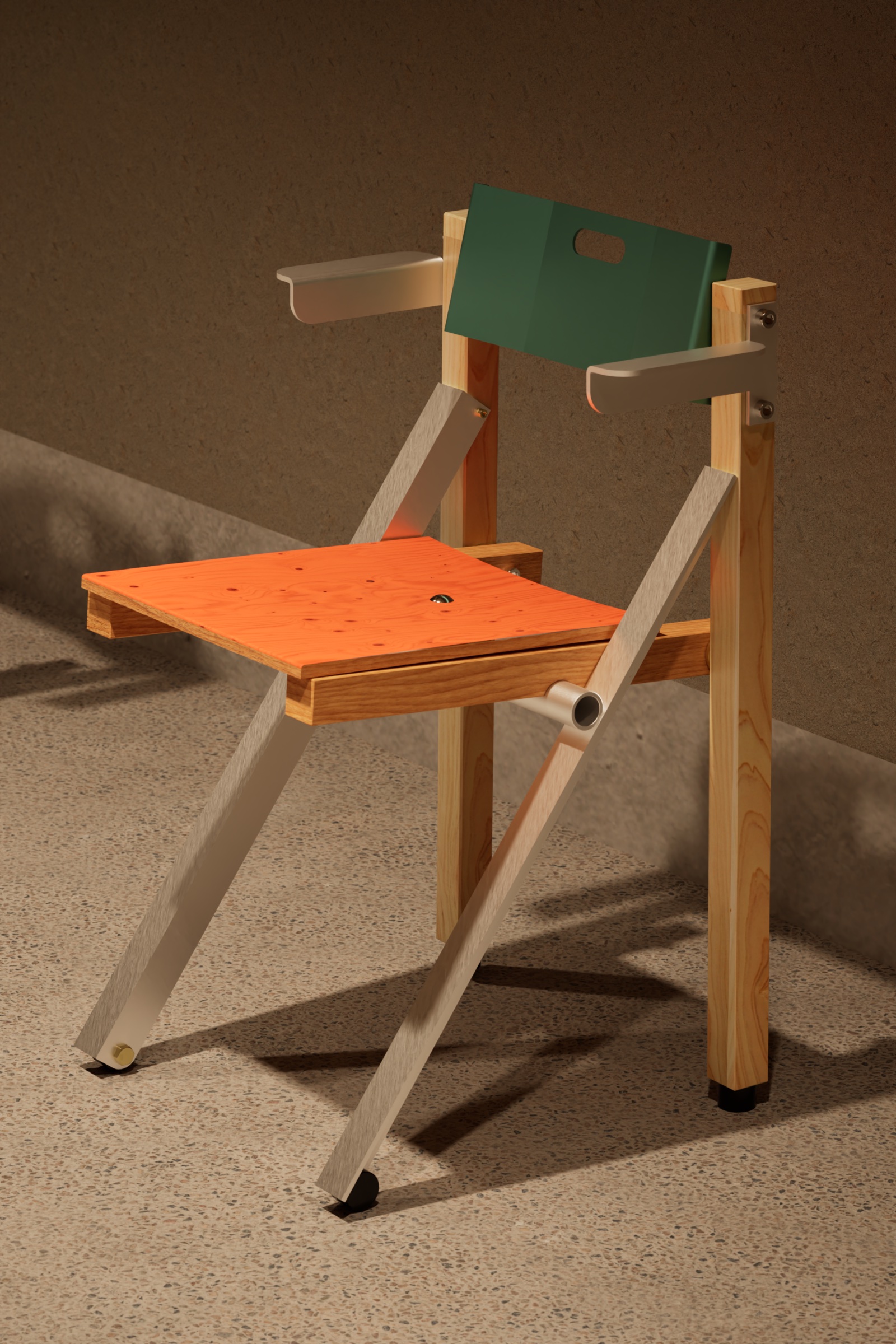
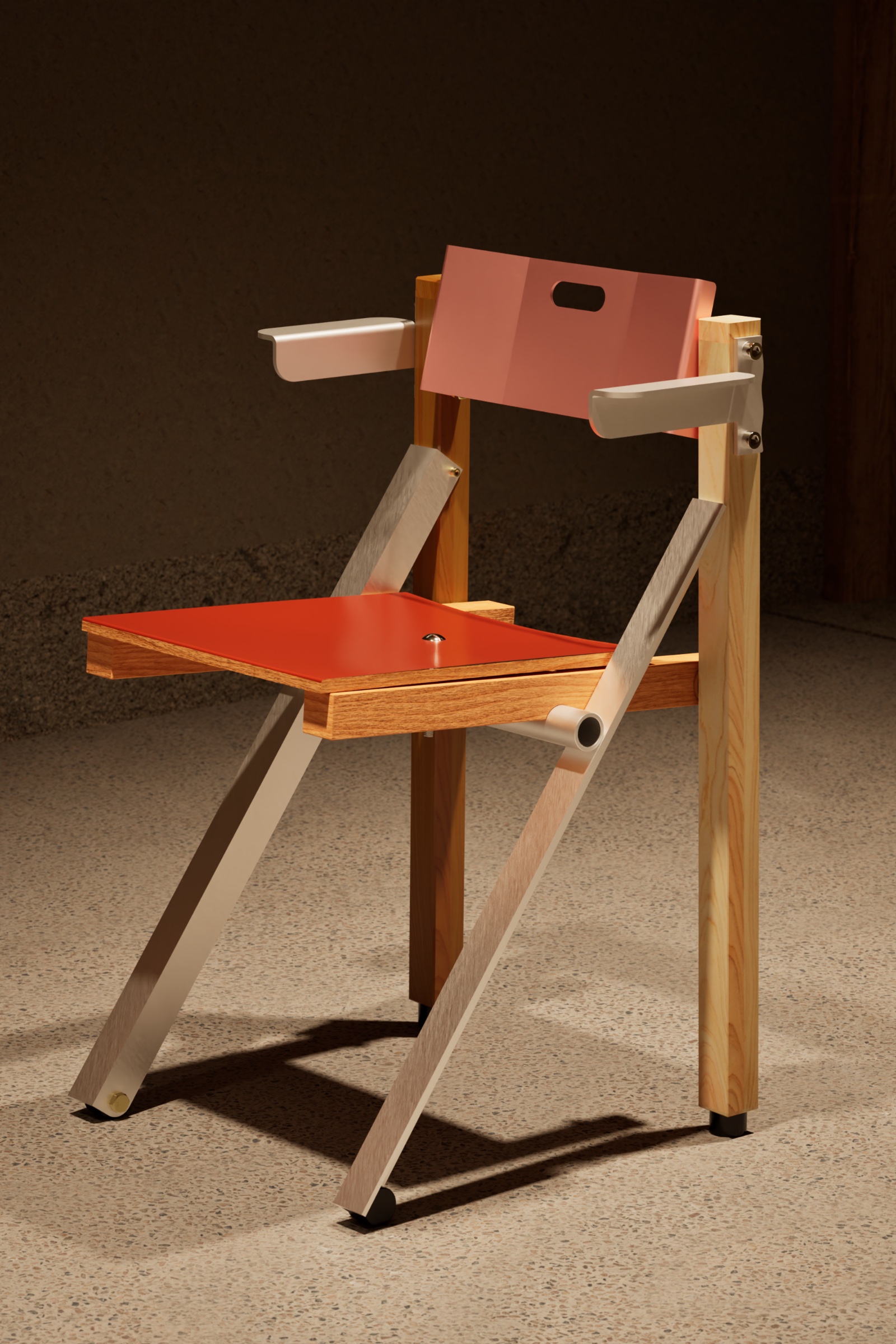
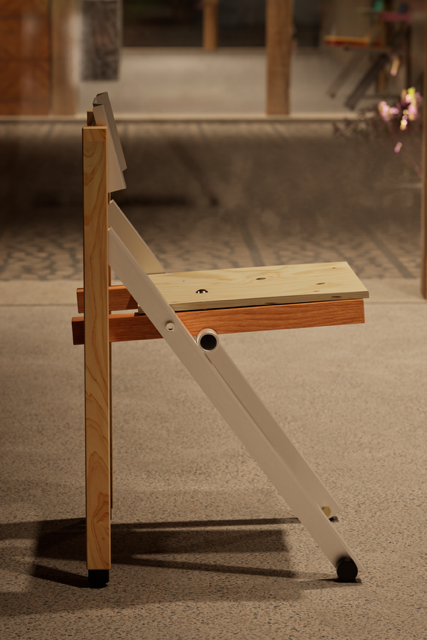
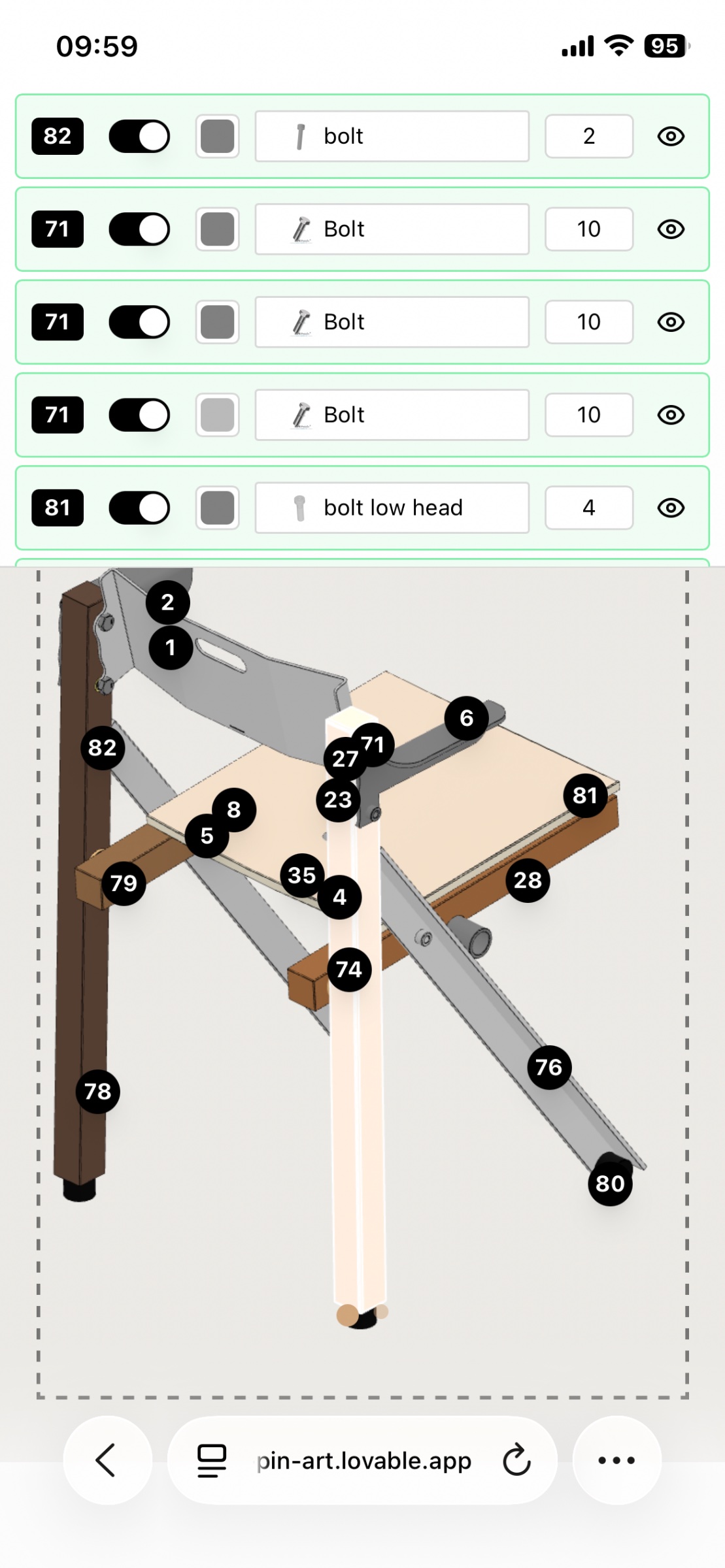
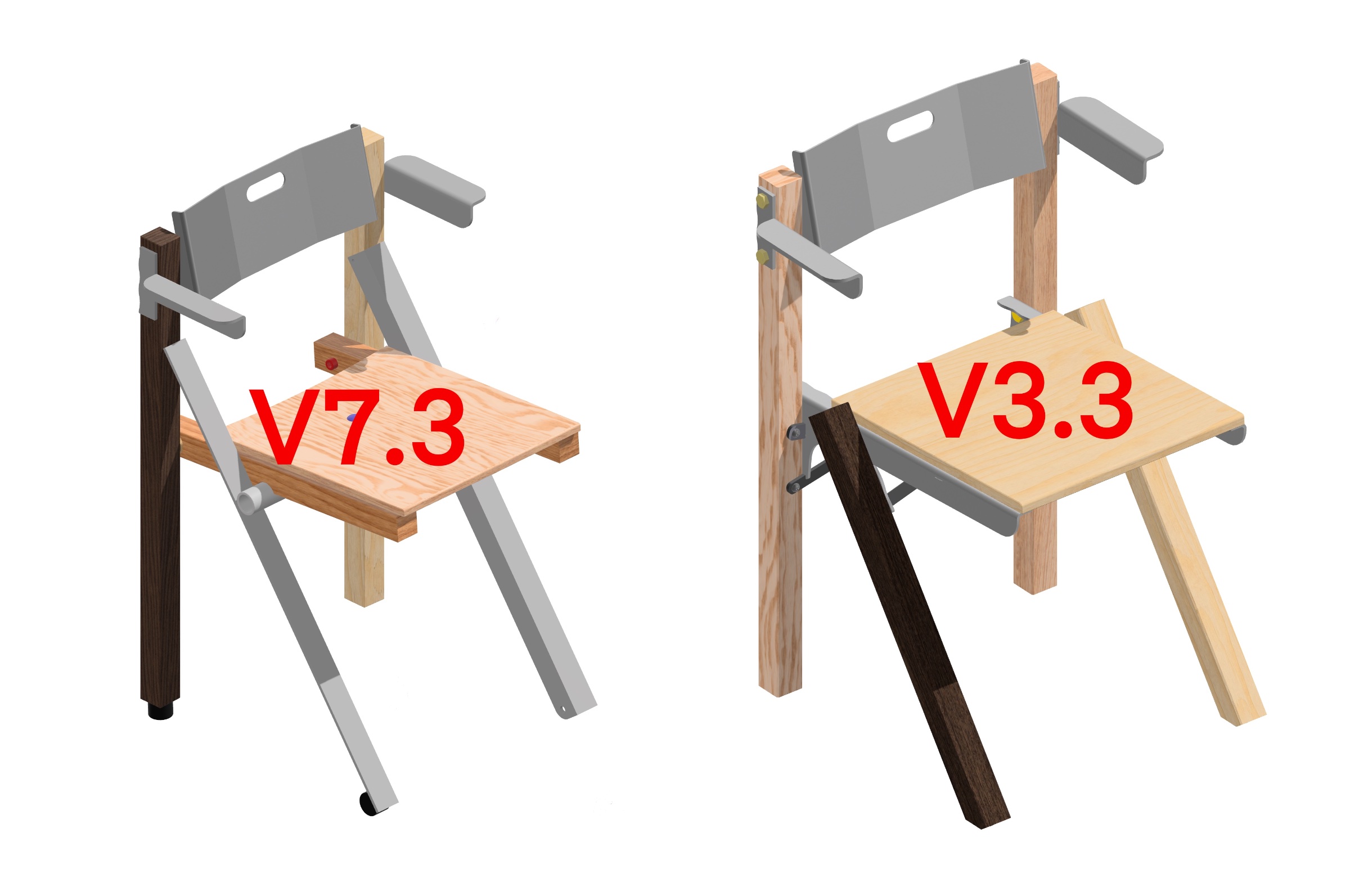
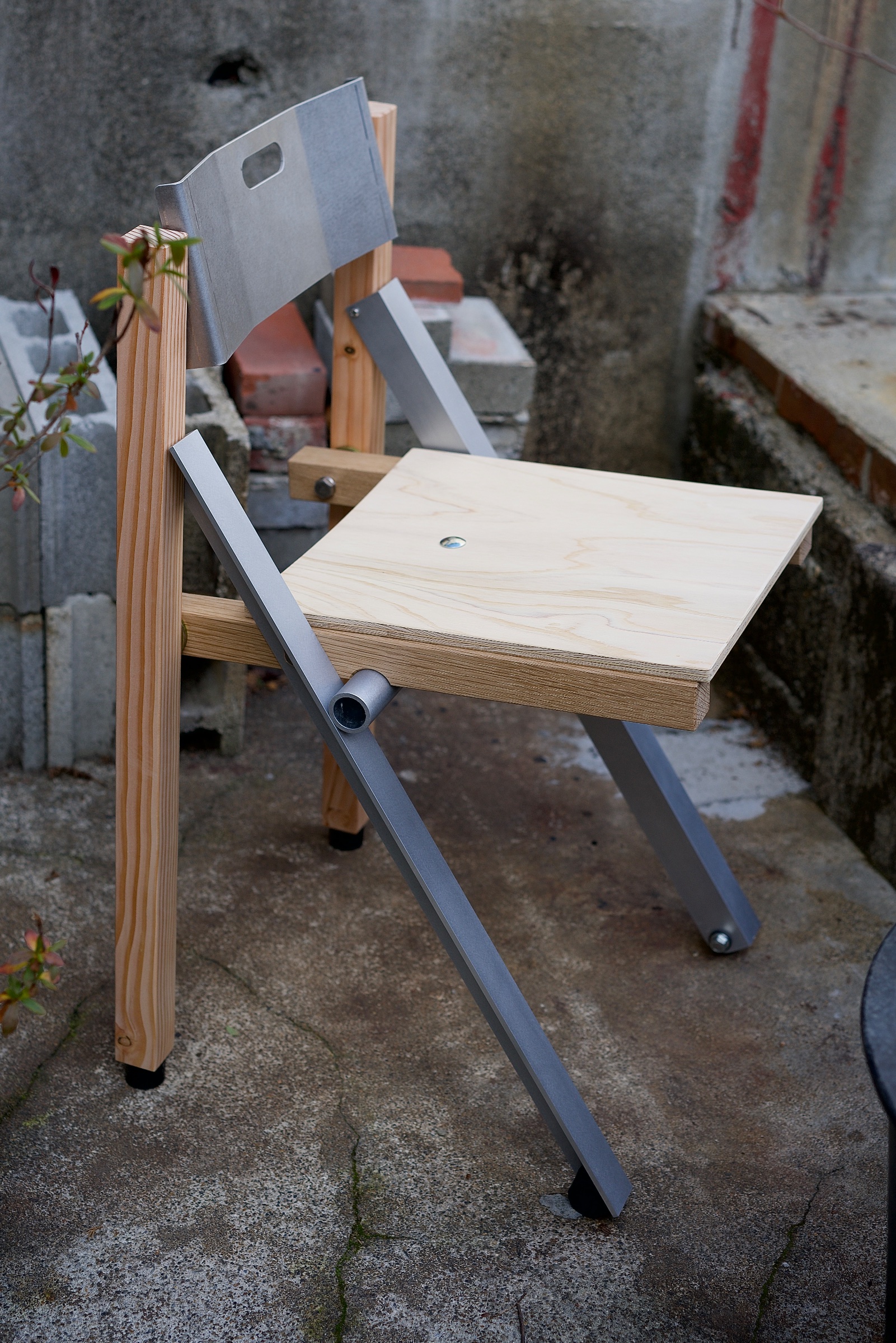
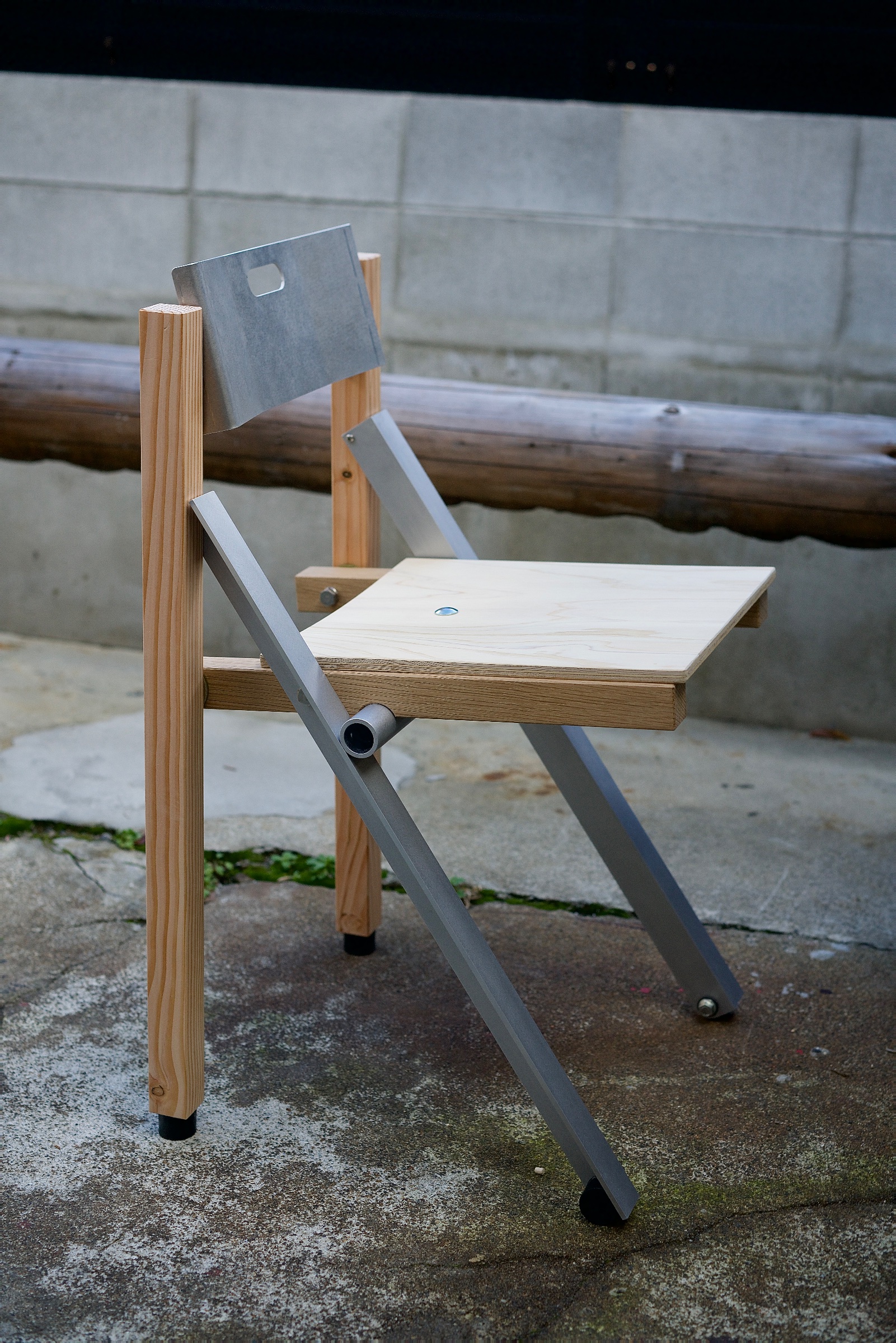
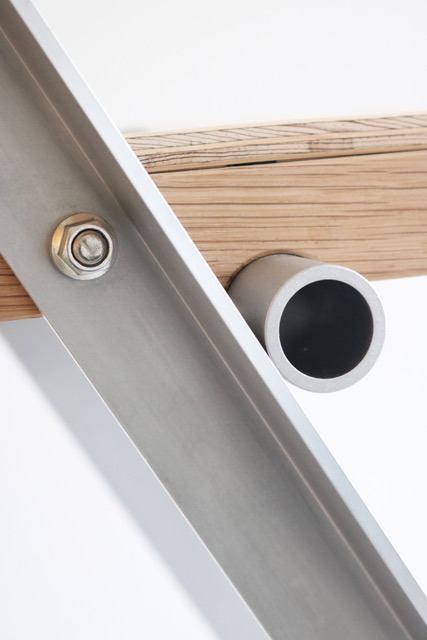
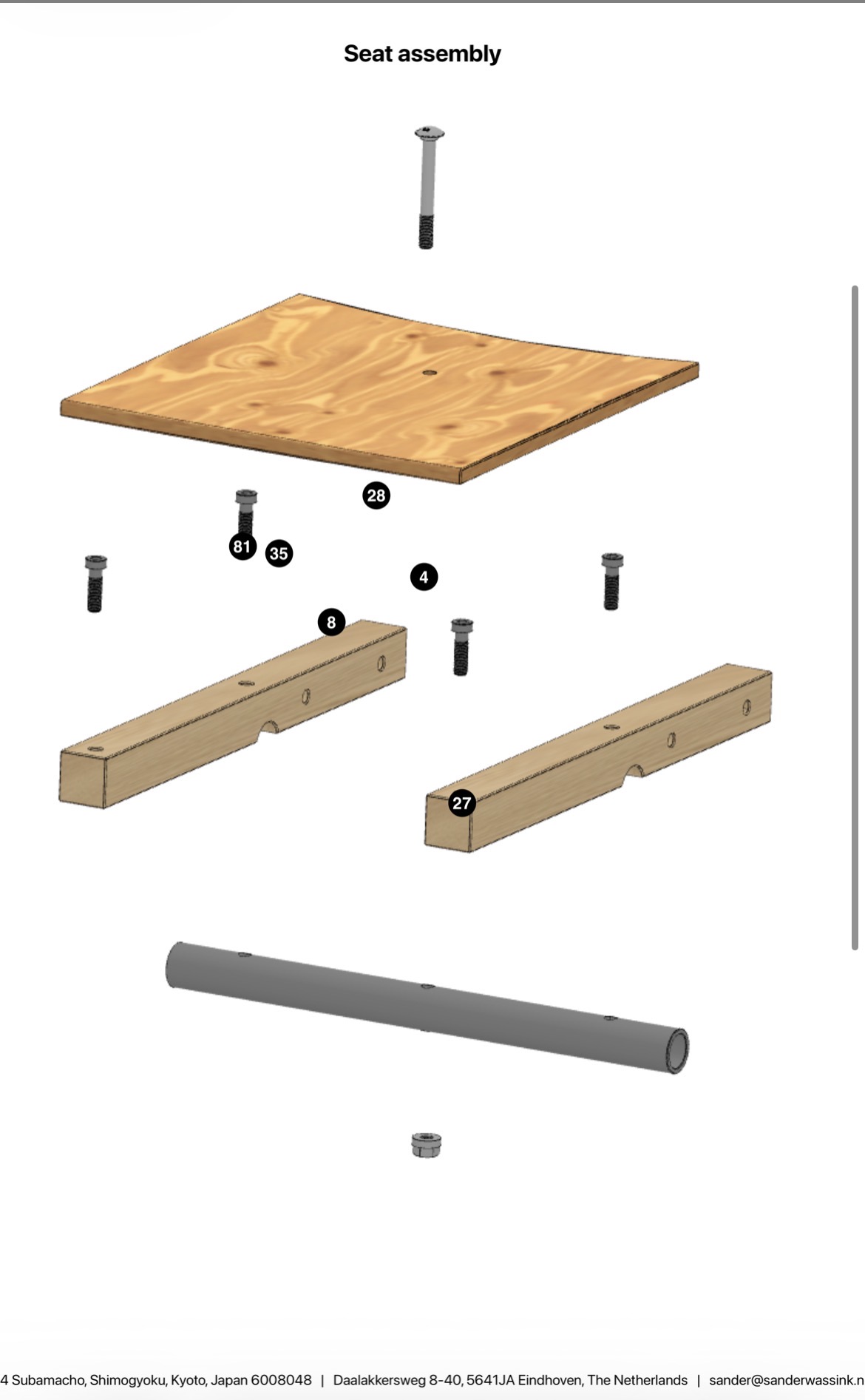
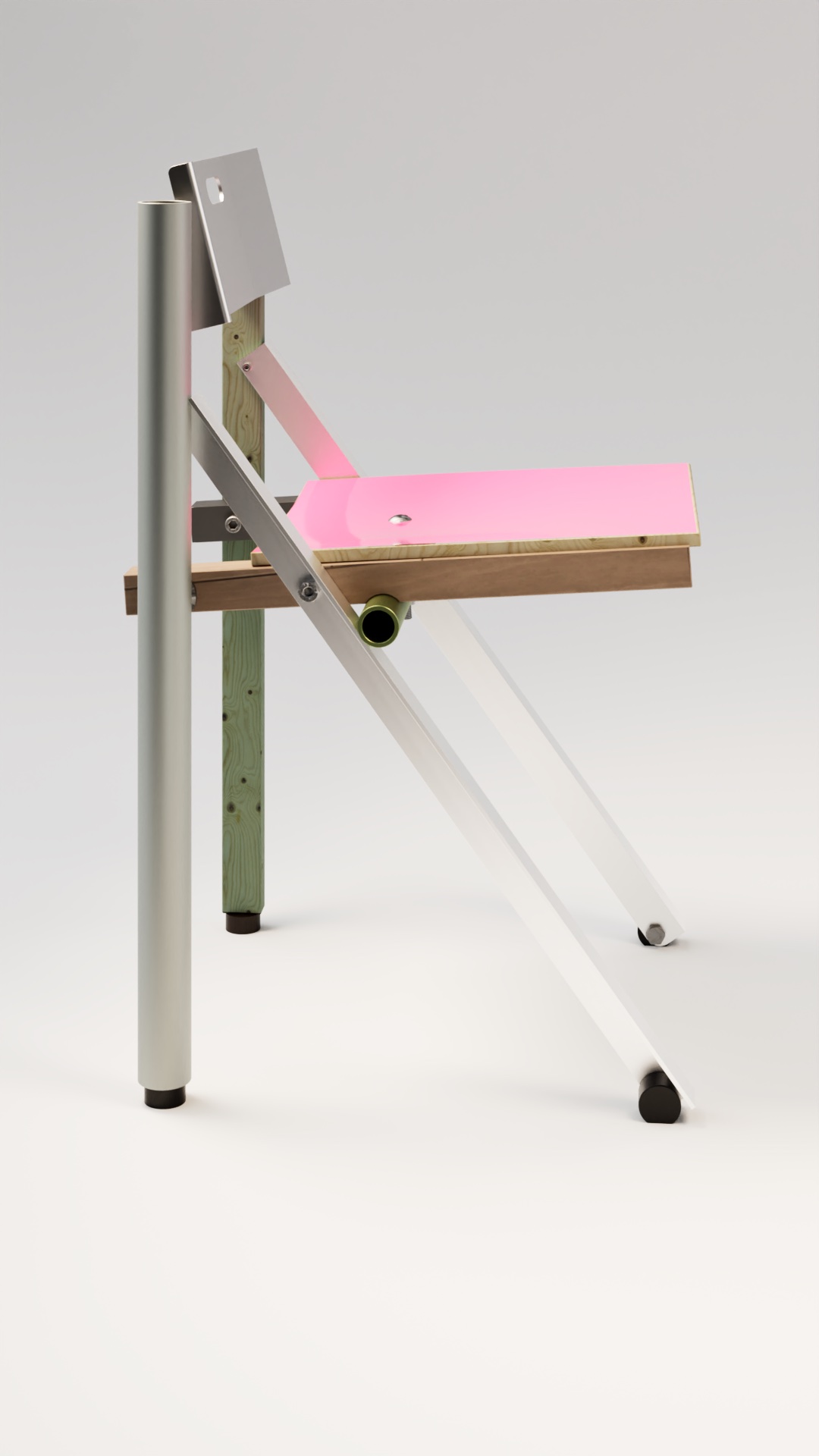
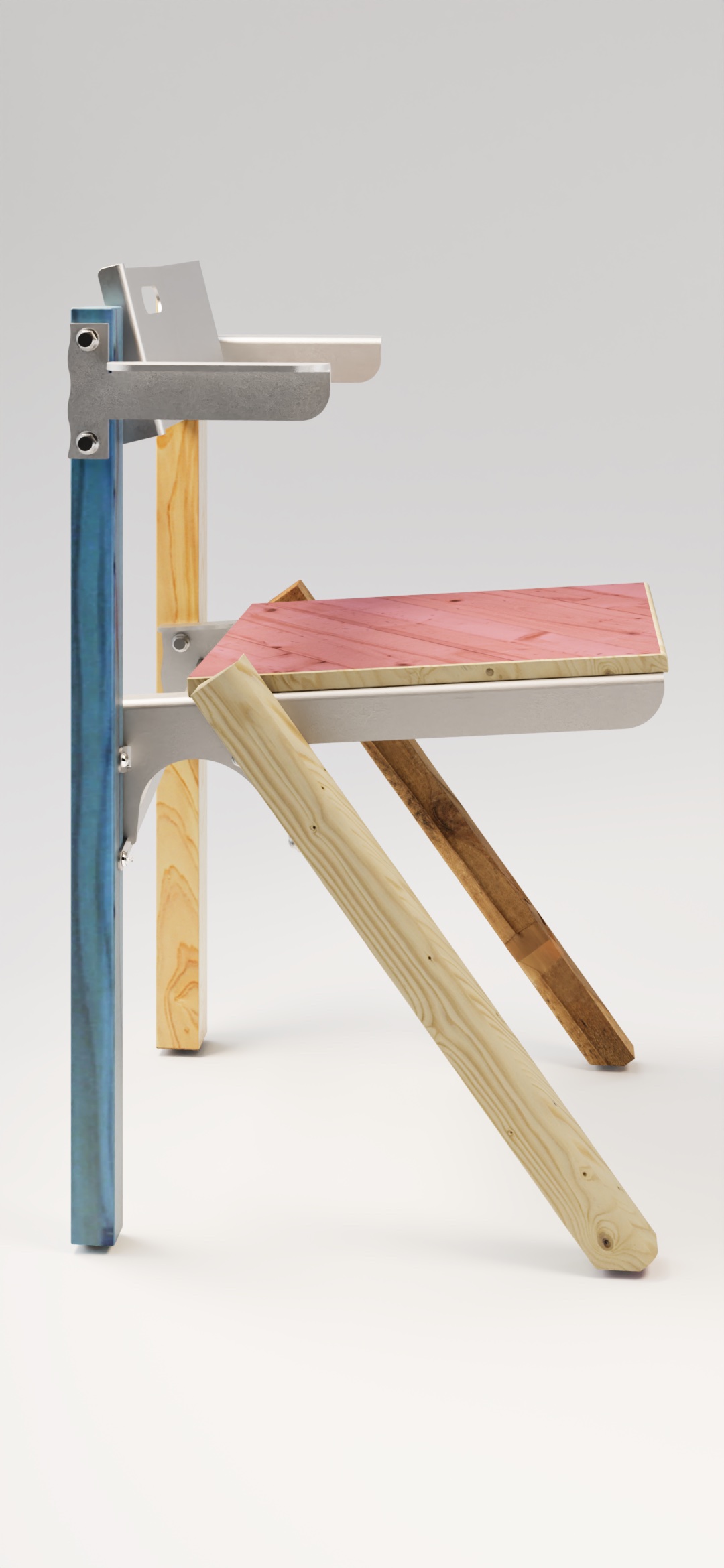
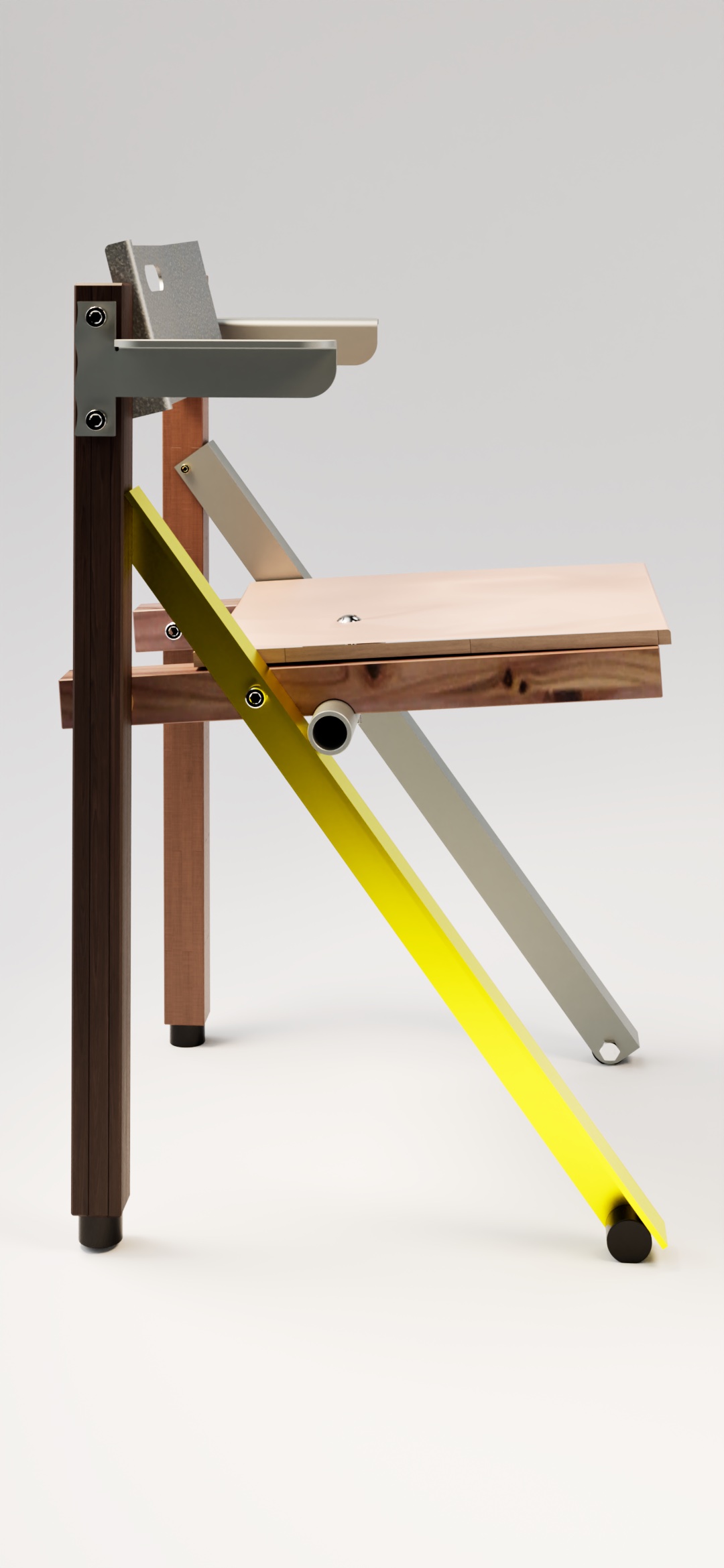
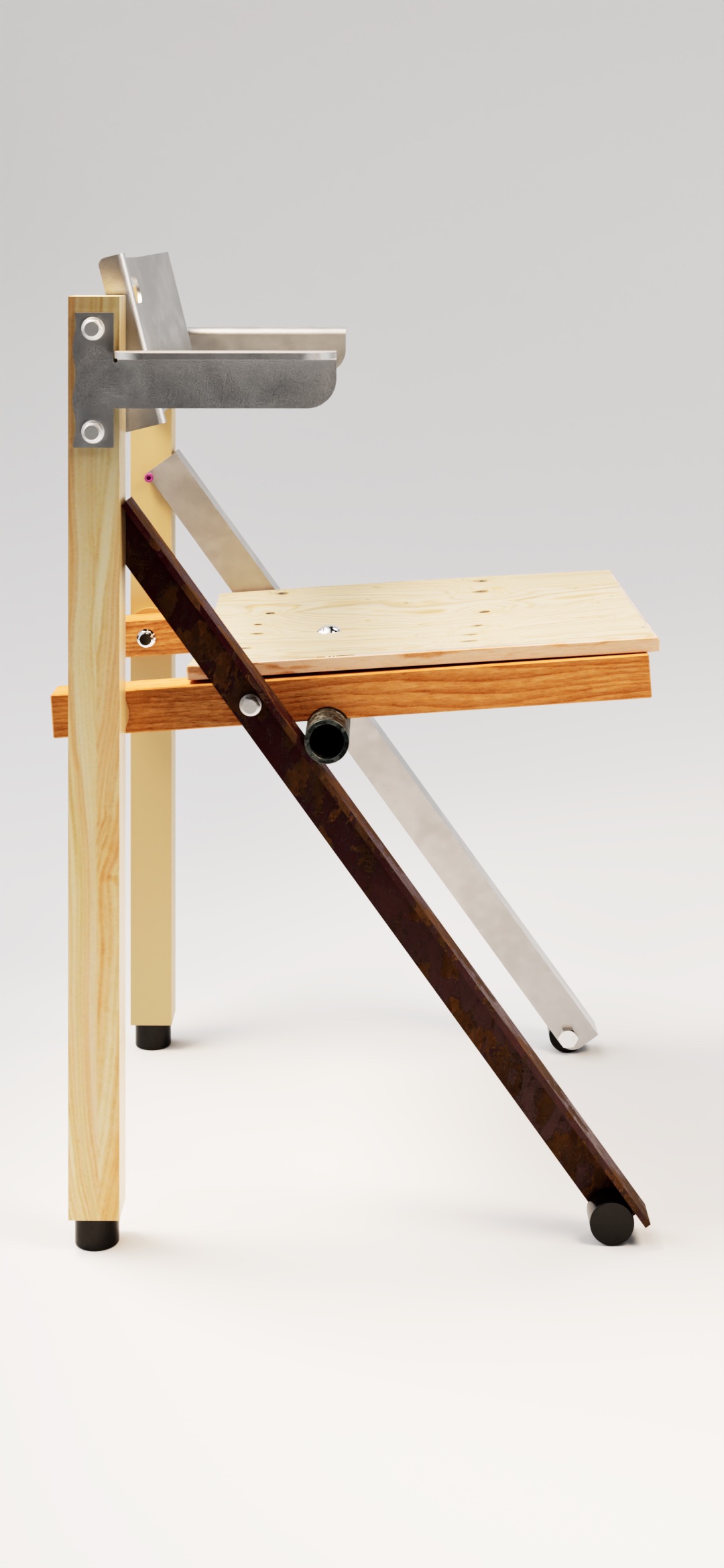
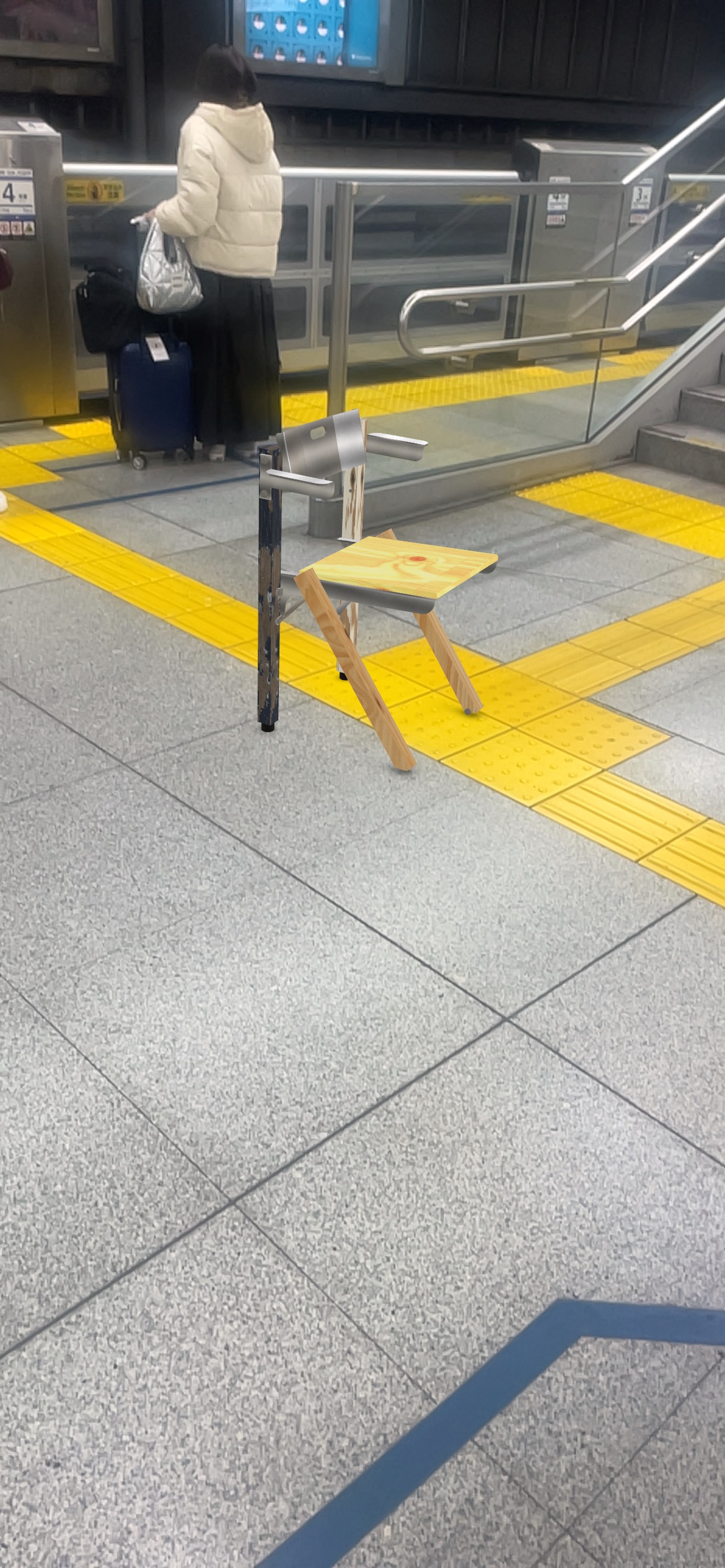
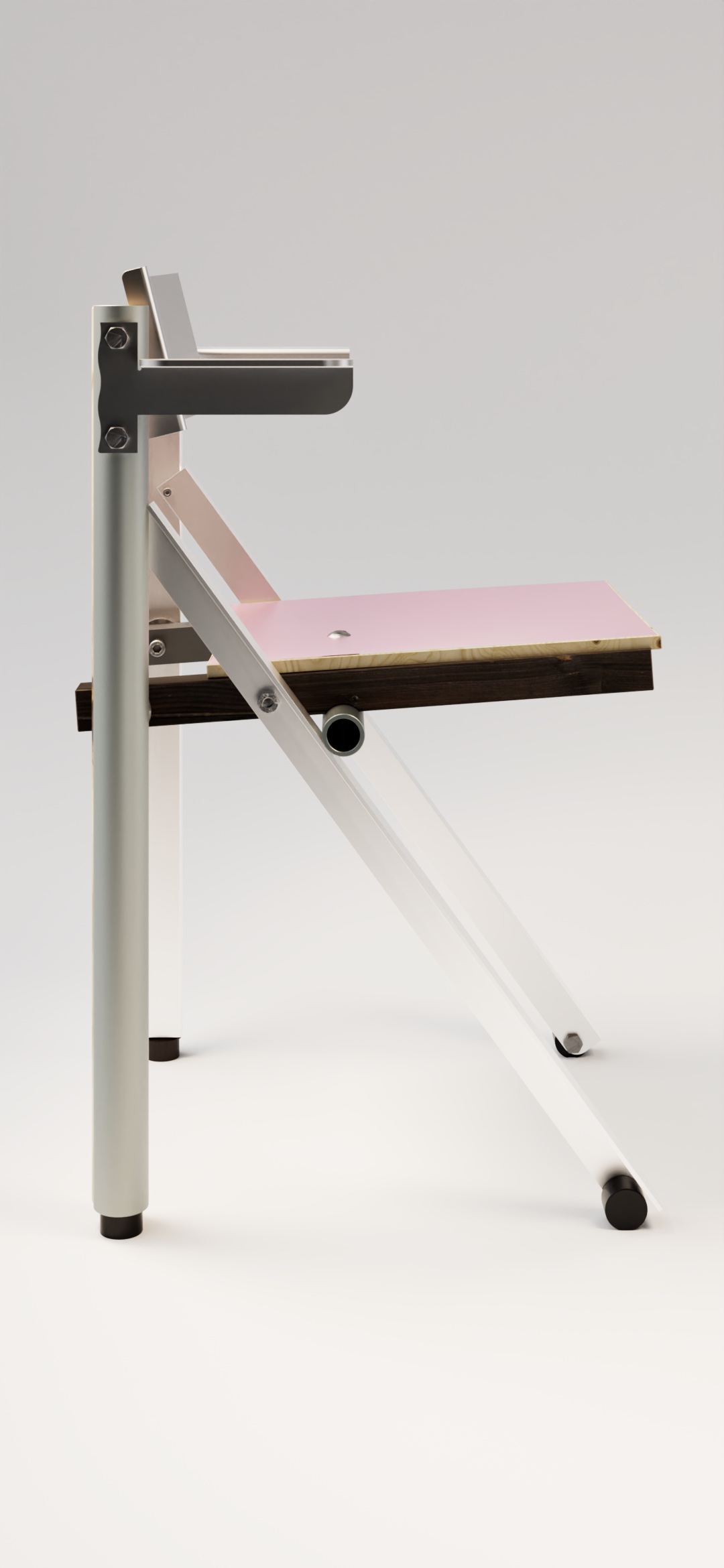
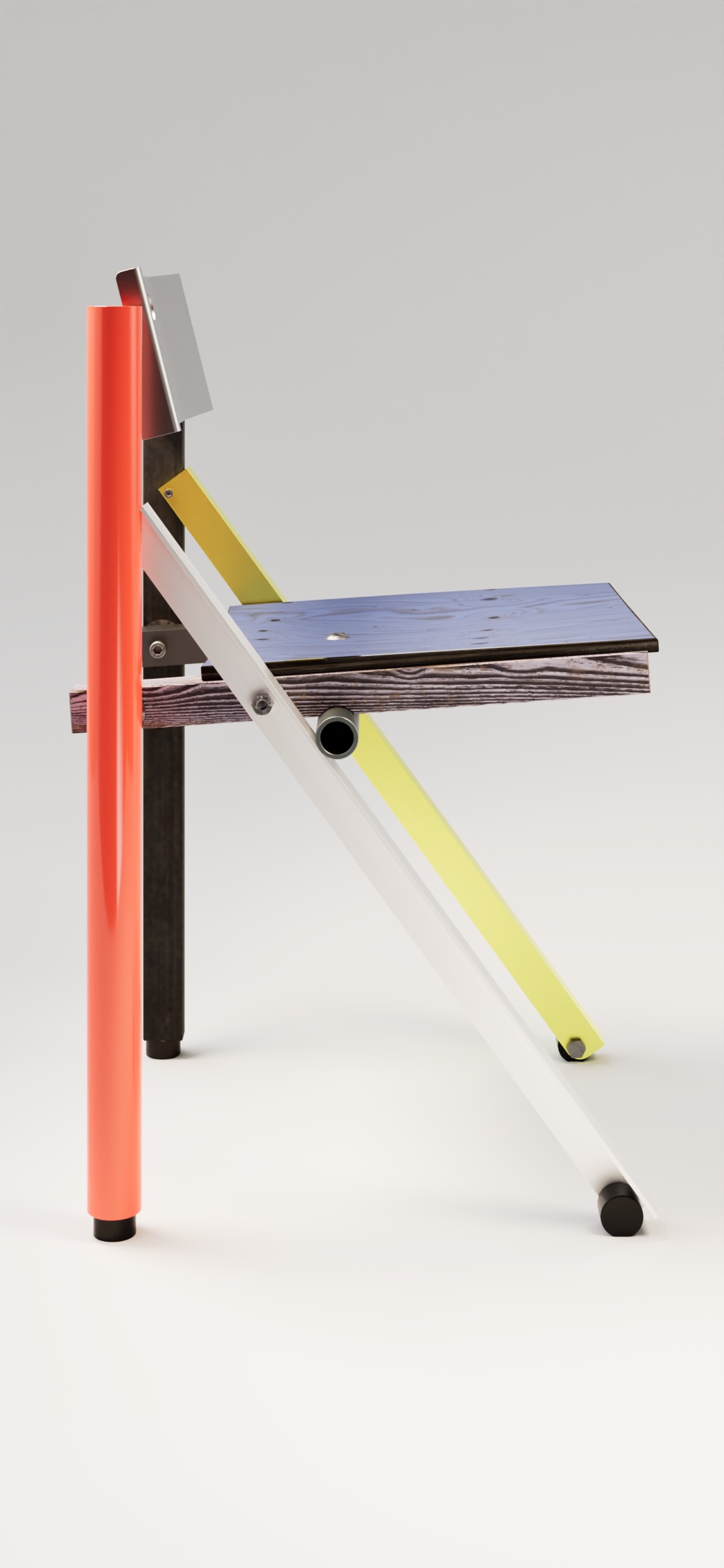
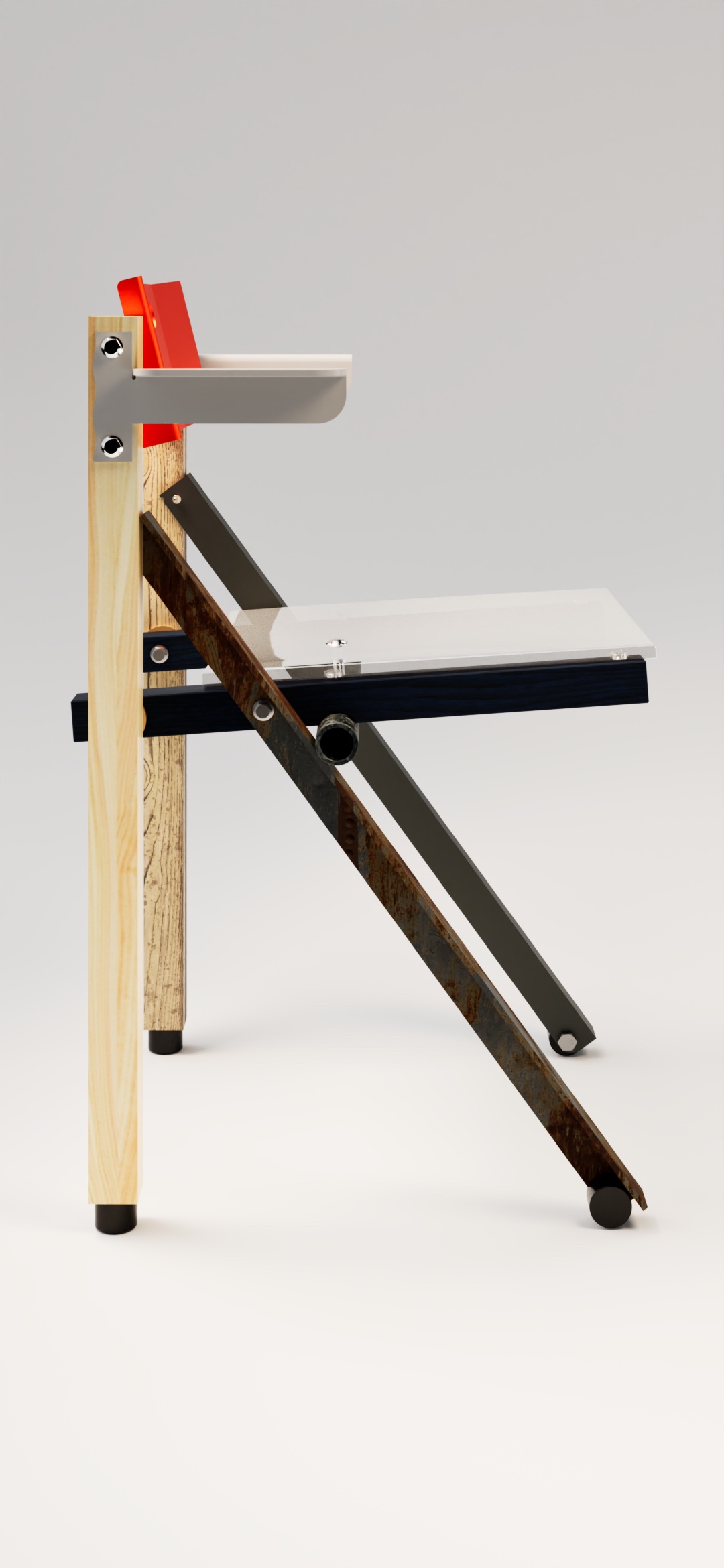
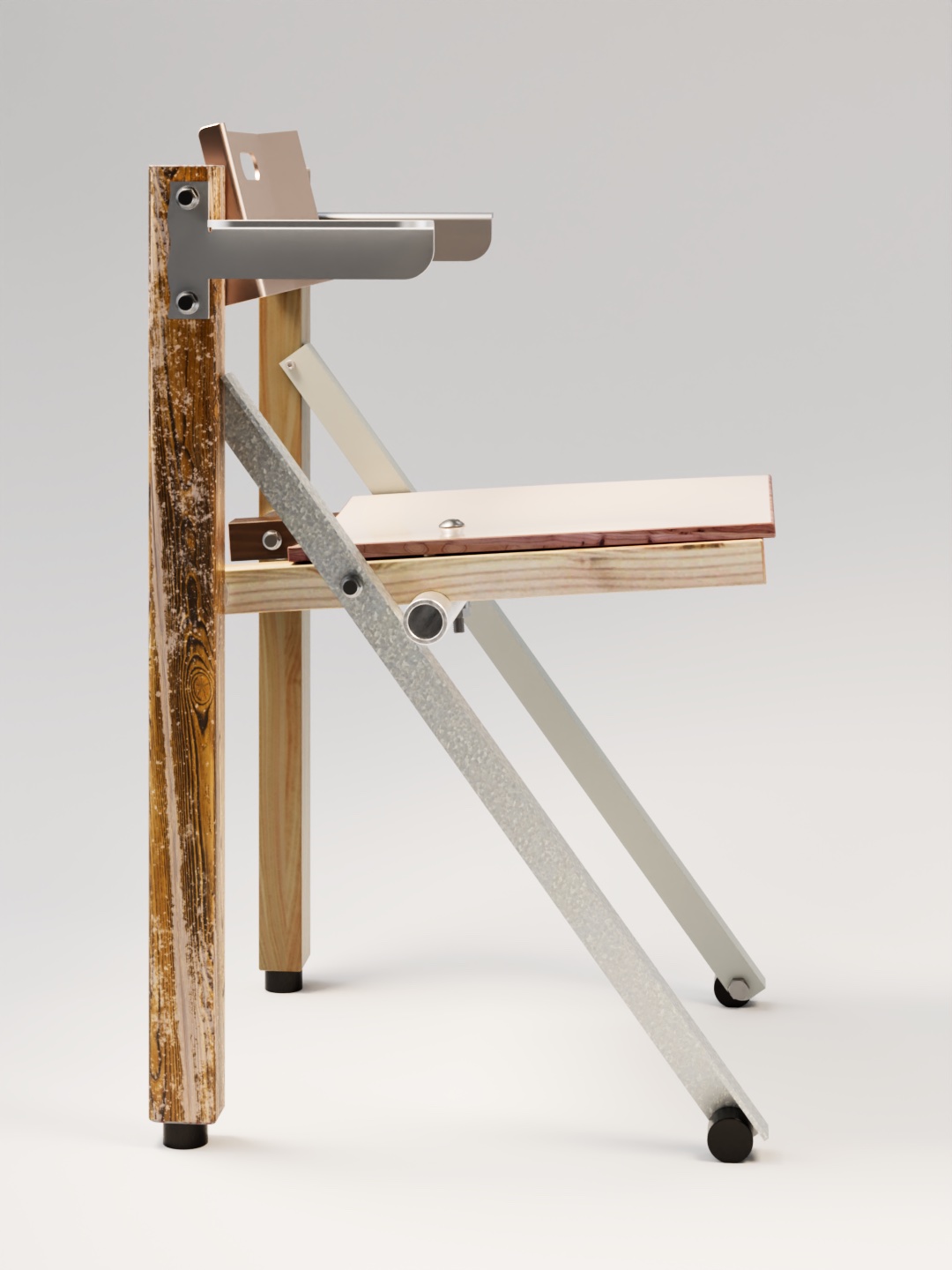
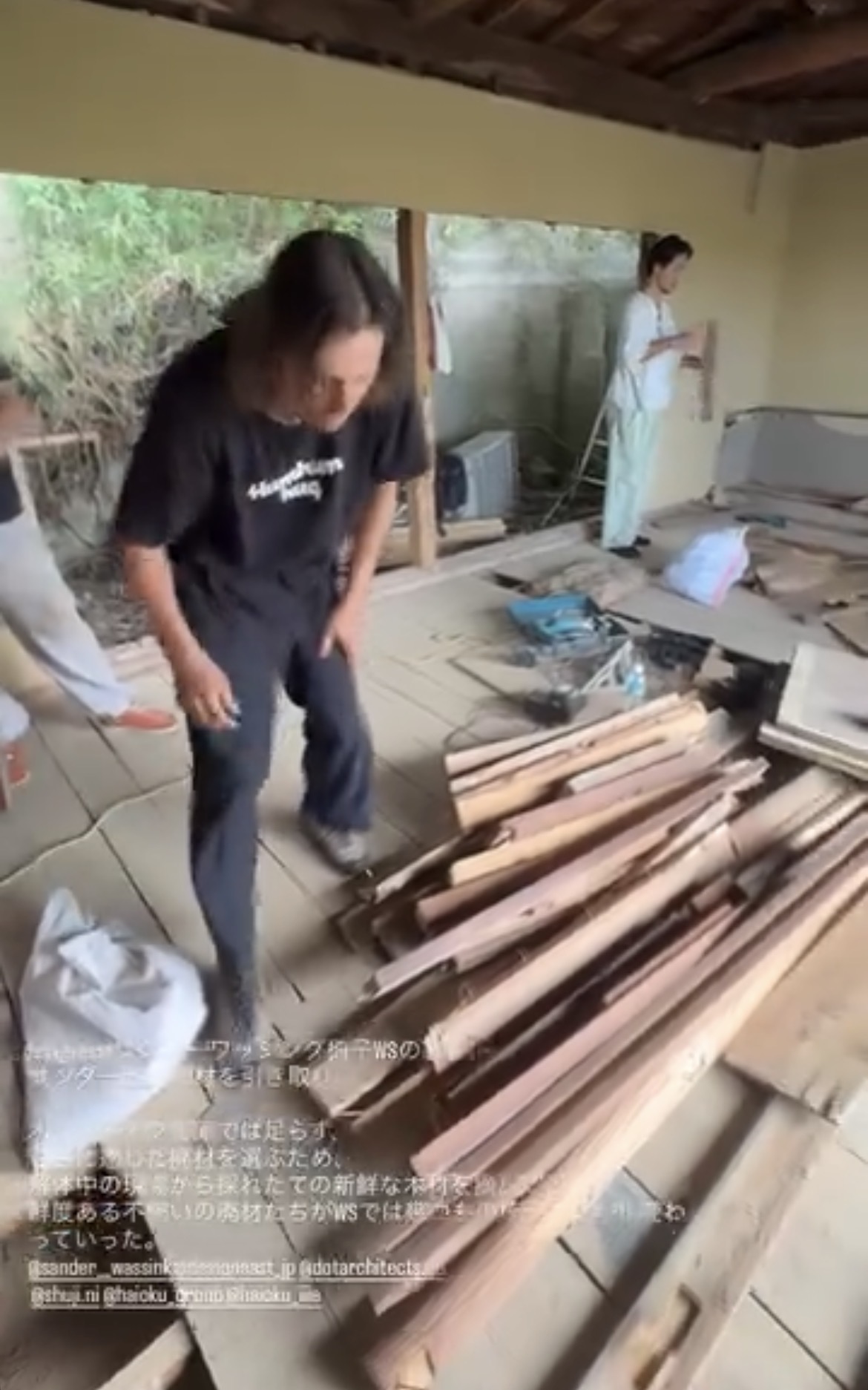
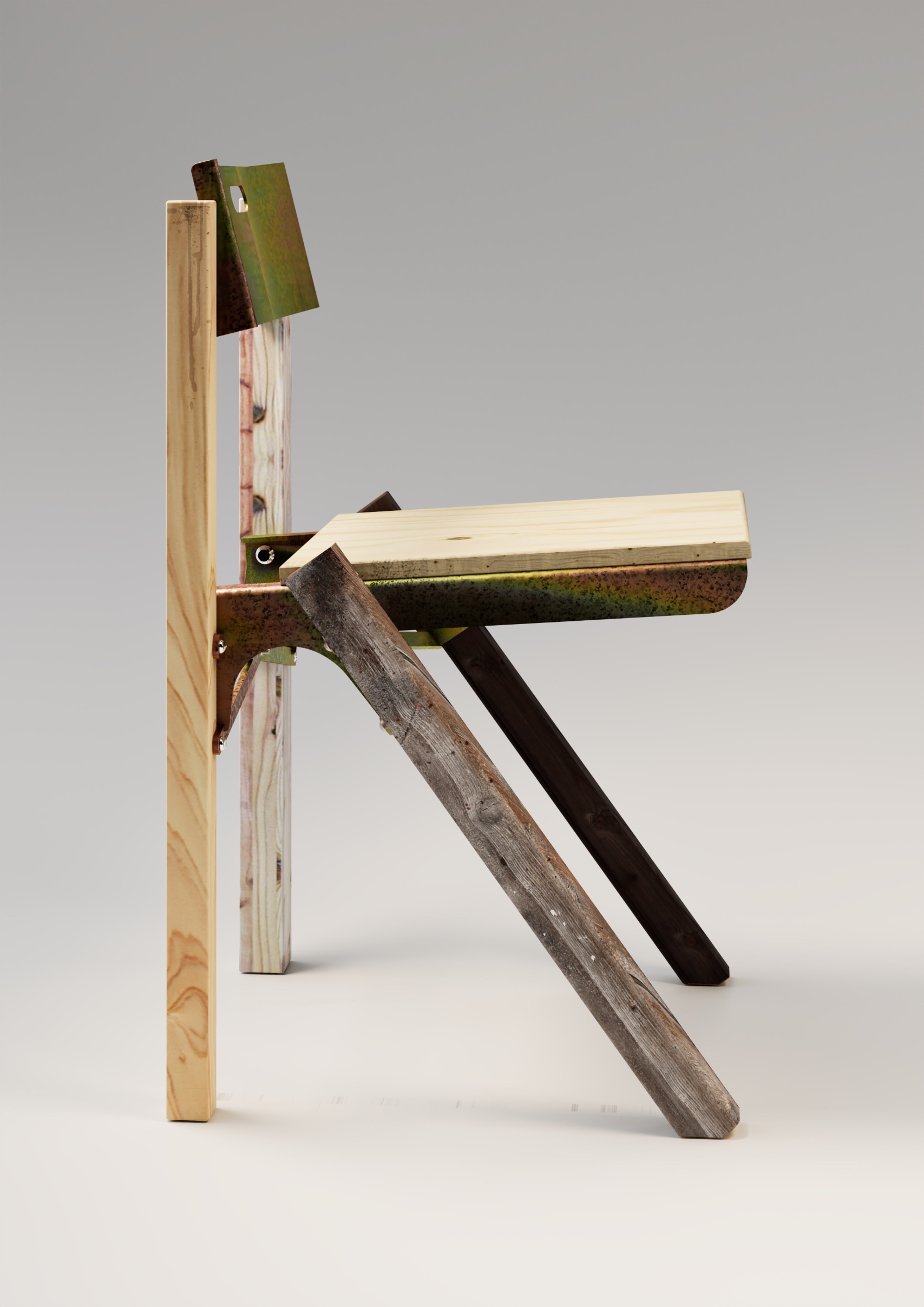
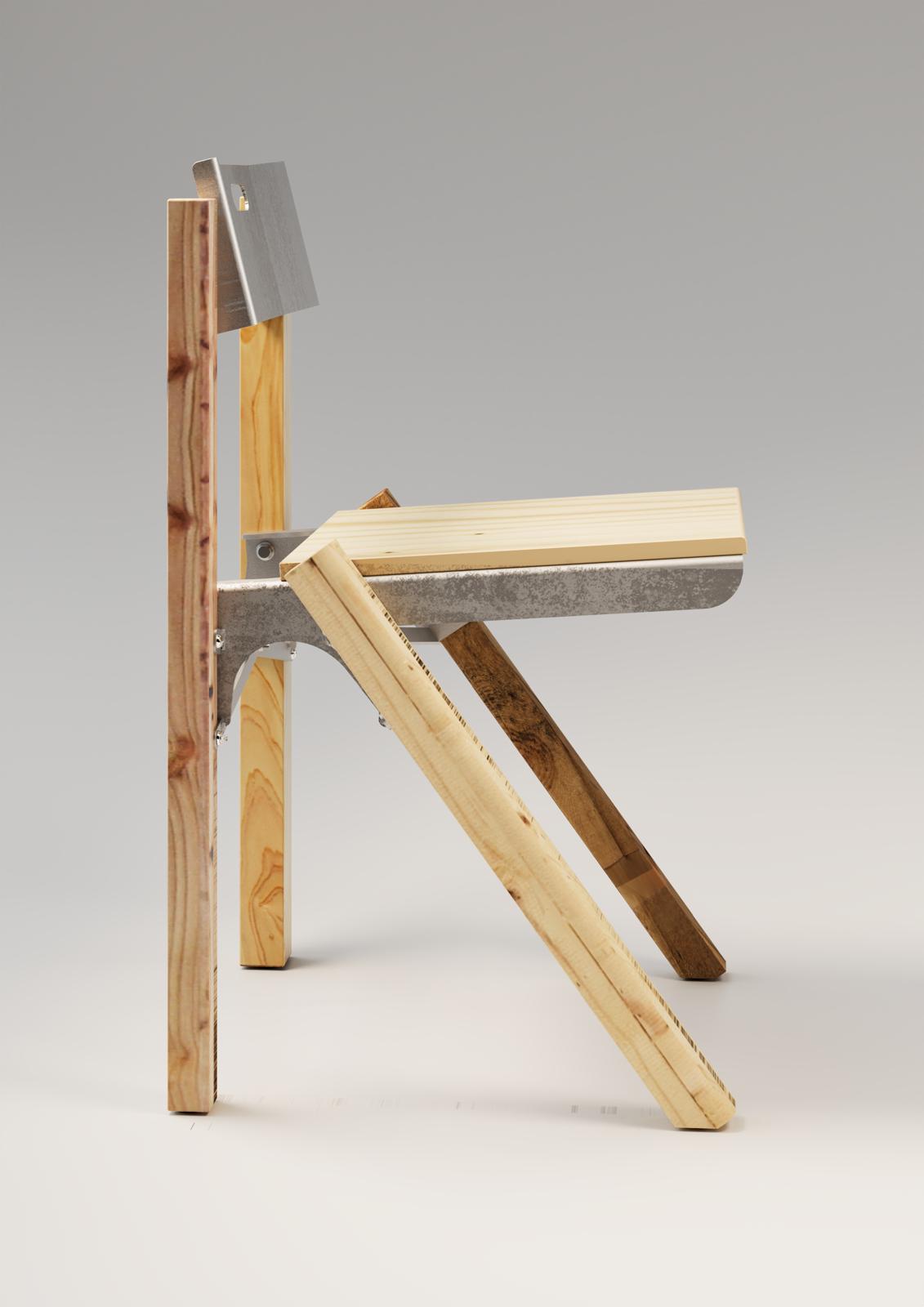
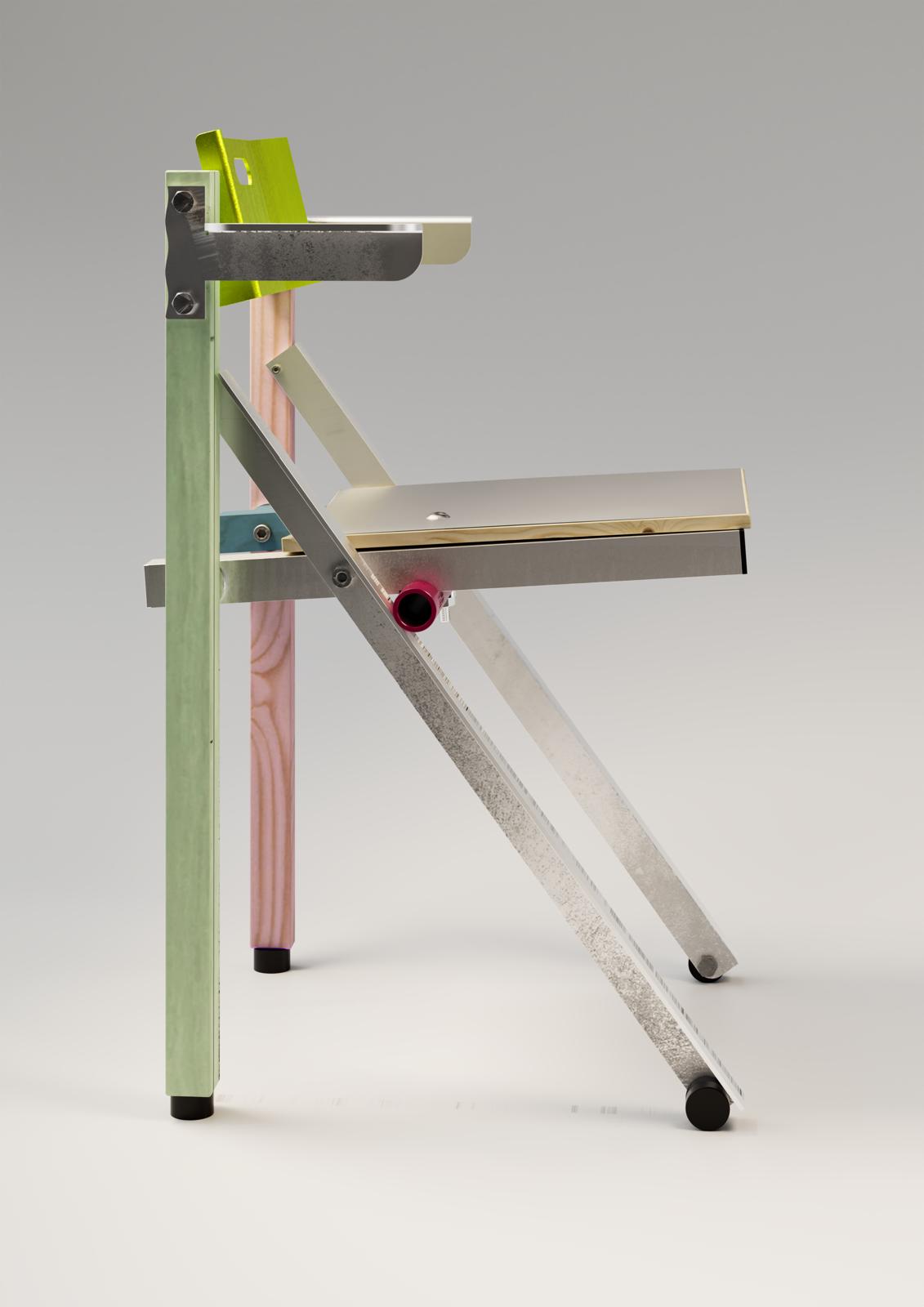
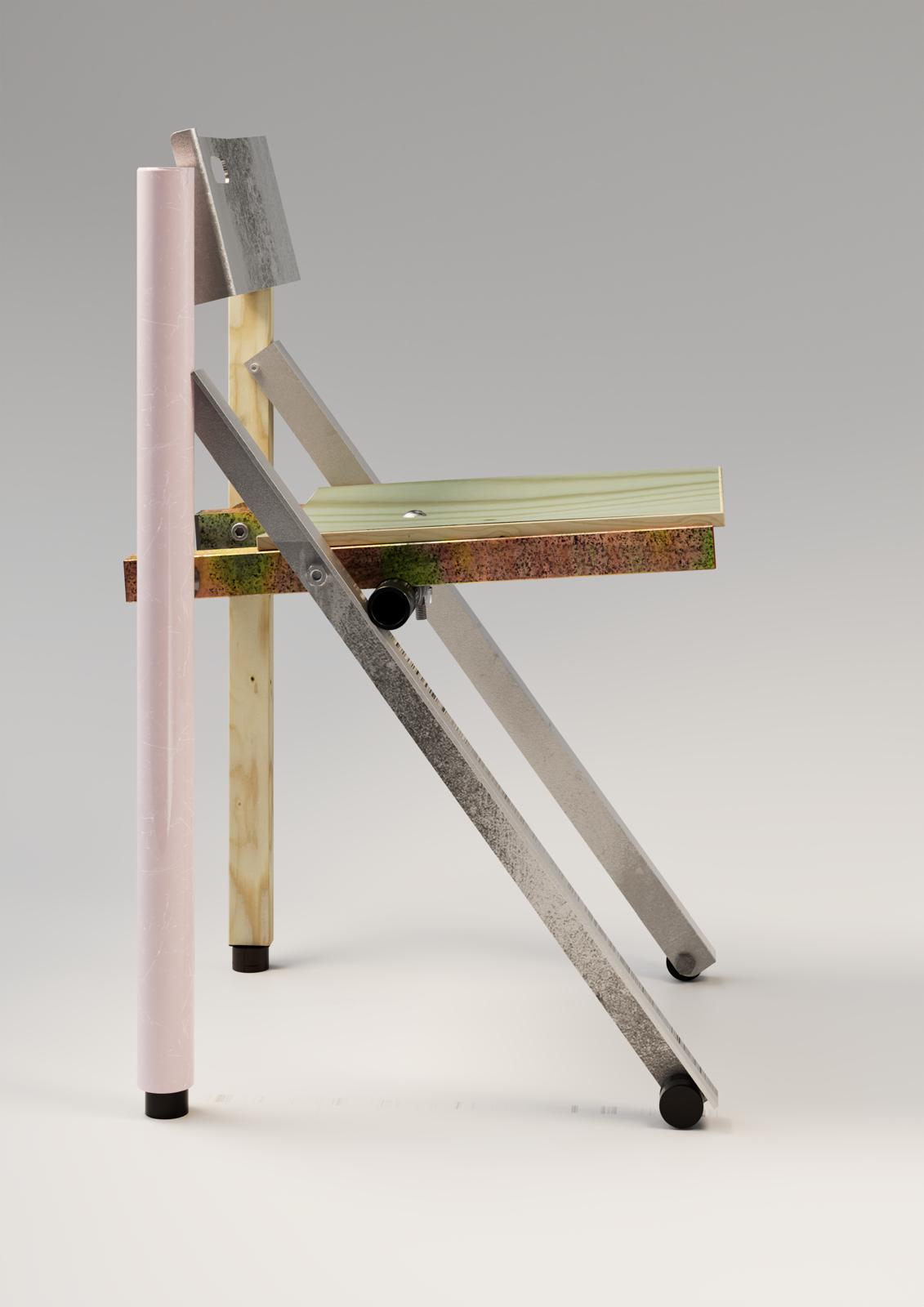
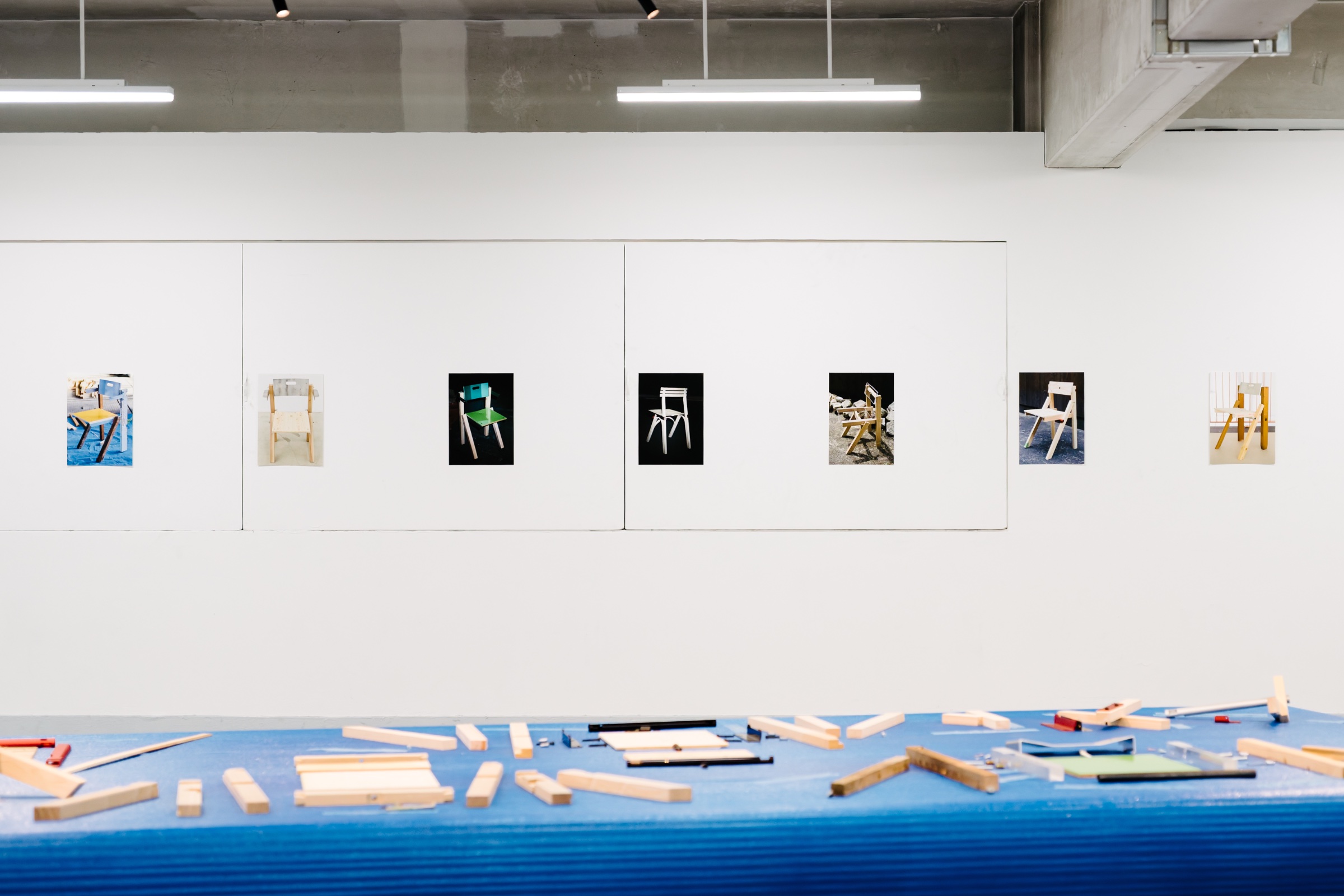
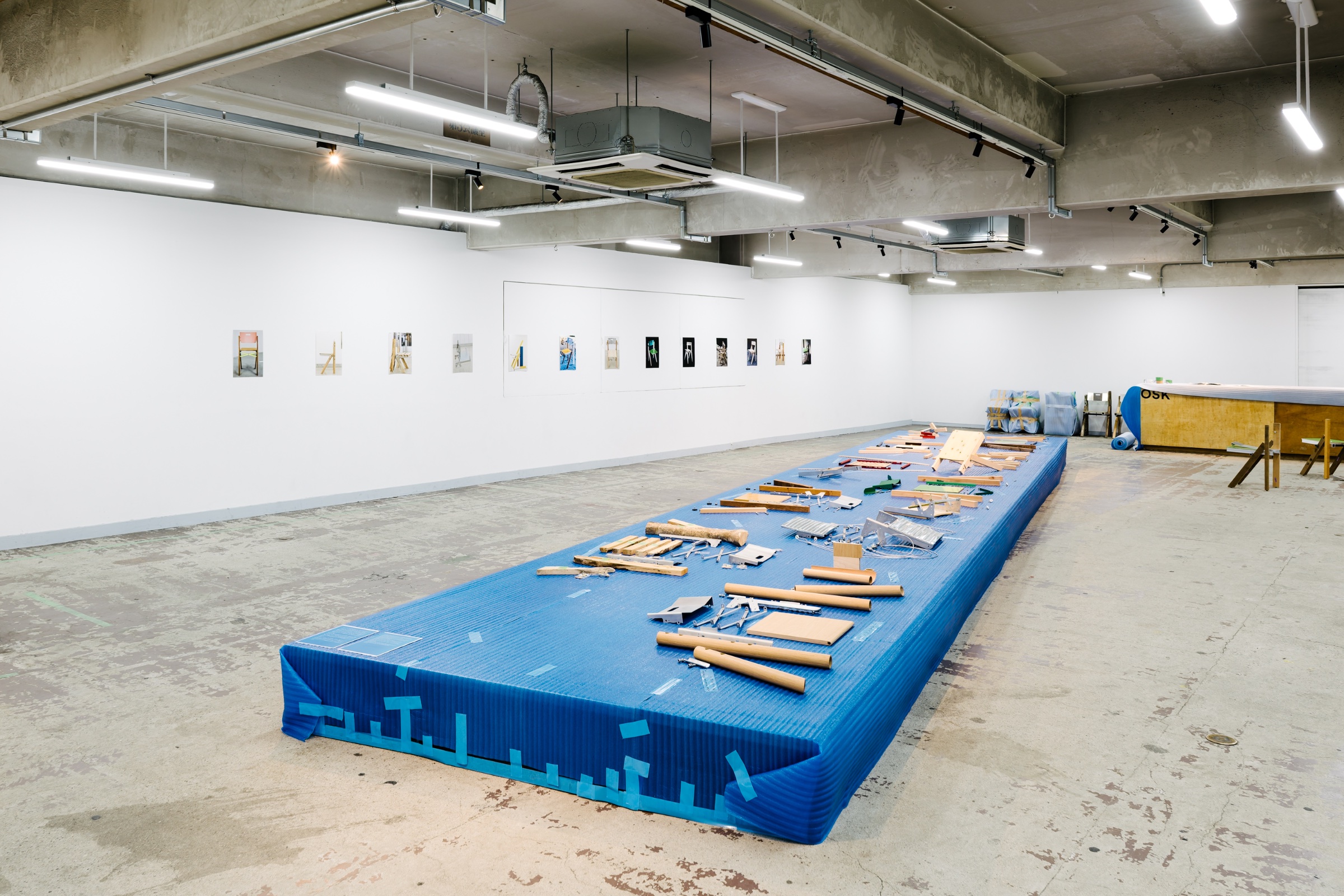
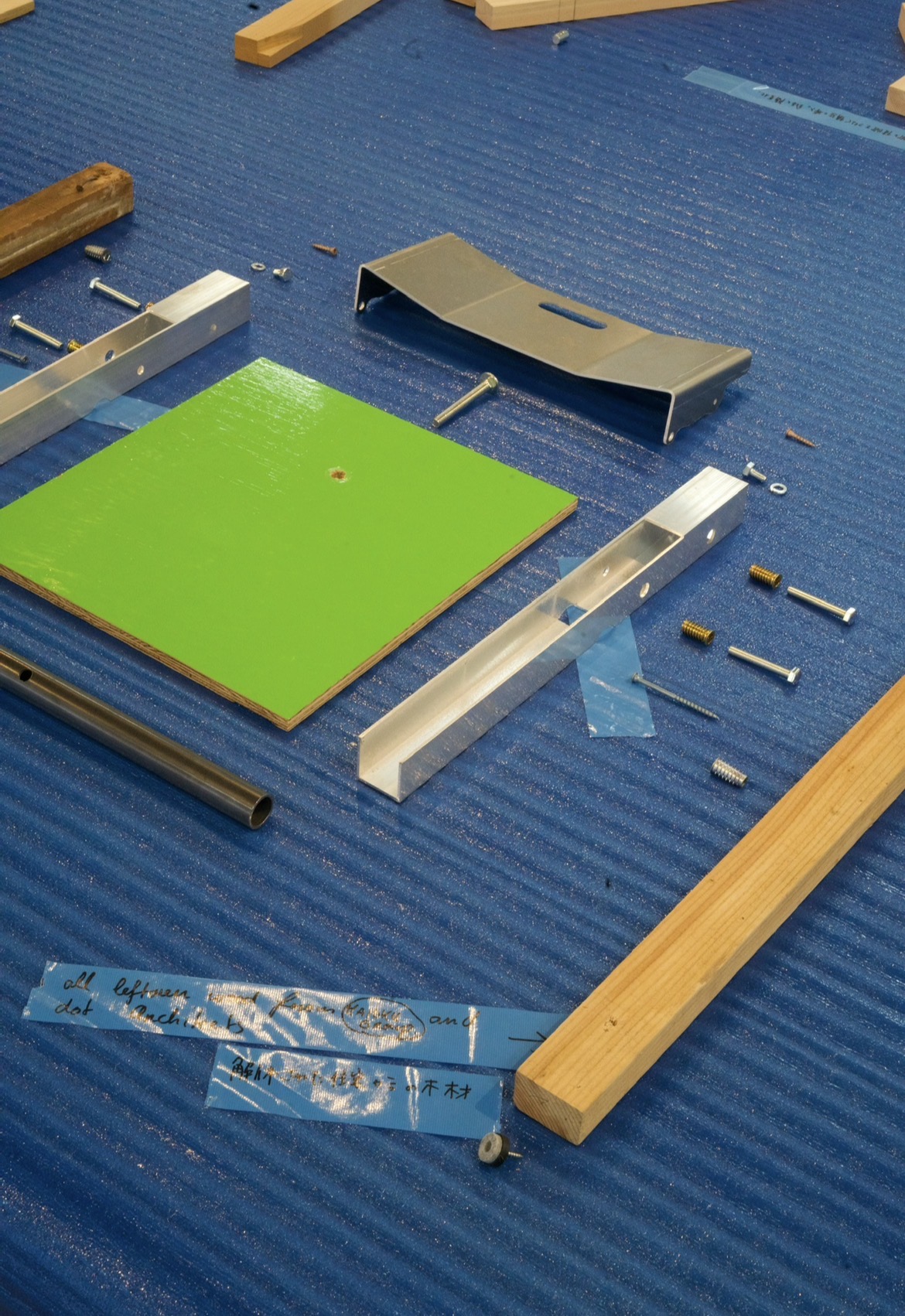
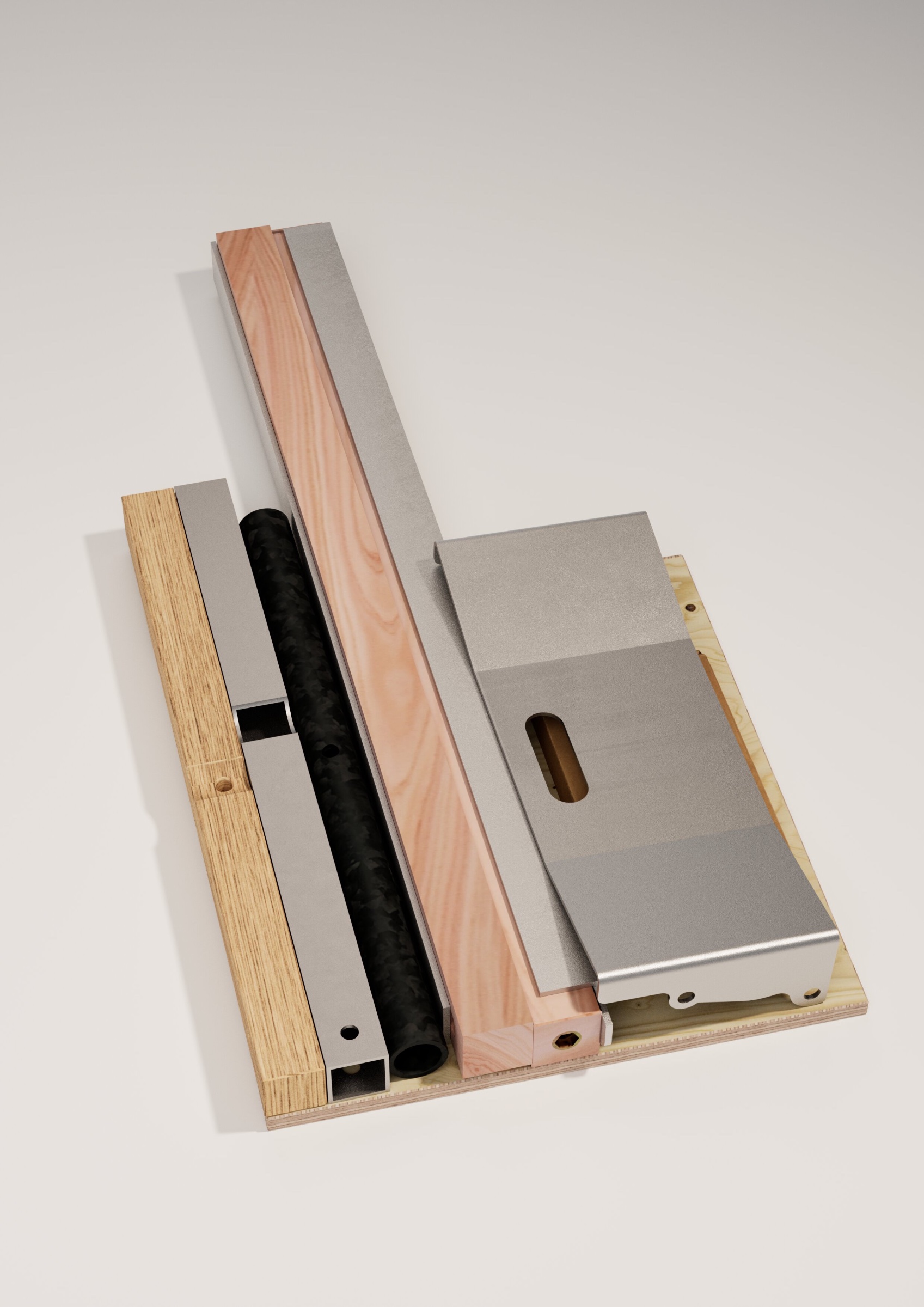
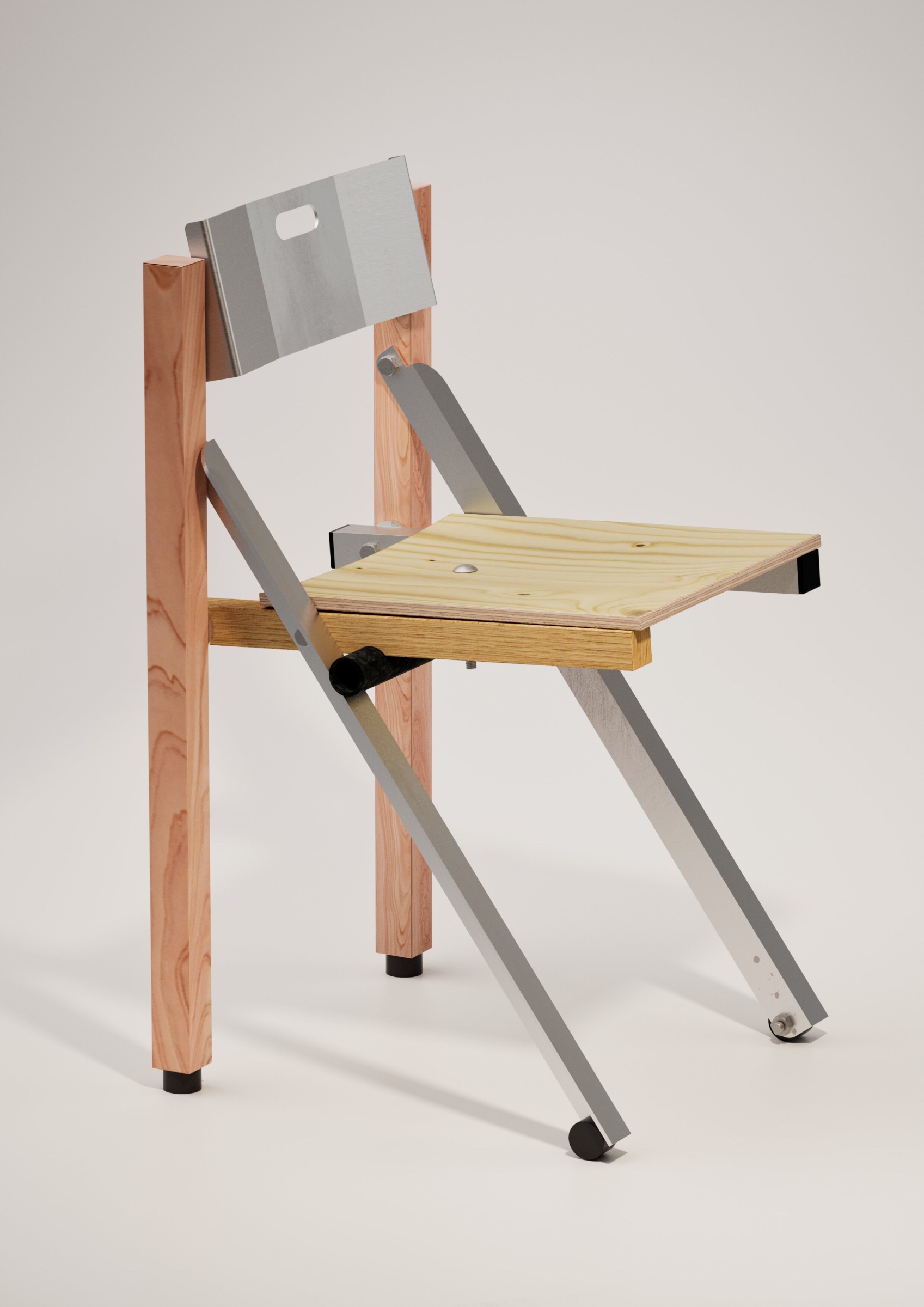
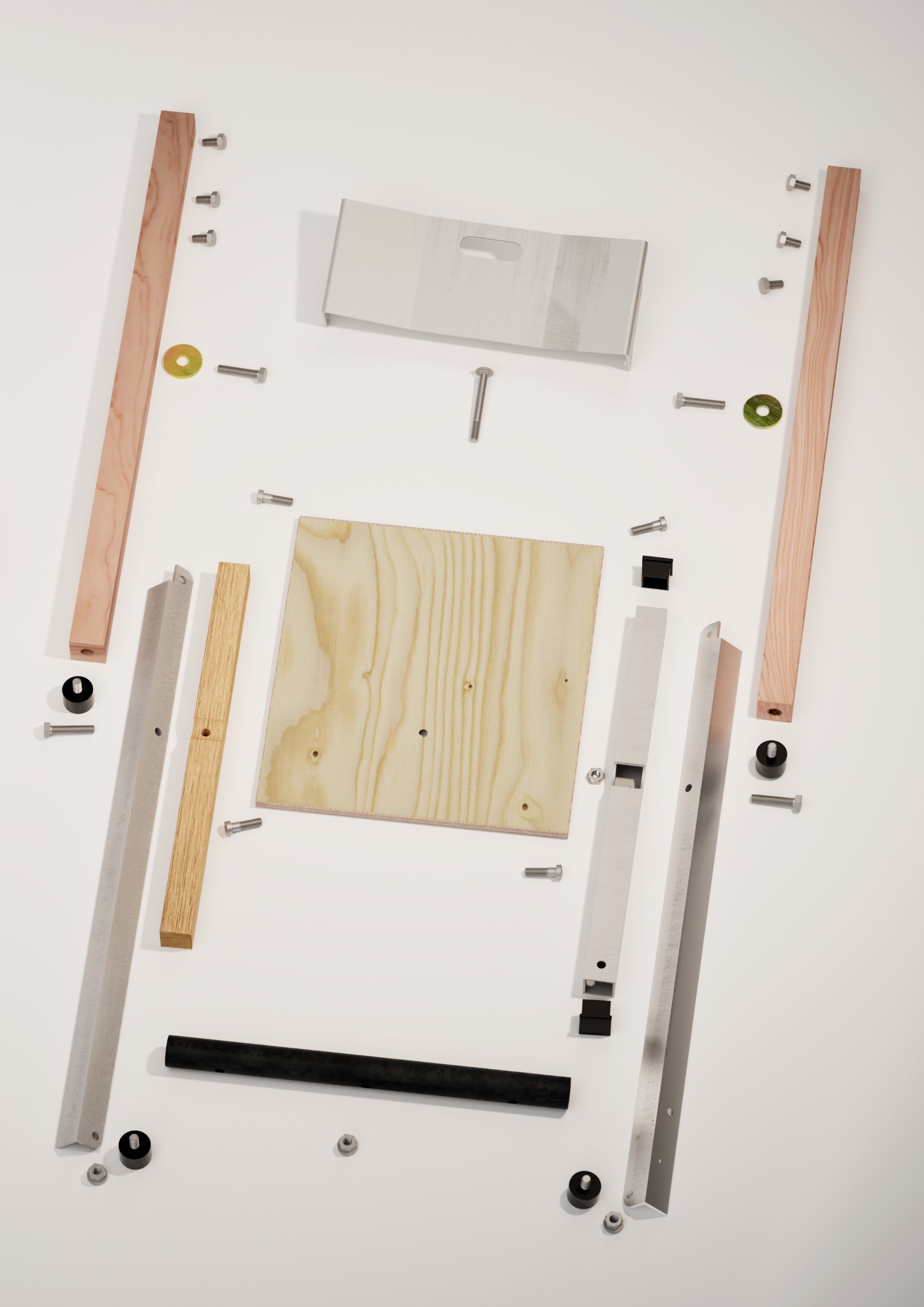
For the Dutch Pavilion at the Osaka Expo developed five variations of a single chair design in collaboration with around ten Japanese partners, from industrial manufacturers to small traditional workshops The project began with a simple intention, to create a chair that could travel, adapt, and be remade through different hands and contexts while maintaining an essential structure. At its core lies a system of custom-engineered aluminum components forming a flexible skeleton that unites diverse materials such as steel, wood, textile, bamboo, and leather into one coherent structure This modular framework allows transformation without losing identity, balancing precision with openness I have long been interested in what happens when a design is transferred to others, not only as a form of production but as a way for the work itself to evolve am less drawn to exporting fixed blueprints than to observing how a design changes when it absorbs local conditions, when it returns shaped by different tools, techniques, and perspectives Earlier projects explored this idea n Contrabande for the Boijmans useum developed chair variations in orocco using local labor and materials to question authorship and value n Dashilar Flagship Store in Beijing reconstructed fake brand shoes with local shoemakers into new hybrids These speculative gestures led me to imagine a system of standardized components produced globally but open to local reinterpretation, much like open-source design. I began to think of products as we think of cars, modular, adaptable, and expected to be customized The same principle could apply to chairs, shoes, or other everyday objects, systems designed to encourage modification rather than resist it This approach was reinforced by the so-called pirate phone makers in Shenzhen who assembled devices from interchangeable parts Their work revealed how open modularity can expand creativity and function beyond branded production From these influences started to consider furniture as a platform rather than a product The TRTONS reflects this thinking, designed for varying levels of user engagement ndividuals can assemble their own chairs, architects can co-develop site-specific versions, or users can simply acquire a finished chair ach mode holds equal value The system aims for coherence without hierarchy and flexibility without loss of clarity The three-month collaboration in Japan became a study in how far such a system could stretch before refinement was required ach chair tested the limits between adaptability and efficiency Some components remained open to variation, others were fixed for production logic The goal was always functional, affordable furniture suited to everyday use The aluminum parts were revised repeatedly to improve performance, simplify assembly, and reduce cost Through this iterative process the design advanced toward greater efficiency and elegance, defining the transition to current state of development ll aluminum components were produced in the Netherlands by TailorSteel This decision was both symbolic and practical, the Dutch-made elements form the structural spine connecting Japanese materials and methods, while automated production in the Netherlands proved more efficient than local manufacturing Such systems enable independent designers like myself to remain small yet precise, combining experimentation with professional production standards n the end the project became less about the chairs themselves and more about the system that allowed them to exist ach version marked a point along a continuous process of refinement The work revealed how design can function as a shared language, one that connects people, skills, and materials across distance, while still remaining open to change
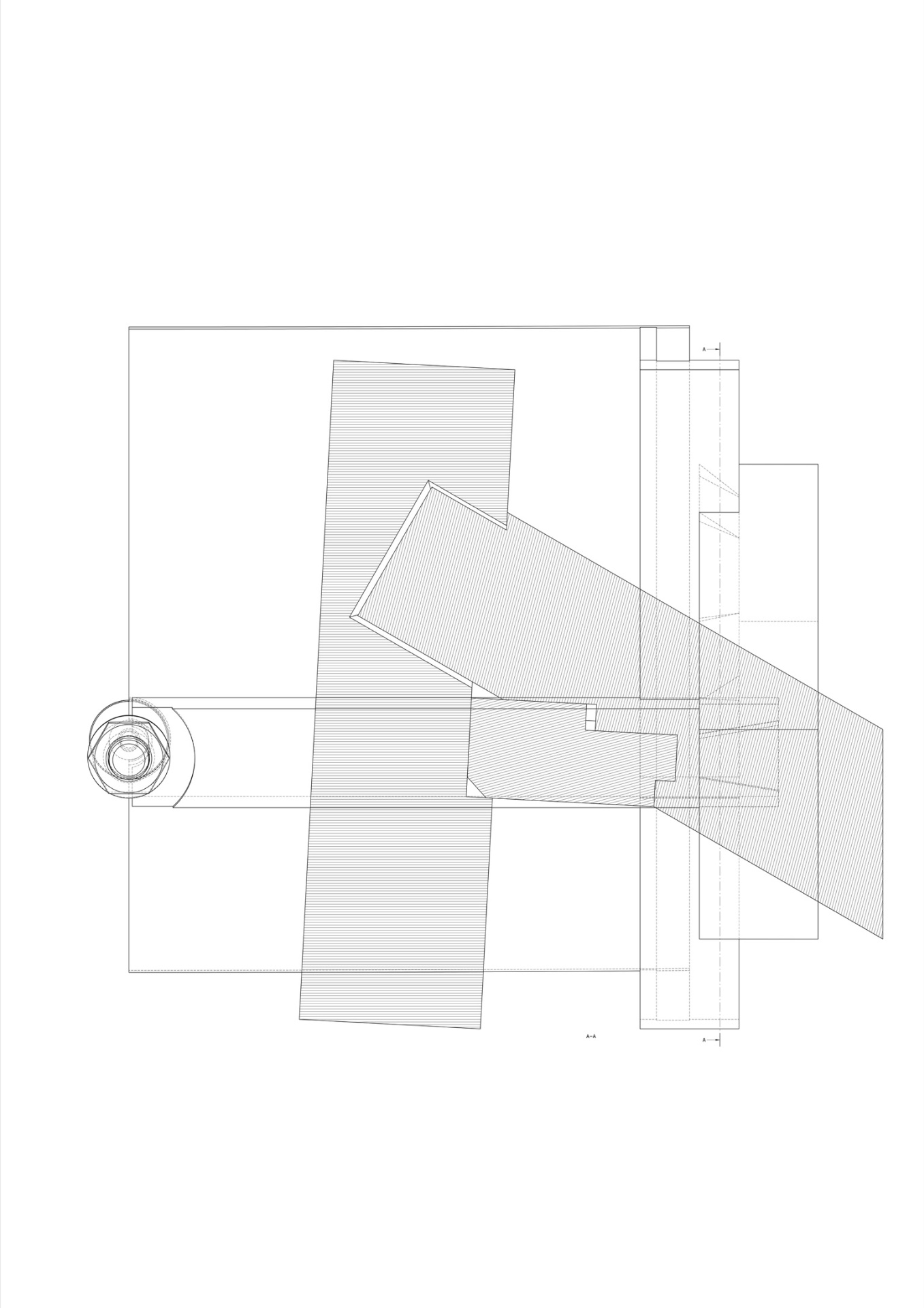
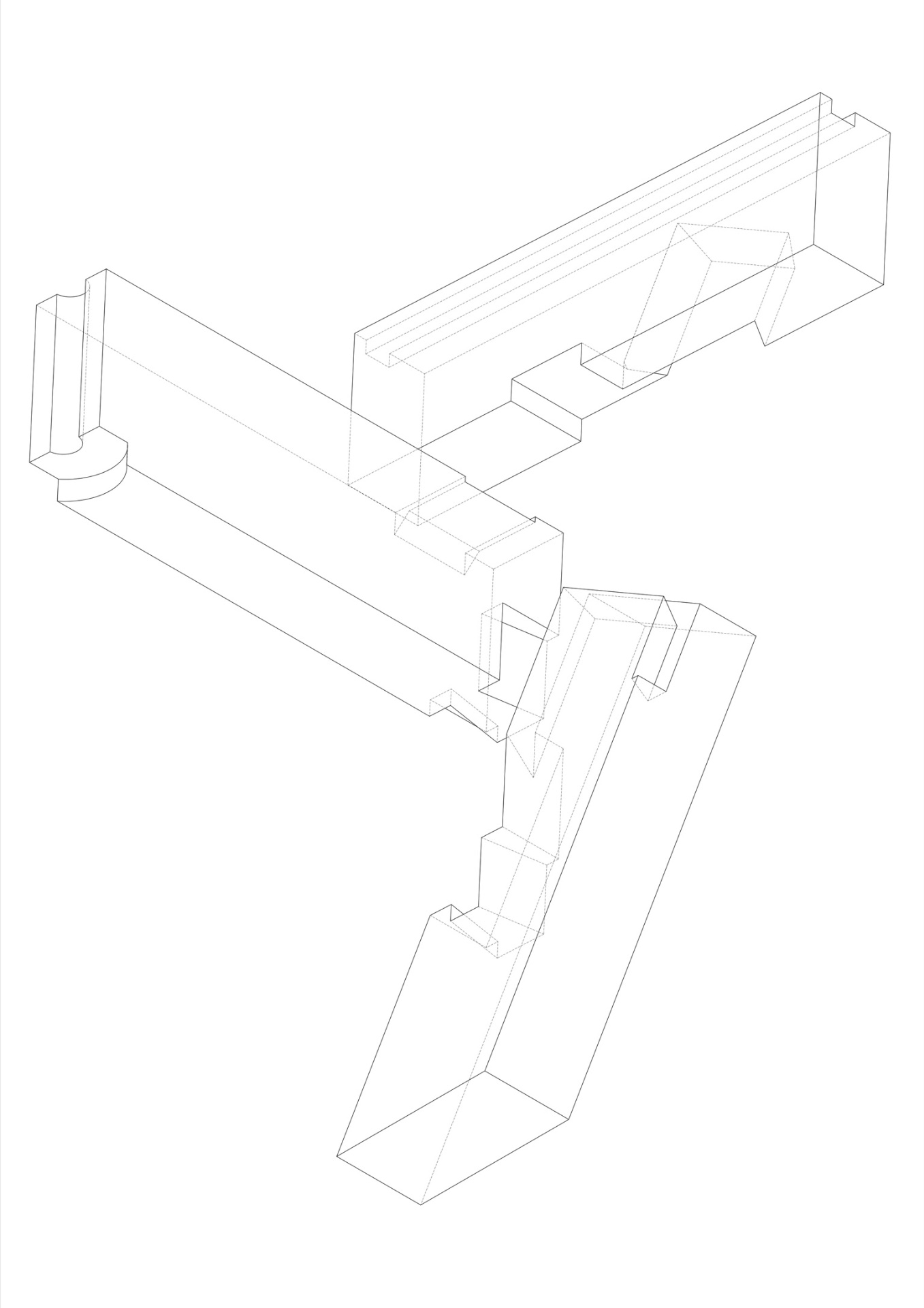
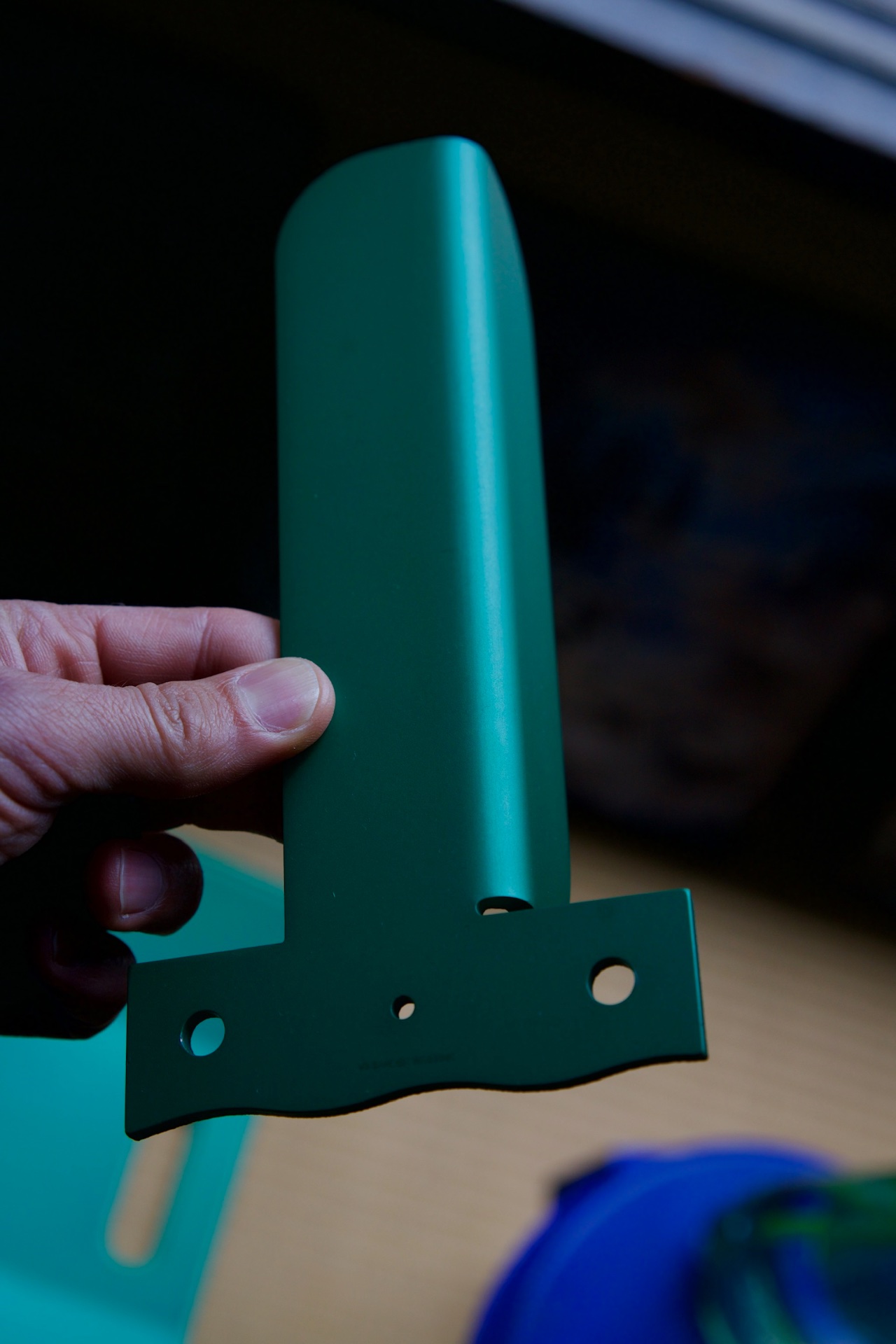
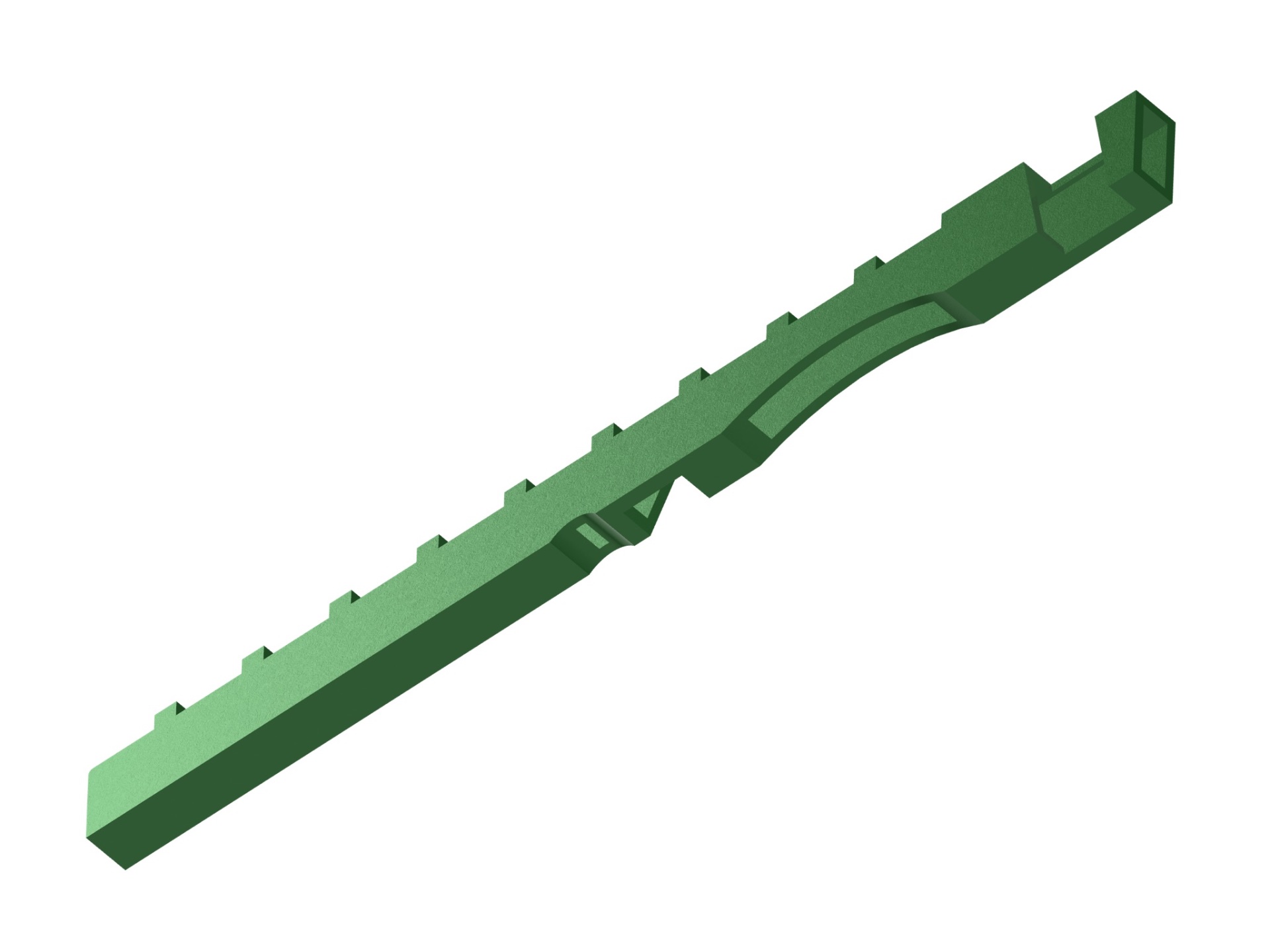
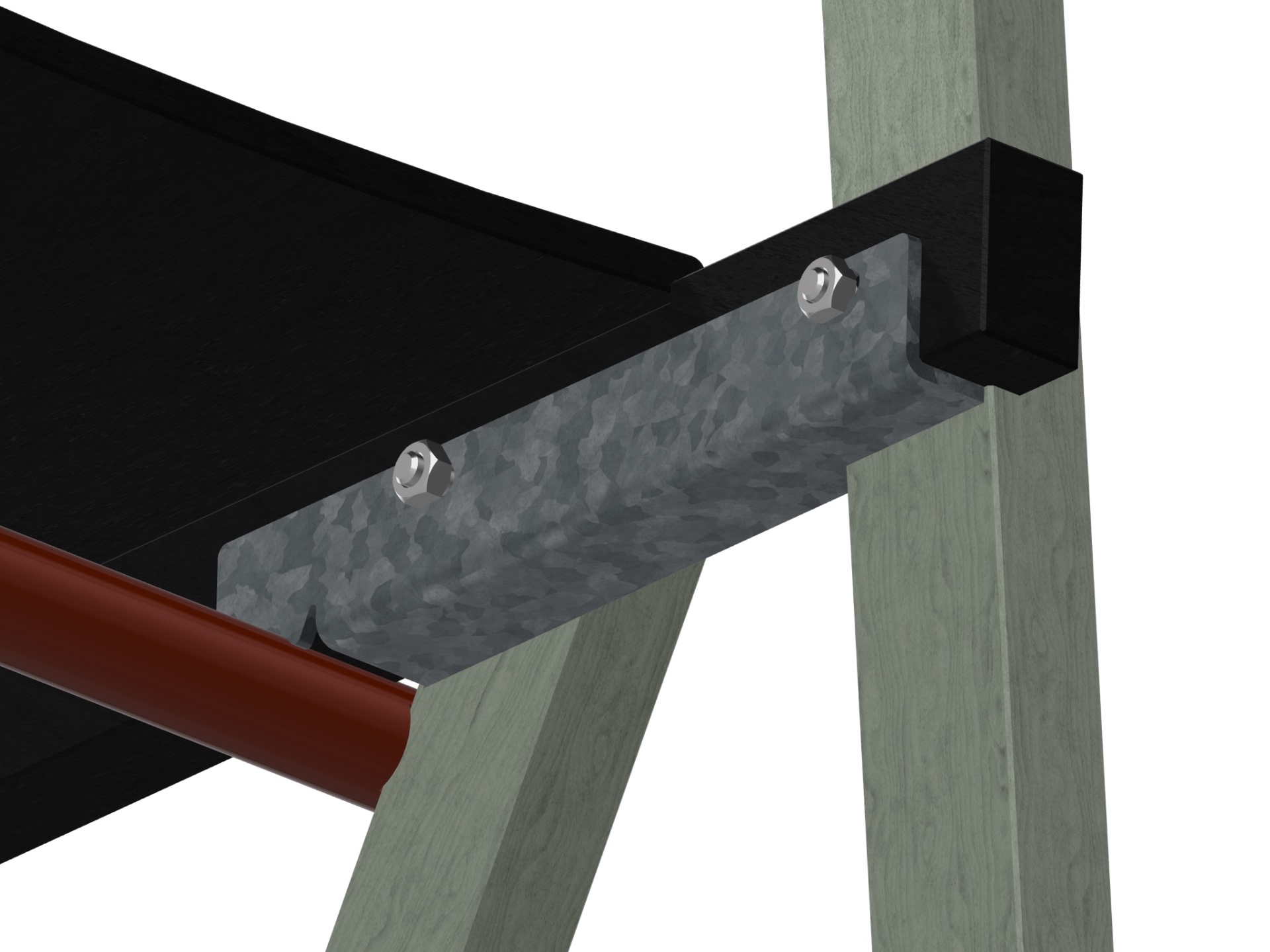
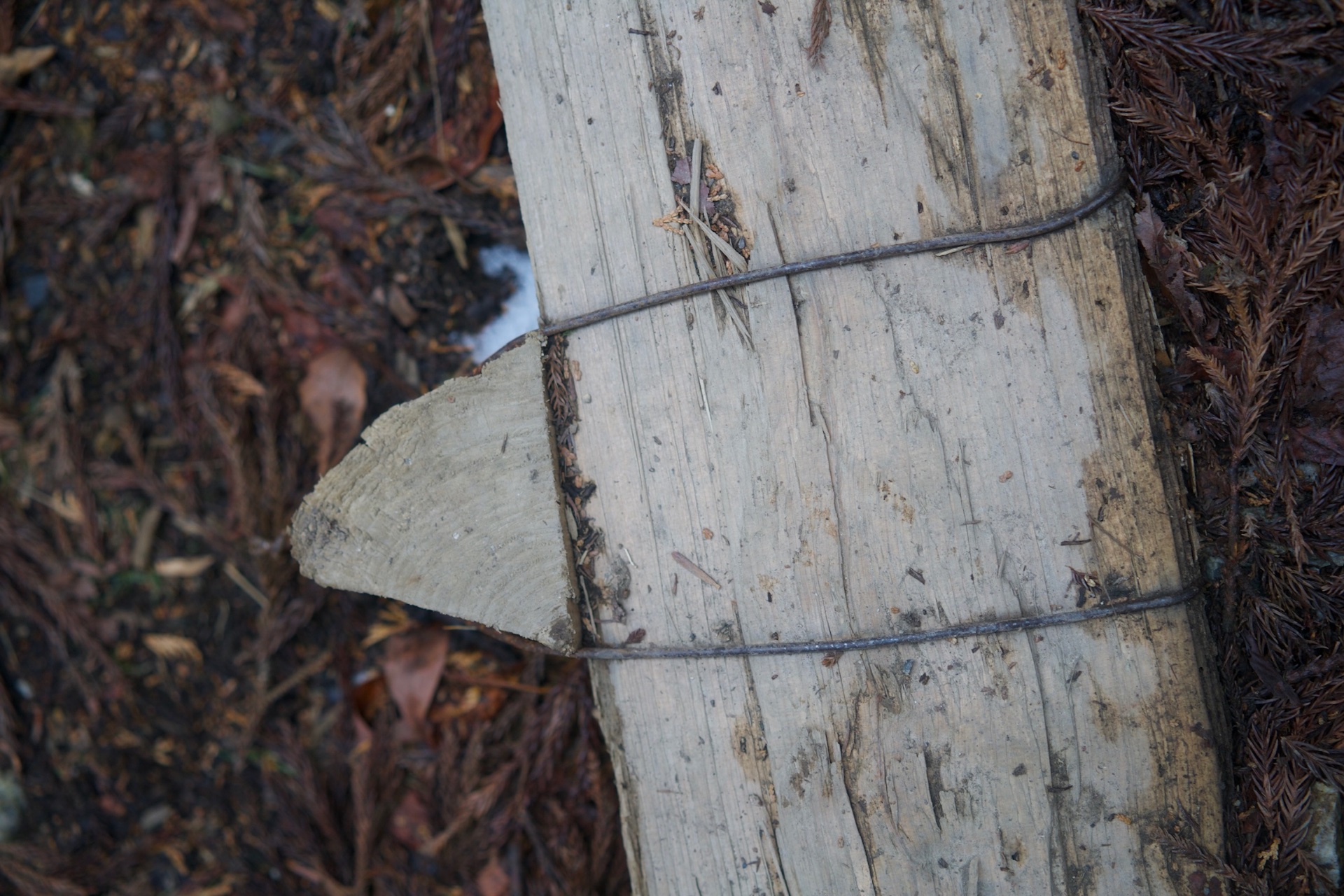
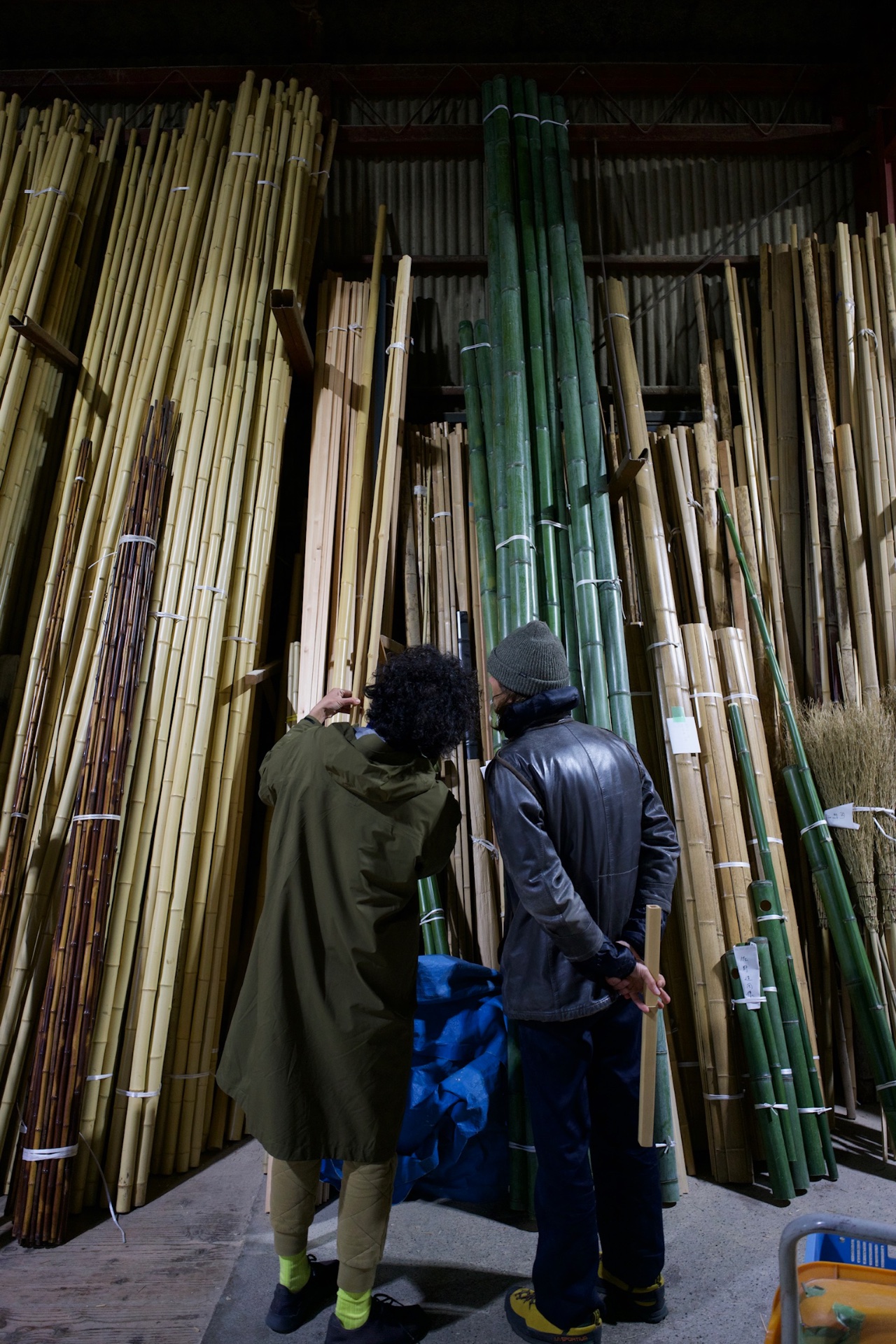
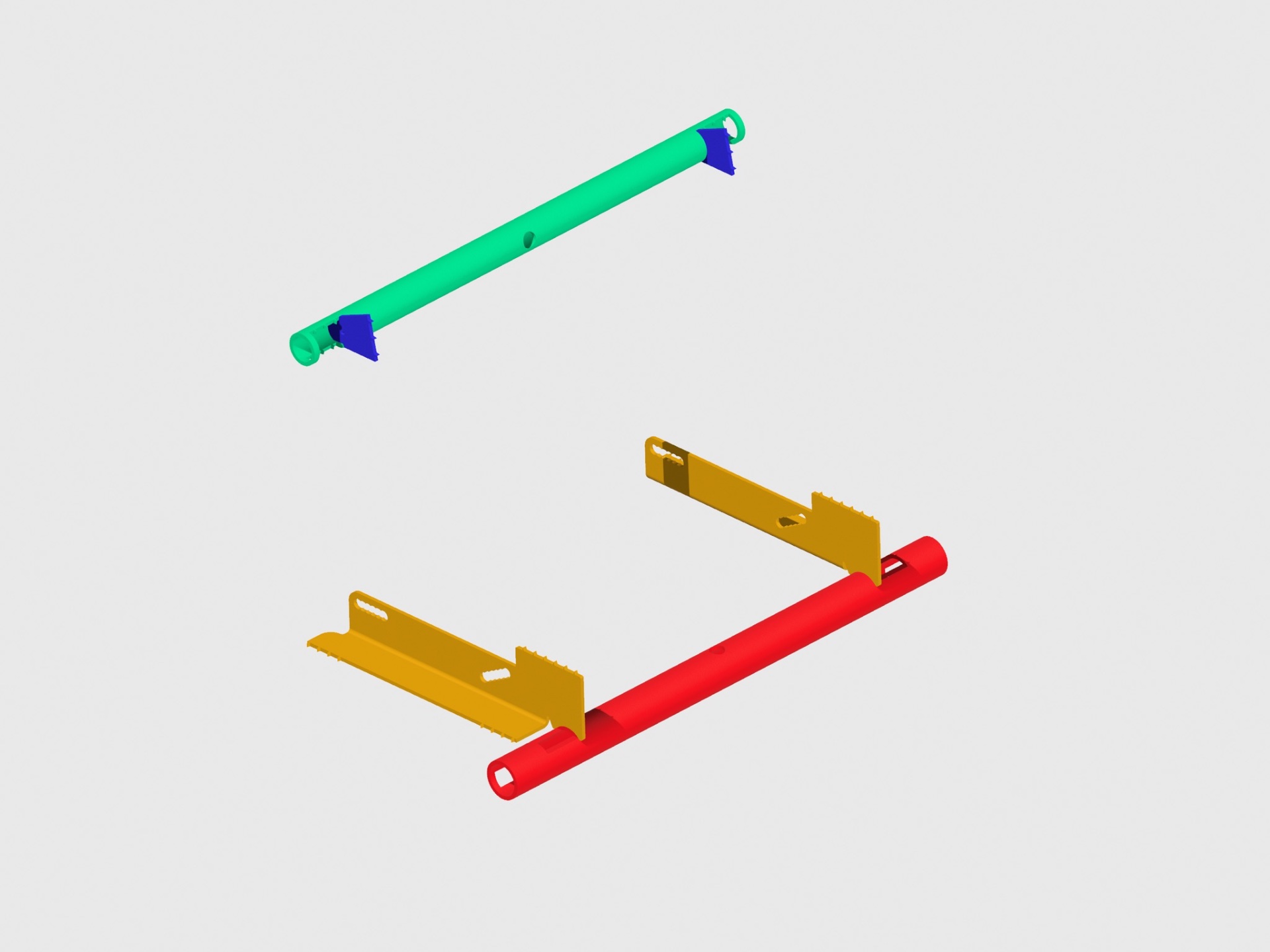
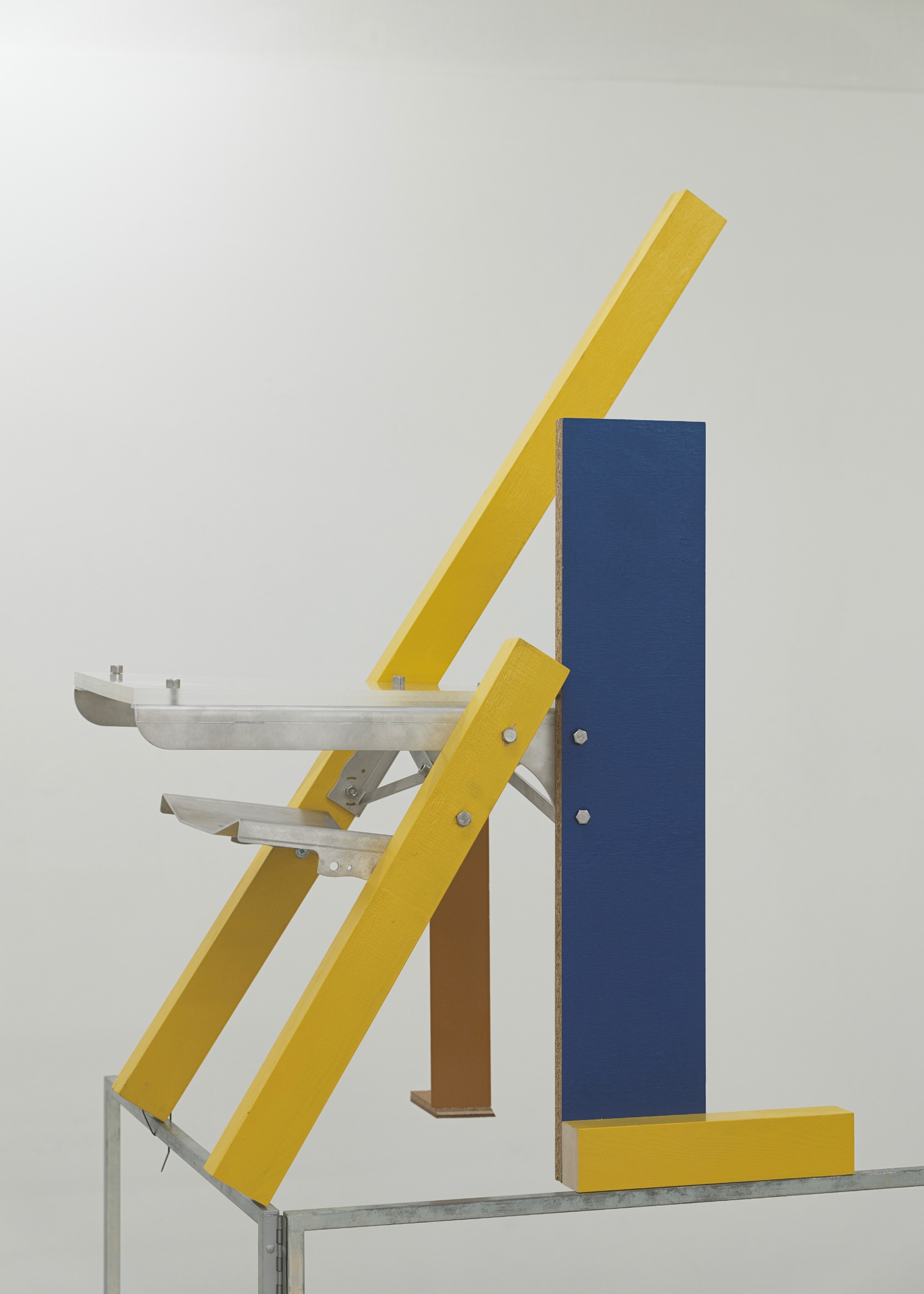
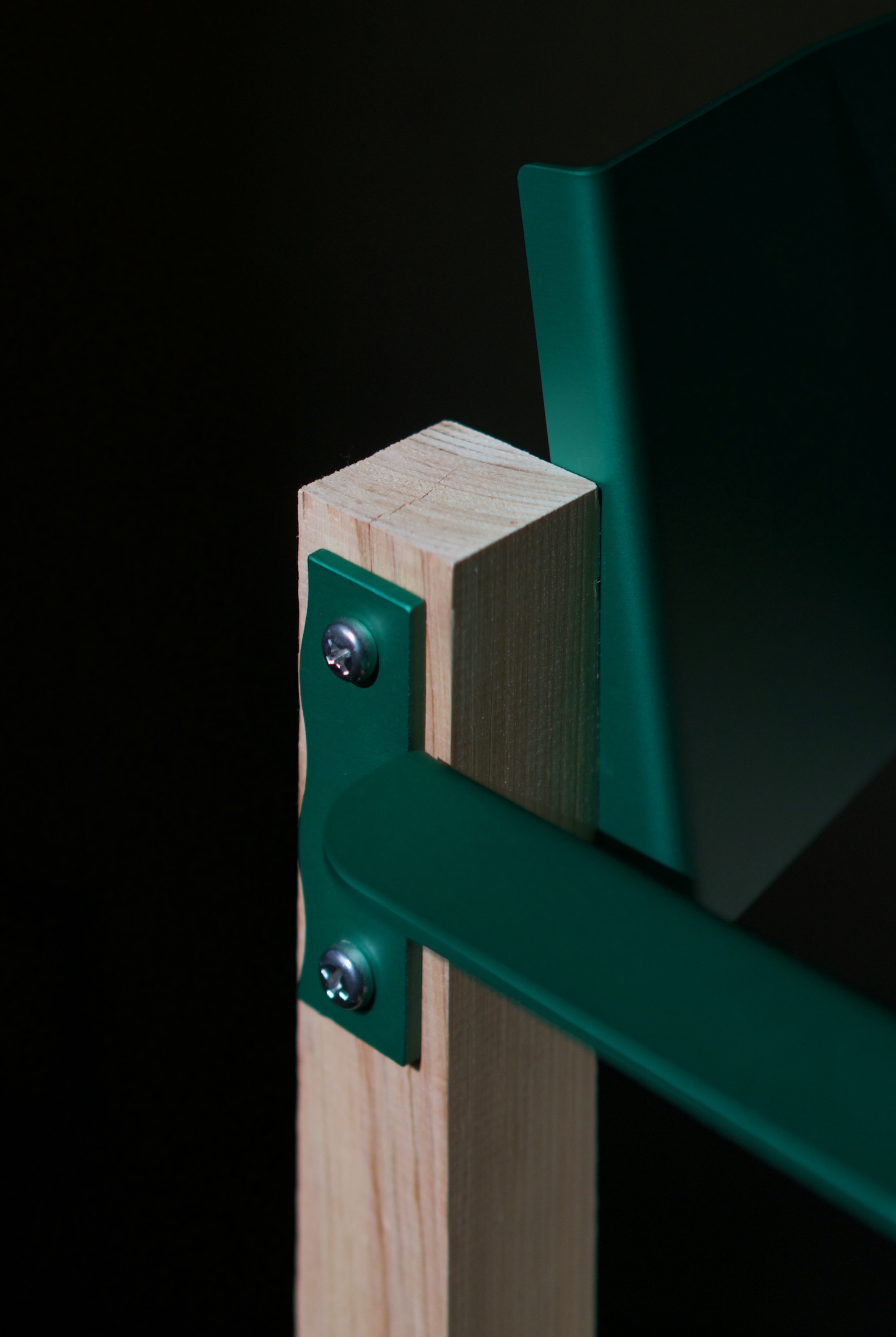
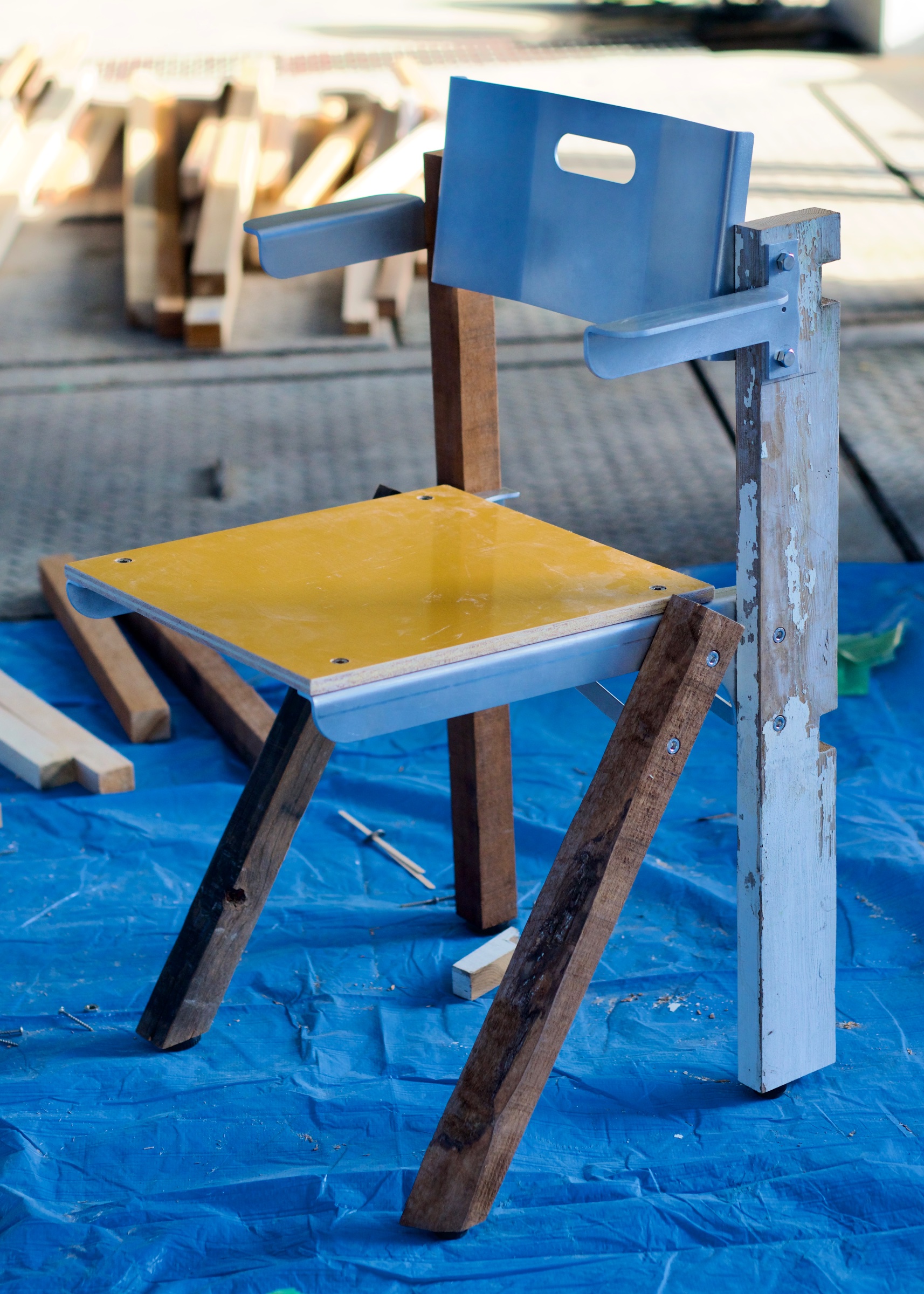
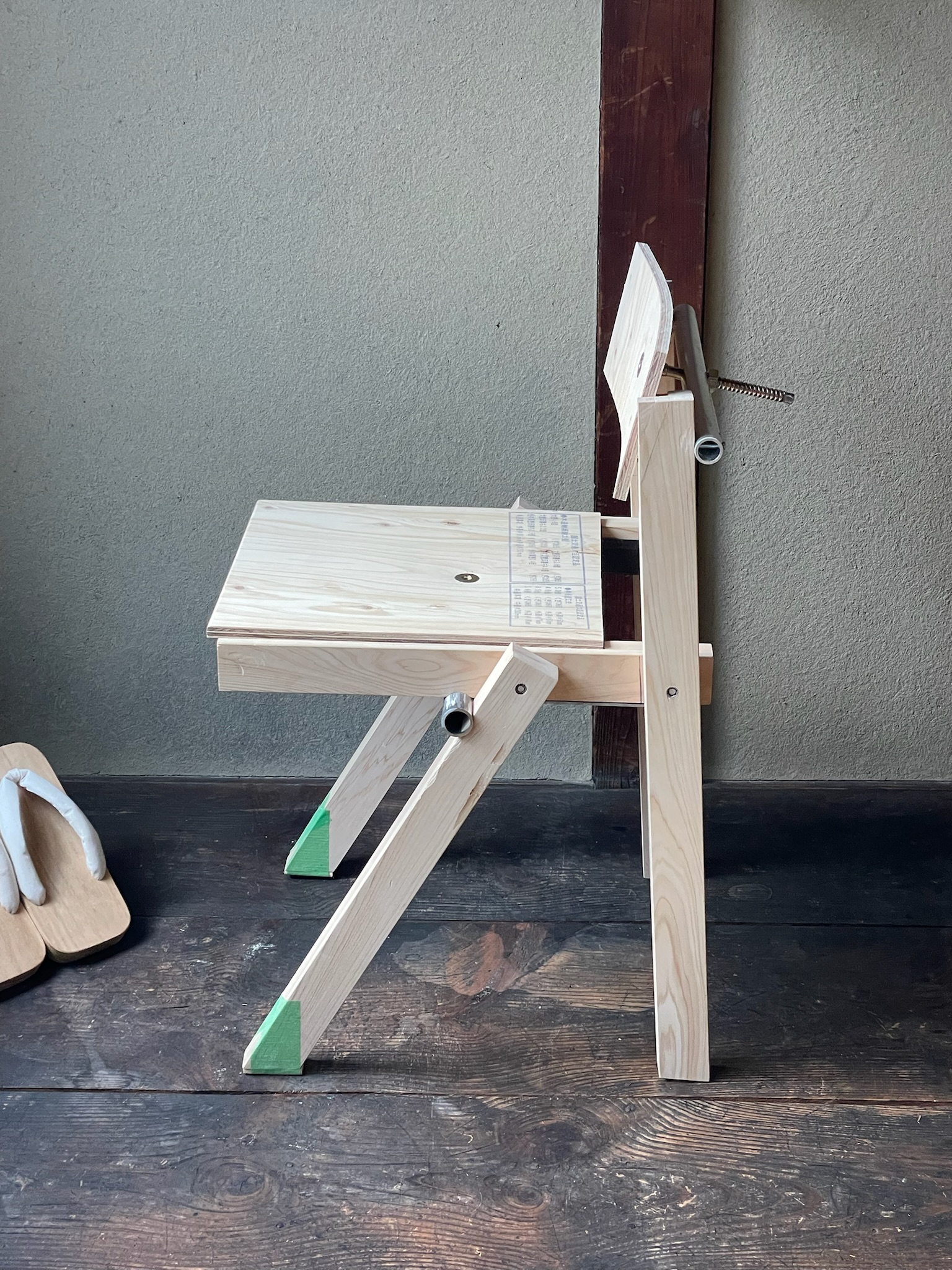
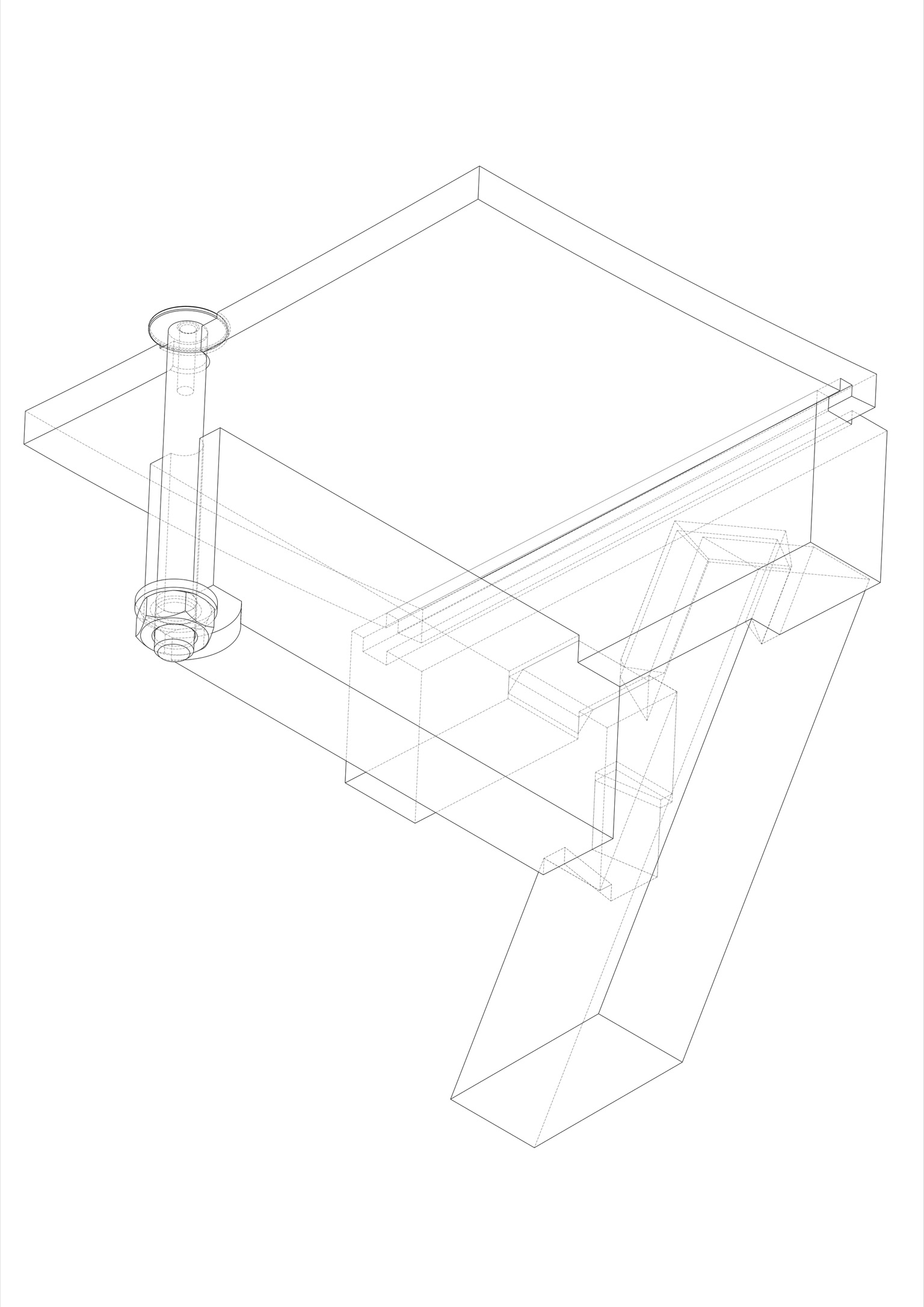
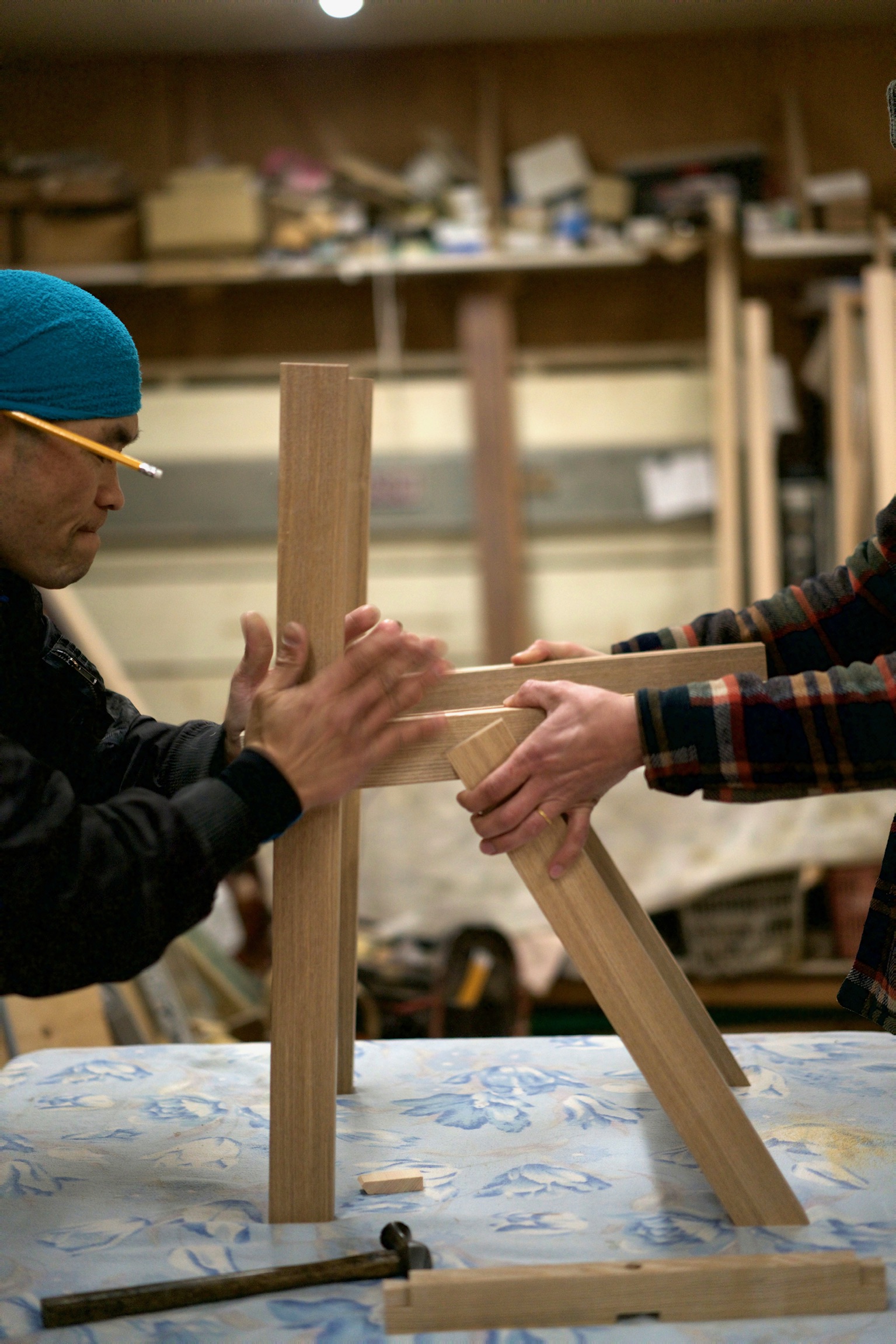
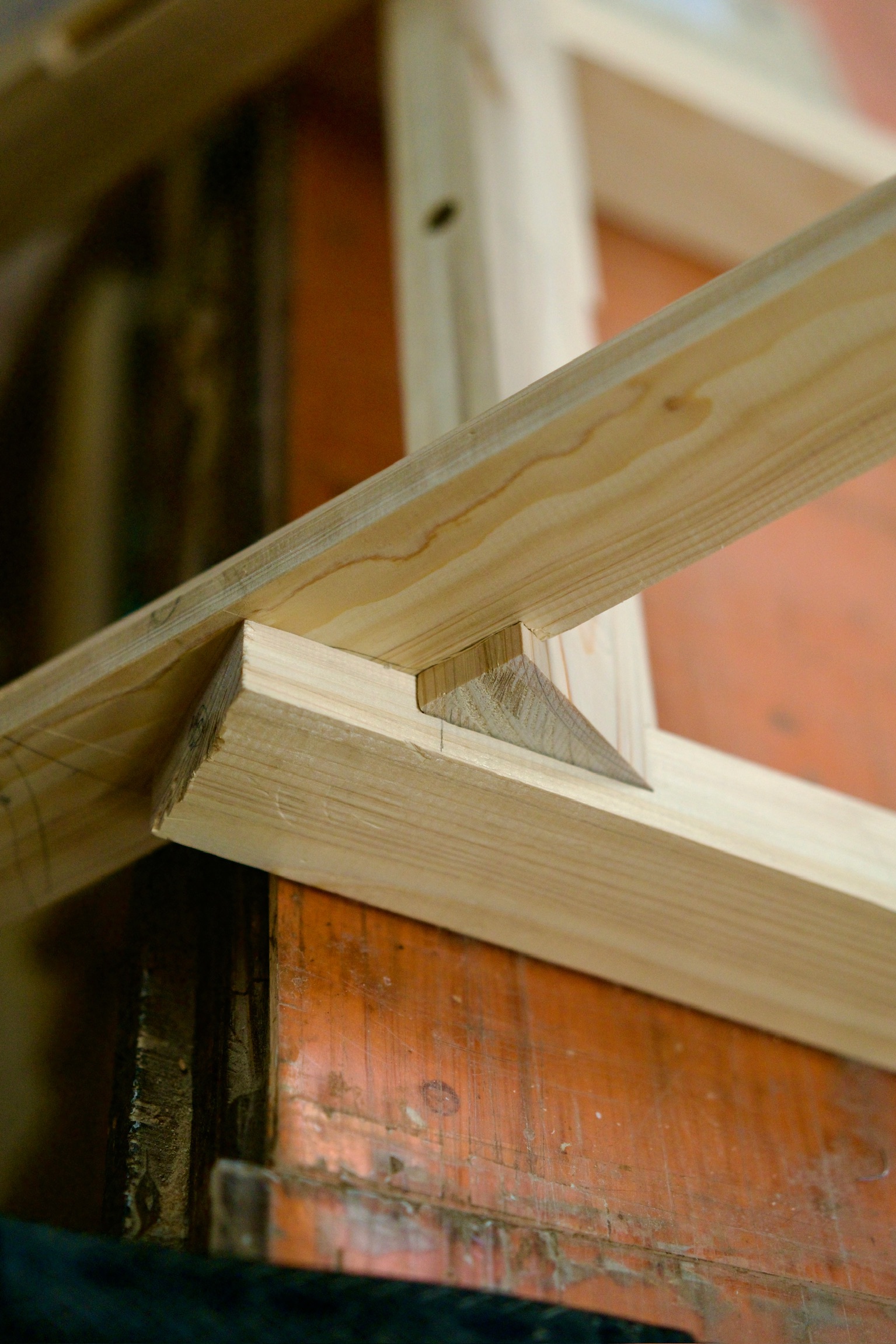
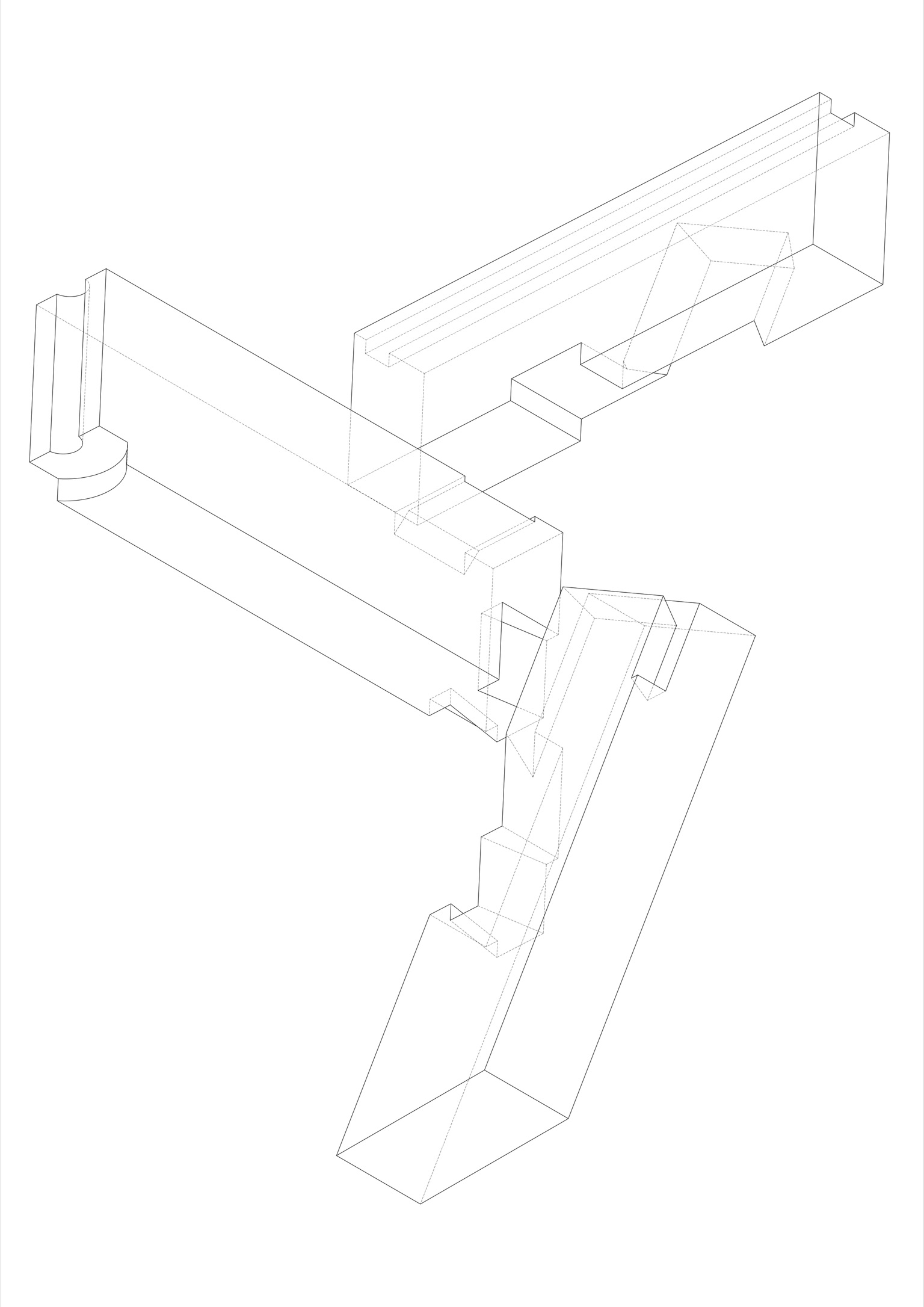
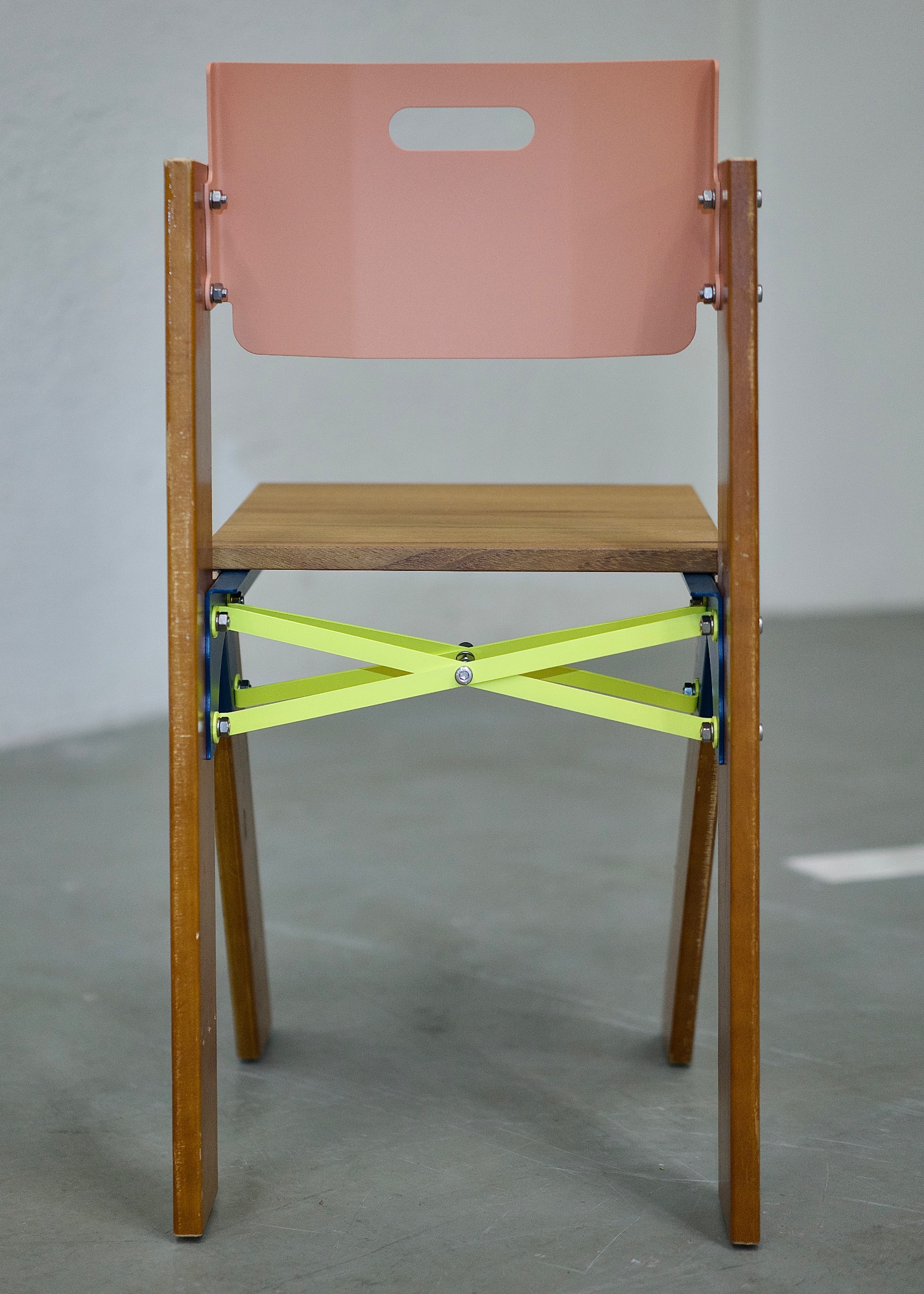
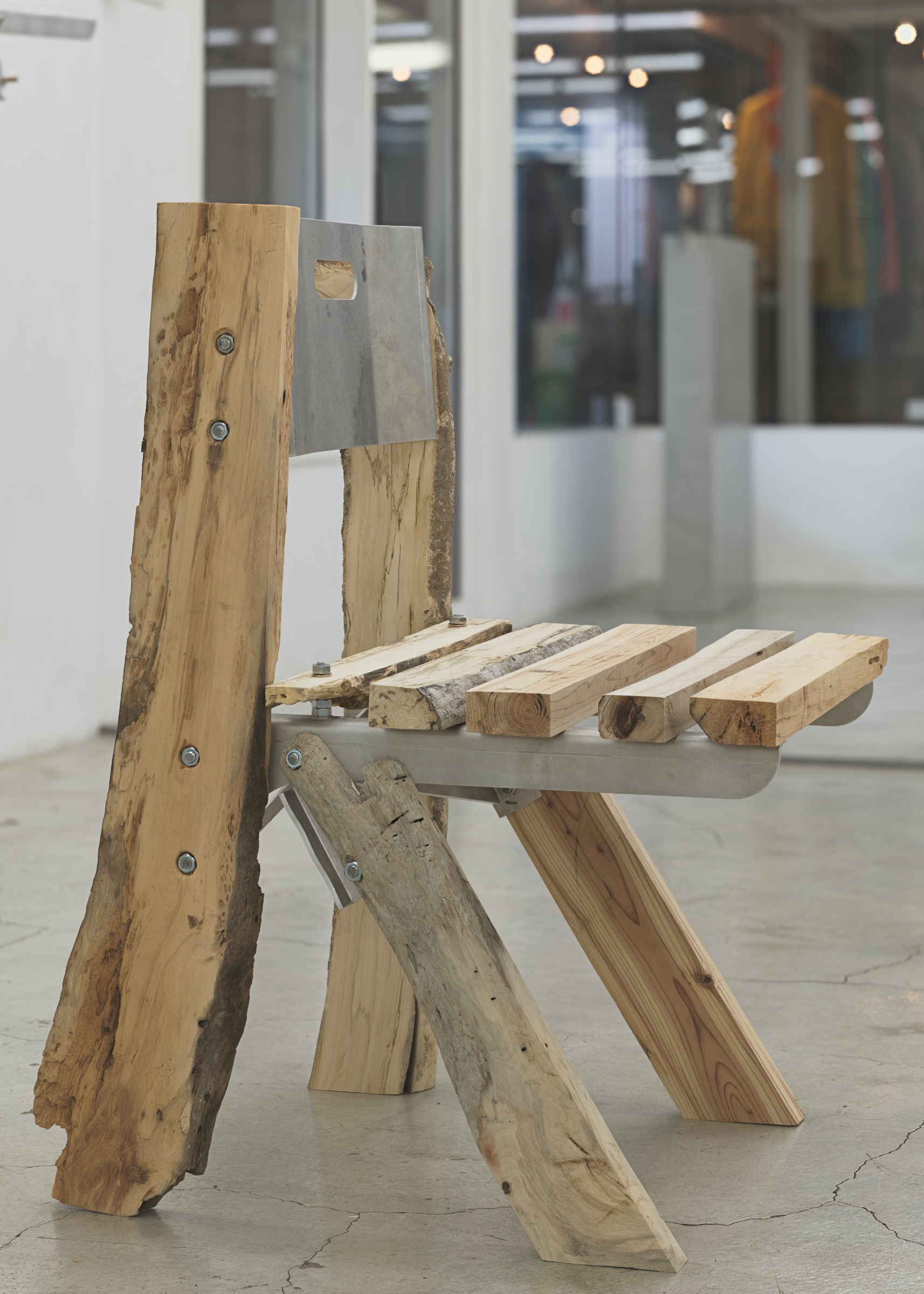
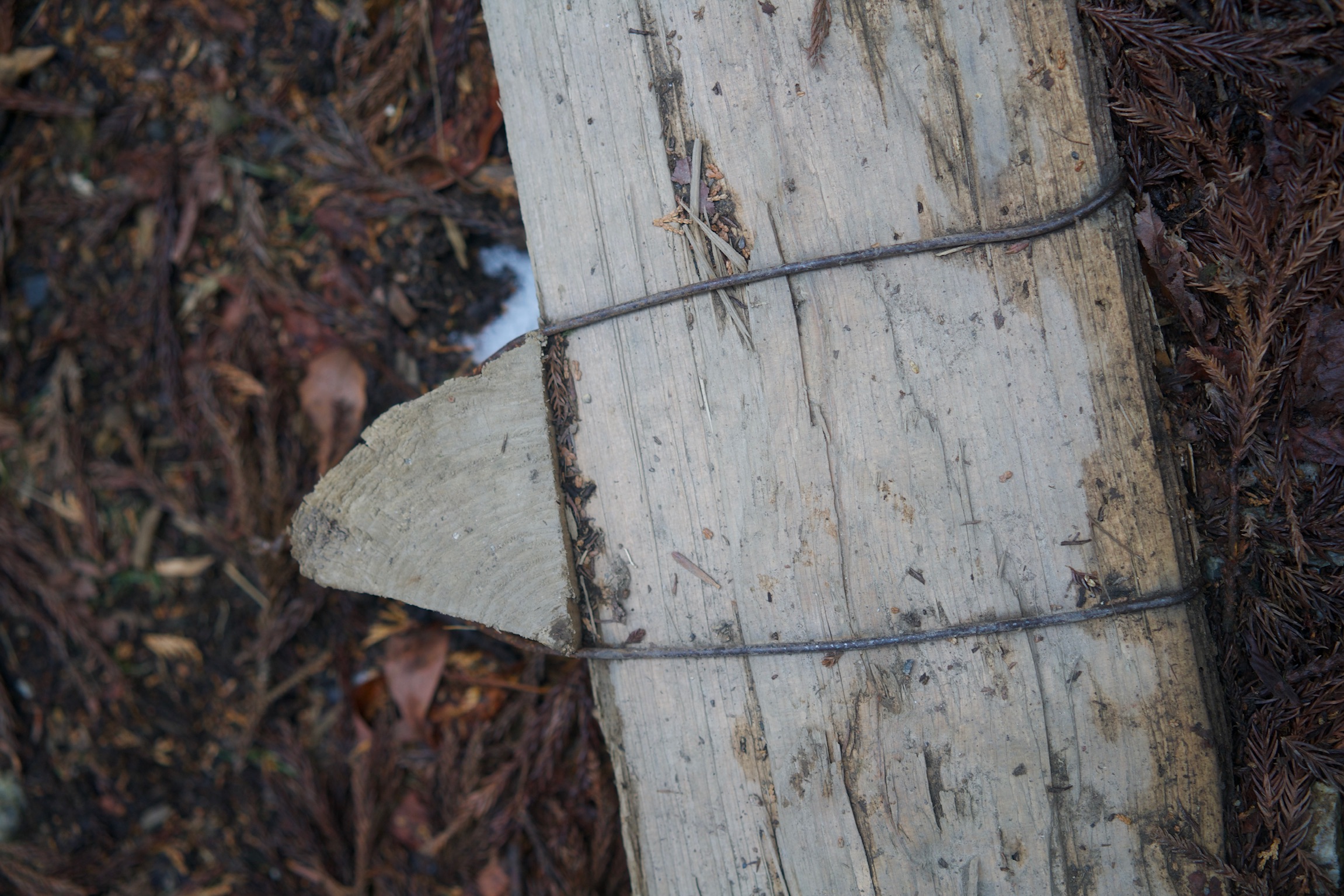
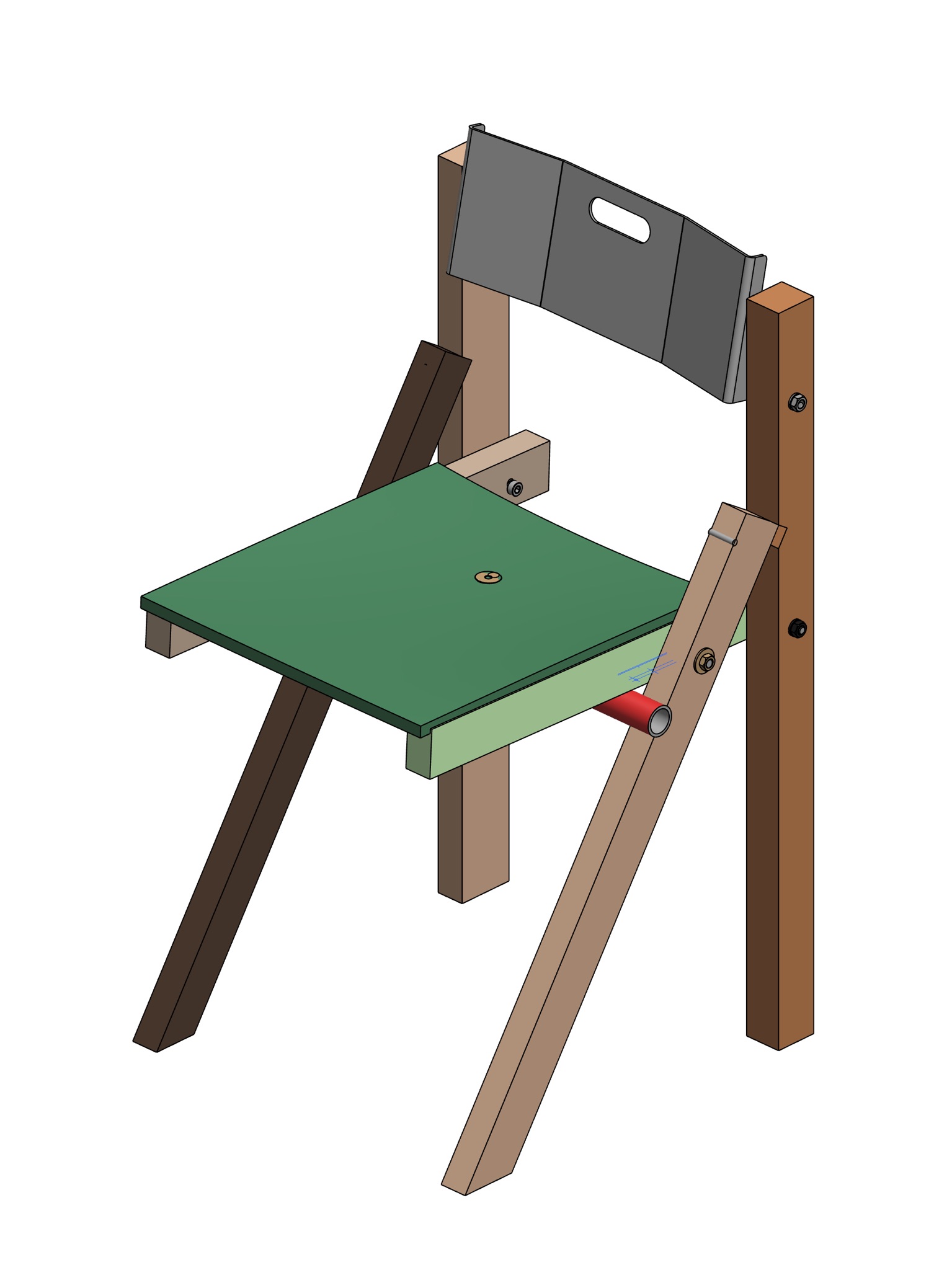
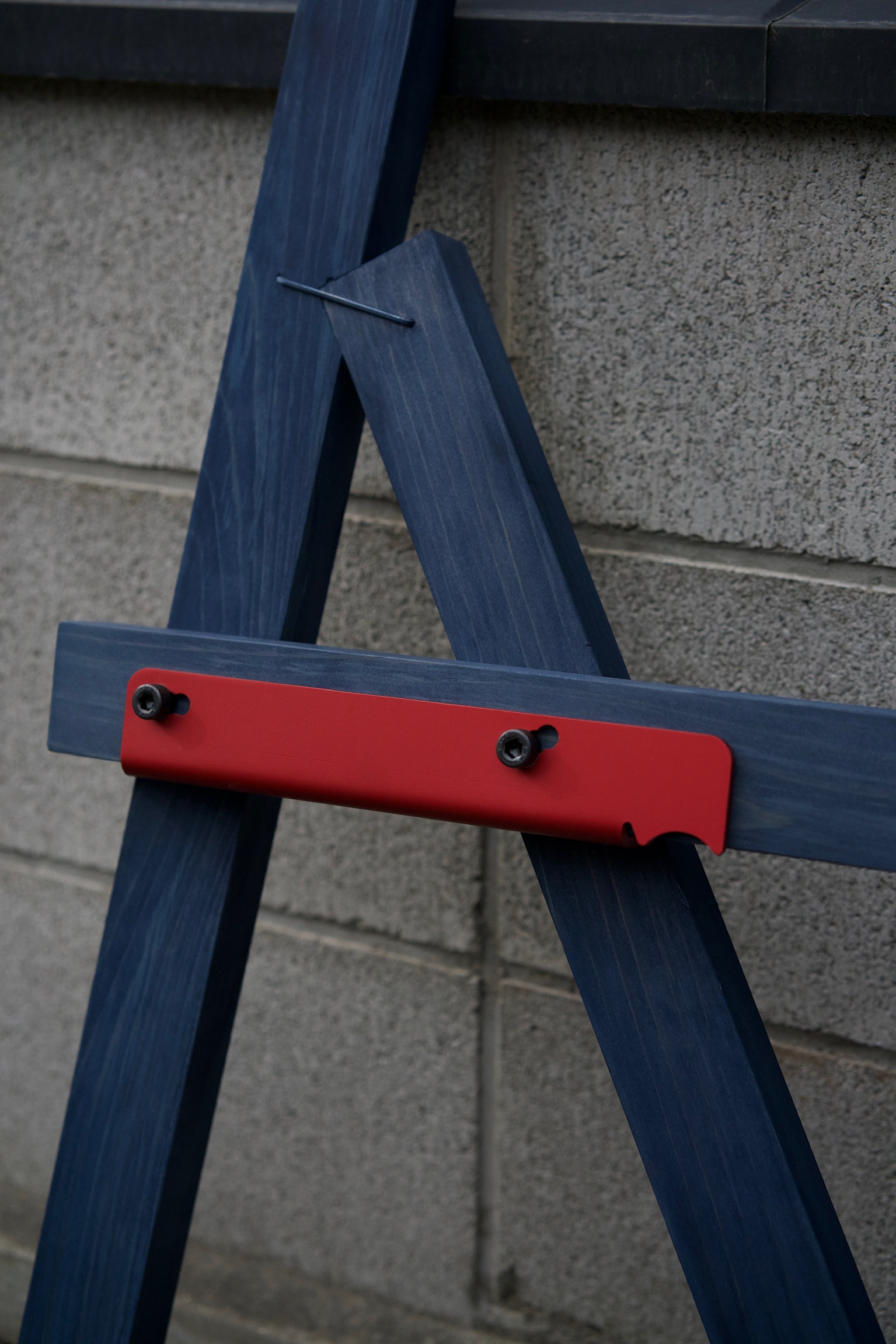
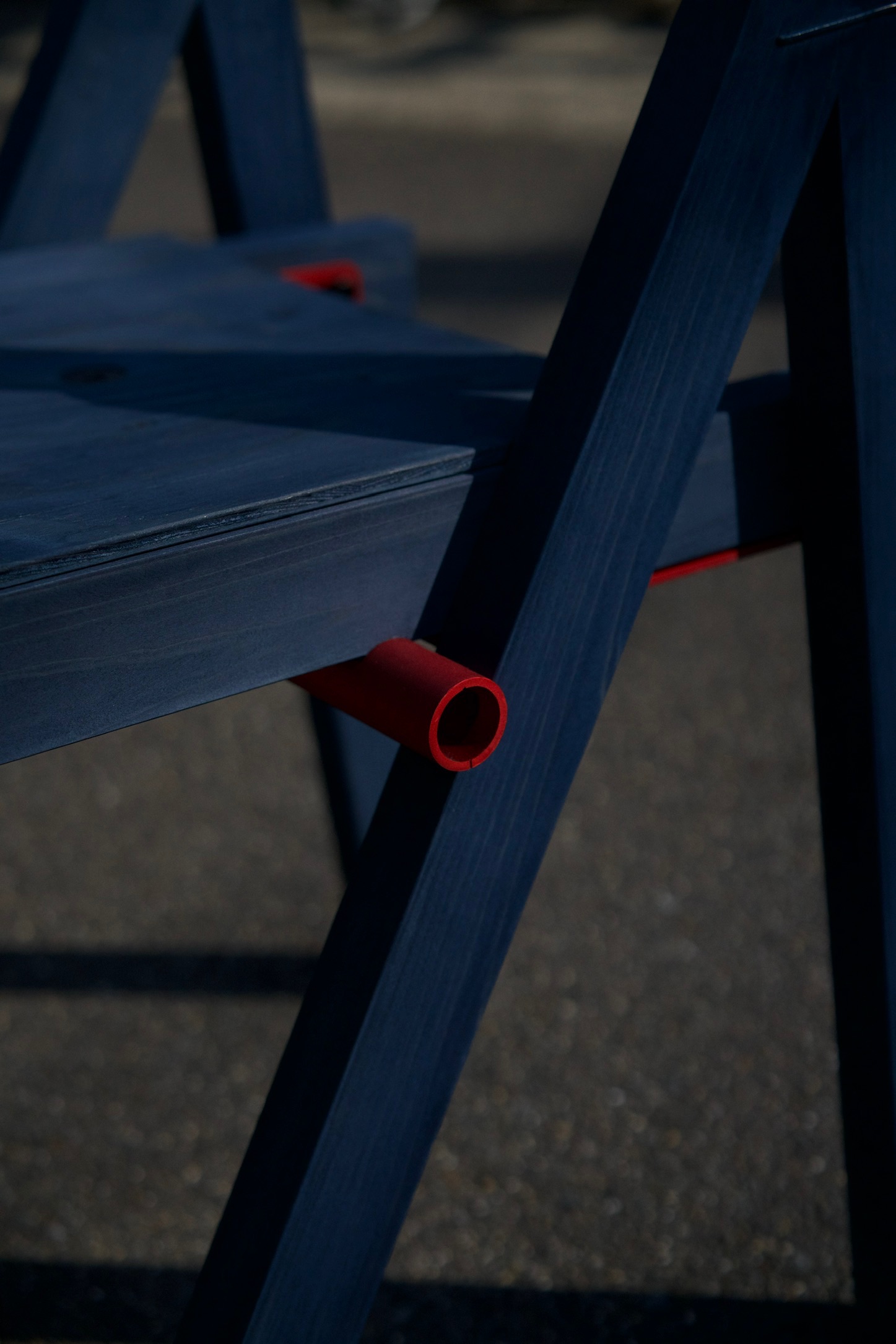
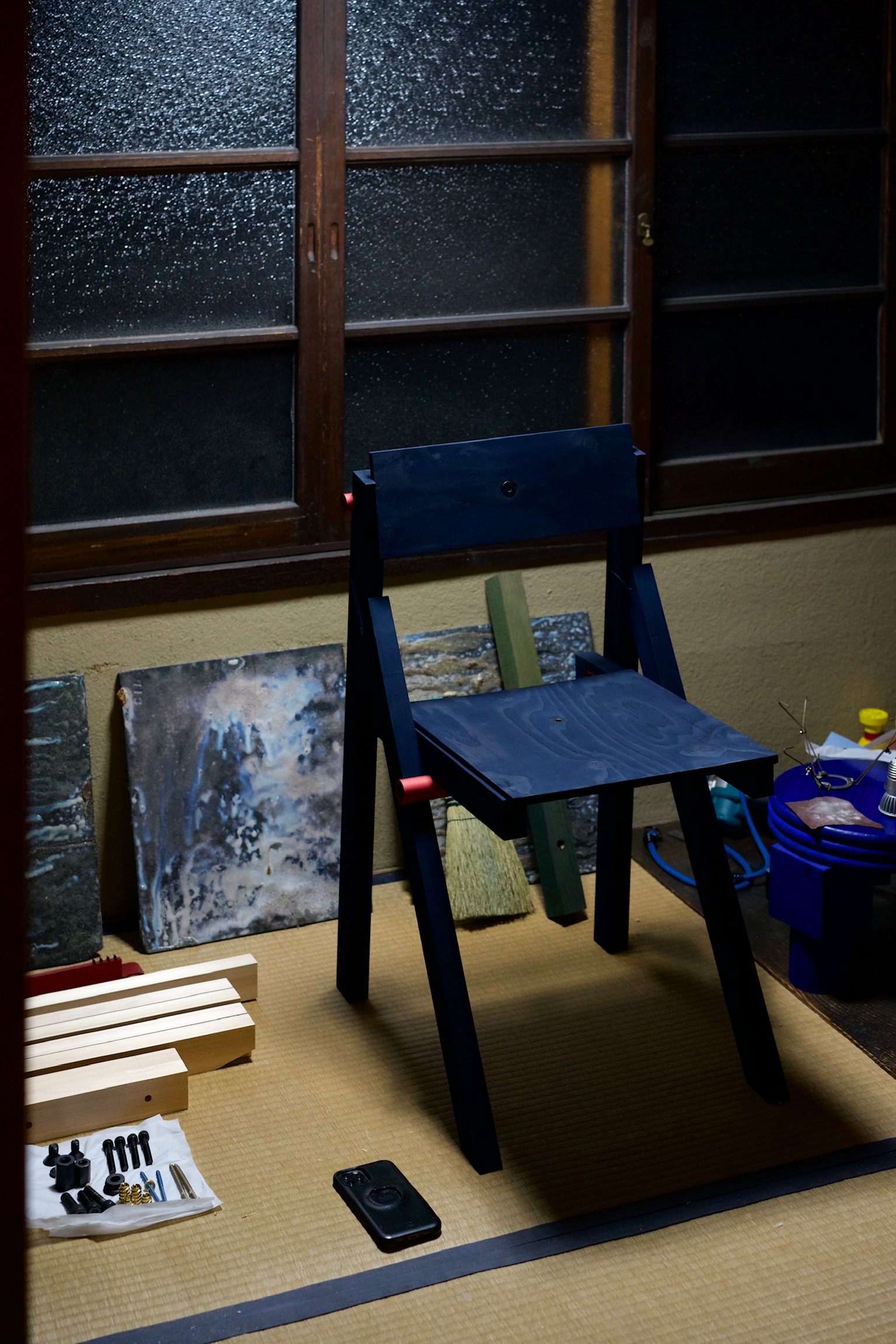
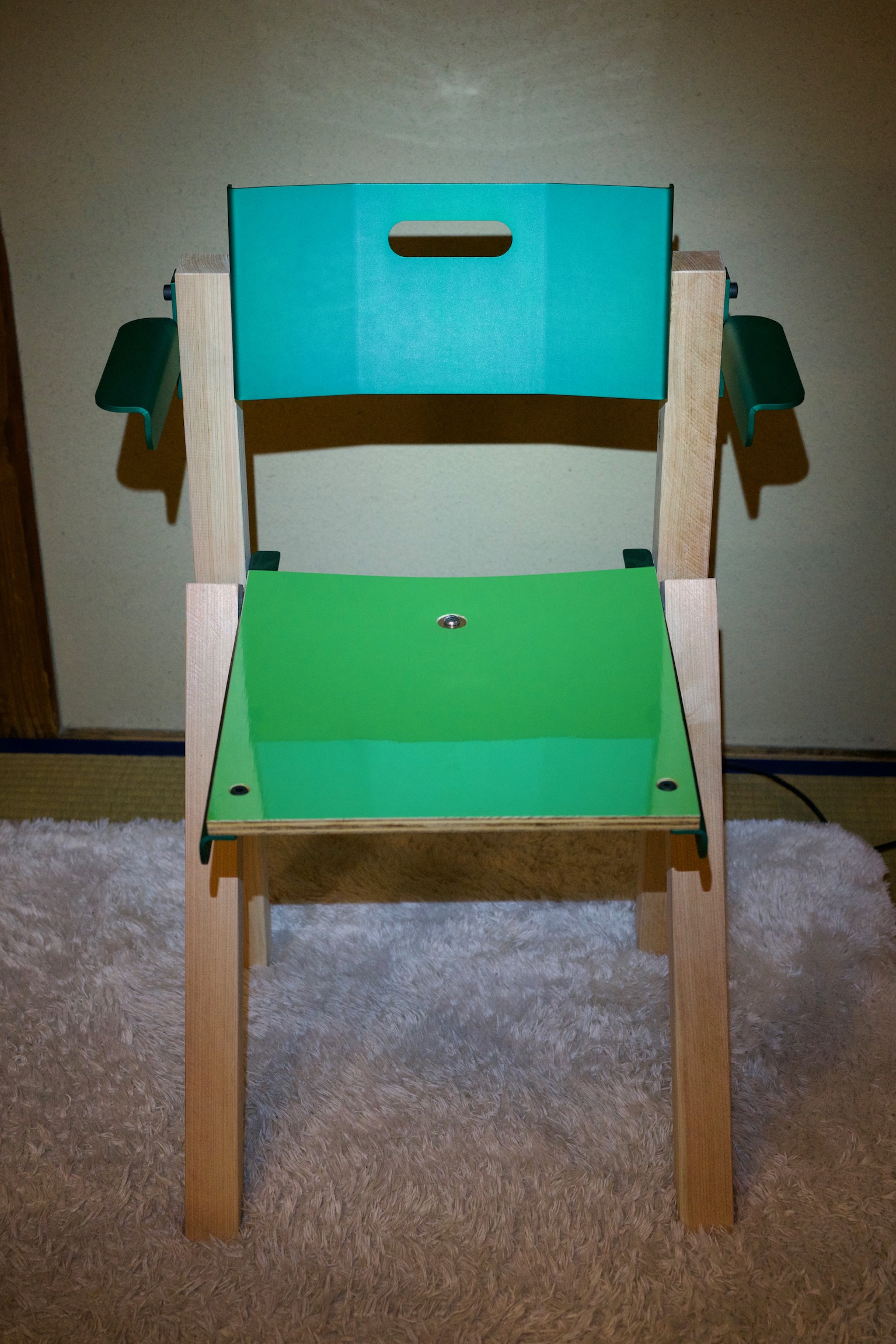
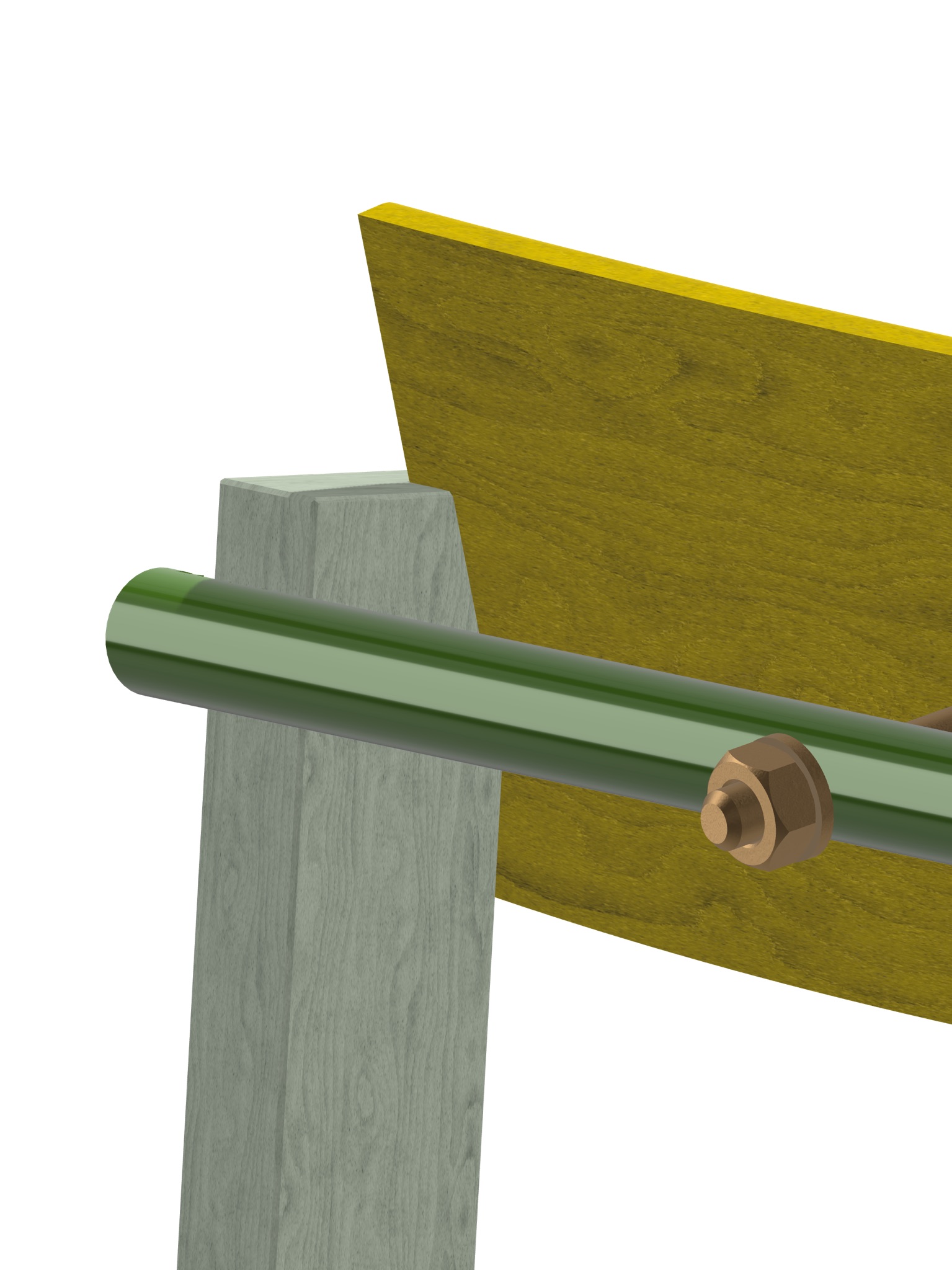
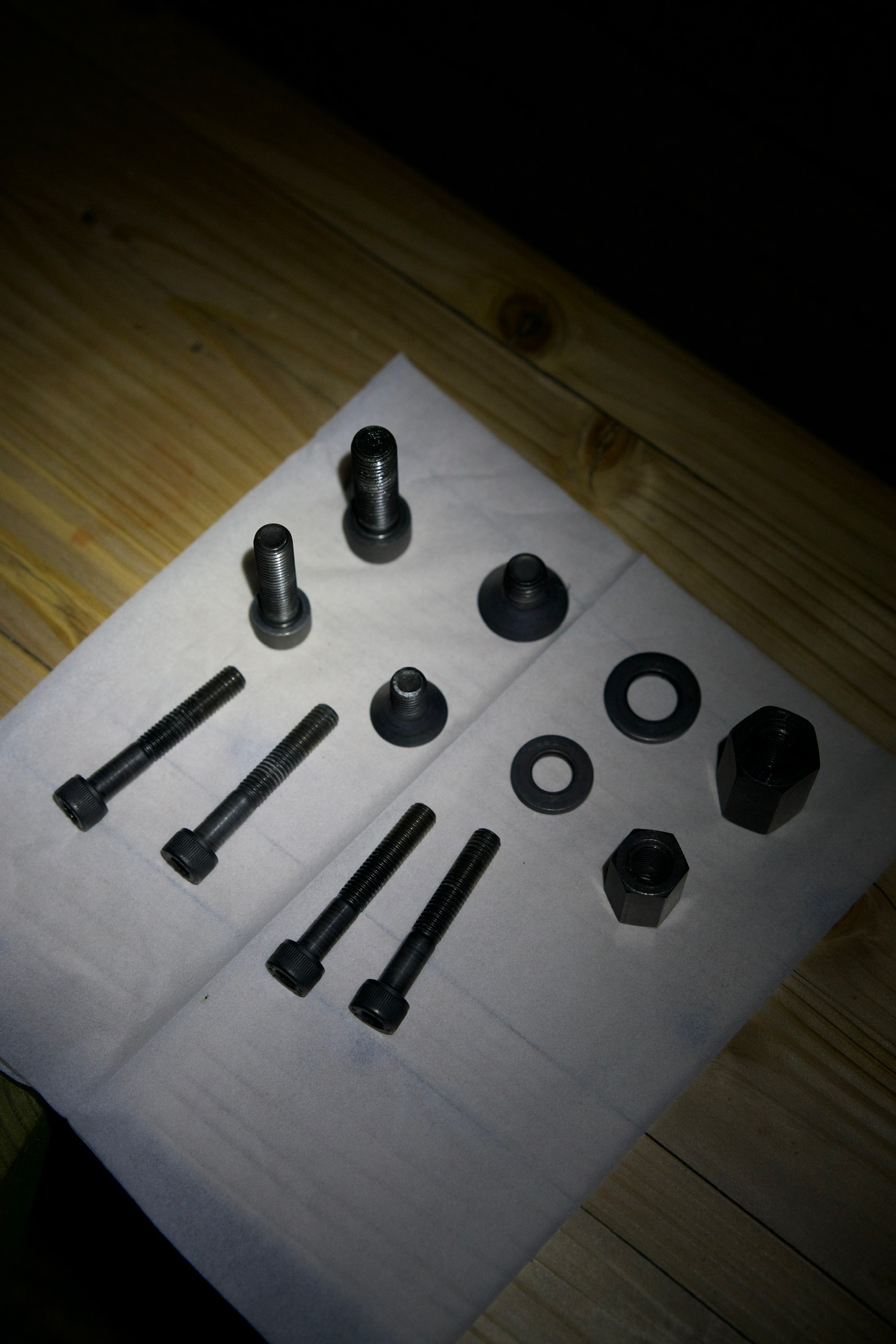
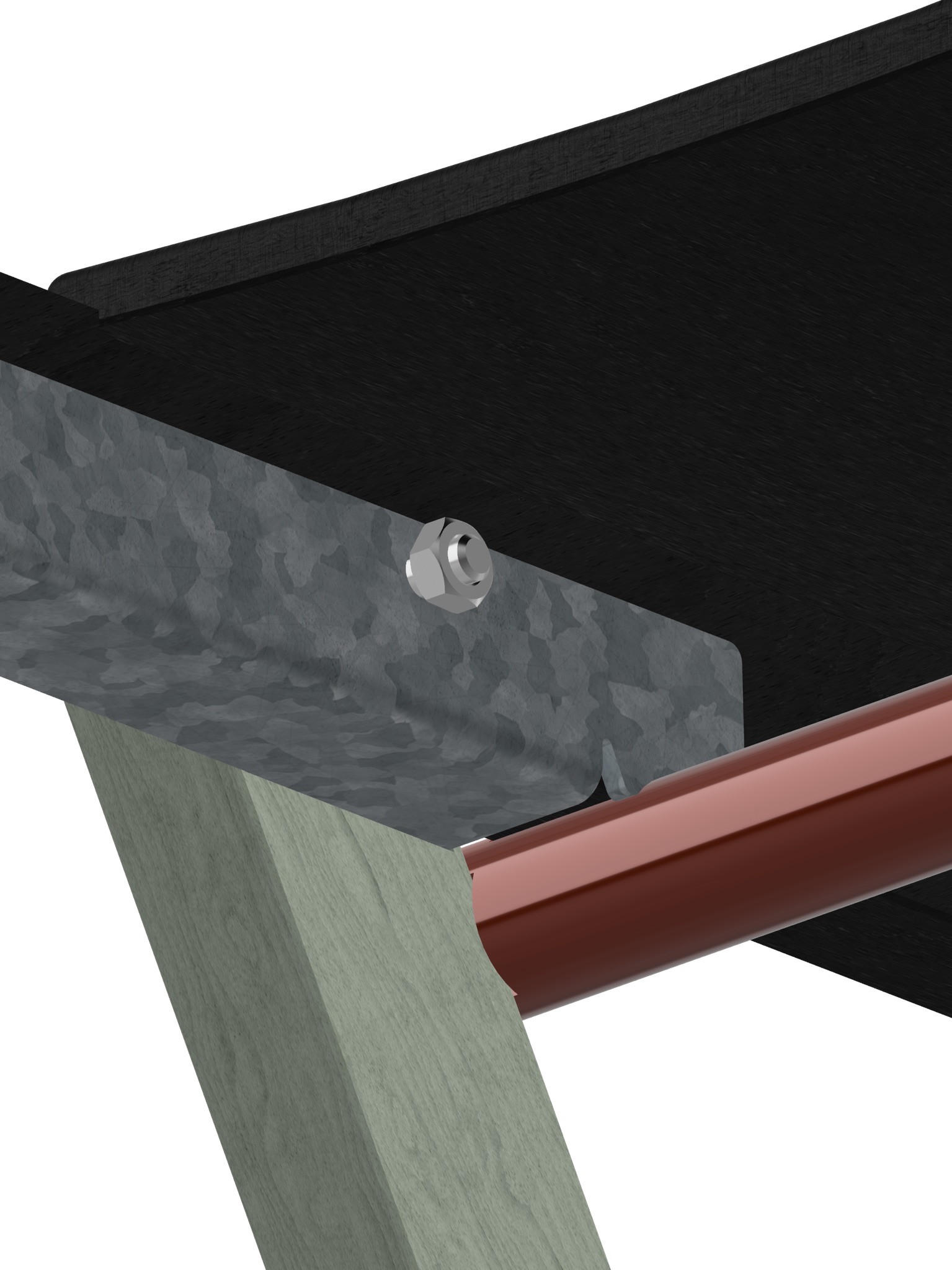
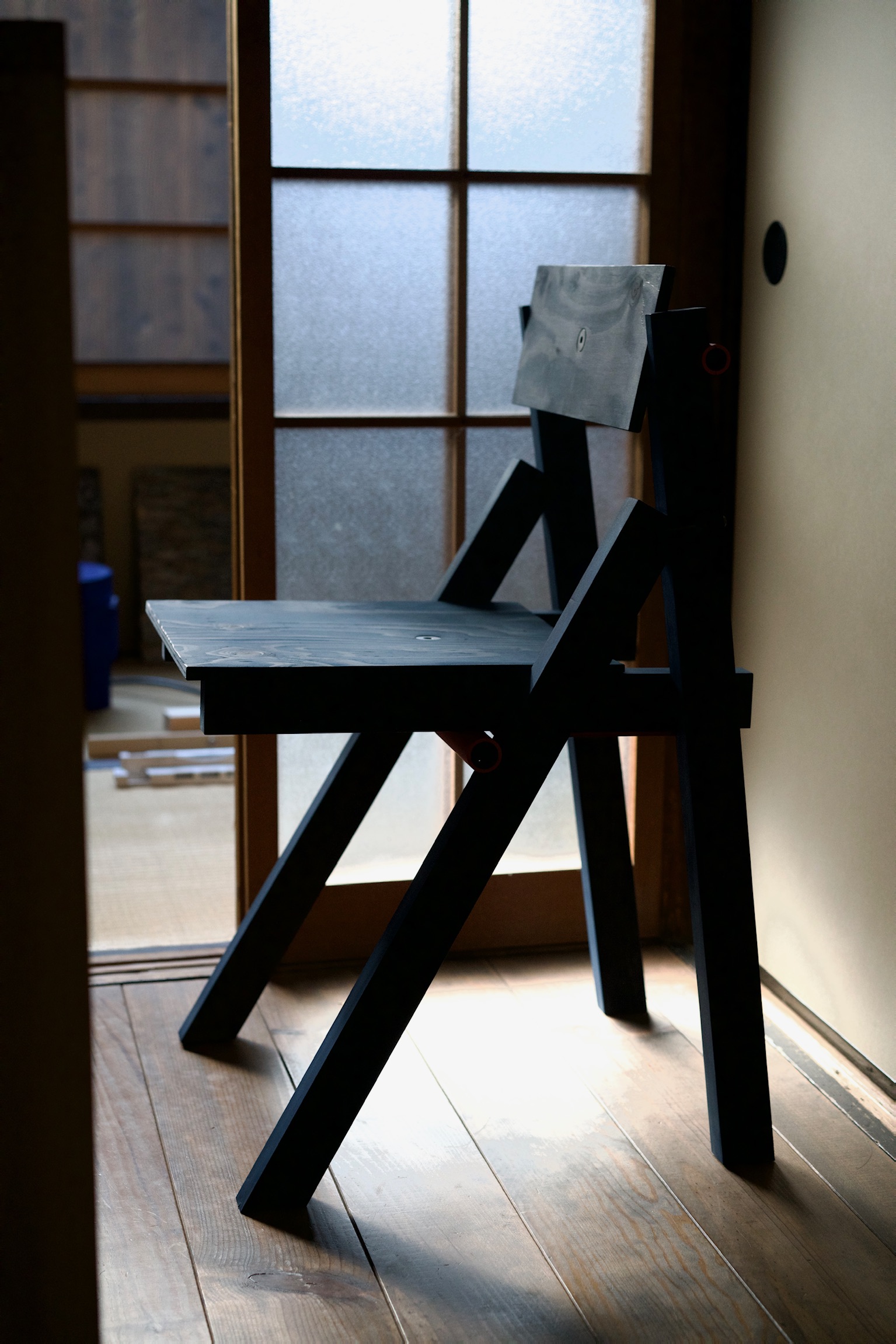
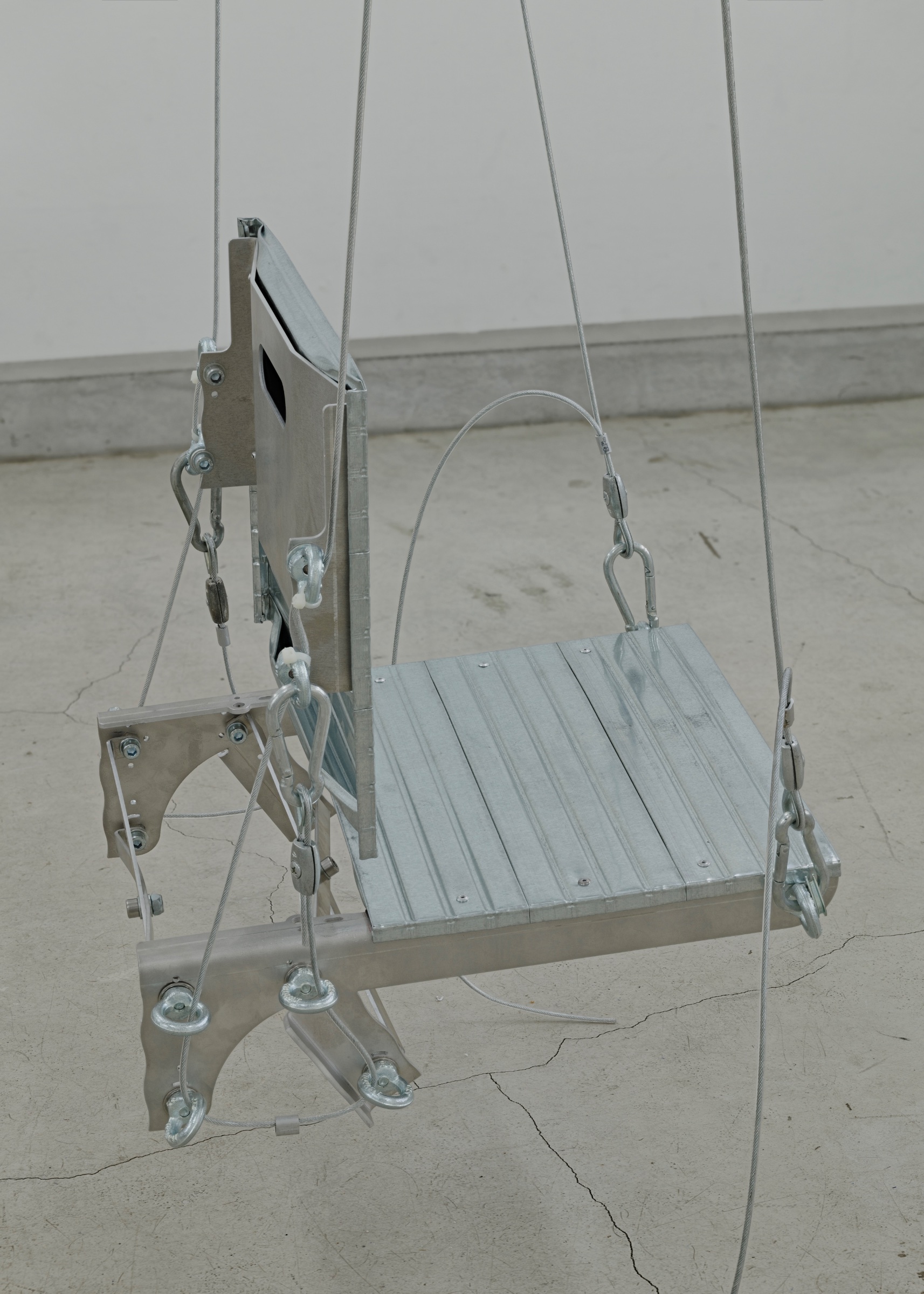
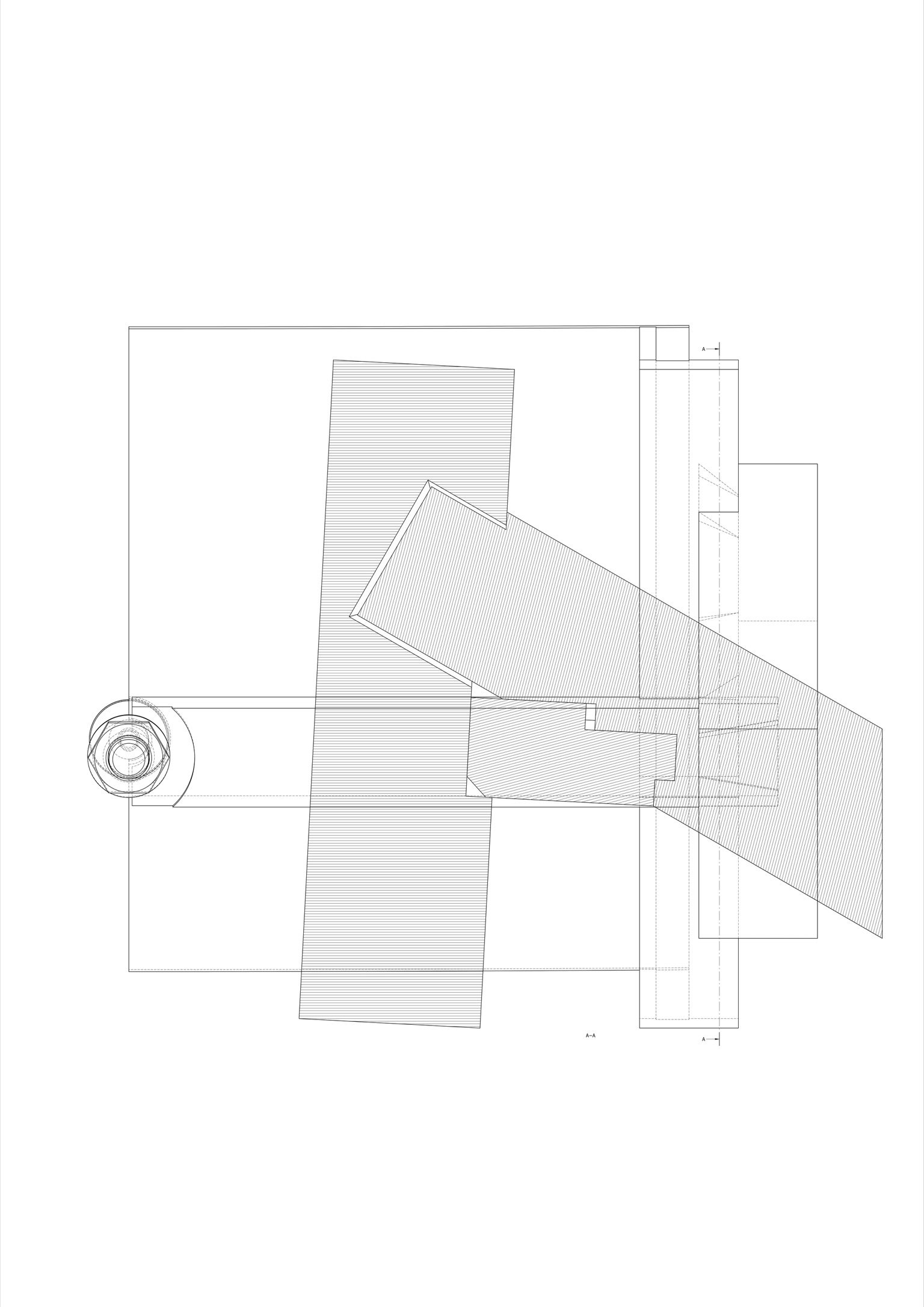
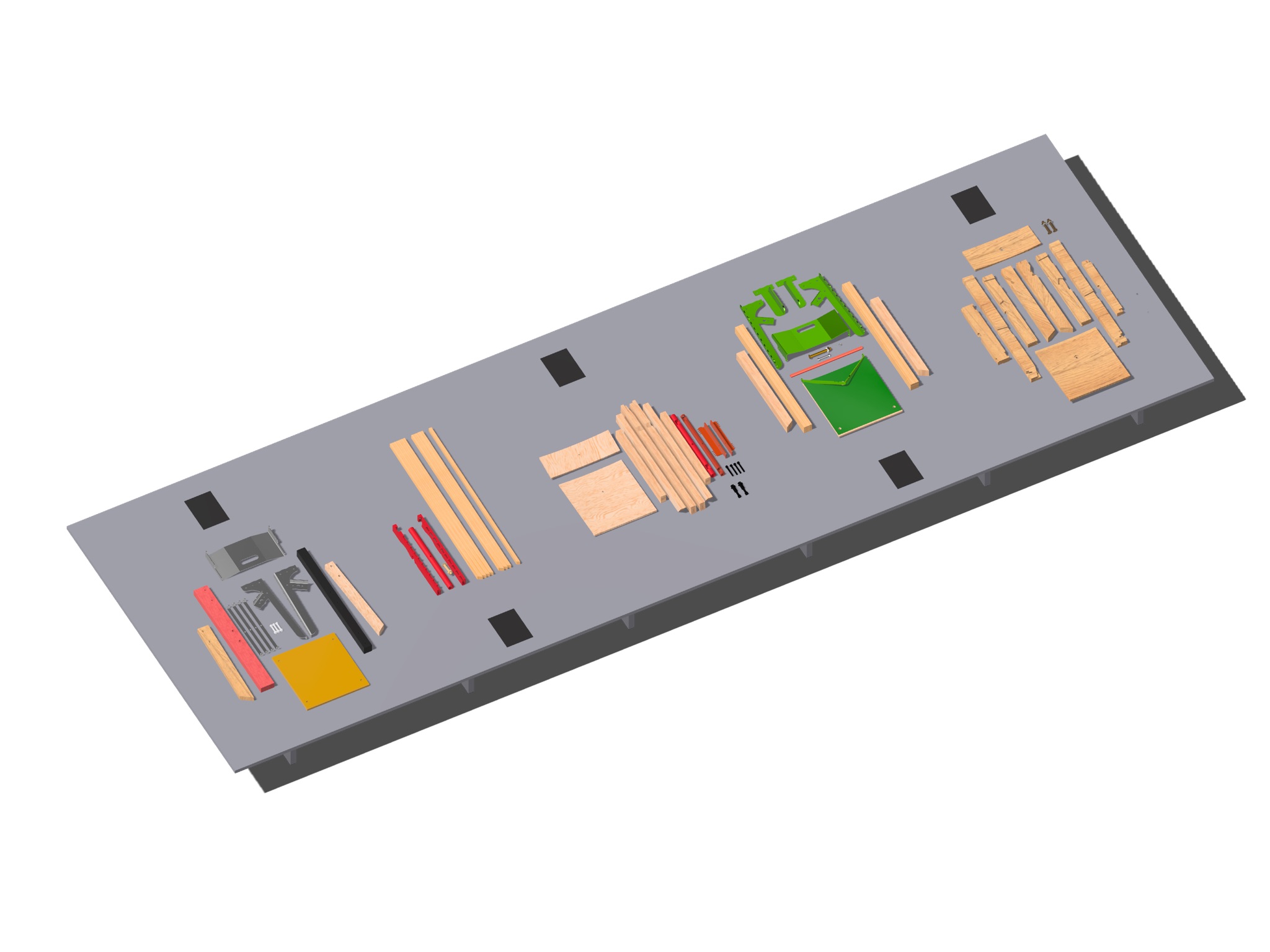
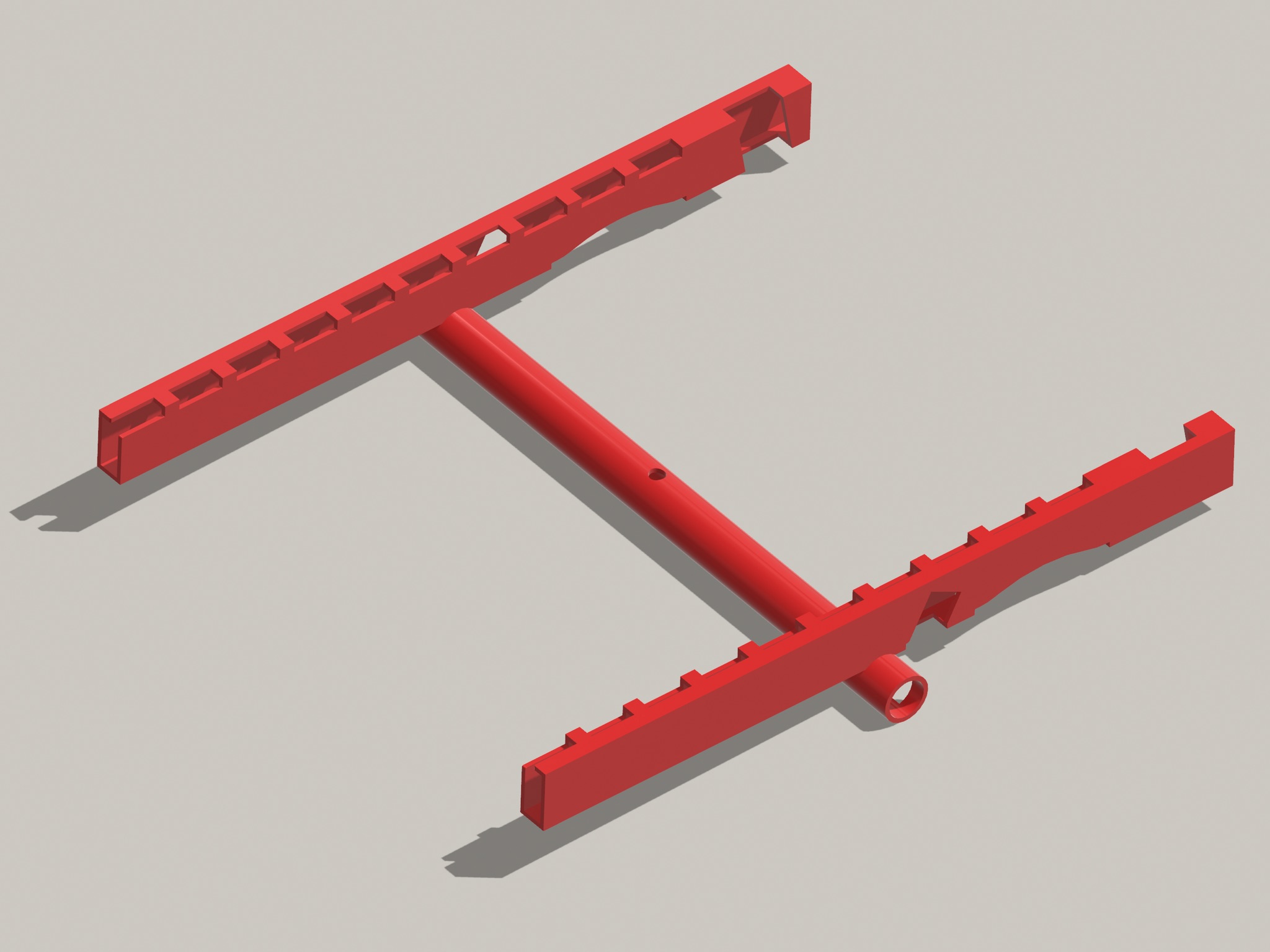
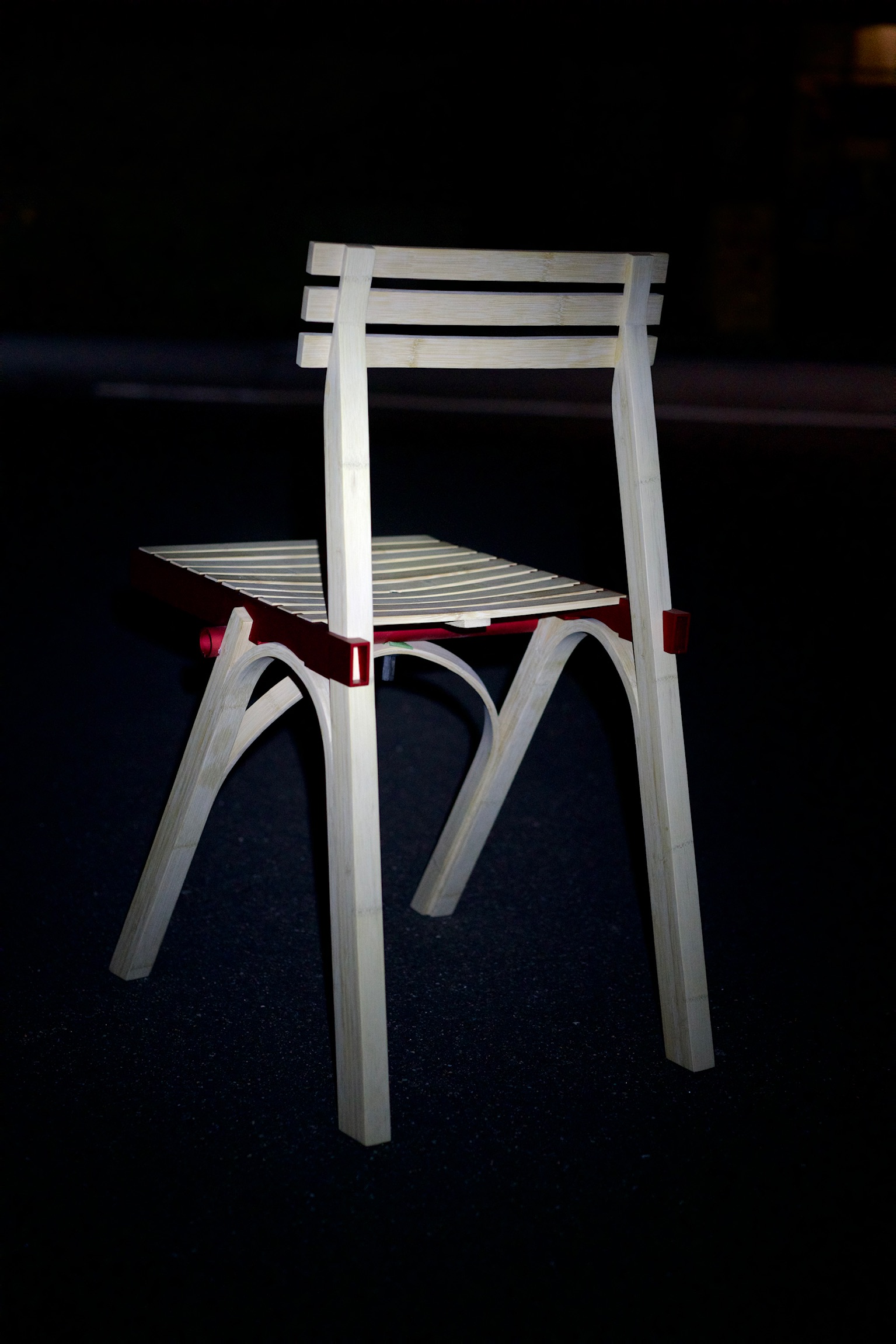
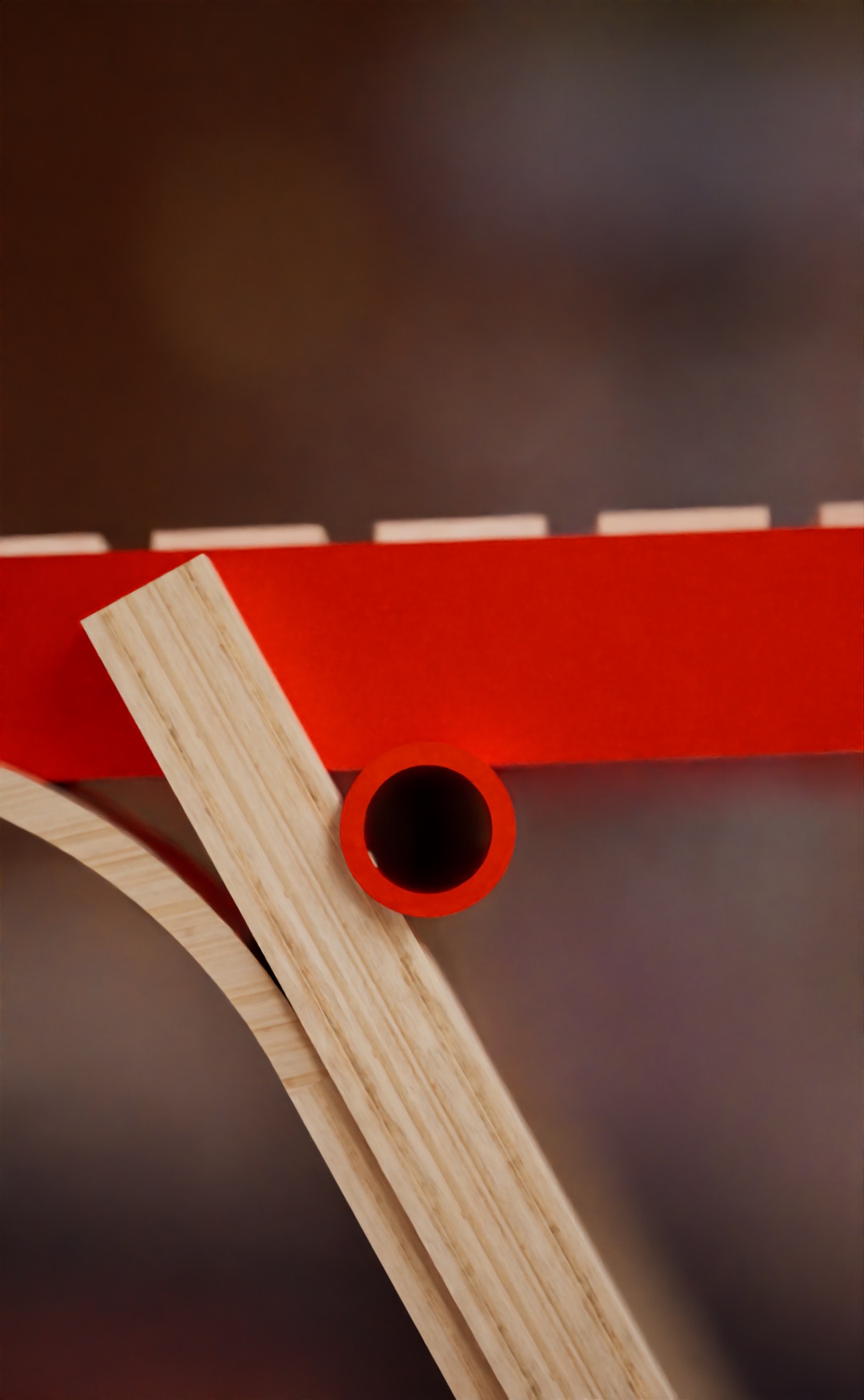
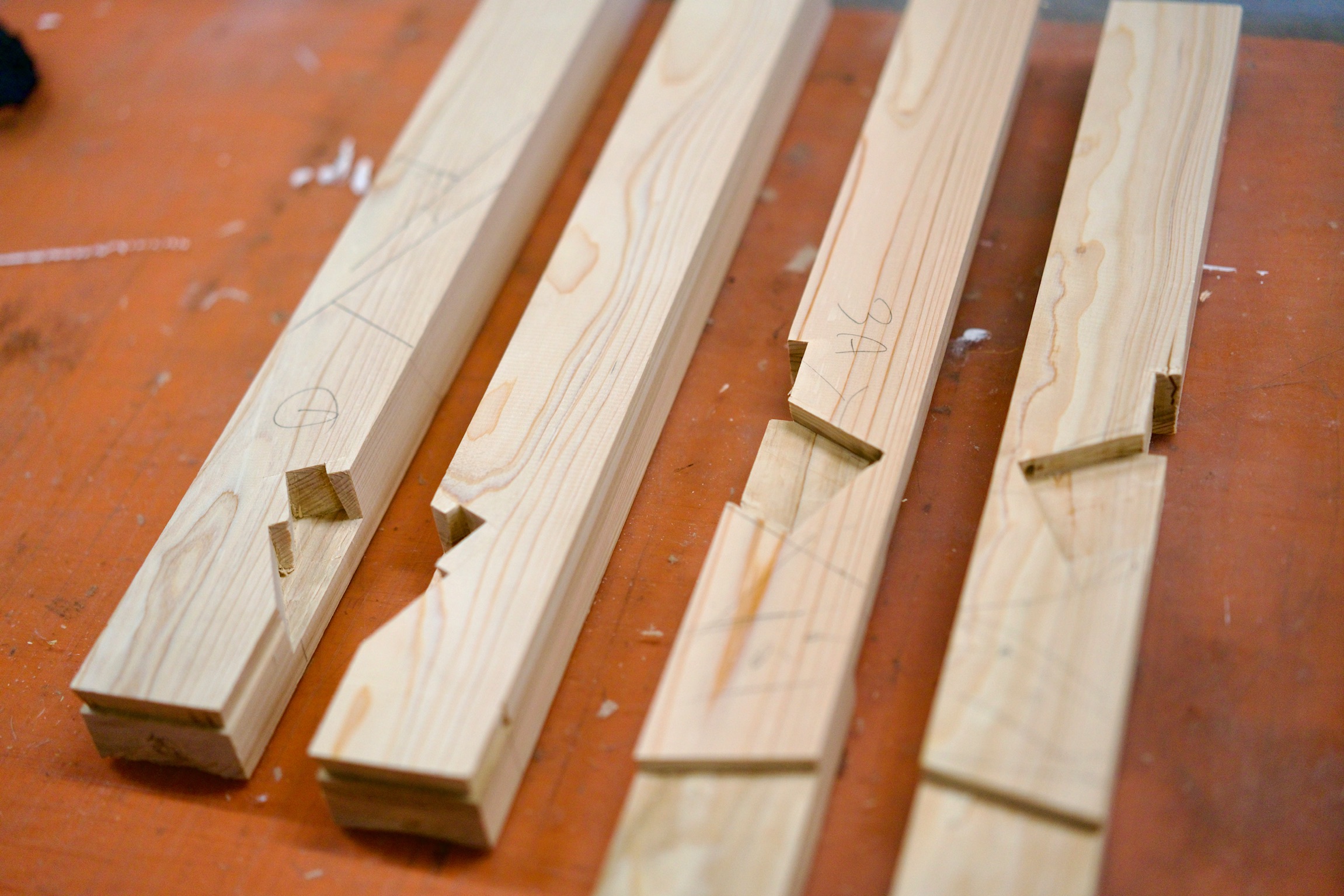
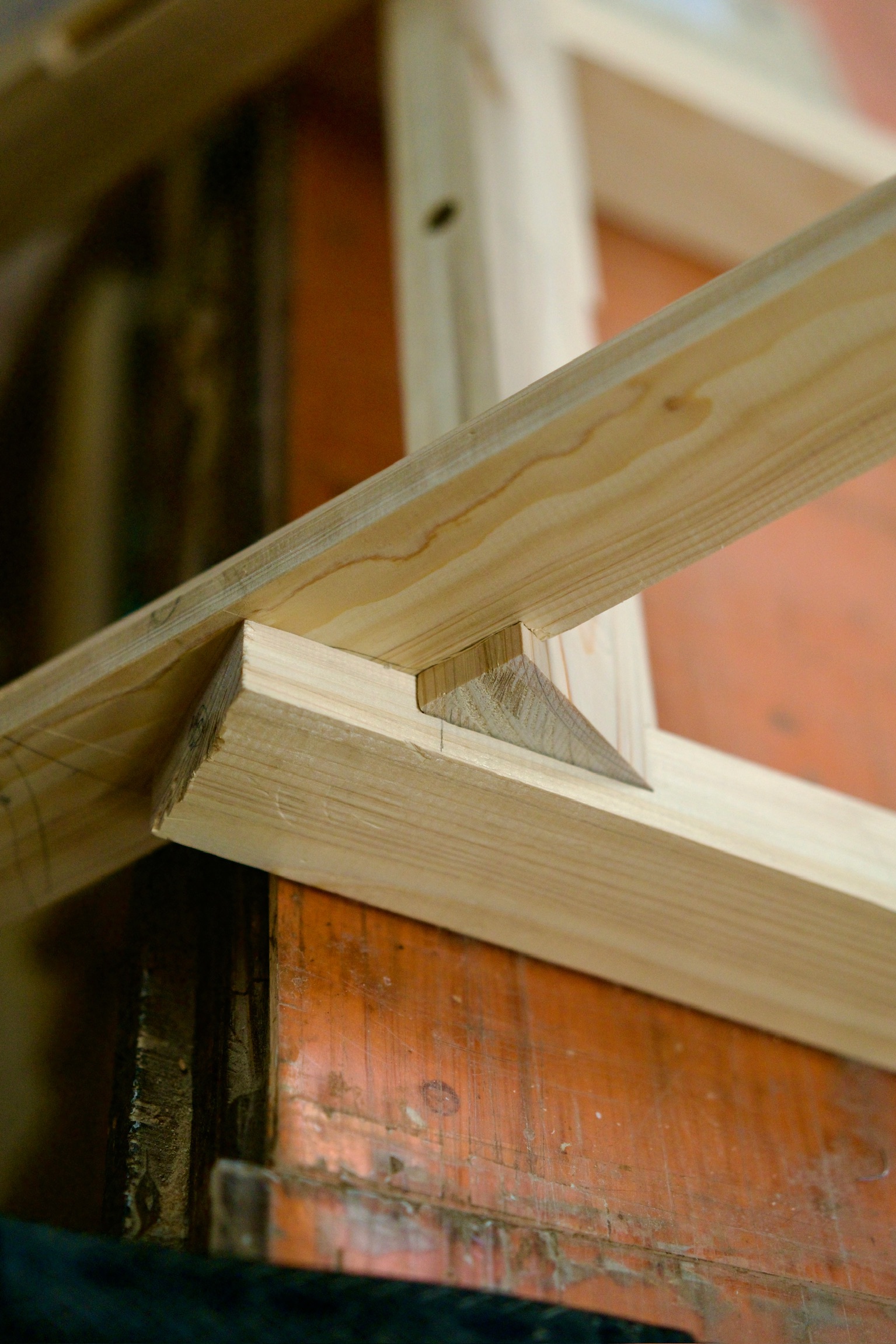
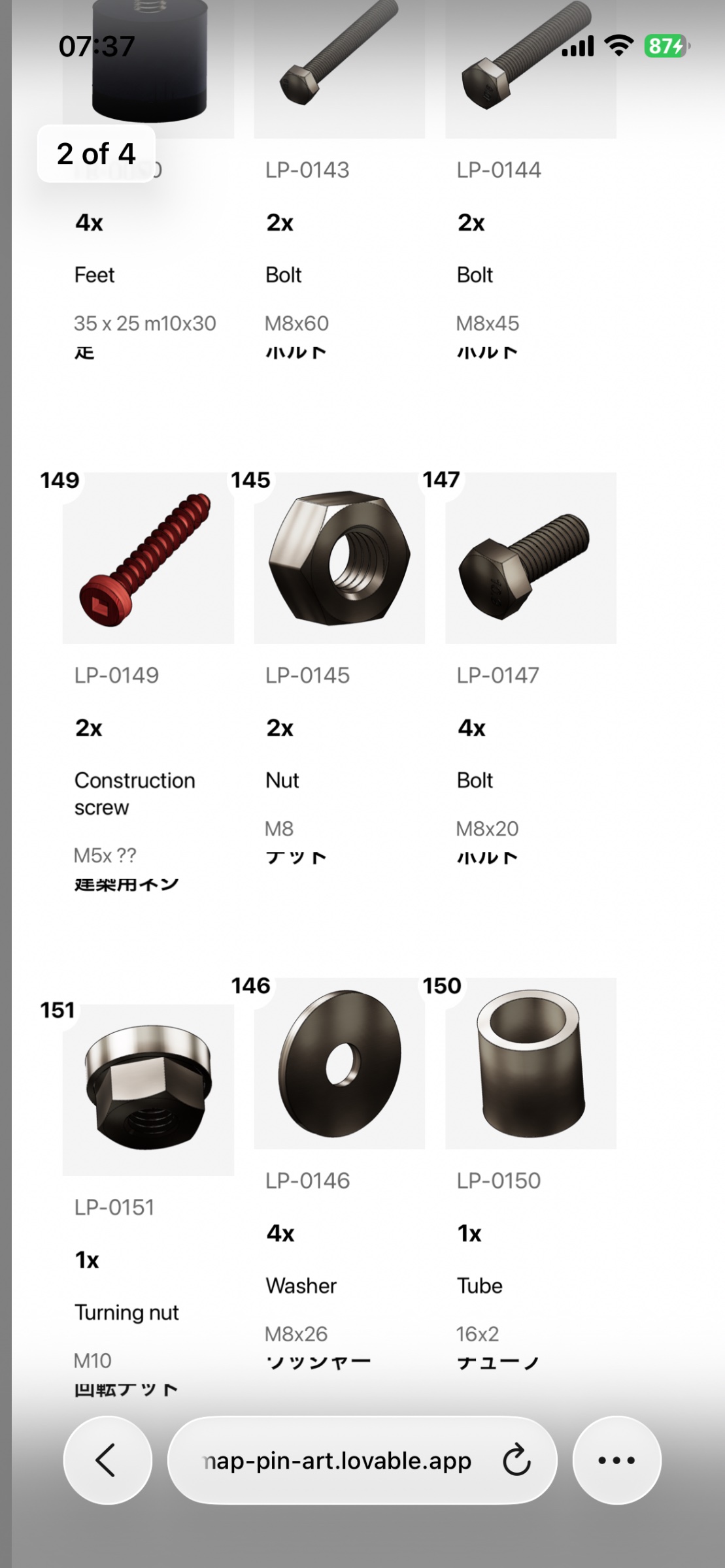
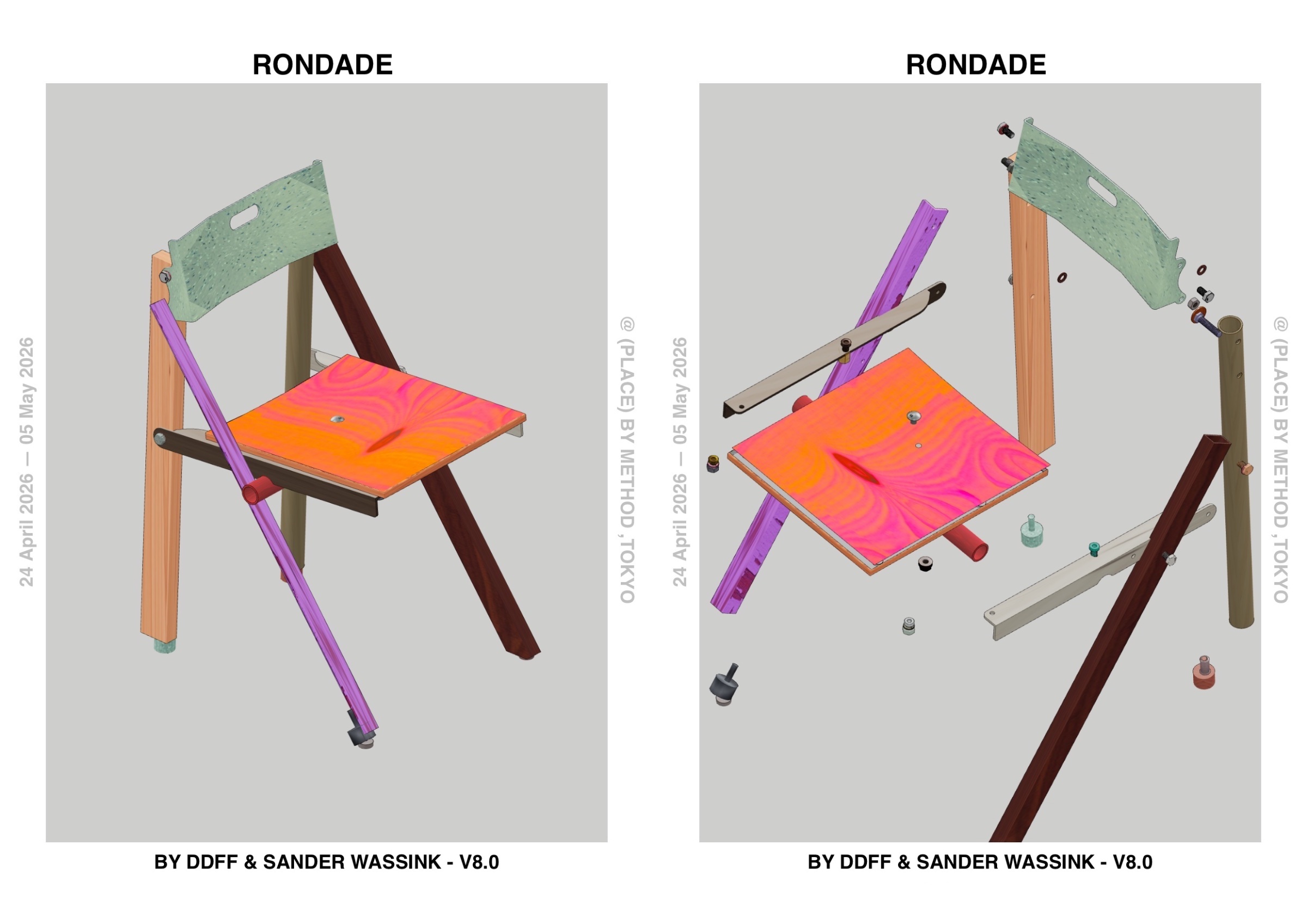
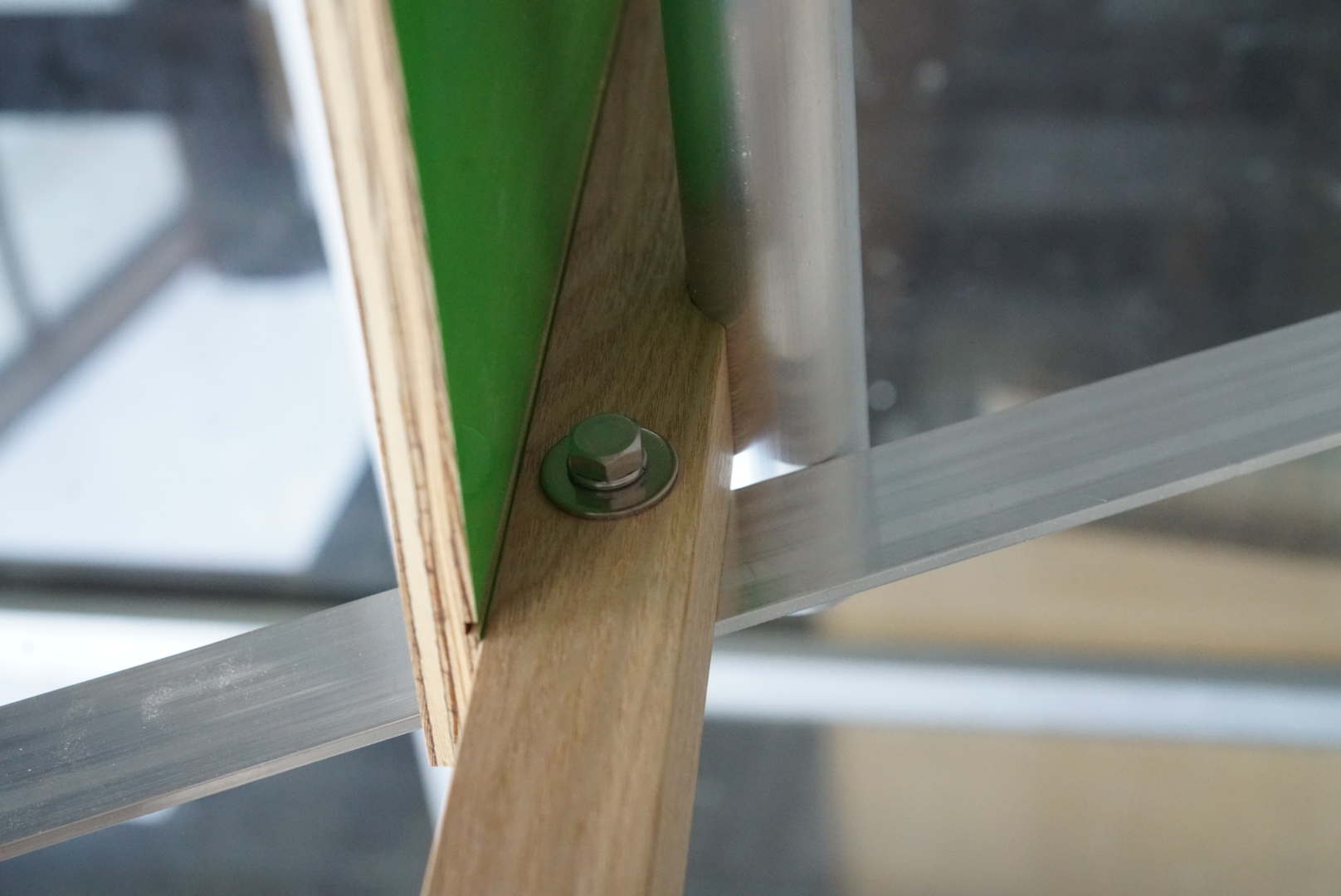
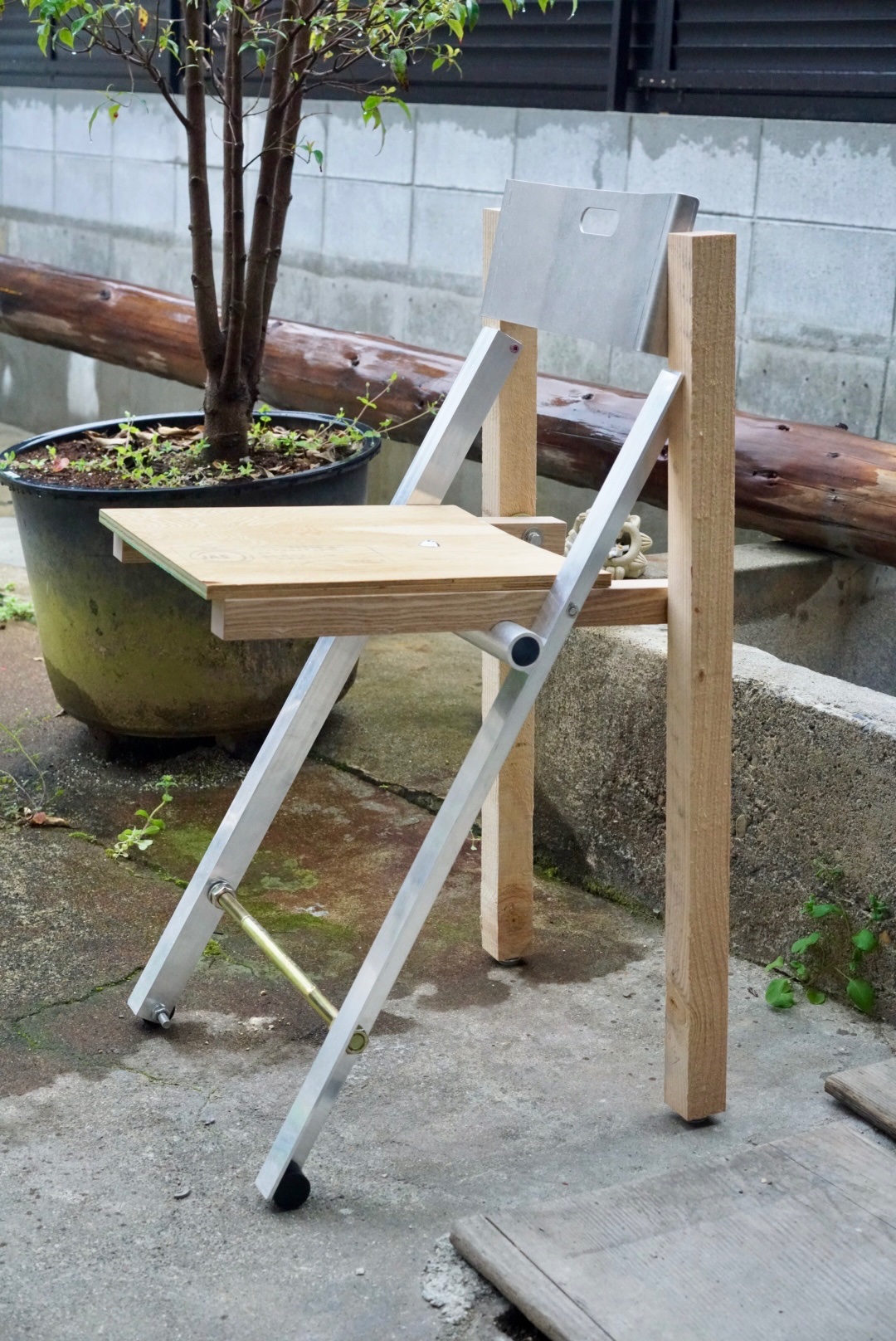
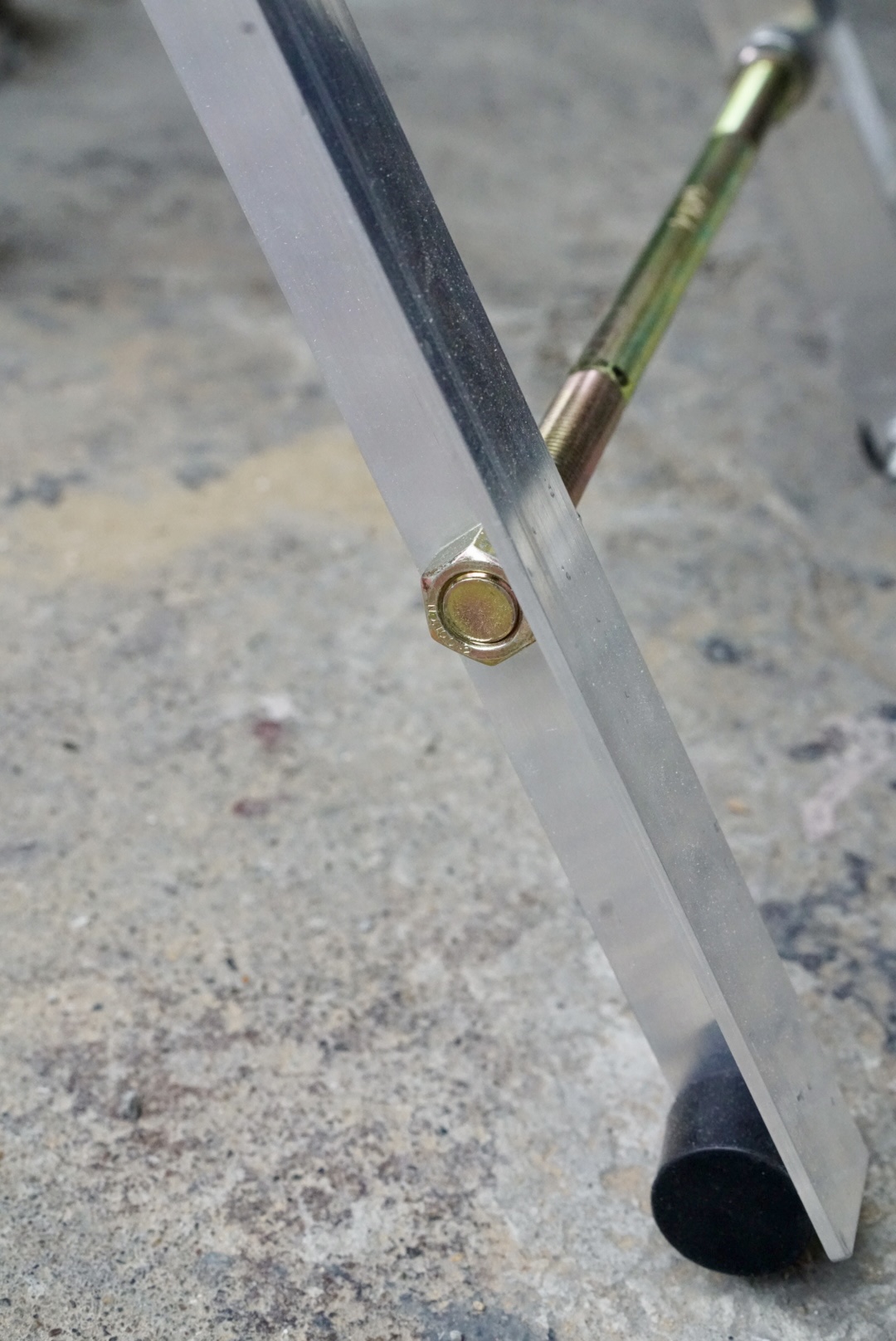
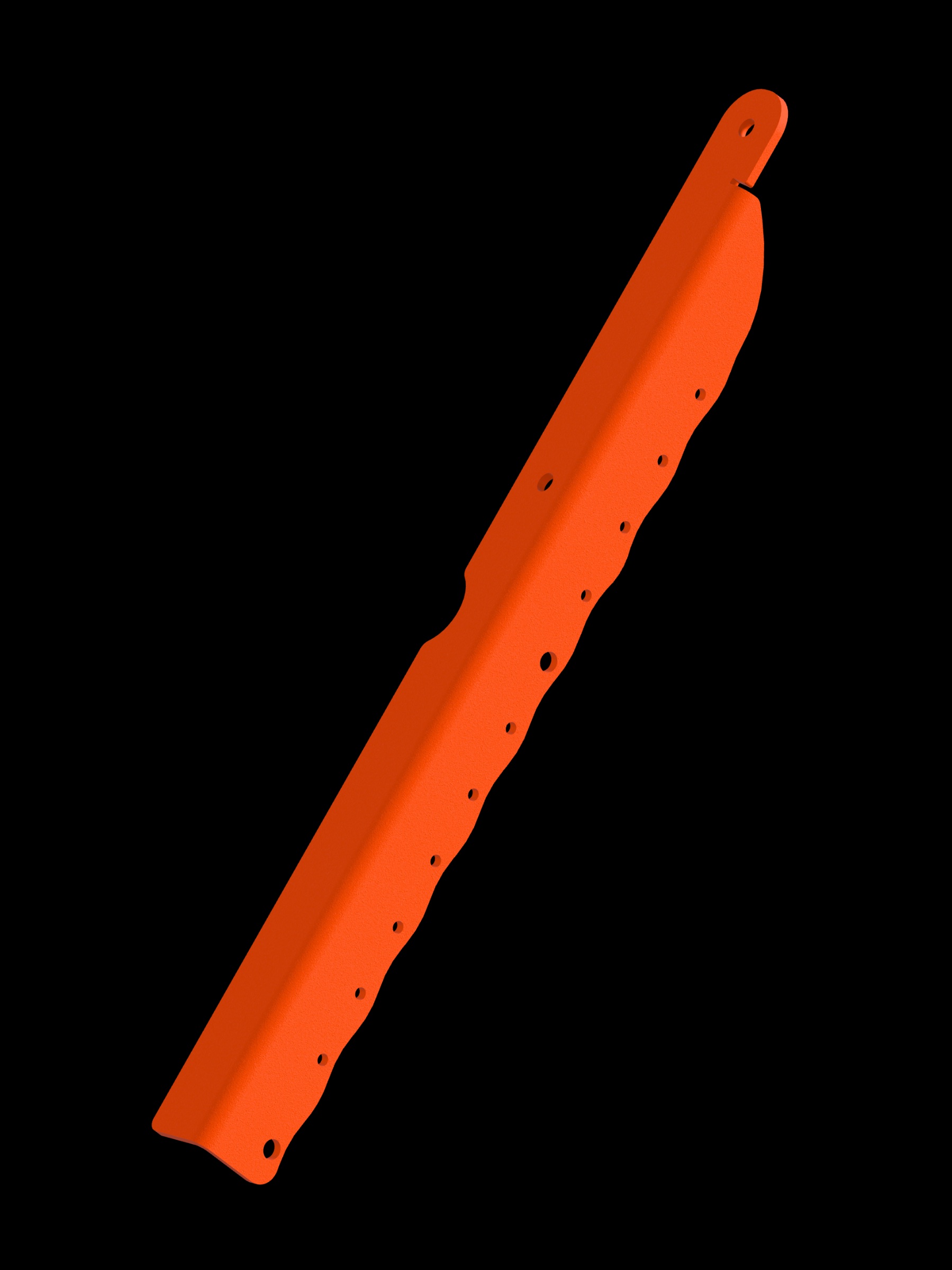
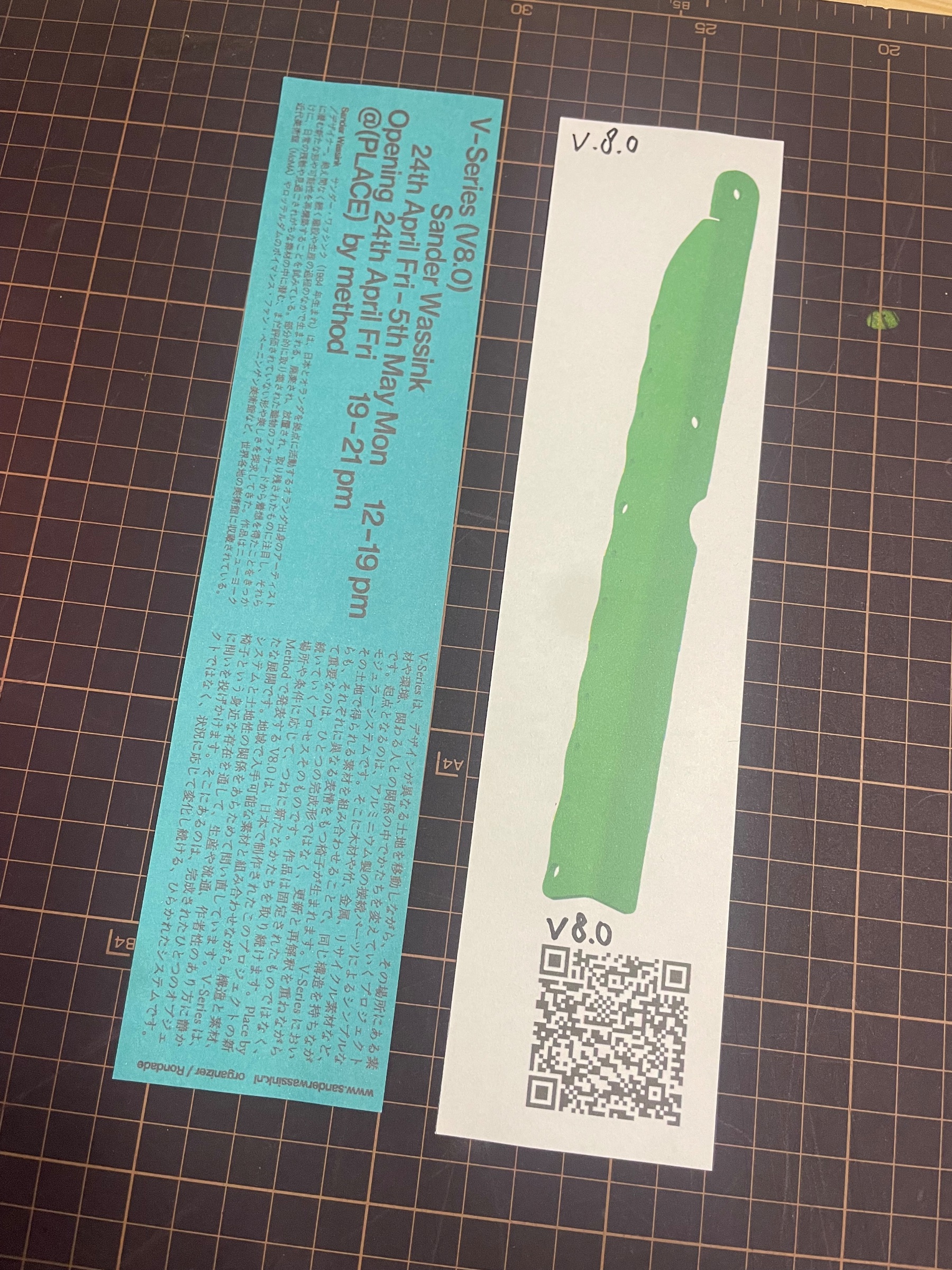
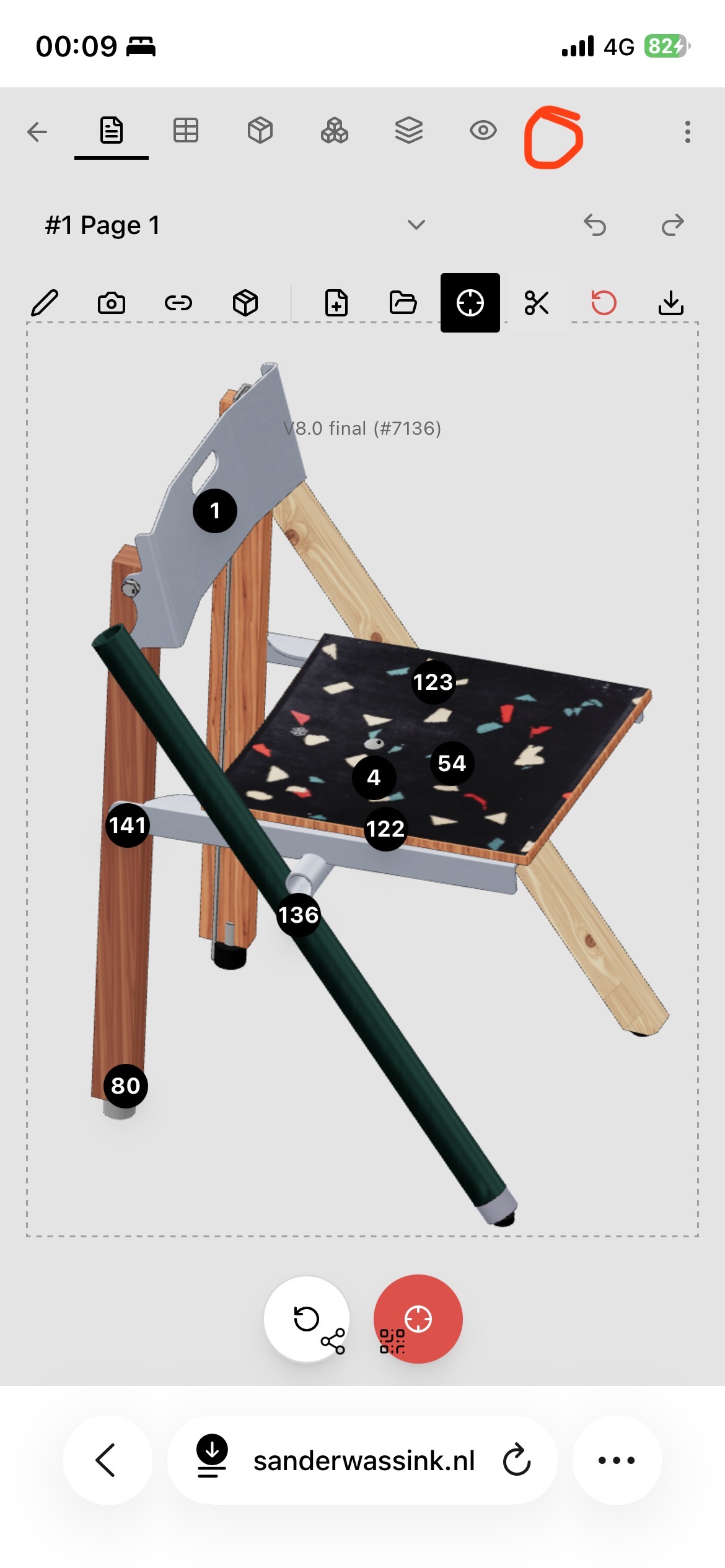
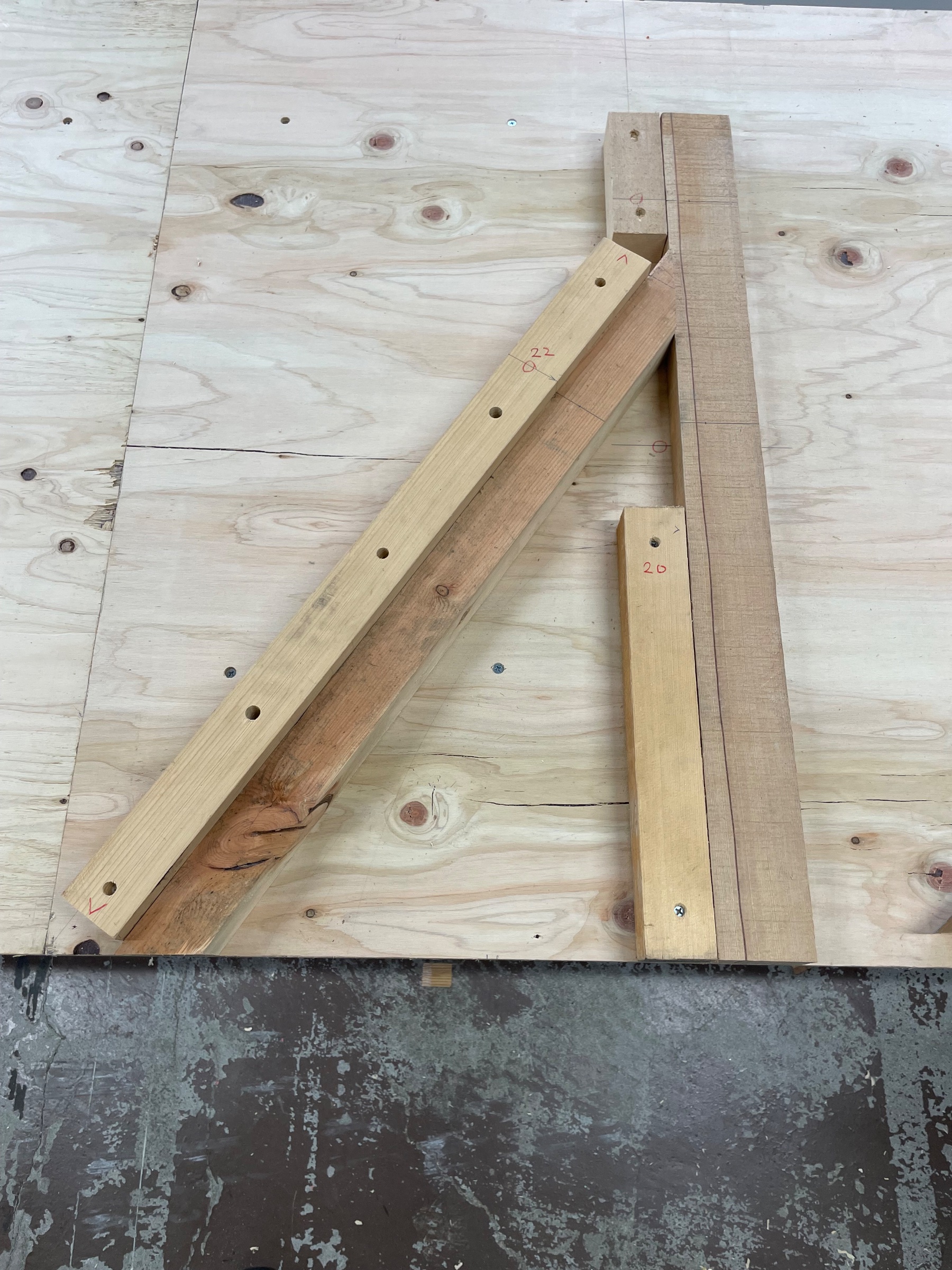
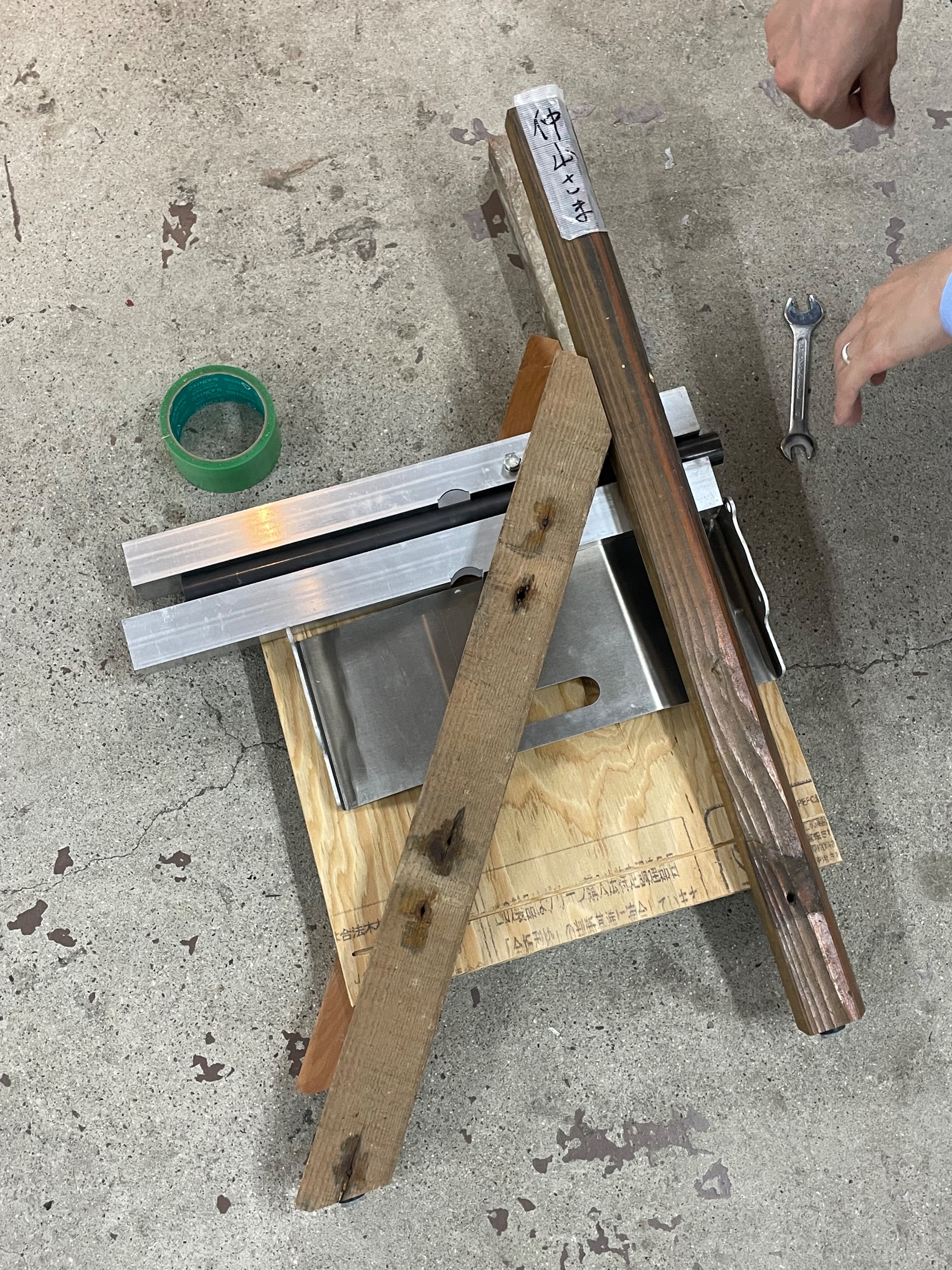
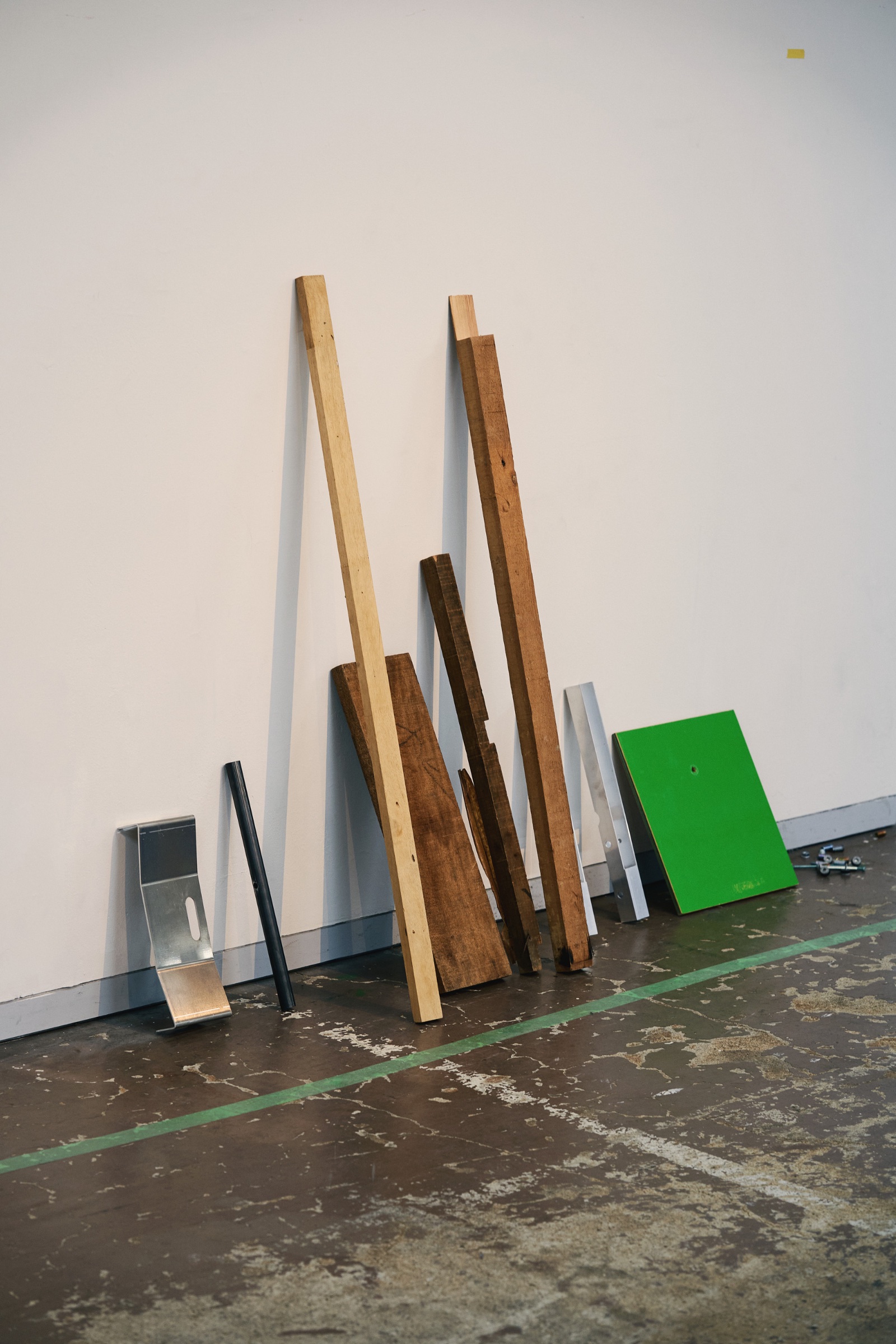
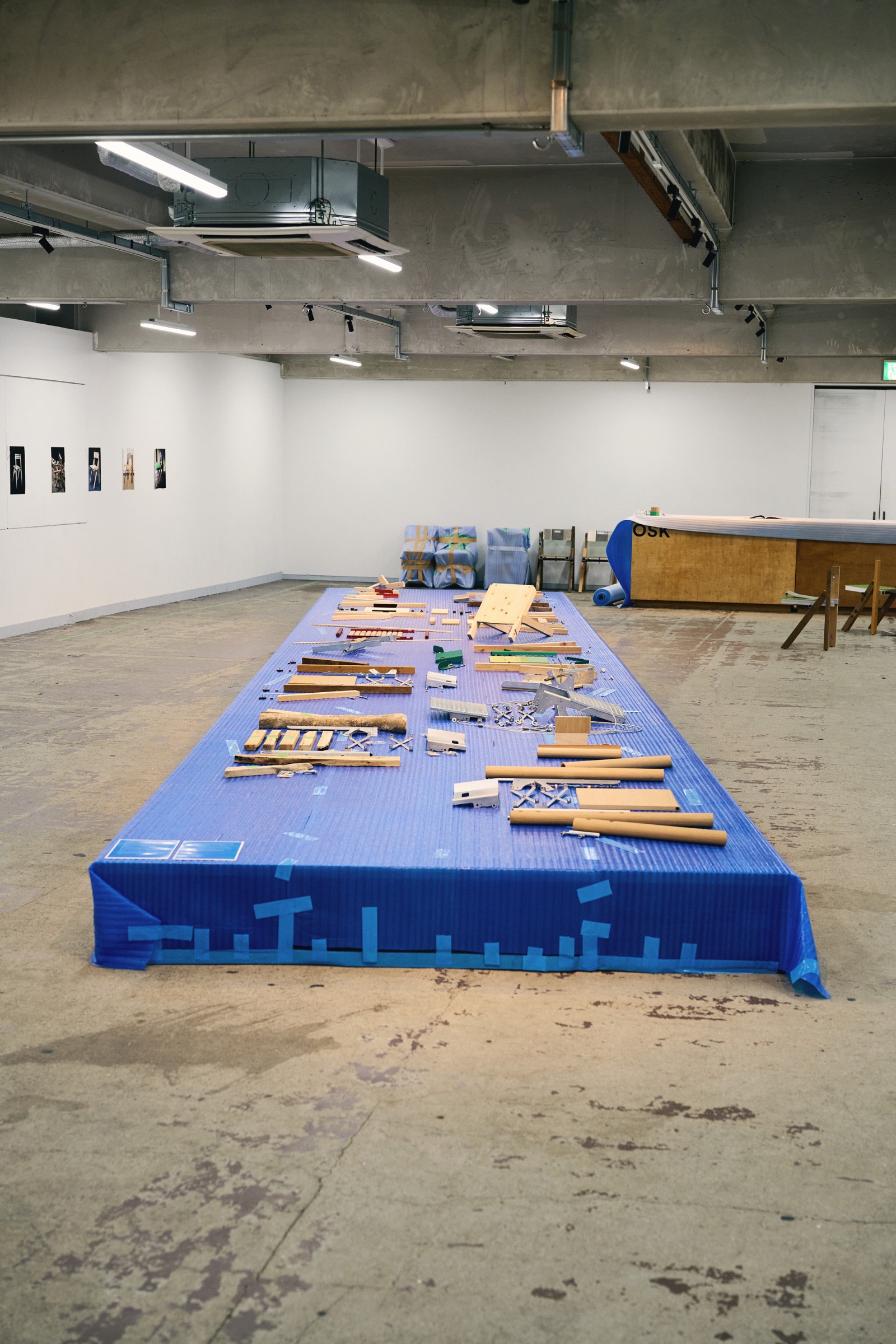
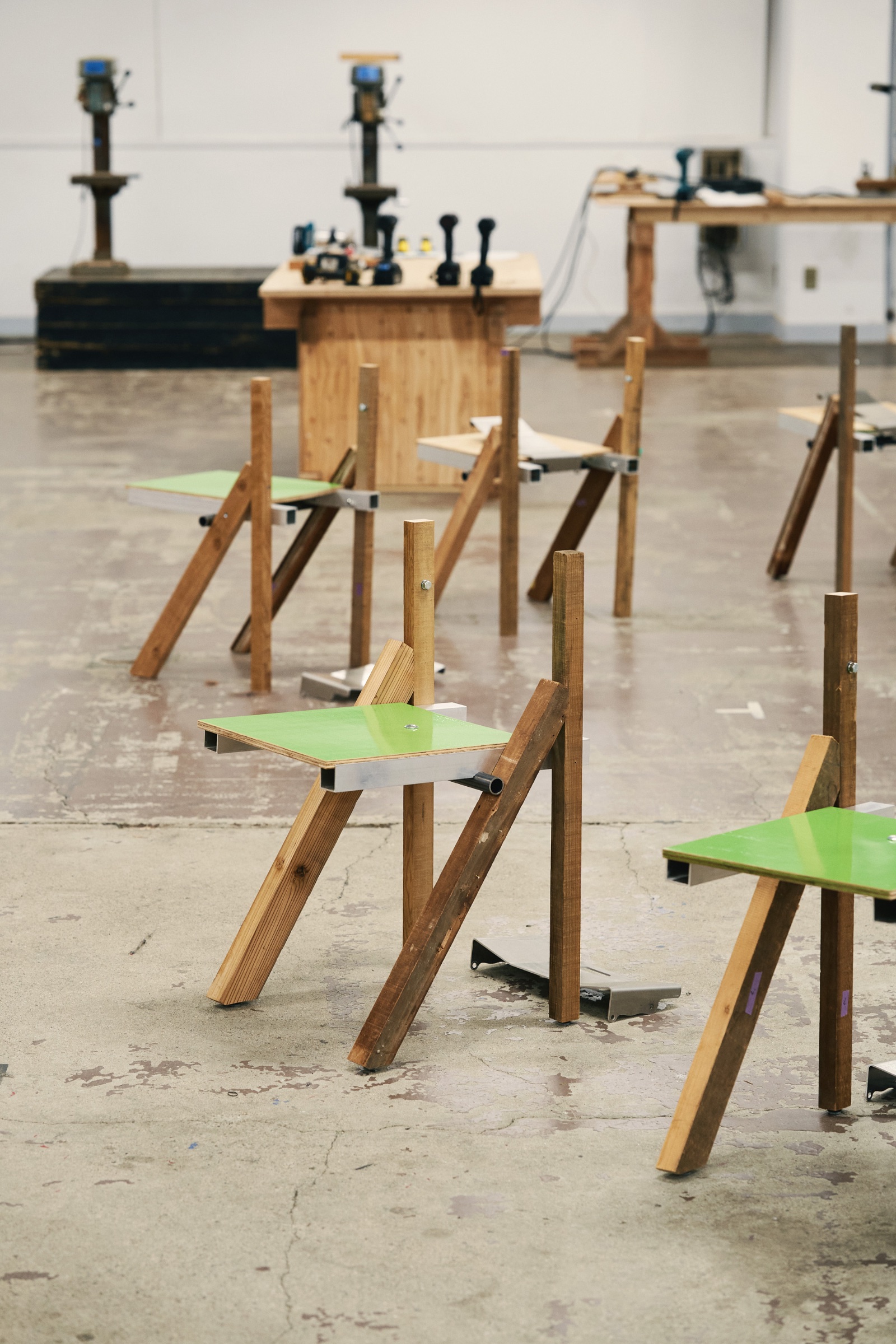
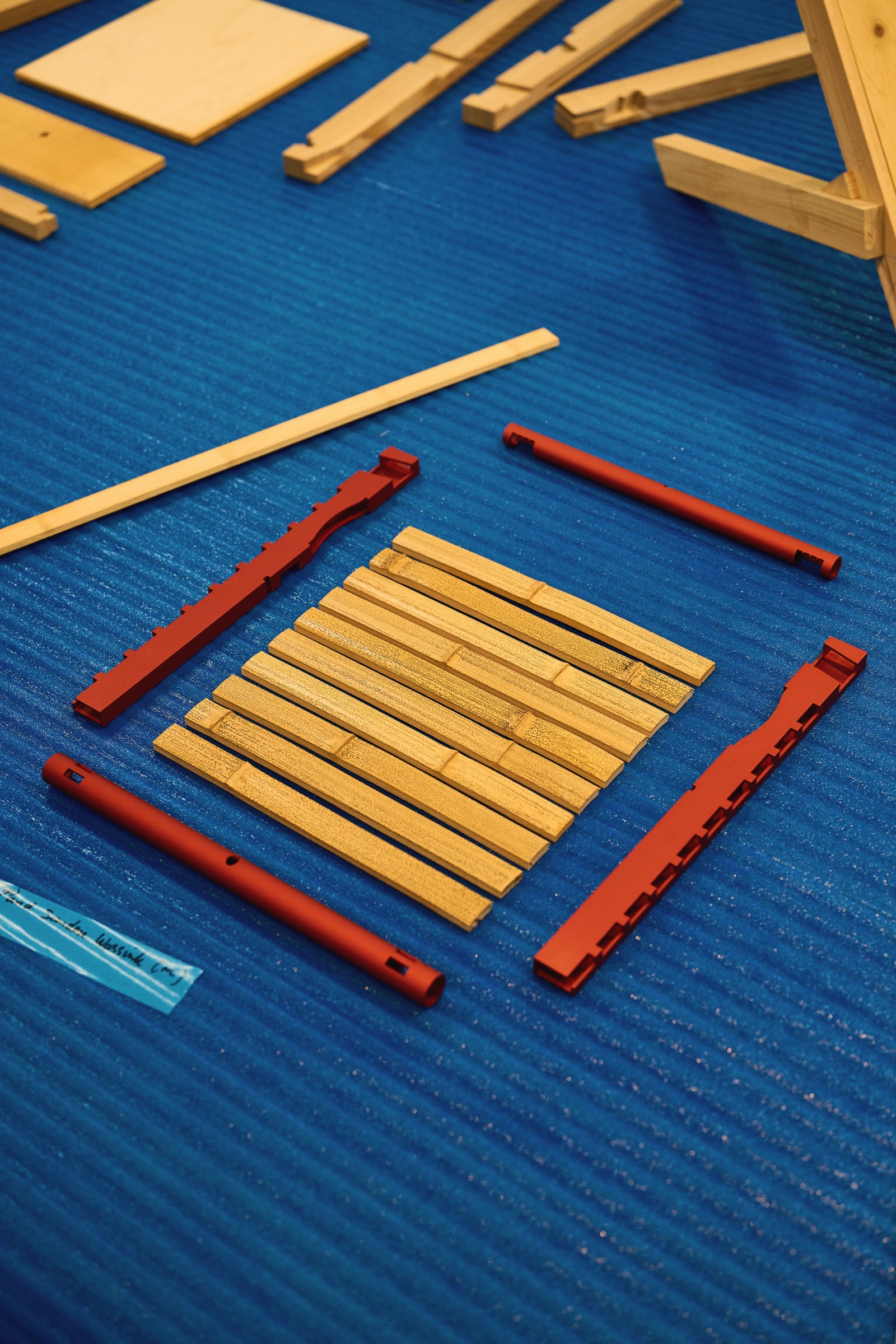
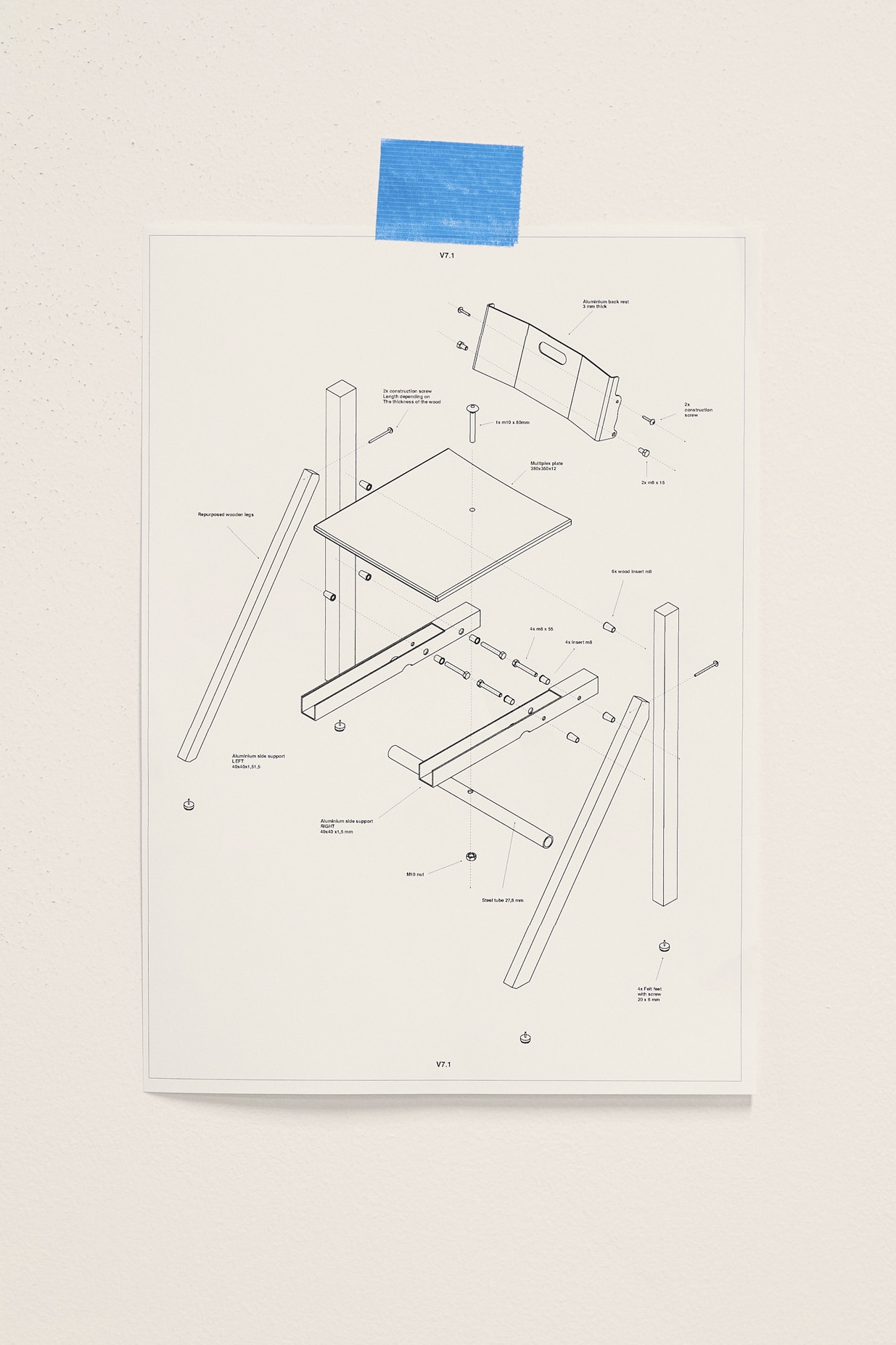
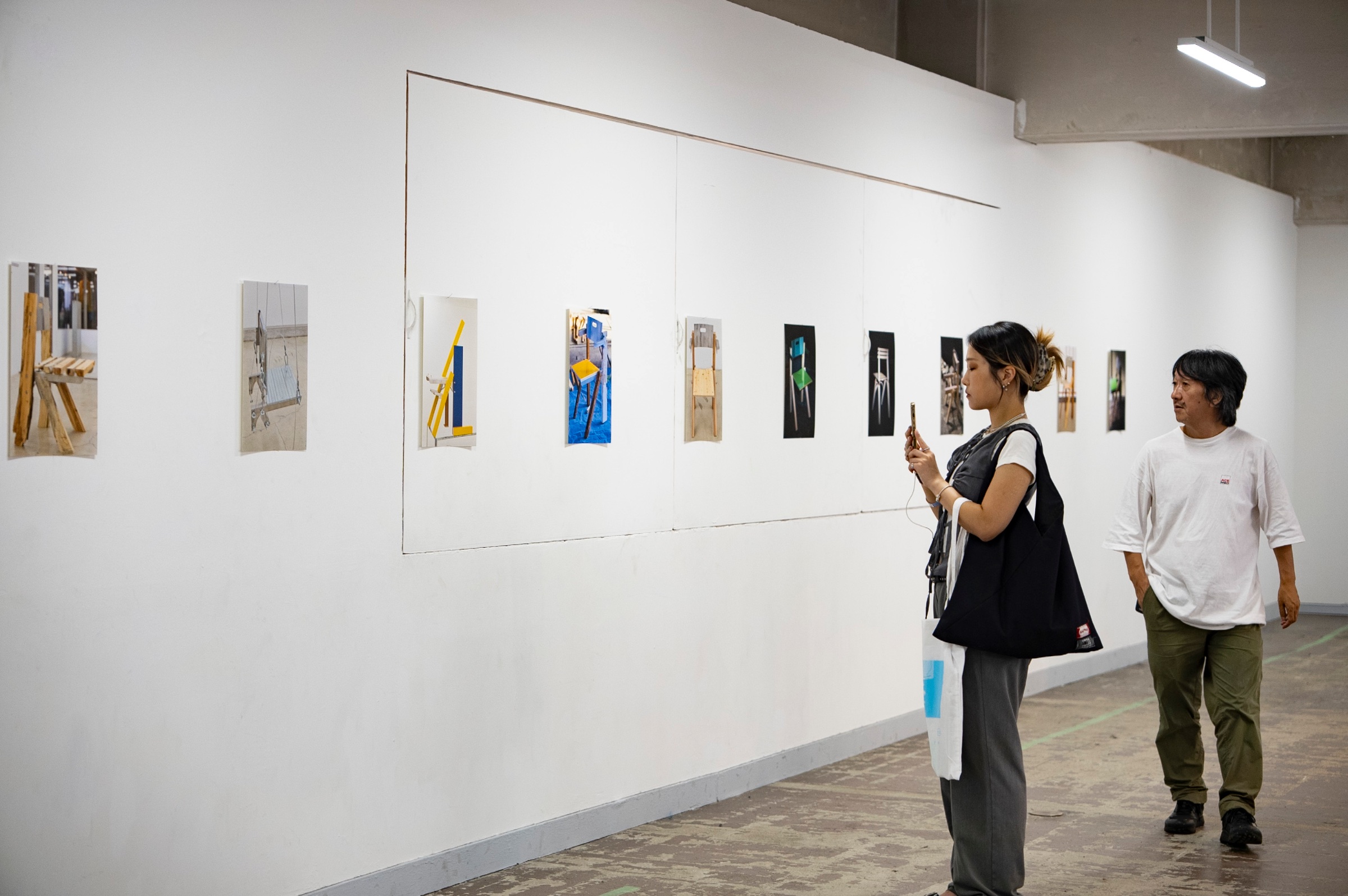
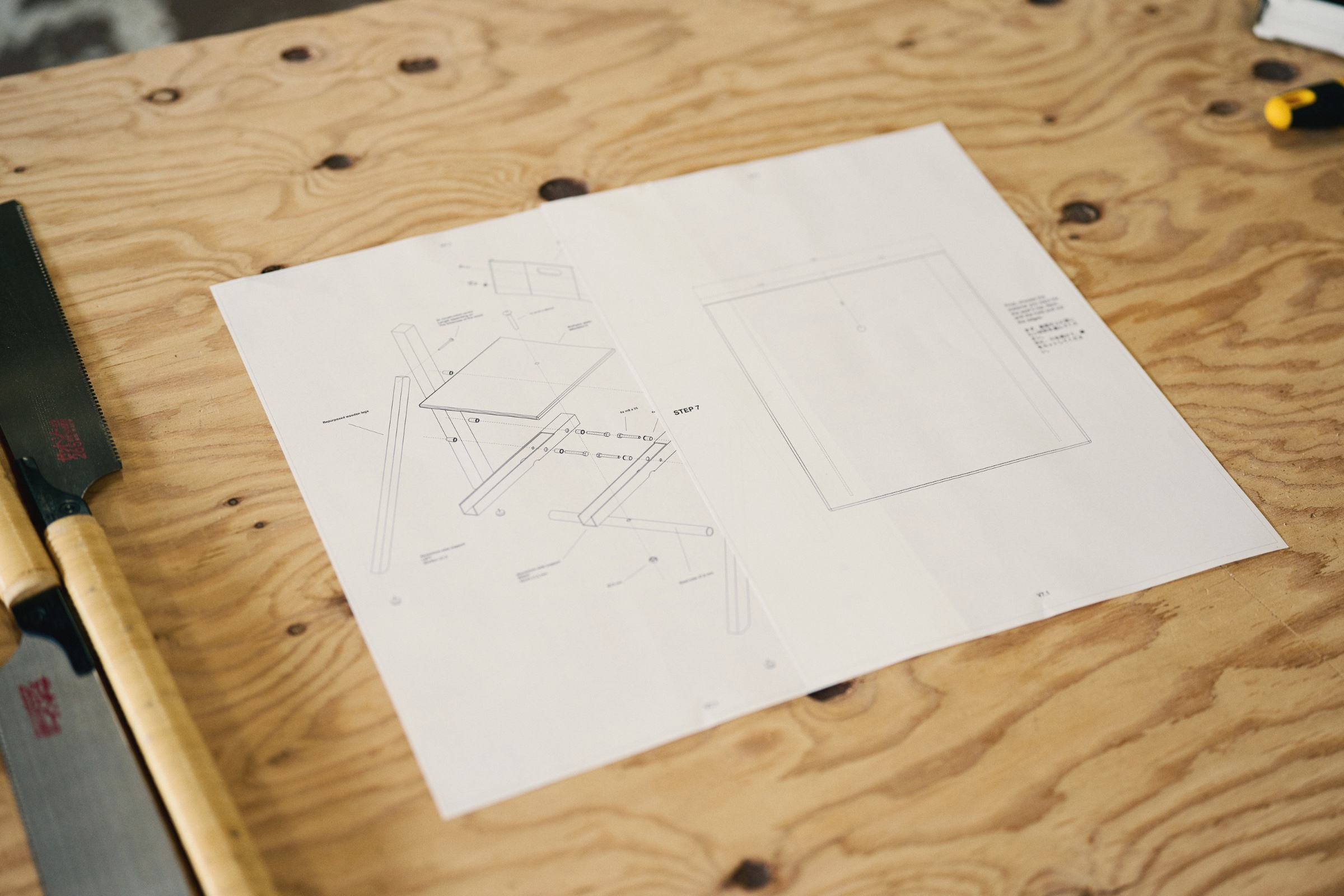
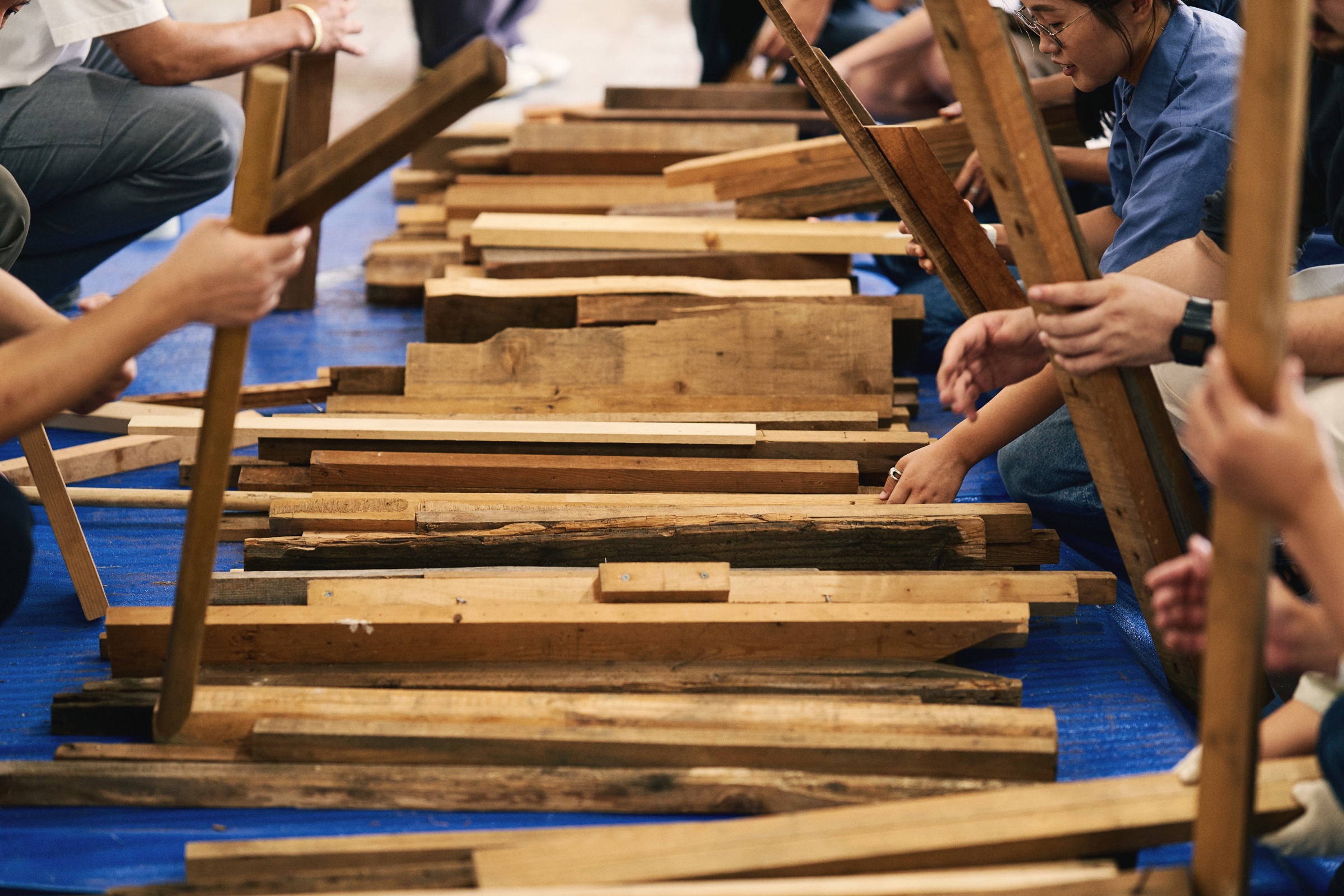
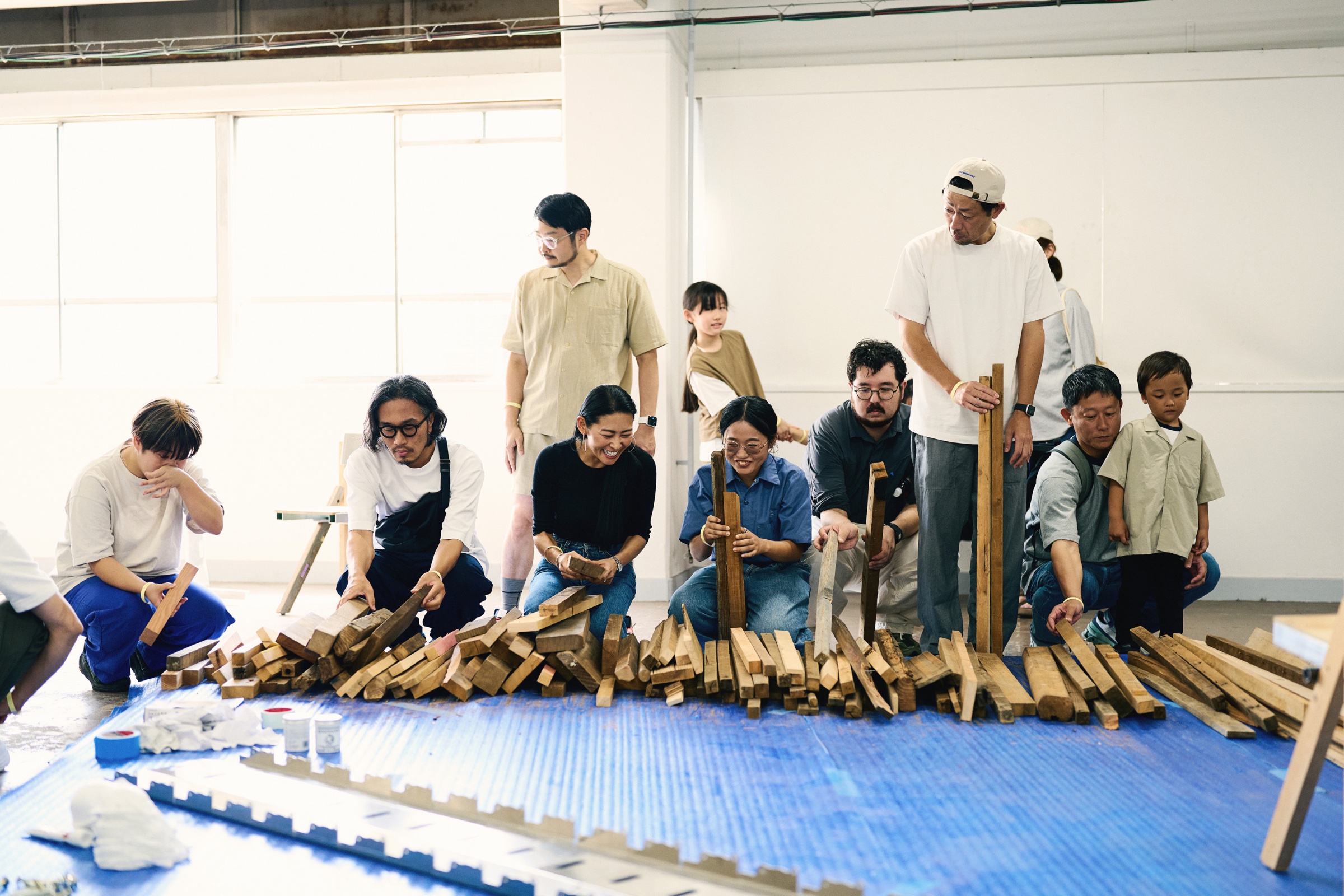
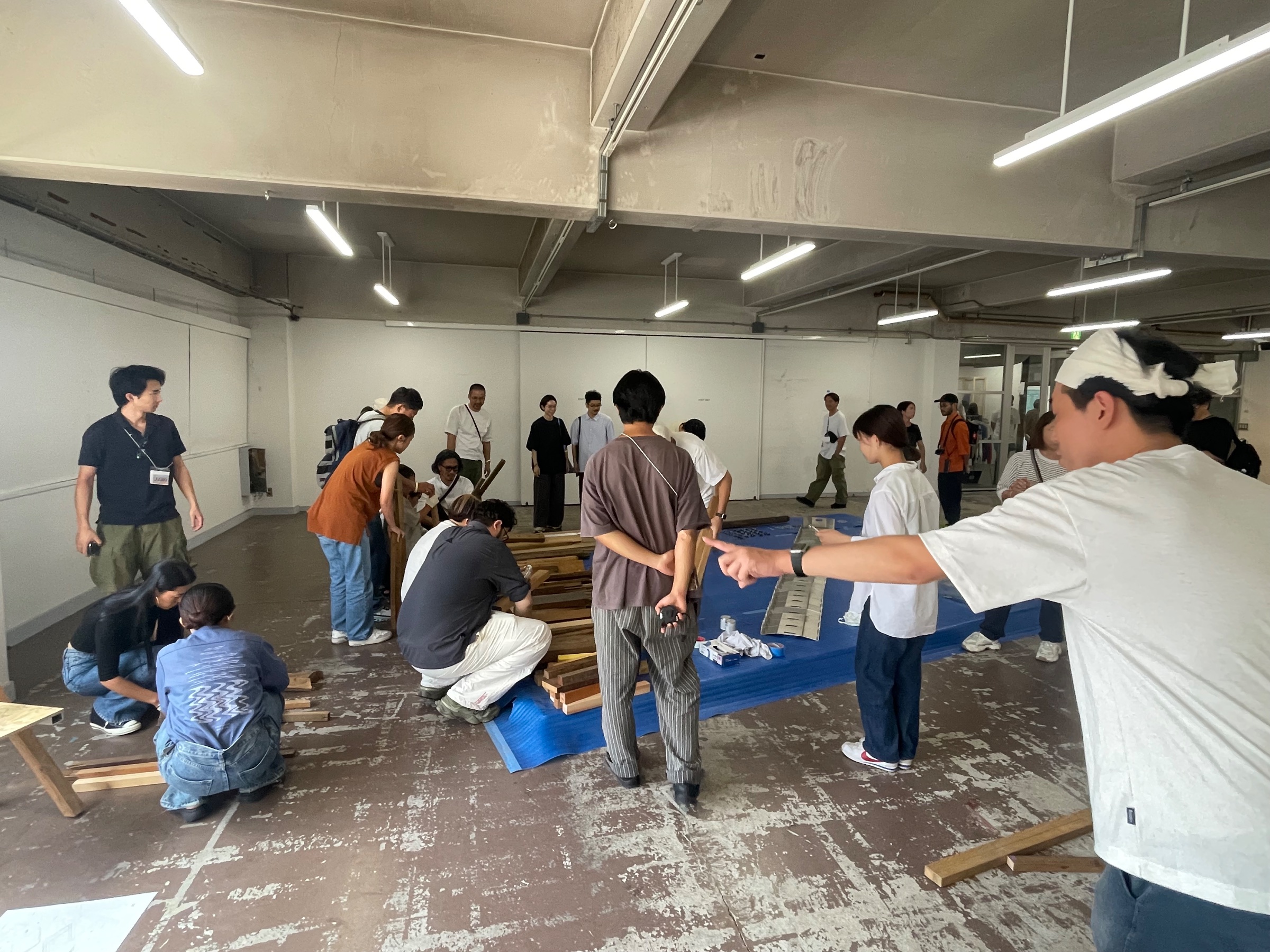
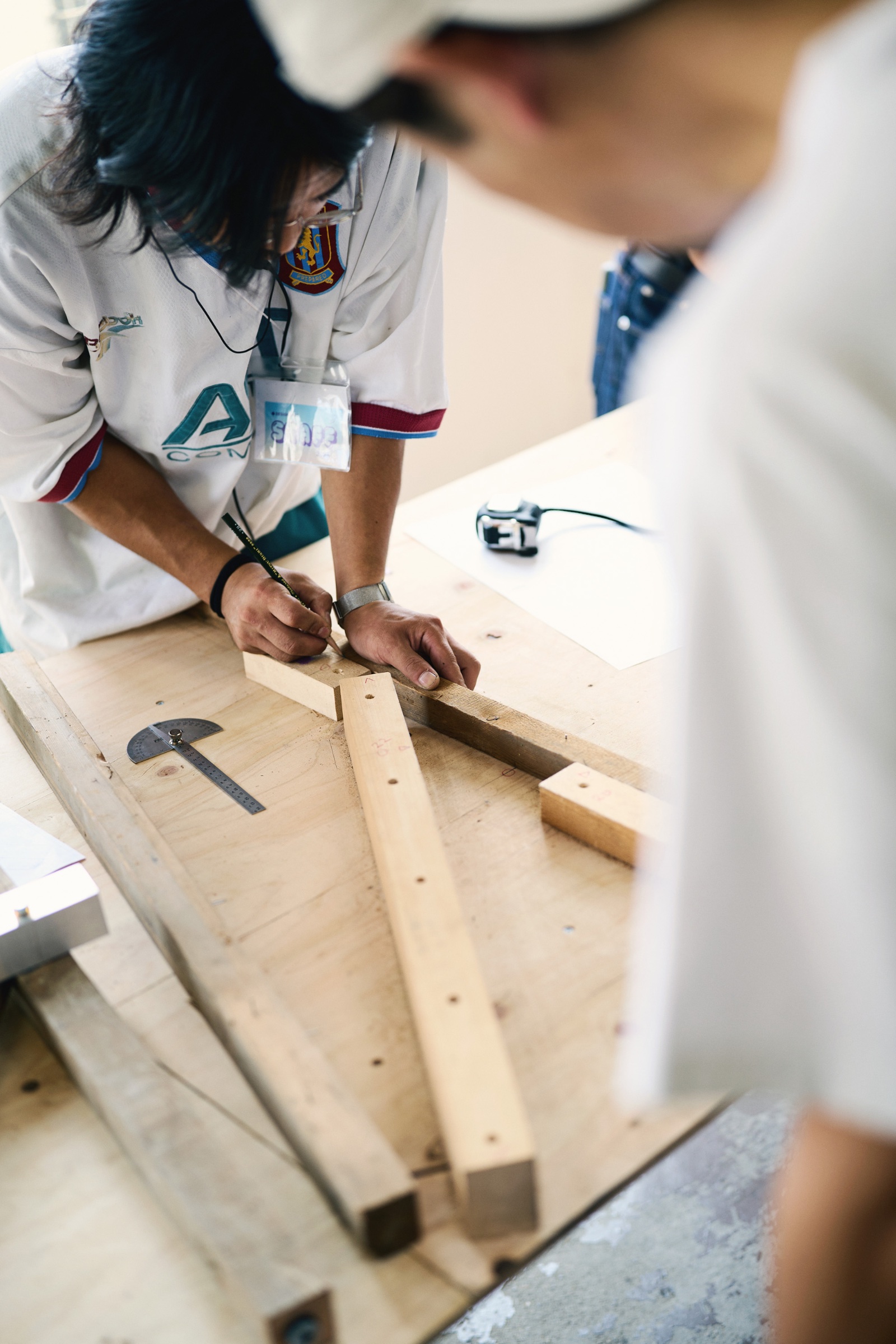
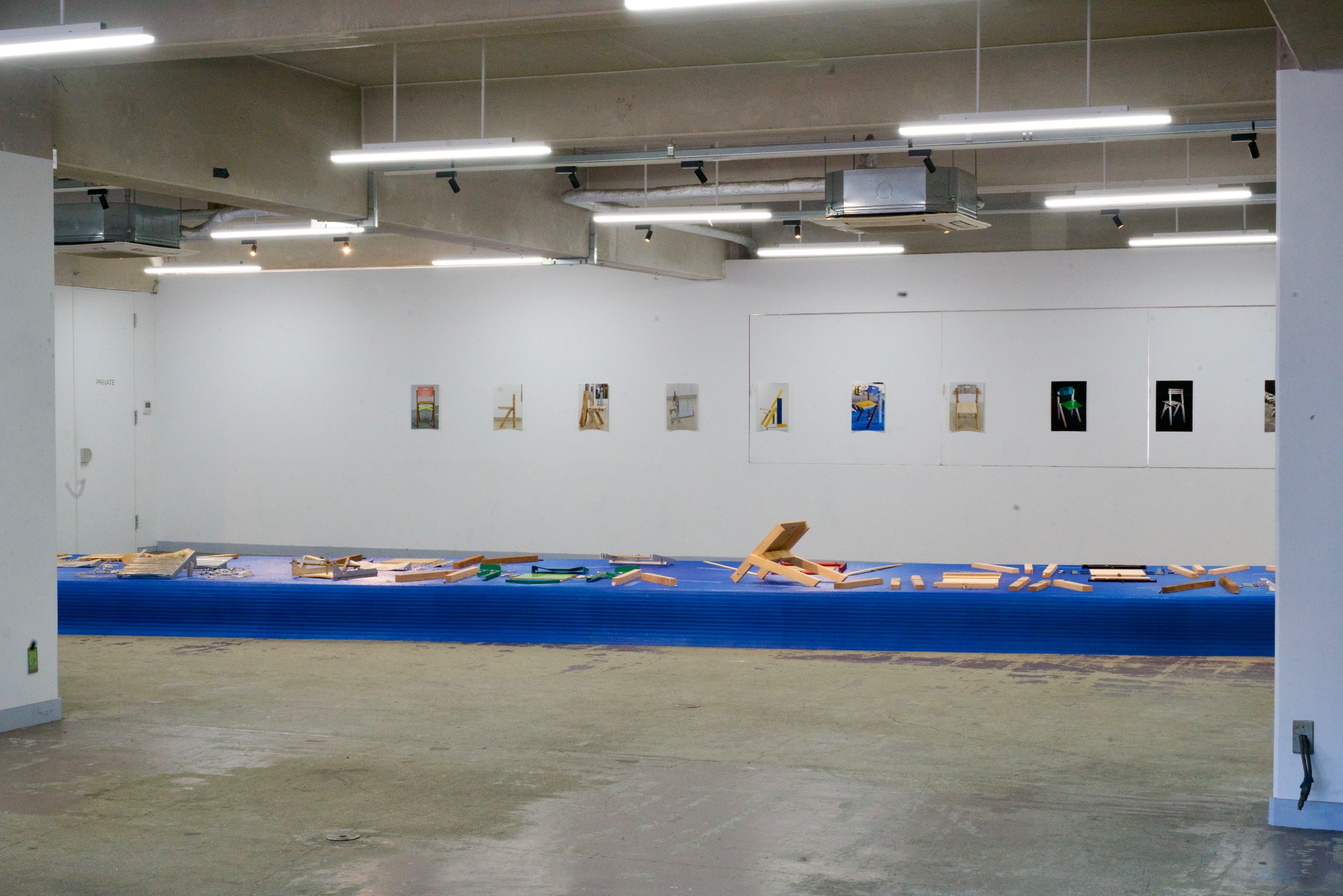
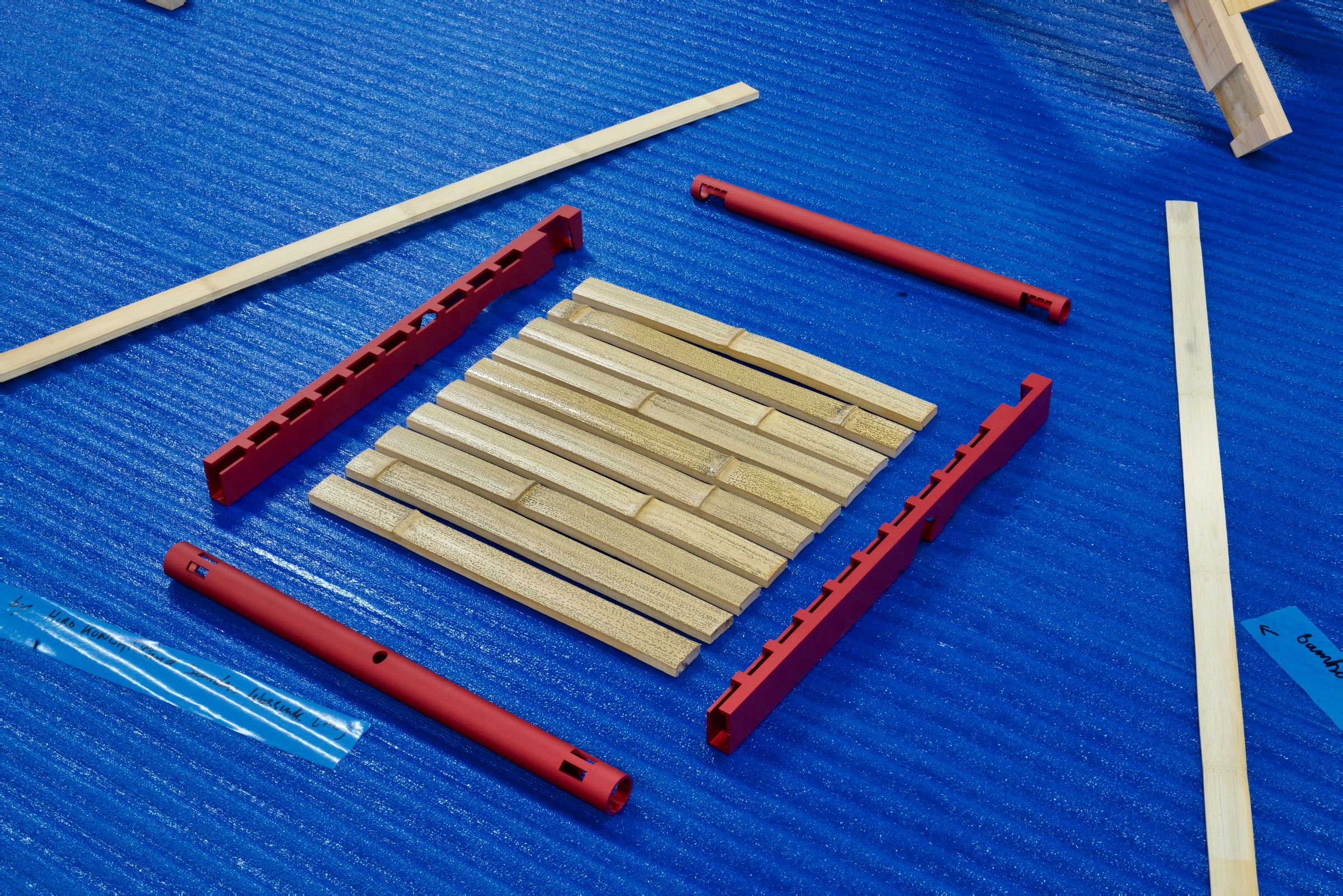
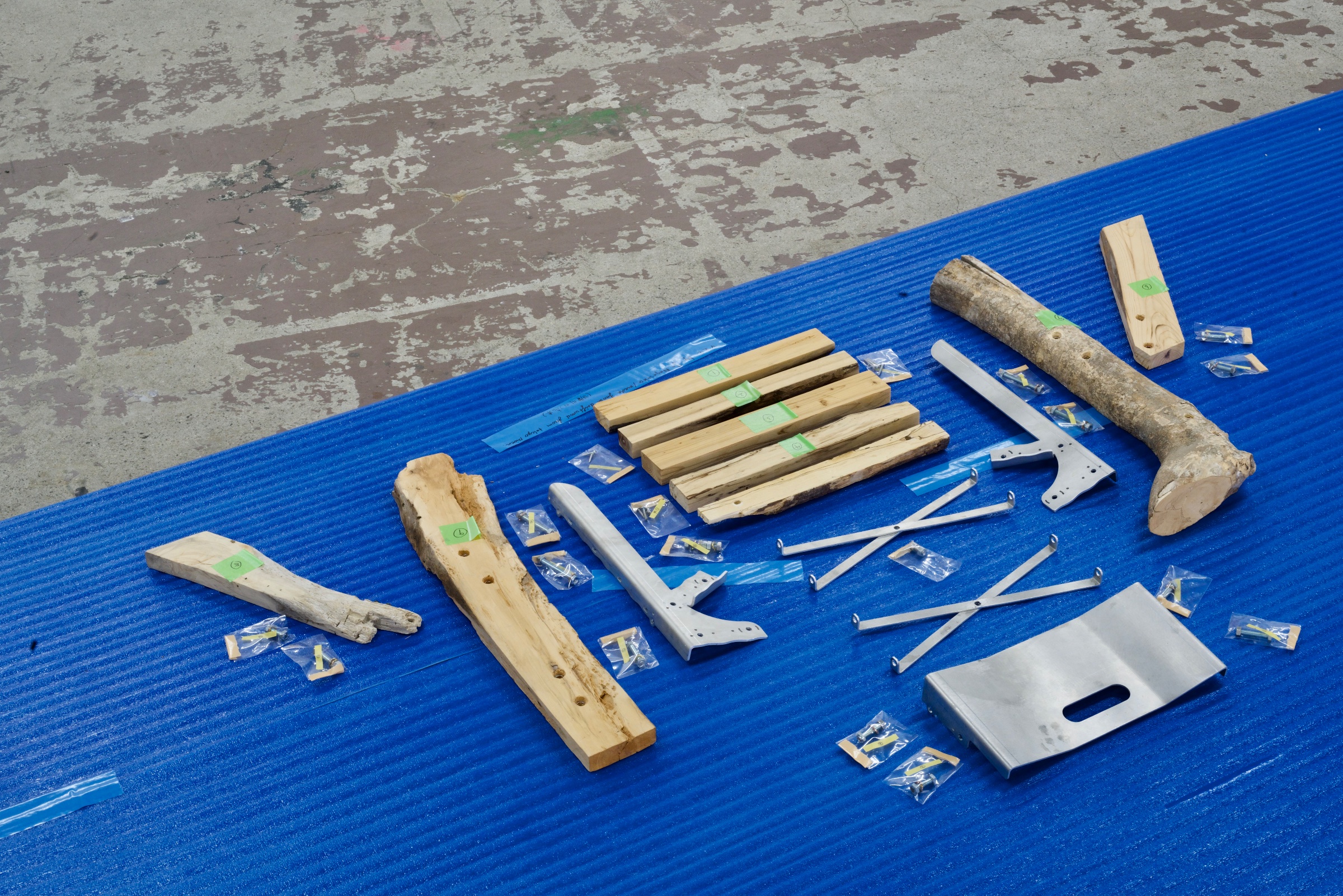
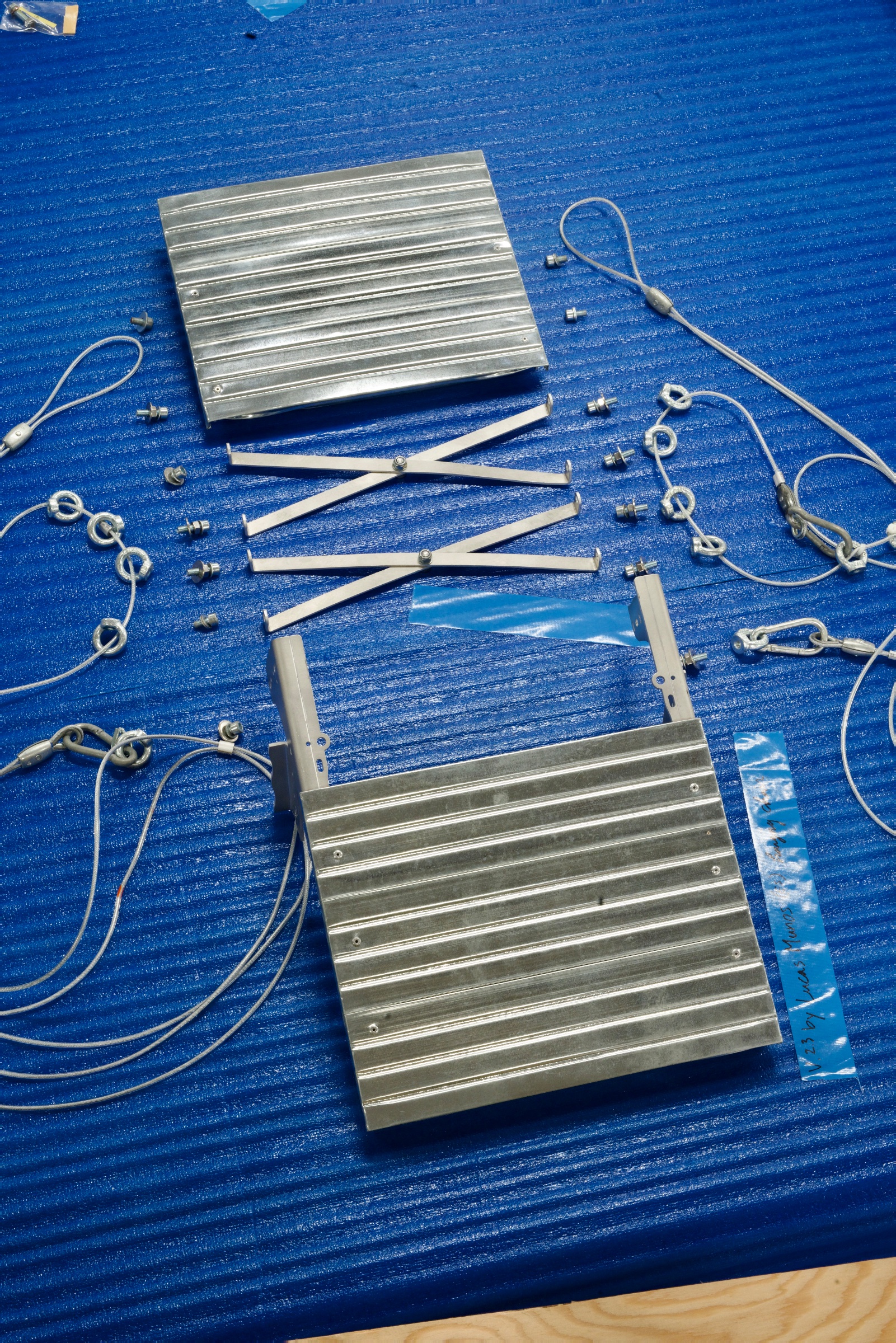
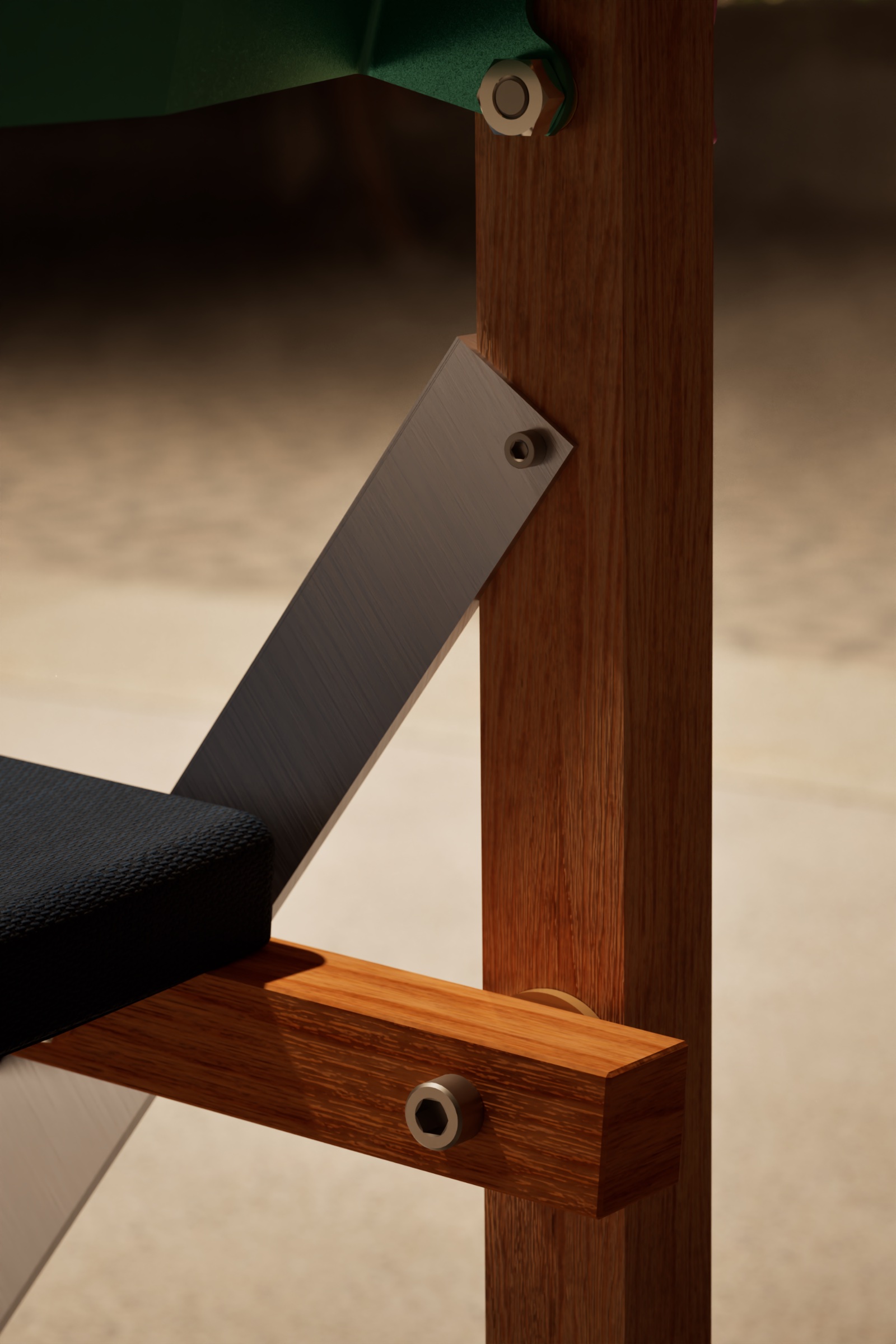
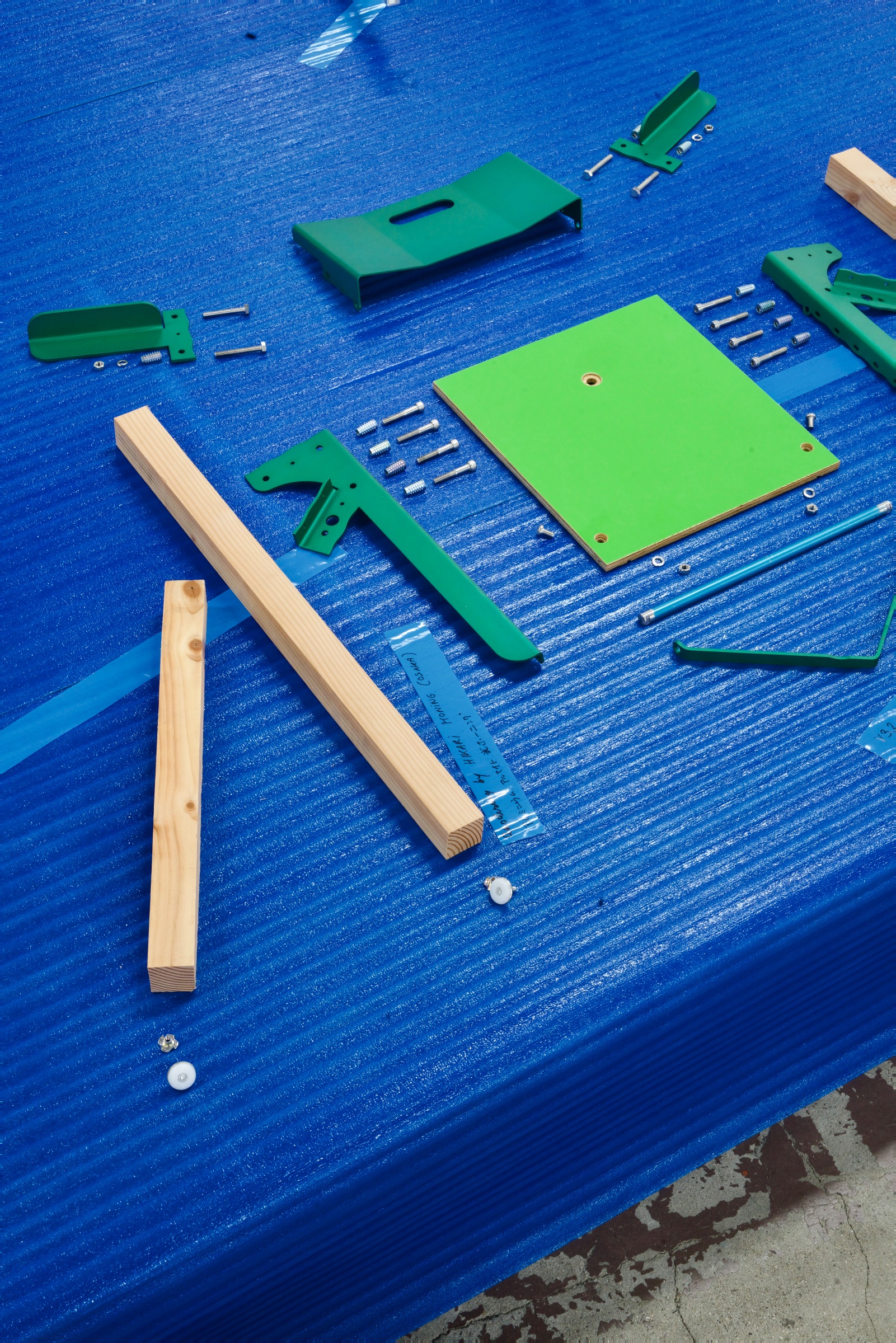
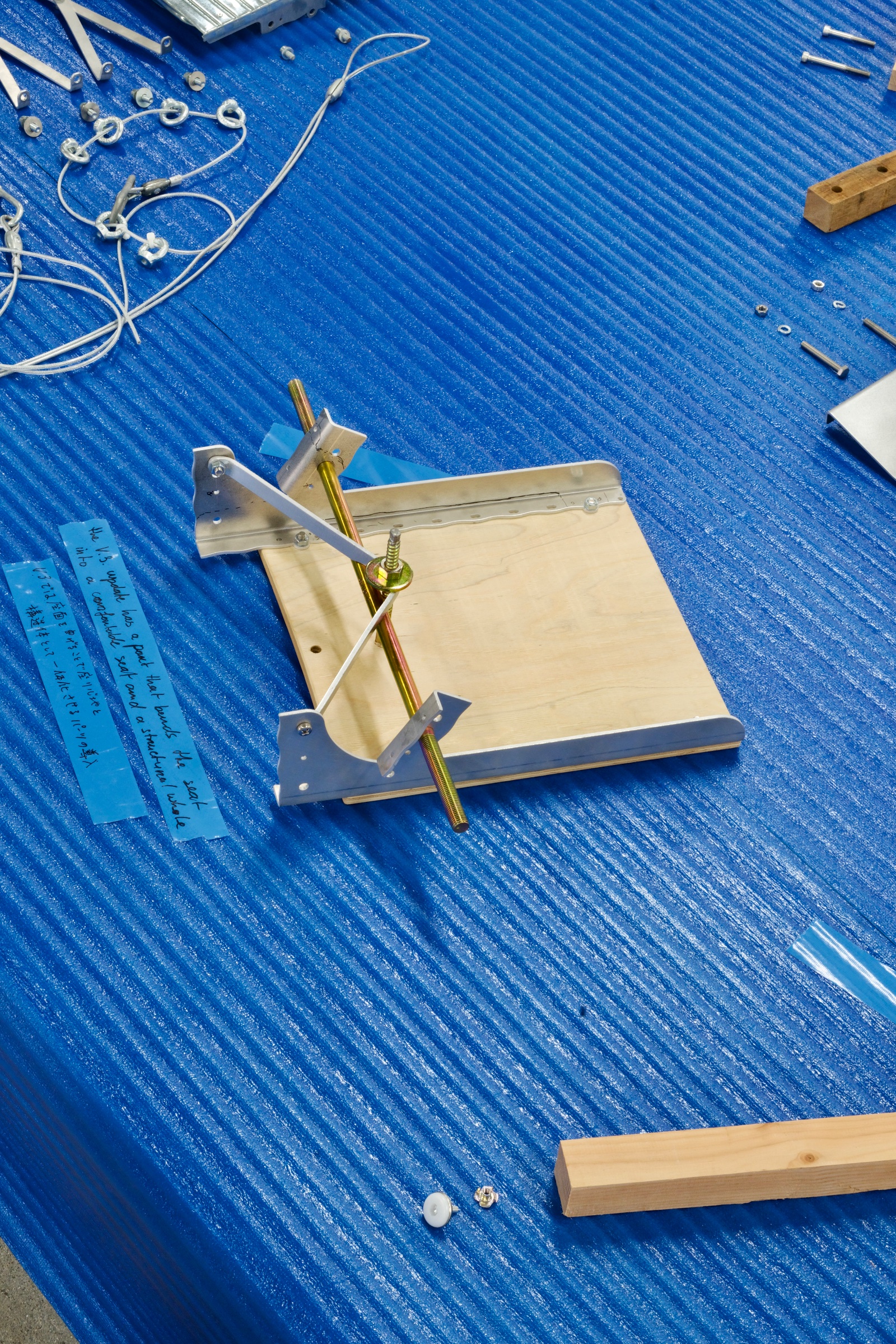
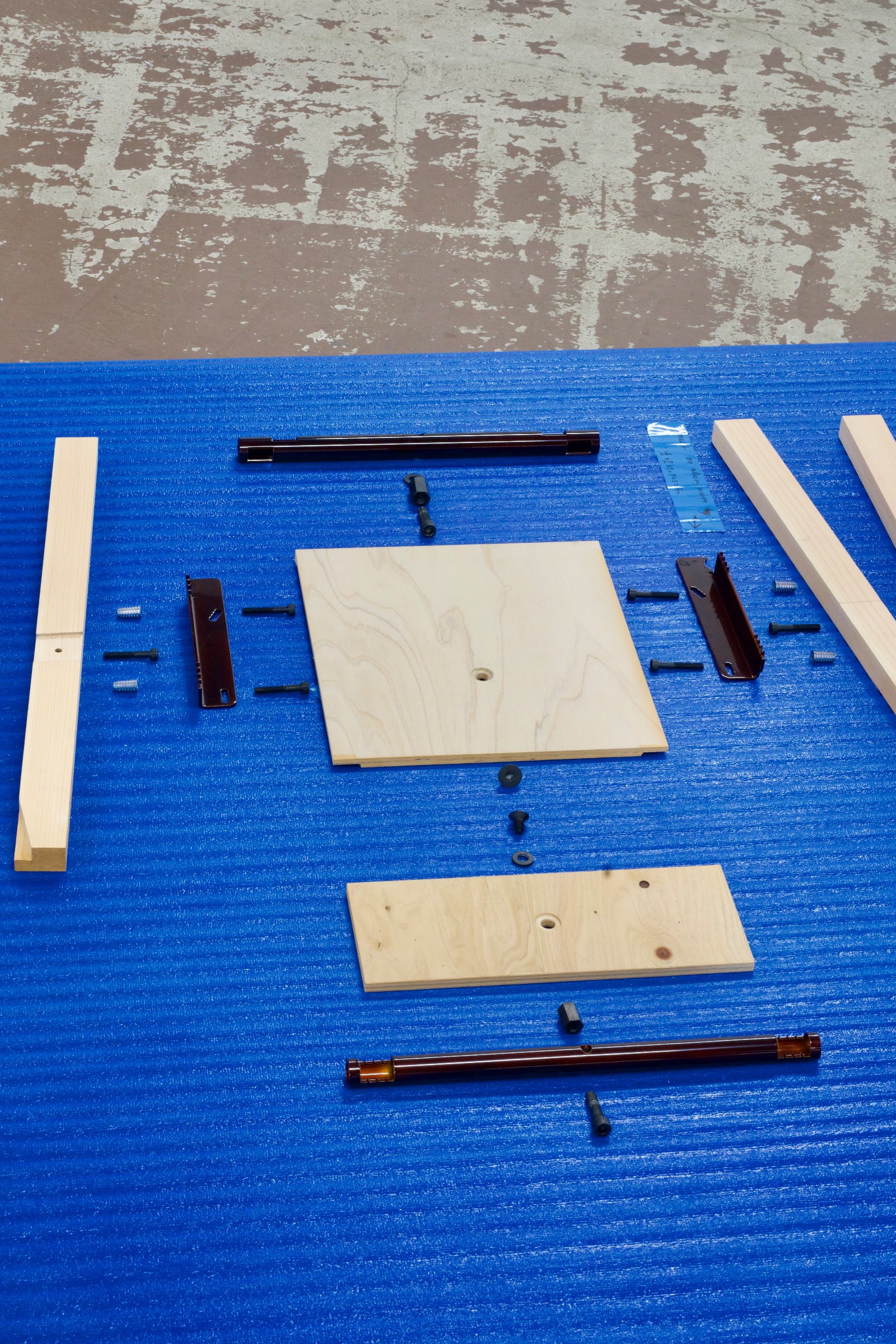
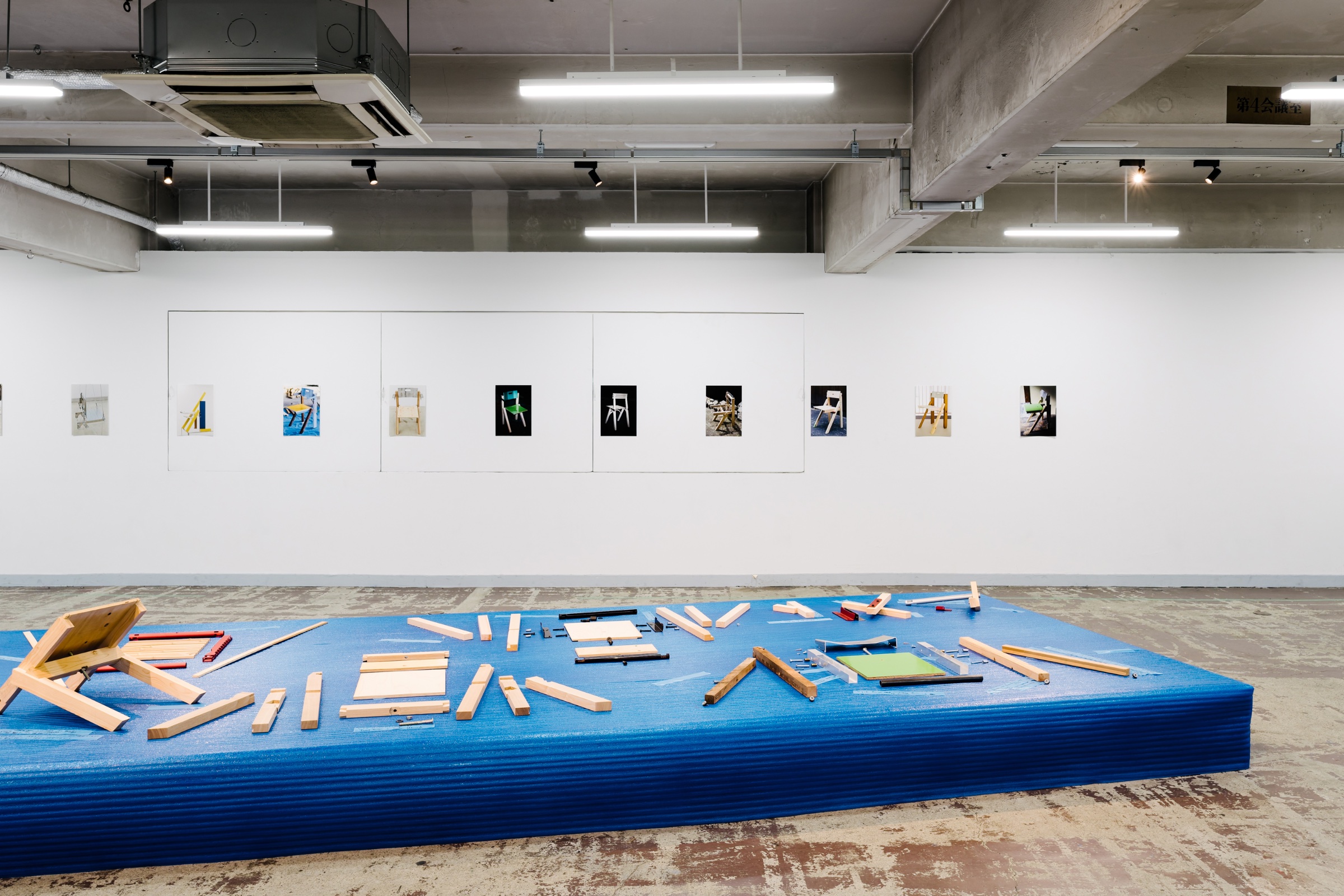
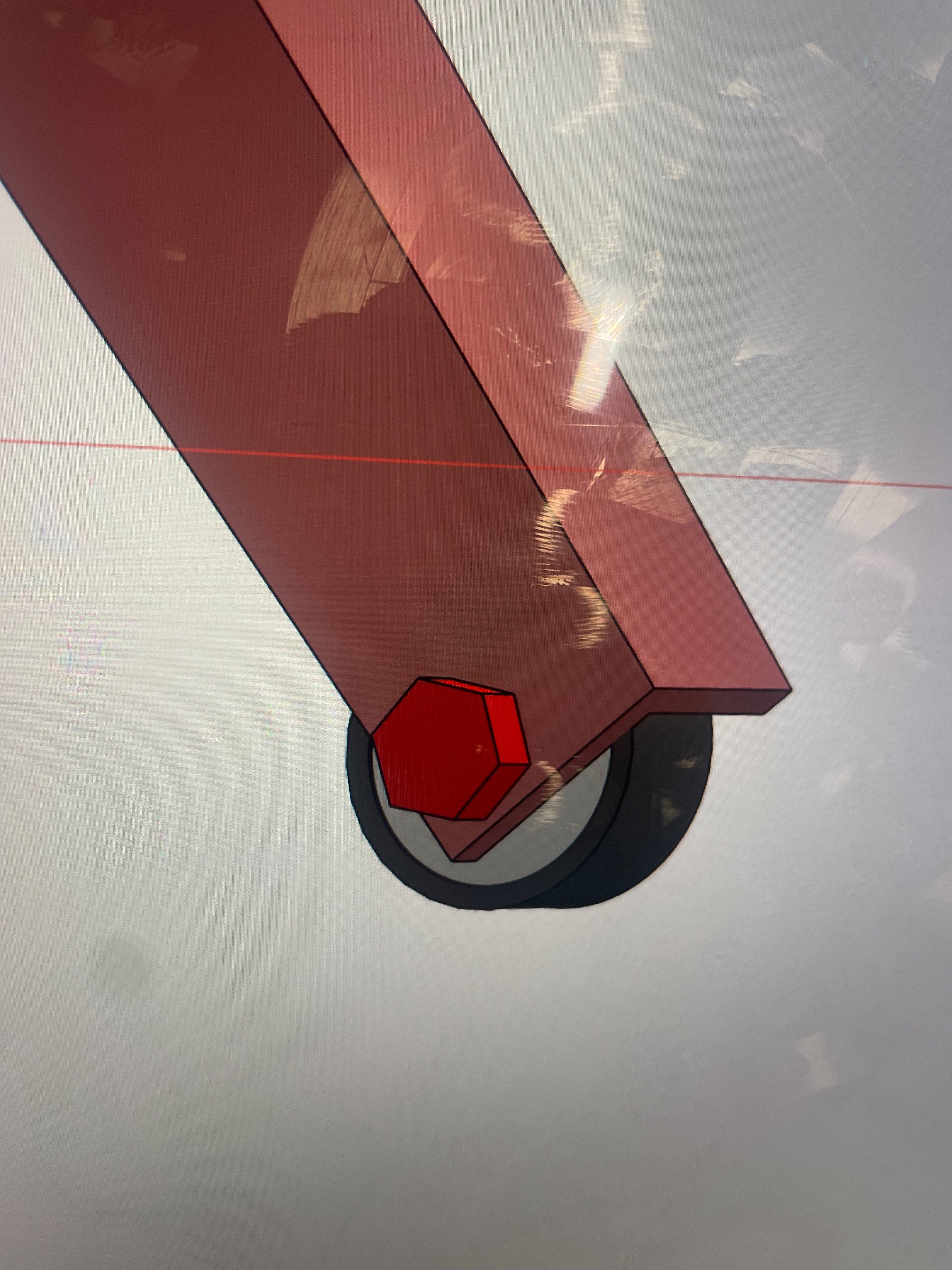
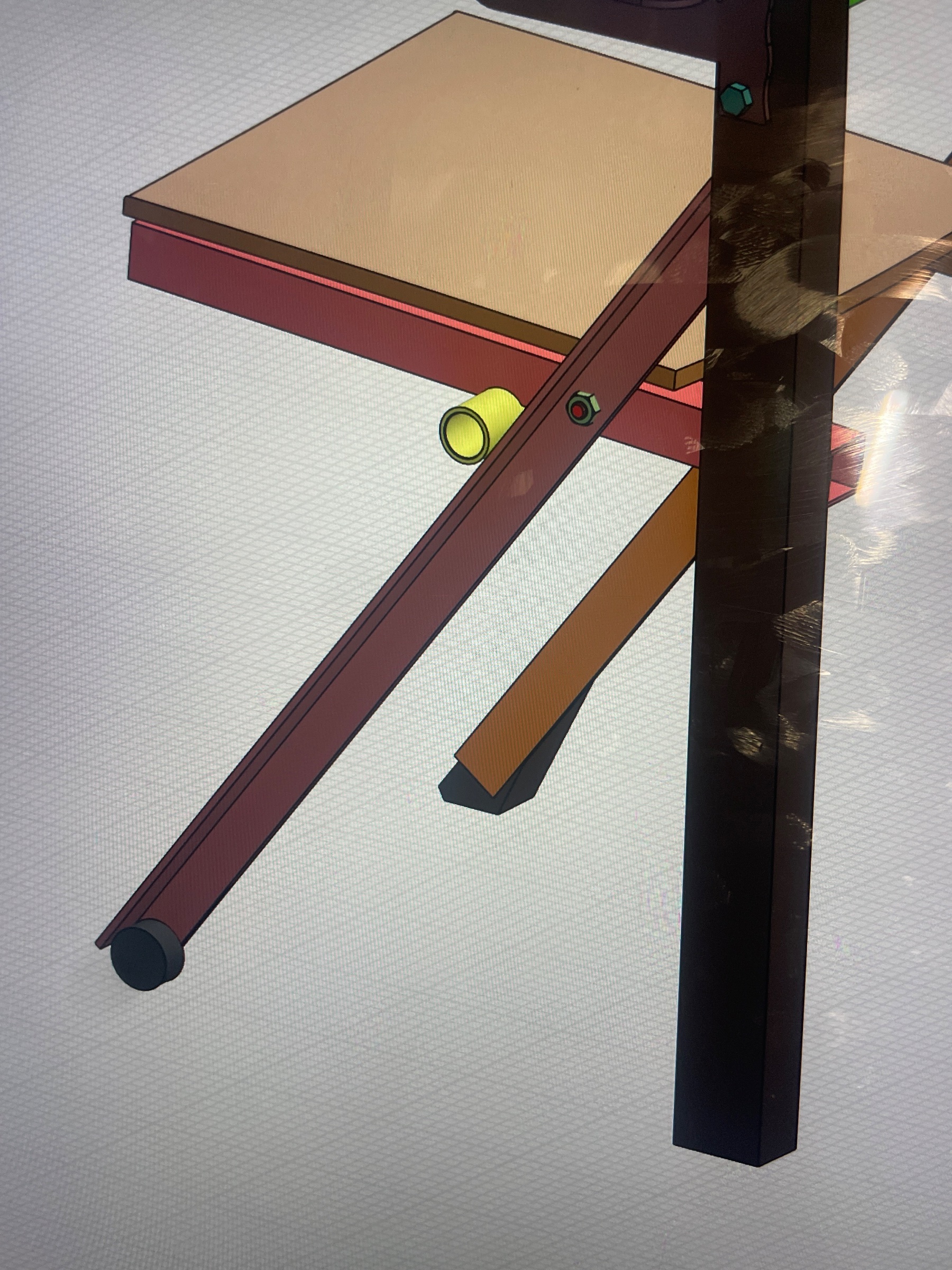
Bended bamboo in shape — 2025 — Photo: Sander WassinkV-SERIES Chair Components Display, Kyoto, 2024, shows wooden frame pieces, colored seat and back panels, and metal fittings arranged on a long blue platform. Photographs of assembled chairs line the white wall beneath an exposed concrete ceiling.A green component from V-SERIES (2024, Kyoto) is rendered diagonally against a white background. The elongated form has regularly spaced tabs, recessed sections and a curved profile within the modular chair construction project.The V-SERIES Chair, Kyoto, 2024, has a yellow wooden backrest, pale green legs, a black seat and a red crossbar with exposed fasteners. Strong sunlight casts angular shadows across the wooden wall and floor.Two people examine an unfinished wooden chair frame for V-SERIES, Kyoto, 2024, on a workshop bench. The frame has upright, horizontal and angled timber components with visible grain and pencil markings, surrounded by tools and wood offcuts.V-SERIES modular chair, Kyoto, 2024, with a wooden seat and legs, a pink backrest with an oval cutout, and yellow-green cross braces secured with exposed bolts. The chair stands on a concrete floor beside pink doors.Sample of hinoki traditional carpentry for chair — Nara — 2024 — Photo: Studio Sander WassinkV-SERIES Modular Chair, Kyoto, 2024, combines a timber frame and plywood seat with a formed metal backrest, armrests and exposed bolted connections. Splayed front legs support the chair on a cracked concrete floor against a plain white wall.V-SERIES (2024, Kyoto) is shown as a modular armchair with a pale wooden frame and seat, green metal backrest and armrests, and exposed bolts. Strong sunlight casts angular shadows across the chair and dark wooden floor.Aluminium Part of v-series v2.2 chair — Kyoto — 2024 — Photo: Studio Sander WassinkSide detail of the V-SERIES modular chair, Kyoto, 2024, showing angled yellow wooden members, a vertical blue panel and silver metal components joined with exposed bolts. The construction rests on an open metal support against a plain light background.Close-up of a V-SERIES modular chair joint, Kyoto, 2024, showing a green metal bracket secured to a square wooden upright with two exposed screws. A green backrest and horizontal metal support stand against a dark background.V2.2 modular chair made with reclaimed material from Teshima for schemata architects and Teshima factory — Teshima Japan — 2024 — Photo: Studio Sander WassinkV-SERIES Modular Wooden Chair, Kyoto, 2024, shown in side view with a pale wood frame, plywood seat and backrest, exposed fasteners and metal tubes. Green tape covers the tips of the angled front legs, which rest on dark wooden floorboards beside a textured wall.Technical line drawing for V-SERIES (2024, Kyoto), showing a modular chair joint with a rectangular seat panel, notched components, an angled leg and cylindrical fastener. Solid and dashed outlines reveal how the parts fit together.Two people align wooden chair-frame components for V-SERIES, Kyoto, 2024, on a patterned worktable. Upright and angled members form the unfinished frame, with a hammer and loose wooden pieces in the foreground.A close-up of wooden chair components from V-SERIES, Kyoto, 2024, shows an angled joint with a triangular support and visible pencil marks. The pale wooden frame rests on a worn orange-brown work surface.Technical line drawing of modular chair components for V-SERIES, Kyoto, 2024. Solid and dashed lines describe elongated parts with stepped notches, grooves and angled cutouts on a white background.V-SERIES (2024, Kyoto) is shown from behind, with a wooden seat and legs, a pink backrest with an oval handhold, and lime-green metal cross-bracing. Exposed bolts and blue brackets connect the components against a plain gray wall and floor.V-SERIES Wood and Metal Chair, Tokyo by Jo Nagasaka, schemata , 2024, combines irregular wooden wooden driftwood with aluminum components. — Tokyo — 2024 — Photo: Go ItamiA close-up from V-SERIES (2024), Kyoto, shows weathered wood wrapped with rusted metal wire beside a projecting wedge-shaped wooden piece. Fallen leaves and needles surround the wood on the ground.A digital rendering of the V-SERIES modular chair, Kyoto, 2024, shows a green square seat, brown rectangular frame members and a faceted grey backrest with a handle opening. Visible bolts and angled front legs outline the component-based construction against a white background.A close-up of V-SERIES (2024), Kyoto, shows dark blue wooden frame members with visible grain and a red metal bracket secured by two black bolts. Angled supports and a horizontal rail stand against a gray concrete block wall.Close-up of a V-SERIES modular chair by Sander Wassink, Kyoto, 2024, showing dark blue wooden seat panels and angled supports with visible grain. Red tubular components punctuate the joints beneath the seat.A dark blue wooden chair from Sander Wassink’s V-SERIES, Kyoto, 2024, has a rectangular backrest, visible wood grain and red cylindrical connectors. It stands on tatami flooring beside loose wooden components and hardware, with textured glass windows behind it.V-SERIES Chair, Kyoto, 2024, combines a pale wooden frame with a glossy green plywood seat, turquoise backrest with a rounded handhold, and dark green armrests. Visible fasteners connect the components, and the chair stands on a white shag rug.A close-up rendering of V-SERIES (2024, Kyoto) shows a yellow backrest panel, a pale wood-grain upright and a glossy green tubular crossbar against white. A bronze-colored nut and washer form a visible connection in the modular chair assembly.Dark metal bolts, washers and hexagonal coupling nuts for V-SERIES (2024, Kyoto) are arranged on white paper over a wooden surface. The hardware is shown separately from the modular chair construction.Close-up rendering of a V-SERIES modular chair connection, Kyoto, 2024. A mottled metal angle bracket with a visible hex nut sits beneath a black seat panel, alongside a pale green leg and reddish-brown crossbar.The V-SERIES Chair, Kyoto, 2024, has dark wooden seat and back panels, an angular frame with splayed legs, and visible red tubular connectors. It stands on a wooden floor beside a frosted-glass sliding door.V-SERIES (2024, Kyoto) shows a modular metal chair suspended by wire cables above a cracked concrete floor. Ribbed seat panels, an upright backrest and shaped metal brackets are joined with exposed bolts, eye fittings and snap hooks.Technical drawing of a modular chair joint from V-SERIES, 2024, Kyoto. Fine black lines show intersecting components, hatched cross sections, a hexagonal fastener and dashed construction lines on white.An angled digital rendering for V-SERIES, Kyoto, 2024, shows modular chair components arranged in groups on a long grey platform. Wooden rails and panels sit alongside coloured brackets, plates and small fasteners.A digital rendering of V-SERIES modular chair components, Kyoto, 2024, shows two parallel red rails connected by a hollow cylindrical crossbar. Rectangular slots, stepped edges and a small circular hole are visible against a gray background.V-SERIES Modular Chair, Kyoto, 2024, combines pale wooden slats, curved supports and red connecting components. Seen from behind against a dark background, the chair has a slatted seat and three horizontal backrest rails.V-Series V7.3 by Sander Wassink is an open-ended furniture system built around a small set of standardized aluminium components. The system allows chairs to be made, repaired and adapted using locally available, leftover or reclaimed materials. Rather than defining a single finished chair, V-Series provides a structure from which many different versions can emerge, each shaped by its materials, maker and location. Furniture design, modular furniture, open-source design, circular design, sustainable furniture, reclaimed materials, DIY furniture, aluminium furniture, chair design. — Kyoto — 2024V-Series V7.3 by Sander Wassink is an open-ended furniture system built around a small set of standardized aluminium components. The system allows chairs to be made, repaired and adapted using locally available, leftover or reclaimed materials. Rather than defining a single finished chair, V-Series provides a structure from which many different versions can emerge, each shaped by its materials, maker and location. Furniture design, modular furniture, open-source design, circular design, sustainable furniture, reclaimed materials, DIY furniture, aluminium furniture, chair design. — Kyoto — 2024Kyoto — 2024