Between Pixel and particle, 2024 — Tokyo
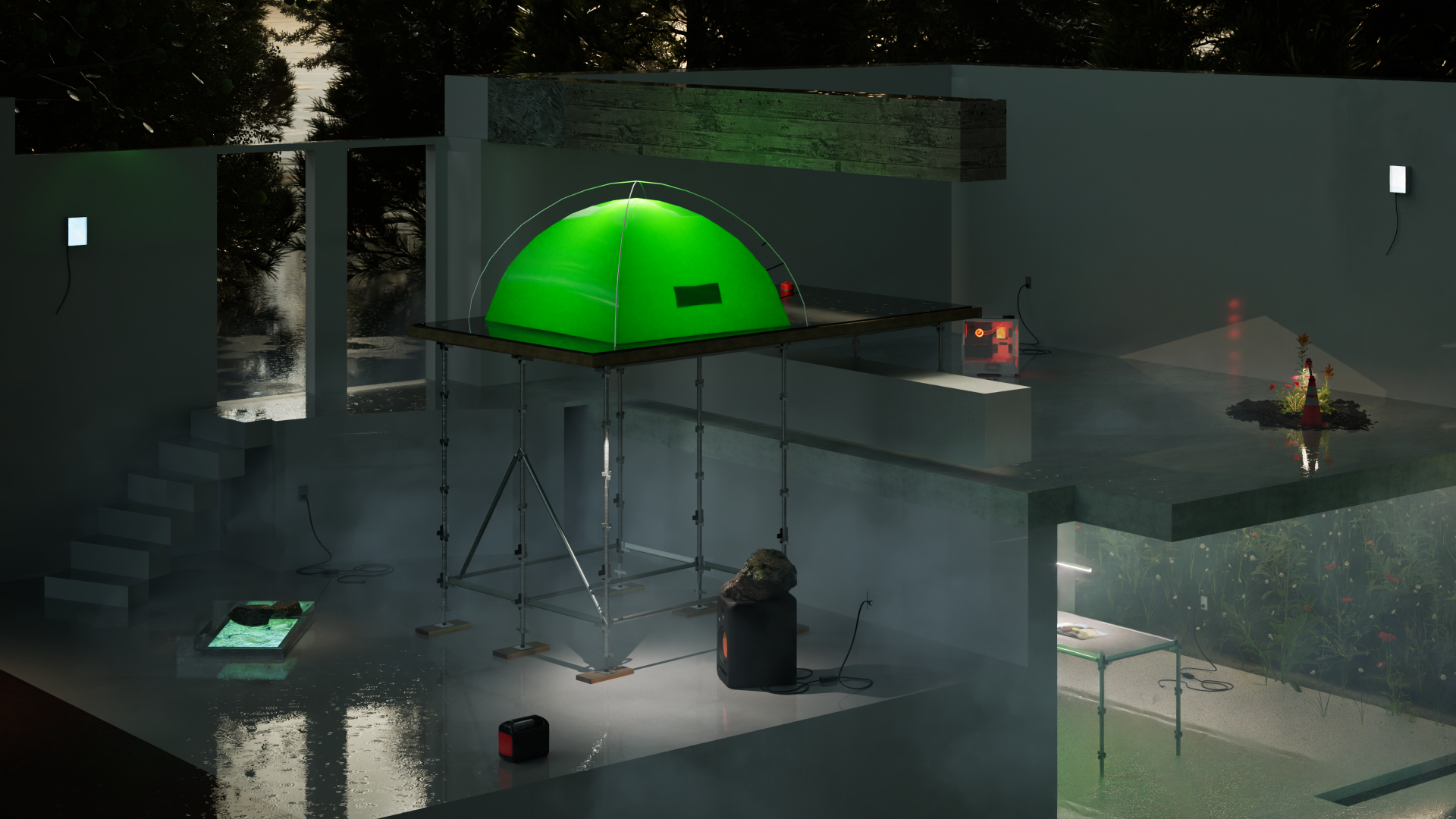
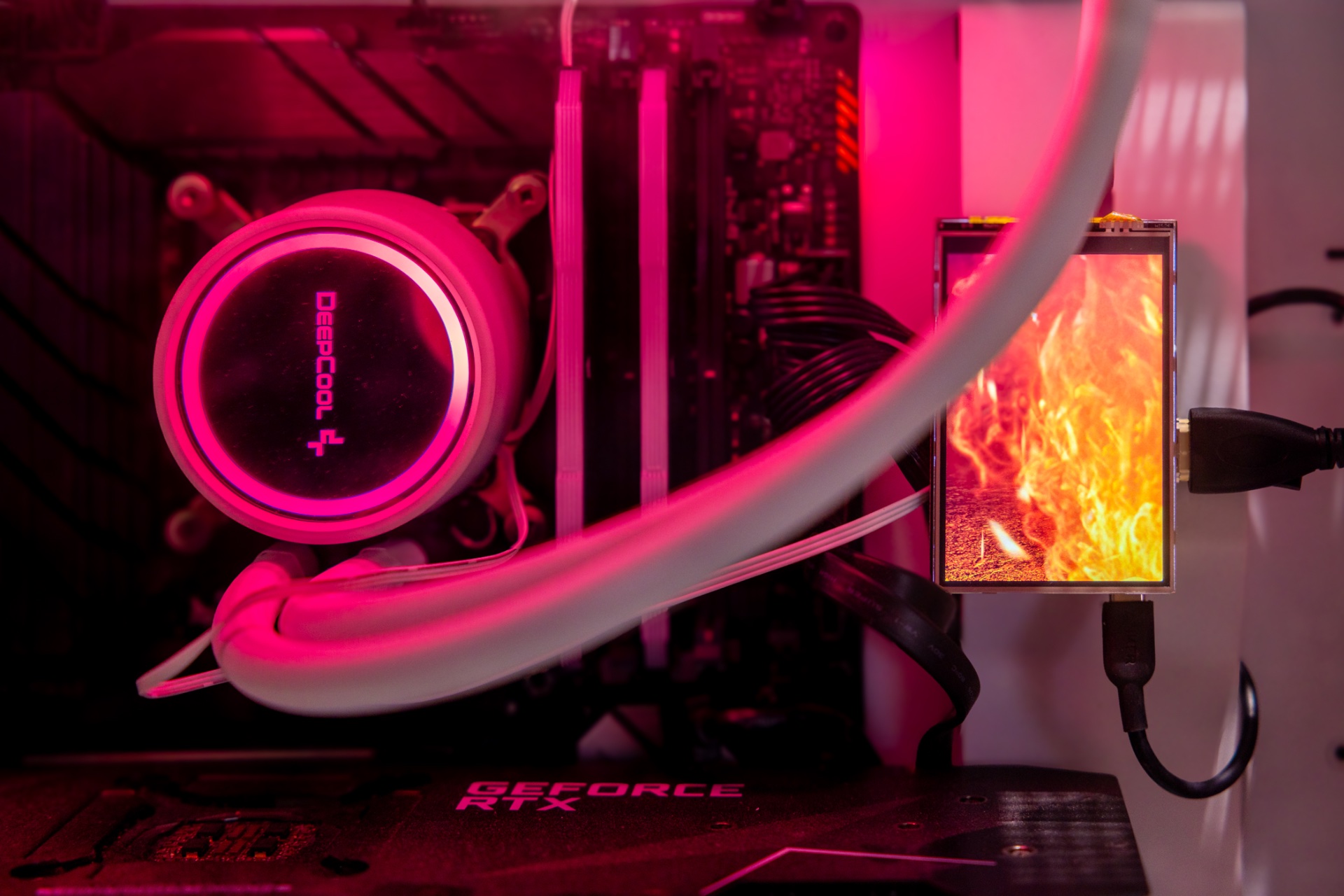
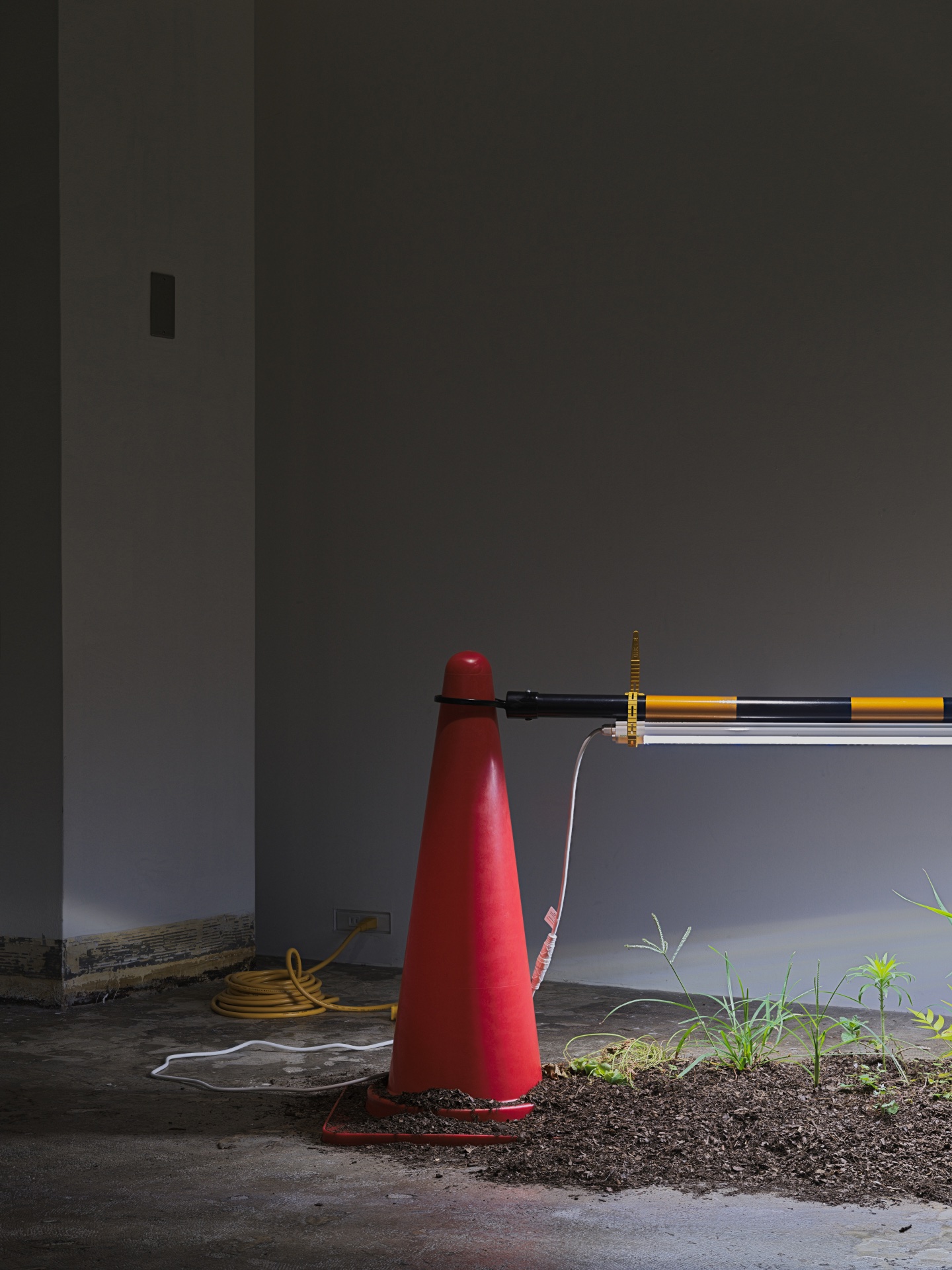
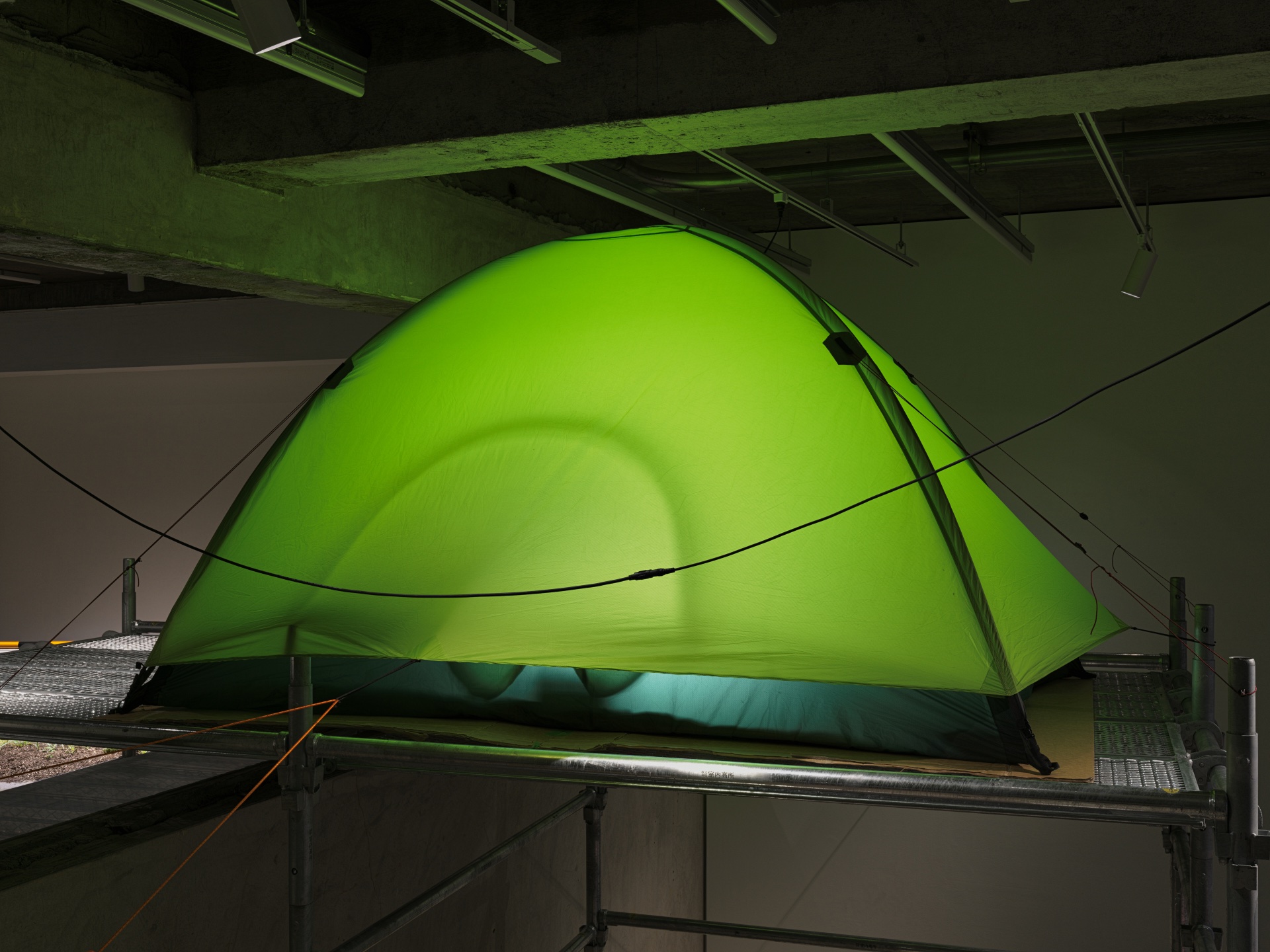
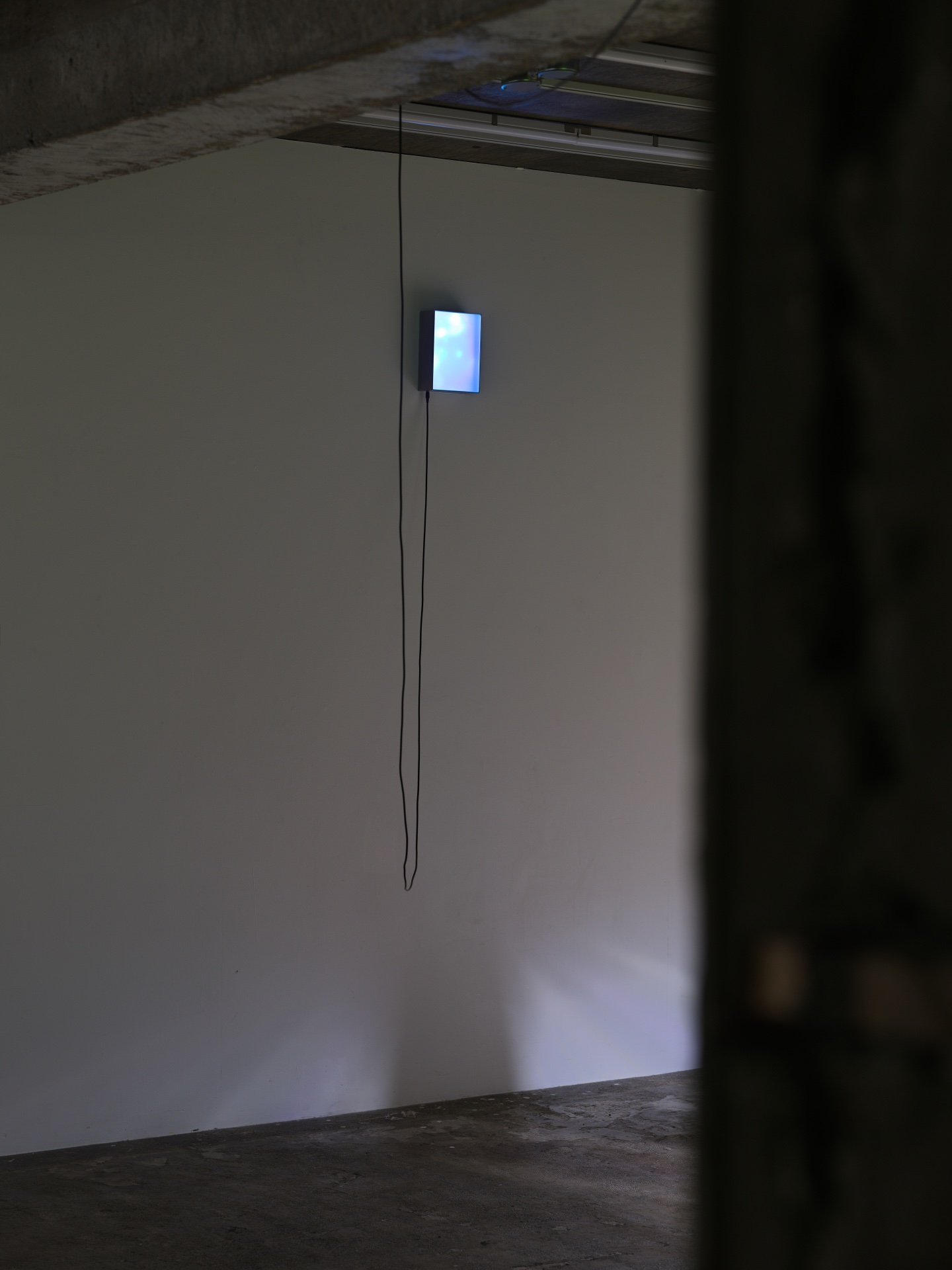
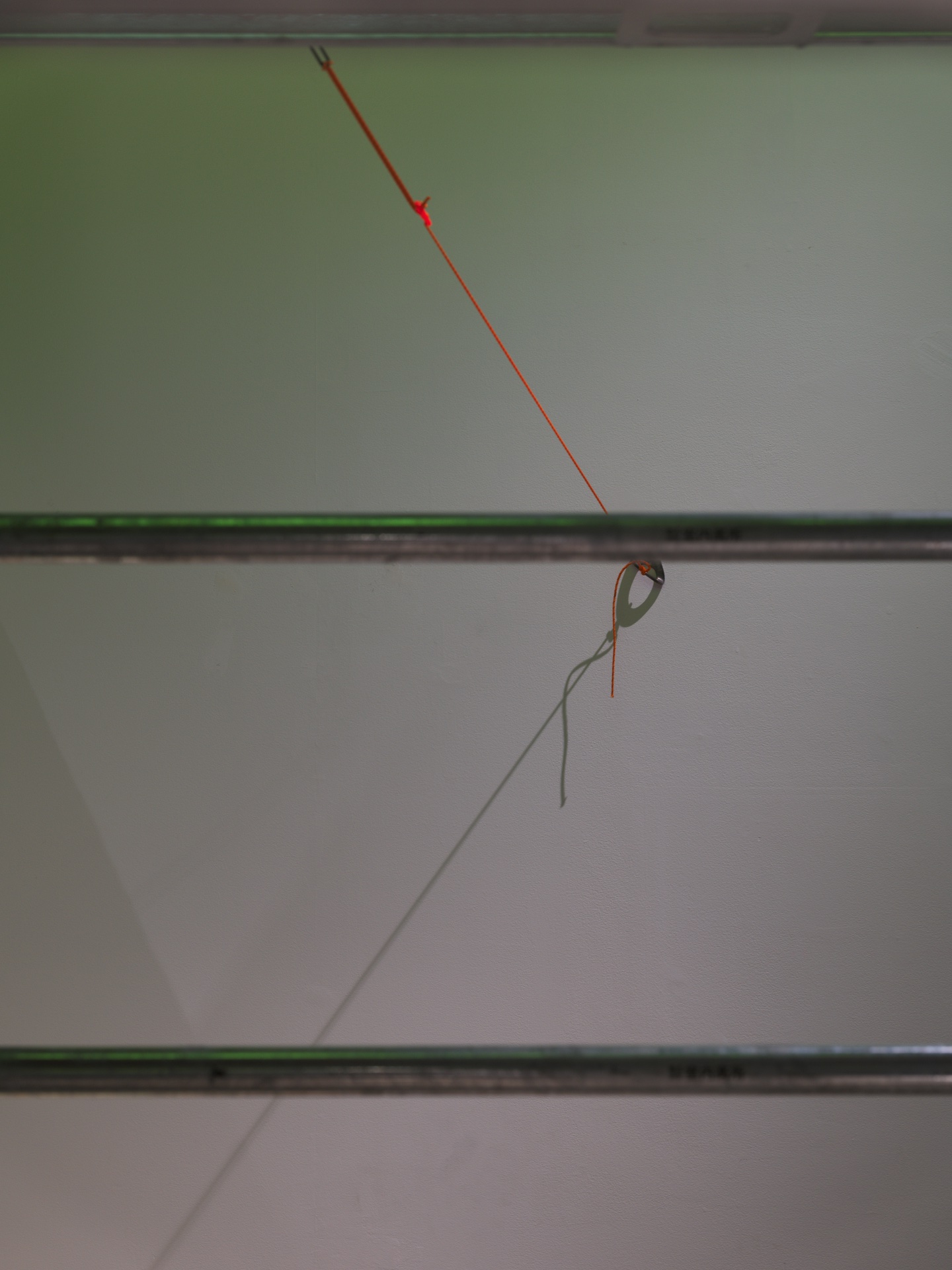
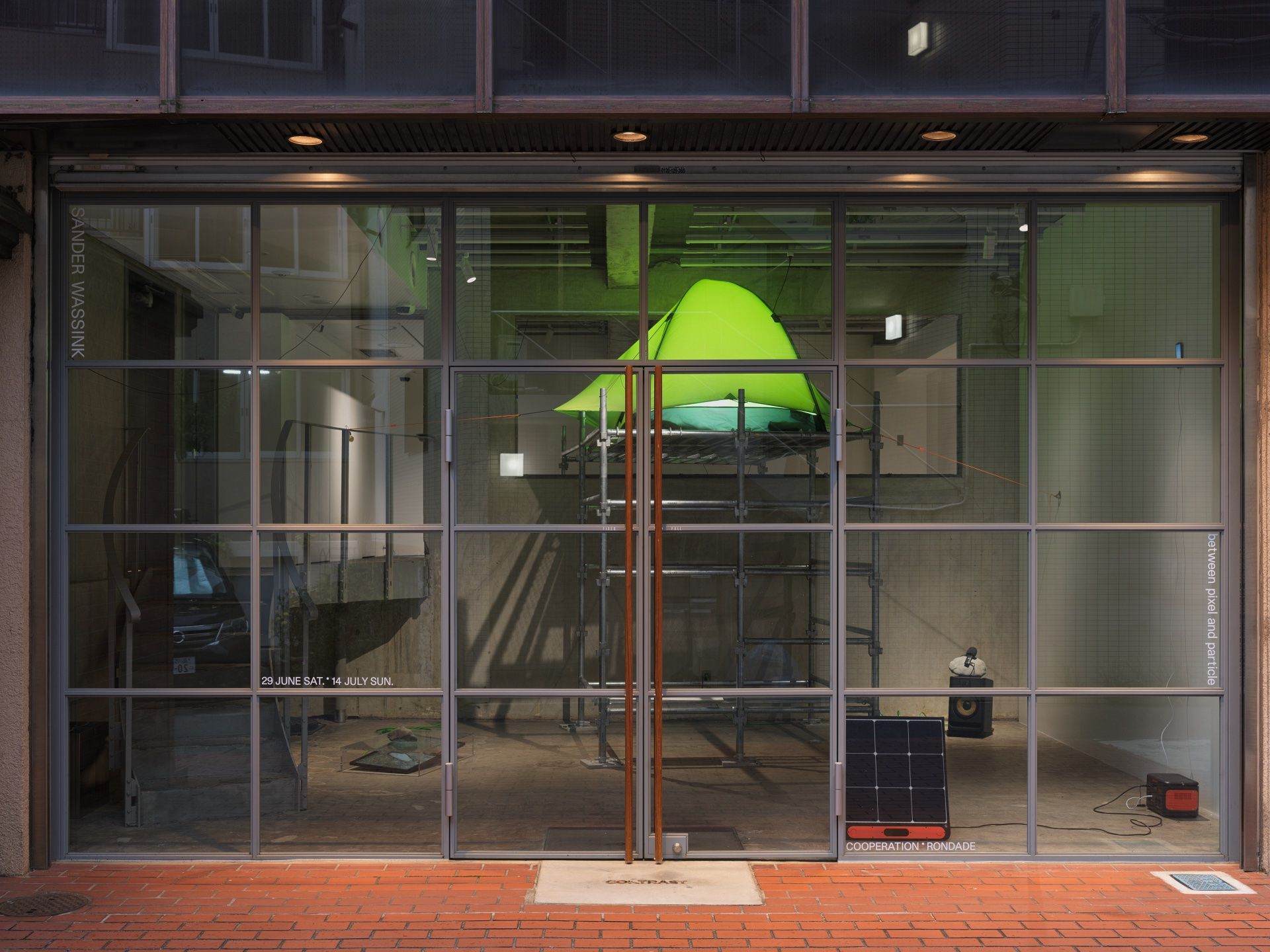
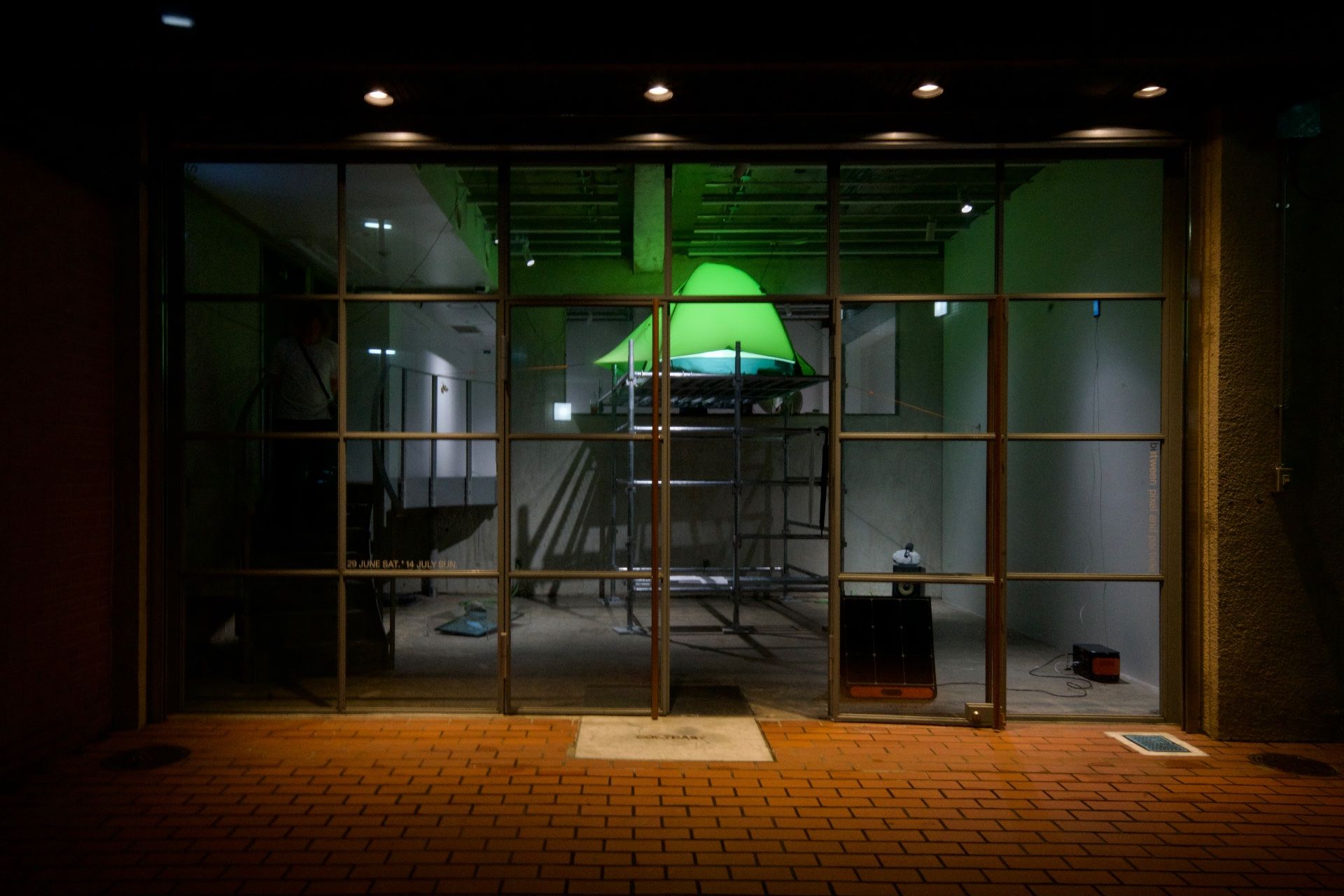
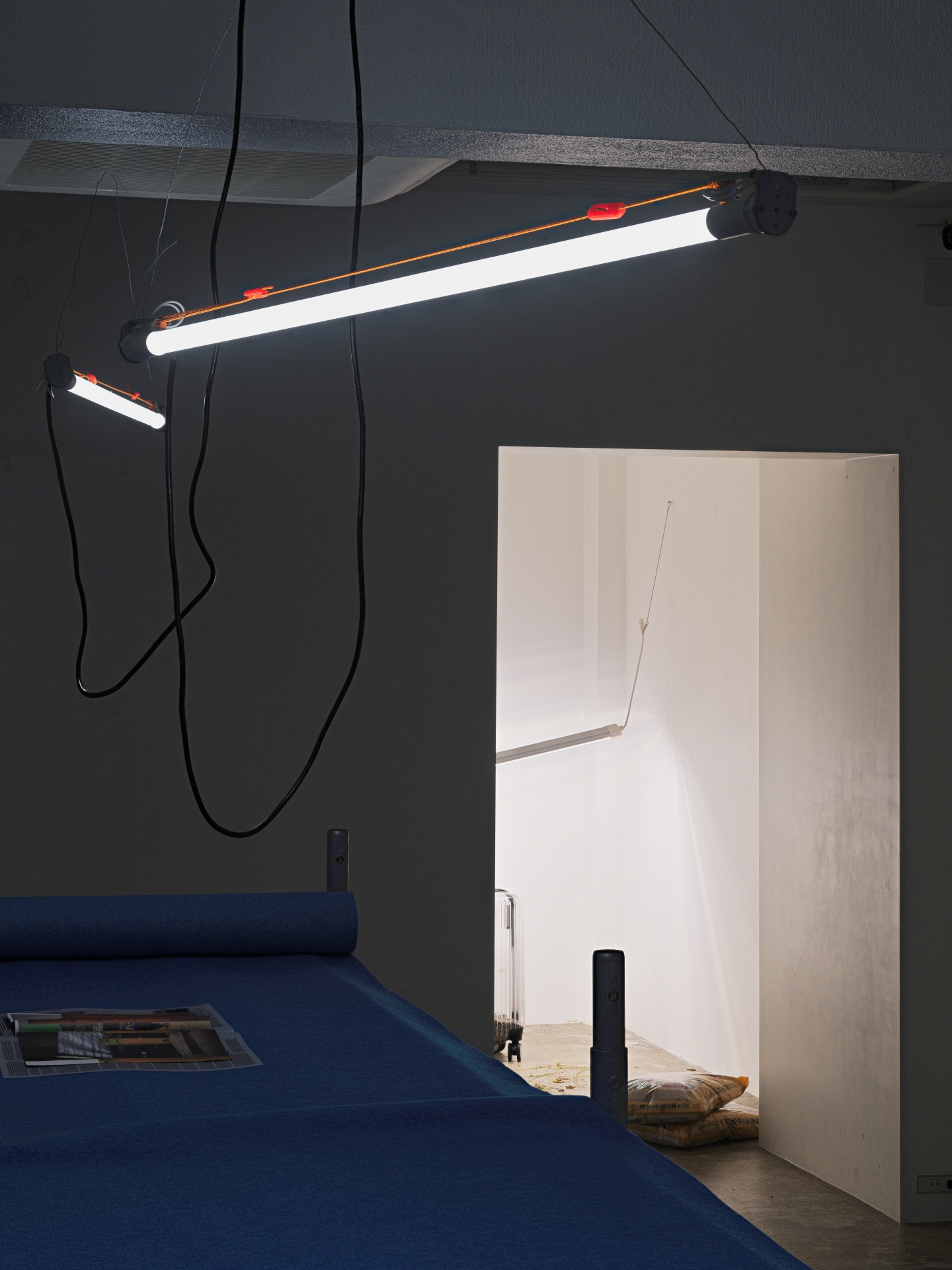
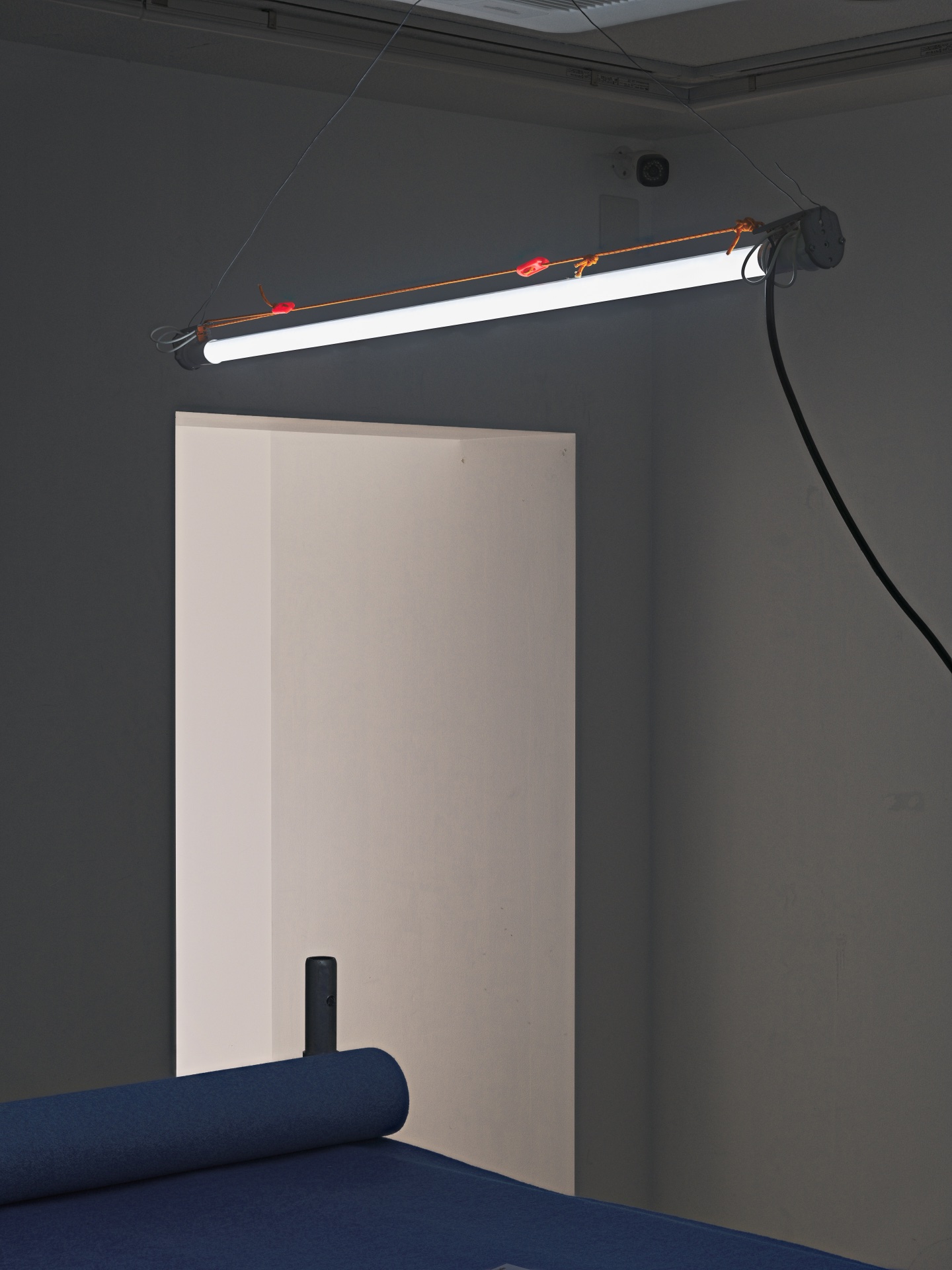
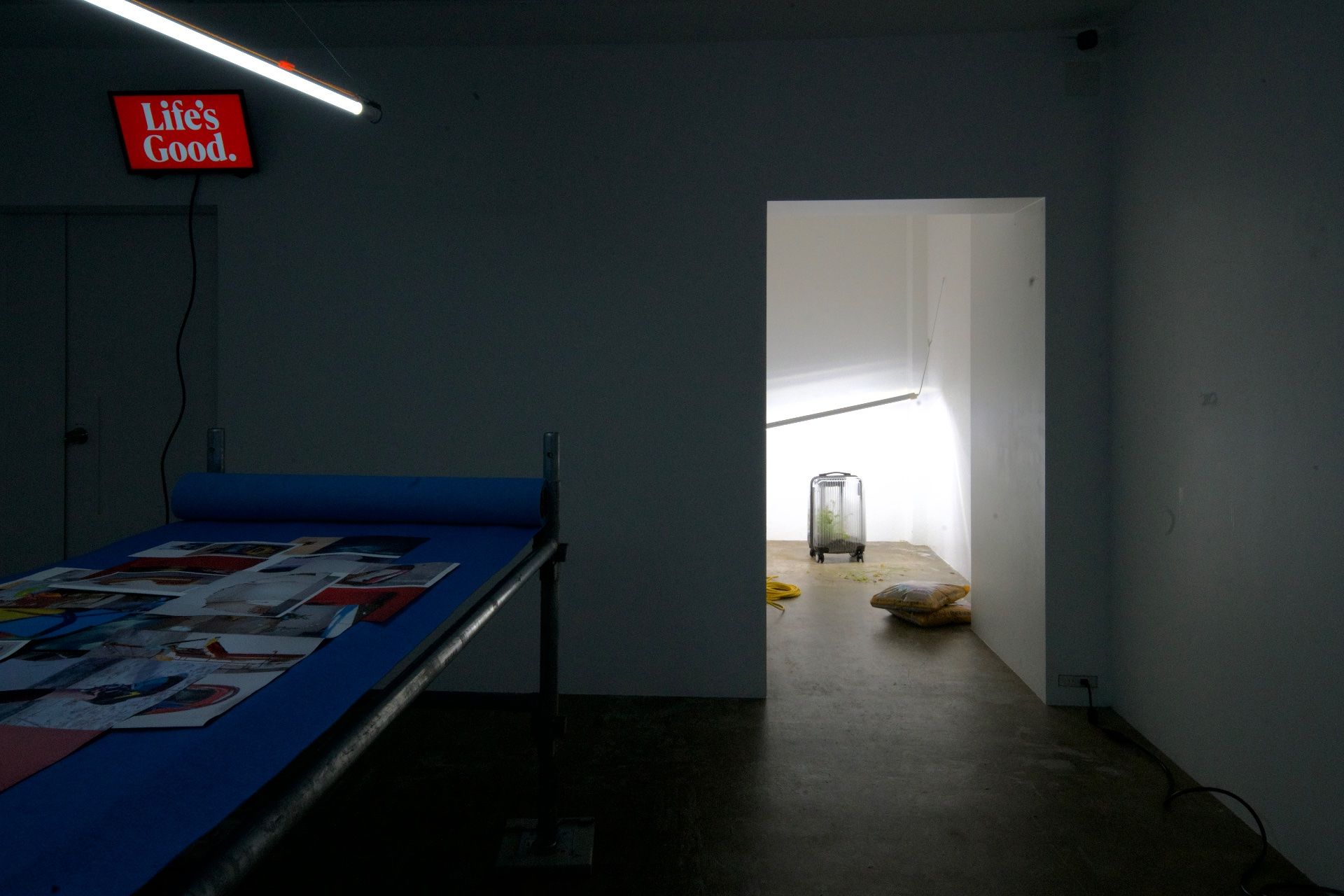
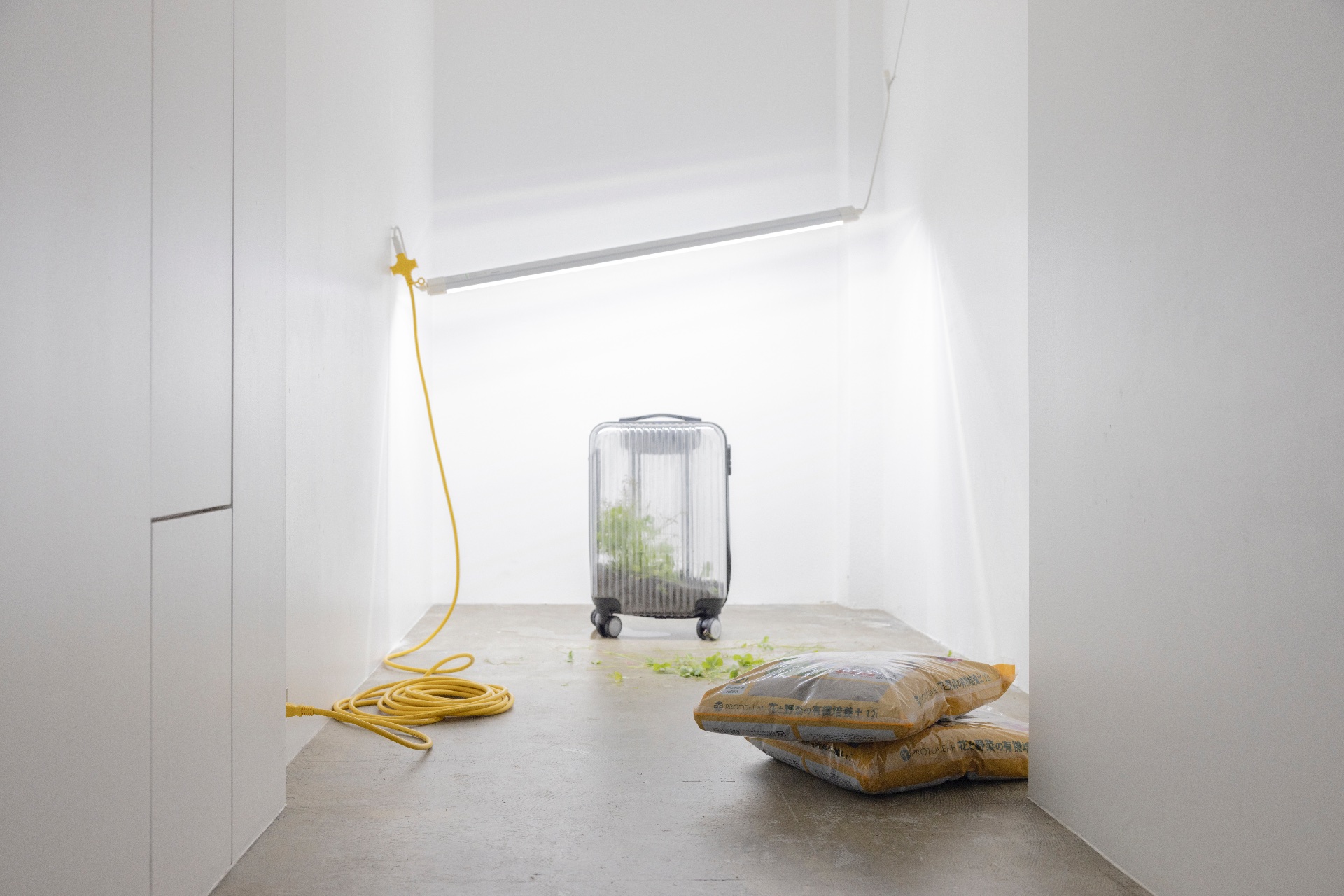
I was invited to produce a solo show at CONTRAST, an art space in Tokyo located in a former garage in the Shibuya district. The building consists of three floors connected through staggered half-levels, which allowed me to work with a vertical sequence of spaces that relate both physically and conceptually to my ongoing exploration of the digital and the material.[IMAGE:0.5116647263442675]After my previous exhibition Out of Office at CAVE gallery, I wanted to continue developing the same line of investigation, how digital processes influence physical matter, and how physical phenomena in turn shape the digital. Some works were newly produced, others recontextualized from earlier exhibitions, forming a continuous reflection on the coexistence of the two realms.[IMAGE:0.8285688683669344]At the center of the exhibition was an interactive simulation of a digital fireplace. Visitors could move toward or away from the virtual fire using a game controller. The screen showing their movement was placed inside a computer case with a glass front, positioning the image of the fire directly beside the GPU that generated it. As one moved closer to the fire, its visual resolution and computational complexity increased, causing a rise in GPU load, energy use, and physical heat. A power meter displayed these fluctuations in real time, exposing the conversion of digital activity into tangible energy. I wanted to show how image, computation, and heat form a single circuit in which representation becomes material. The use of fire was intentional. Fire is a primal force in human evolution, the origin of culture, and the earliest form of controlled energy. The same principle that once hardened clay and forged metal now drives the processors that power our machines. The simulated fire again produces heat, completing a loop between natural phenomenon and human invention. [IMAGE:0.7049227633669227] A second work, Sun, extended this principle. I captured light from the actual sun and stored it in a portable battery. The stored energy powered a screen showing an image of that same sun until the battery was depleted. The work established a direct link between the act of capturing and the act of display, between source and image, duration and exhaustion. [IMAGE:0.7280750382953002] In the central area of the space, I installed a tent on a scaffold structure. It connected the different levels of the building and acted as a temporary dwelling within a constructed environment. The tent represented a way of inhabiting this emerging terrain between the natural and the artificial. I see these technologies, chips, GPUs, and other devices, as products of collective human labor that are gradually becoming as autonomous and complex as the natural phenomena from which they originated. The tent was a gesture of camping within this new landscape of artifacts that are evolving into a kind of second nature. [IMAGE:0.378108802466006] Next to the tent, I created a small garden. Since there was no daylight in this part of the space, I installed a growing lamp under 2 traffic cones to provide the plants with artificial light. The plants were weeds collected from the streets of Tokyo, found beside vending machines and in back alleys. They are plants that usually go unnoticed, yet here they became central. Within this artificial setting, they represented a renewed form of value and resilience. I was interested in the idea that what is ordinary or overlooked today may, in another context, become rare and deeply appreciated, a way I often approach common things in general. [IMAGE:0.7458448907220172] The River series from Out of Office was also shown. I had collected stones from rivers in Kyoto after filming the flow of water around them. In the installation, the same stones were placed on top of a screen with a video of that recorded water. The flow no longer shaped the stones, it existed only as an image. The work reflected on how a process can turn into memory once its active element is removed. A related sound piece featured a speaker with a stone resting on top. The sound of the river, recorded and played through the speaker, It was a way to translate the same idea from visual to sonic form. [IMAGE:0.44481504261039917] The exhibition continued downward toward the basement. Along the sloped path, I placed a large television encased in a thick plexiglass box. It displayed a video of a river flowing continuously, as if a fragment of the river had been cut out of its environment and relocated. The footage was taken in Kyoto and came from an earlier work titled Borrowed River, first exhibited at KiKa Gallery. It is a segment of nature turned into a portable image. [IMAGE:0.2929344673966162] At the end of the slope, a door to the left led into the basement. In the center of the room, I built a platform presenting a book that compiles my works from 2012 to 2022. Around it, three televisions were mounted on the walls. Each displayed only the slogan of its respective brand: LG Life’s Good, Acer In Search of Incredible, and ASUS Explore Beyond Limits. [IMAGE:0.7411226462916349] Removed from their commercial contexts, these slogans revealed another layer of meaning. They use the language of aspiration, expansion, and belief, almost spiritual in tone. I found them interesting because they resemble mantras of human optimism, phrases that once represented technological progress as a path toward freedom or exploration. Each slogan refers to physical experience, yet it is delivered through a static digital screen. I treated these devices as billboards that invite action, surrounding the platform that holds my book, a record of ten years of exploration, experimentation, mantras related to that time and that book . [IMAGE:0.3572335124636995] In a small corner of the same space, I placed a transparent suitcase filled with soil and the same plants found on the streets of Tokyo. The work represents my wish to plant and to settle somewhere, while maintaining the ability to keep exploring. To plant something and nurture it is an act of grounding, yet the suitcase makes it possible to move it around. It stands as a metaphor for a condition that is both rooted and mobile, a desire to belong without becoming fixed.